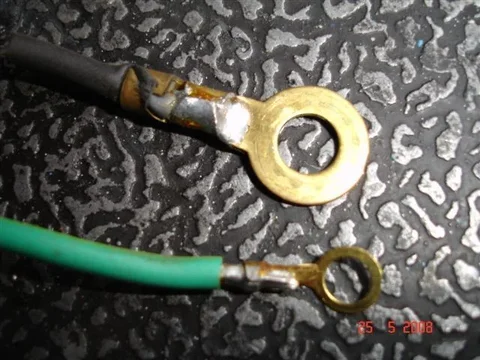
For stranded wire a proper crimp connection is more reliable than a soldered connection.
This is not opinion, it is fact based on studies conducted by NASA, IPC and JEDEC.
You will not find a single soldered wire connection in any production vehicle manufactured today. EVERY wire connection in the space shuttle or any satellite and EVERY wire connection in any military airplane, ship, boat or ground vehicle is a crimp connection.
Why soldered connections fail:
The solder binds the wire strands together and does not let them flex.
Solder contains flux which is corrosive, it wicks into the wire under the insulation and cannot be cleaned.
Do yourself a favor and learn how to make a proper crimp connection.
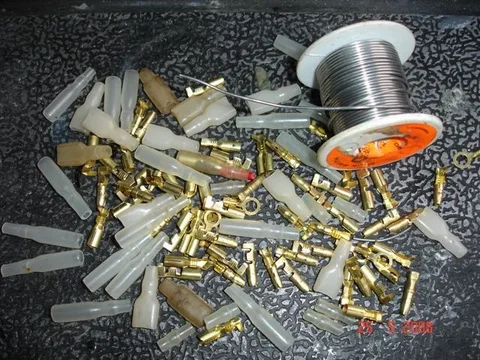
Get a good pair of crimper's and the correct connectors to go with them. If you pick up the multi pack at Autozone and use their POS crimper you will have s*** connections. Panduit, Greenlee, and Amp all make good crimp tools.
I'm a journeyman electronics technician. I've been professionally wiring communications equipment for 28 years. I have crimped and/or soldered thousands upon thousands of connections. Many of these are in harsh environments - rain and/or spray from seawater.
Given a choice, and given the time, I prefer to crimp AND solder, or splice and solder. My soldered connections don't corrode and don't fail. That's been proven for 28 years. During that time I've seen a good many connections made by others fail. Almost always they are crimp connections, but I've seen sloppy solder joints fail too. (BTW, I've never had a joint fail from corrosion caused by rosin core solder. Acid core solder must be absolutely avoided for any electrical work.)
Proper, consistent soldering is not something most people can quickly master. It takes some practice... and patience. The biggest problems are cold solder joints, using too much solder, using too small of an iron, and applying too much heat, and often a combination of these.
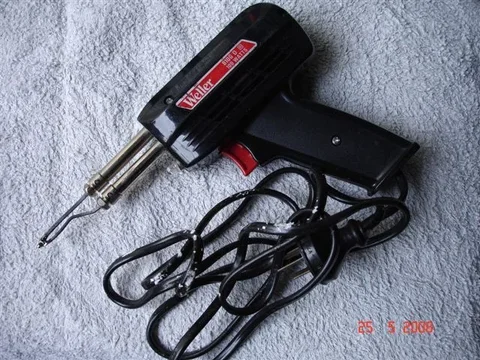
The larger the iron (wattage) the faster the joint can be heated. A smaller iron will require more contact time to prevent a cold solder joint, and will cause heat to travel further up the wire(s), melting or burning insulation. If the solder joint is done quickly to prevent melting of wires, the joint may be too cold. The smaller irons and/or tips are great for circuit boards, but not for general wiring, particularly automotive.
Too much solder can help cause cold solder joints when used in conjunction with a small iron. It takes a lot of heat to keep a large blob of solder fluid, and this can not only cause cold joints but can melt insulation. It can also cause excess solder to capillary up wires, making them stiffer and more prone to breakage.
I put a small amount of solder on a freshly cleaned tip, then apply heat to the joint or connector Additional solder is NOT applied to the iron tip. It is applied to the joint or connector, and when the joint or connector is hot enough, the solder will melt and flow. Only enough solder to make the joint solid is used. Any more and it will capillary up the wires.
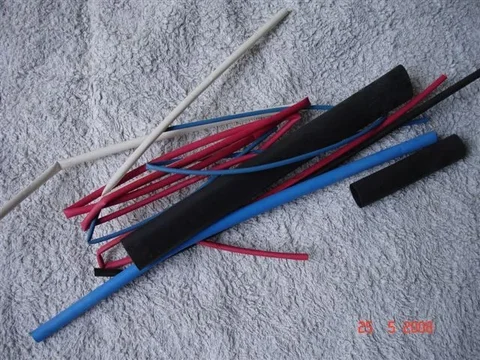
Depending on where the connector is used, it may or may not be insulated. Plastic insulation on crimp connectors will not survive soldering, so I cut it off before soldering and use heat shrink tubing. I don't like wrapping with electrical tape if possible, but sometimes this must be done with some connections, especially taps. For automotive use, I always insulate the splices or connectors.
I realize the aerospace, aviation and automotive manufacturers use crimp connections instead of soldering. Economics plays a big role here. In most cases, they are also using connectors that are of a far better design and far better quality than the hobbiest is going to use.
From a hobbiest standpoint, who should solder? Those who can. Who should use crimps? Those who can't solder. My feeling is that if at all possible, solder your connections. (I'm not saying everyone who uses crimps can't solder. Don't read more into this than what I wrote. If you can make a crimp that will last and not fail from corrosion, then this doesn't apply to you.) If you must crimp, follow rusty tlc's advice and get a quality crimp tool, not a cheap piece of crap. Don't go budget here.
I recently wired up two jeep trailers. The wiring harnesses are temporary. I soldered them instead of using crimp connectors anyway.




 Obviously most of us have experimented with both methods.


 ).
).


 This sounds just like me.