



These snorkels are blow molded, not injection molded. LLDPE is about as cheap as it gets for plastic resin, so there's no incentive to go to a cheaper resin. The UV stabilizer additives are to maintain the "blackness" of the tube, not for structural integrity. Ask me how I know. Carry on.
Navigation
Install the app
How to install the app on iOS
Follow along with the video below to see how to install our site as a web app on your home screen.
Note: This feature may not be available in some browsers.
More options
Style variation
You are using an out of date browser. It may not display this or other websites correctly.
You should upgrade or use an alternative browser.
You should upgrade or use an alternative browser.
Budget Snorkel Review
- Thread starter 2000UZJ
- Start date
This site may earn a commission from merchant affiliate
links, including eBay, Amazon, Skimlinks, and others.

how do you know?

- Thread starter
- #123
Supra88 said:These snorkels are blow molded, not injection molded. LLDPE is about as cheap as it gets for plastic resin, so there's no incentive to go to a cheaper resin. The UV stabilizer additives are to maintain the "blackness" of the tube, not for structural integrity. Ask me how I know. Carry on.
So what happens to the structural integrity of this cheaper plastic resin over 5-10 years of UV exposure? I'm not really worried about it, but it is bolted and drilled into my truck....I'd like to hear everybody's opinion. Good or bad
Sent from my iPhone using IH8MUD

2000UZJ said:So what happens to the structural integrity of this cheaper plastic resin over 5-10 years of UV exposure? I'm not really worried about it, but it is bolted and drilled into my truck....I'd like to hear everybody's opinion. Good or bad
Sent from my iPhone using IH8MUD
Well it's installed on your rig...so keep it obviously. Since it's "untested" then keep an eye on it to be sure it's doing it's job. I personally think it looks good although that's not your concern. I would change out the intake to a Donaldson Topspin Pre-cleaner:
http://www.donaldson.com/en/engine/support/datalibrary/000207.pdf
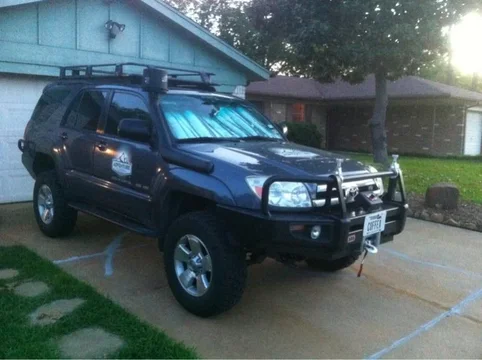
My rig...note the pre-cleaner (bigger is better according to the Donaldson peeps) and mines roughly 10" cause I have the 4.7L V8. The pre-cleaner is supposed to eject up to 85% of the contaminants dirt/water before it even enters the snorkel tube. I've had no issues and I've driven in the rain multiple times so far. This is all IMHO of course.
~Daniel
Sent from deep in the mountains of Honduras using only sticks and rocks.

According to Safari and the Chinese manufacturer, they form the snorkels by roto molding, not blow molding. I know I mistakenly said injection molded in a previous post, my bad. Your right about the addition of carbon black, all it does is make it black and more UV stabile, its adds nothing in terms of integrity.
As for my opinion on what I found,
I think that lab test that safari had them perform does not prove anything that has any real world significance. They did prove that their polymer, when brand new is stronger than a new chinese knock off. However, the test, to me does not simulate any kind of stress a snorkel MAY endure in the real world.
Realistically, what kind of situation would be equivalent to hitting your snorkel with a 4.5kg dart at -18 degrees celsius (thats 9.9 lbs and -0.4 degrees Fahrenheit). That works out to ~44 newtons on the point of the dart on impact, or dropping a 10lb dumbbell on your big toe. Branches smacking into it on a tight trail will not exert that kind of force on the snorkel and they will not be exerted over such a small area either. Anything beyond that, like sliding sideways into a tree or large rock, will probably be more than either snorkel can handle and at that point Id be more worried about sheet metal than the snorkel. T
The other thing that honestly bothers me, is that the entire basis of Safari's argument revolves around UV stability of their polymer. However the test they performed appears to have nothing to do with UV stability. It merely shows the strength of the polymer, albeit in an unrealistic manner.
And for part two, regarding UV stability.
They measure the UV stability in regards to its affect on tensile elongation, this is the way the plastics industry does it. While this is a good way to measure it, in our application, tensile elongation does not seem to have much significance. Unless you count the scenarios i stated above, the snorkel will not be subjected to any stress on a regular basis other than environmental factors. I don't see how the affects UV exposure will have an impact on strength that is significant to a snorkel. Also, like i said in my last post, Safari equates 1000hrs of UV exposure to one year of life in the real world. Raw LLDPE has at least 8 years of life by that standard and that is before they make it black, which does increase UV stability according to one of the links in my last post.
Another thing to think about, is after 8000 or whatever hours of exposure, the plastic is not worthless and its not going to disintegrate. Its just lost 50% of ability to elongate without breaking. How often, if ever, are you going to elongate the snorkel? It will be more brittle at this point, but again considering the usage of a snorkel I have hard time foreseeing any actual problems that could arise from this, since a snorkel experiences very little if any physical stress since the body of a 100 series does not flex much, if any, even when off road.
The color of the chinese knockoff could fade over time, but beyond that I don't see a huge problem. Considering that a snorkel bares no load and really only matters when you are going through a deep water crossing, I have a hard time justifying the cost difference, based on what I currently know.
Last point, we don't know the actual UV rating of the chinese snorkels that are currently available, the data Safari gives is ~3 years old at this point. The chinese only seem to get better and better at copying things, not worse.
Again this is my opinion.
As for my opinion on what I found,
I think that lab test that safari had them perform does not prove anything that has any real world significance. They did prove that their polymer, when brand new is stronger than a new chinese knock off. However, the test, to me does not simulate any kind of stress a snorkel MAY endure in the real world.
Realistically, what kind of situation would be equivalent to hitting your snorkel with a 4.5kg dart at -18 degrees celsius (thats 9.9 lbs and -0.4 degrees Fahrenheit). That works out to ~44 newtons on the point of the dart on impact, or dropping a 10lb dumbbell on your big toe. Branches smacking into it on a tight trail will not exert that kind of force on the snorkel and they will not be exerted over such a small area either. Anything beyond that, like sliding sideways into a tree or large rock, will probably be more than either snorkel can handle and at that point Id be more worried about sheet metal than the snorkel. T
The other thing that honestly bothers me, is that the entire basis of Safari's argument revolves around UV stability of their polymer. However the test they performed appears to have nothing to do with UV stability. It merely shows the strength of the polymer, albeit in an unrealistic manner.
And for part two, regarding UV stability.
They measure the UV stability in regards to its affect on tensile elongation, this is the way the plastics industry does it. While this is a good way to measure it, in our application, tensile elongation does not seem to have much significance. Unless you count the scenarios i stated above, the snorkel will not be subjected to any stress on a regular basis other than environmental factors. I don't see how the affects UV exposure will have an impact on strength that is significant to a snorkel. Also, like i said in my last post, Safari equates 1000hrs of UV exposure to one year of life in the real world. Raw LLDPE has at least 8 years of life by that standard and that is before they make it black, which does increase UV stability according to one of the links in my last post.
Another thing to think about, is after 8000 or whatever hours of exposure, the plastic is not worthless and its not going to disintegrate. Its just lost 50% of ability to elongate without breaking. How often, if ever, are you going to elongate the snorkel? It will be more brittle at this point, but again considering the usage of a snorkel I have hard time foreseeing any actual problems that could arise from this, since a snorkel experiences very little if any physical stress since the body of a 100 series does not flex much, if any, even when off road.
The color of the chinese knockoff could fade over time, but beyond that I don't see a huge problem. Considering that a snorkel bares no load and really only matters when you are going through a deep water crossing, I have a hard time justifying the cost difference, based on what I currently know.
Last point, we don't know the actual UV rating of the chinese snorkels that are currently available, the data Safari gives is ~3 years old at this point. The chinese only seem to get better and better at copying things, not worse.
Again this is my opinion.

I simply challenge the assumption that there are actually two different snorkel tubes.
Seriously, if a different factory in a different country was making "copy" snorkels that were not as good as the "branded" snorkels, would you attack the "copy" snorkels this way?
WARNING: Don't buy cheap copy snorkels because they might fail below 0 degrees when hit by heavy flying pointy objects several years after installation!
Come on!
Why don't we just change the conversation to a discussion of aftermarket UV coatings or something? Seems like the snorkel would benefit from some kind of protection whether it says Safari on the side or not.
Seriously, if a different factory in a different country was making "copy" snorkels that were not as good as the "branded" snorkels, would you attack the "copy" snorkels this way?
WARNING: Don't buy cheap copy snorkels because they might fail below 0 degrees when hit by heavy flying pointy objects several years after installation!
Come on!
Why don't we just change the conversation to a discussion of aftermarket UV coatings or something? Seems like the snorkel would benefit from some kind of protection whether it says Safari on the side or not.
Black Rhino 13 said:I simply challenge the assumption that there are actually two different snorkel tubes.
Seriously, if a different factory in a different country was making "copy" snorkels that were not as good as the "branded" snorkels, would you attack the "copy" snorkels this way?
WARNING: Don't buy cheap copy snorkels because they might fail below 0 degrees when hit by heavy flying pointy objects several years after installation!
Come on!
Why don't we just change the conversation to a discussion of aftermarket UV coatings or something? Seems like the snorkel would benefit from some kind of protection whether it says Safari on the side or not.
Stinking Hilarious!!! You can simply apply your favorite color to the snorkel to add extra UV protection. Paint protects PVC from UV rays... In certain cities it's actually code to paint your swimming pool equipment PVC pipes for two reasons: 1. The city thinks it looks better 2. It protects the sch40 (white) PVC from the UV rays so it wont become brittle.
As stated before by others darker PVC lasts longer and this is why we use sch80 (dark grey) PVC that is direct contact with pumps...pumps put off a ton of heat and the sch80 PVC does better with continual expansion and contraction. So in short if UV is really your concern...Paint It.

How do you know this Daniel you ask? - I've been in the pool industry for 13years this year.

~Daniel
Sent from deep in the mountains of Honduras using only sticks and rocks.


Well it's installed on your rig...so keep it obviously. Since it's "untested" then keep an eye on it to be sure it's doing it's job. I personally think it looks good although that's not your concern. I would change out the intake to a Donaldson Topspin Pre-cleaner:
http://www.donaldson.com/en/engine/support/datalibrary/000207.pdf
View attachment 621548
My rig...note the pre-cleaner (bigger is better according to the Donaldson peeps) and mines roughly 10" cause I have the 4.7L V8. The pre-cleaner is supposed to eject up to 85% of the contaminants dirt/water before it even enters the snorkel tube. I've had no issues and I've driven in the rain multiple times so far. This is all IMHO of course.
~Daniel
Sent from deep in the mountains of Honduras using only sticks and rocks.
What do you think of the Sy-Klone?
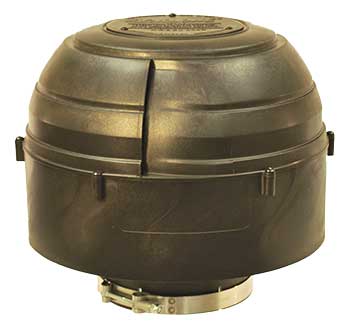
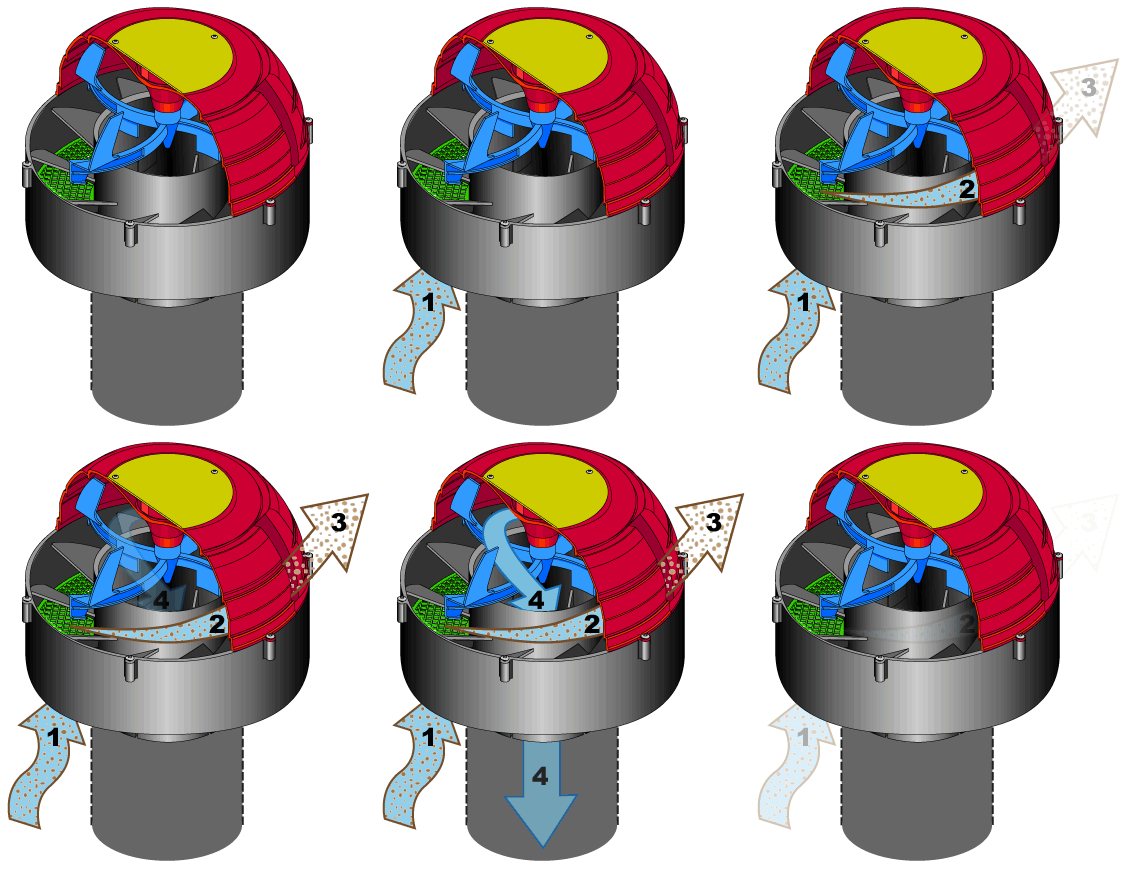
Seems to work like the Donaldson Topspin without looking like a paper towel dispenser
You can simply apply your favorite color to the snorkel to add extra UV protection. Paint protects PVC from UV rays....
I just coated mine with matching bed liner


98 SNAKE EATER said:What do you think of the Sy-Klone?
<a href="http://www.youtube.com/watch?v=_6AxqFVipbA">YouTube Link</a>
Seems to work like the Donaldson Topspin without looking like a paper towel dispenser
I just coated mine with matching bed liner
Lol!!! Never thought of it that way, but it does look like that! I went with the Donaldson because it came recommend by a few of the top off road parts dealers and didn't know about the Sy-Klone. But really as long as it's doing the job right.
That's a good idea with the liner too. I saw your thread on your rear winch...great looking rig you got there!~Daniel
Sent from deep in the mountains of Honduras using only sticks and rocks.
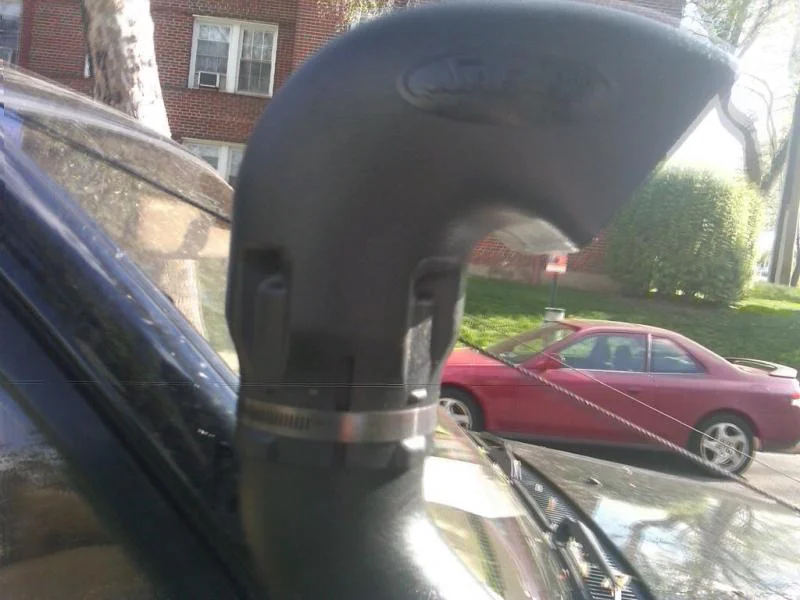
one thing, the head, or intake piece of the snorkel is pretty different between the two. The drainage channels are different, and the front grate is a completely different design. The fit is also different. The safari fits over the main tube much easier. You can see in the pics that the drainage slots on the arb have paralleled sides, where the others flare outward from fitting over the main tube. This leads me to believe that that piece, at least, did not come from the same mold. Better or worse? i have no clue. But different, yes.
Yukon LX said:how do you know?
Apparently I don't! I'm surprised their using rotational molding for this - my bad. I wonder if the knock offs are using blow molding hence the crappier parting line? Regardless I'll keep quiet in the future when I haven't actually seen the product.
I use to work for Solvay who produced LLDPE filler tubes and fuel tanks.

Yukon LX said:one thing, the head, or intake piece of the snorkel is pretty different between the two. The drainage channels are different, and the front grate is a completely different design. The fit is also different. The safari fits over the main tube much easier. You can see in the pics that the drainage slots on the arb have paralleled sides, where the others flare outward from fitting over the main tube. This leads me to believe that that piece, at least, did not come from the same mold. Better or worse? i have no clue. But different, yes.
That's what I was sayin'...
Man you guys.....
Actually there is a lot of good info here... But the bottom line for me is this, I want to see the Chinese and the Safari bolt to bolt to intake, etc. If every hole matches up perfect... I would be more inclined to buy the cheaper version knowing I could if needed replace it with a Safari down the road should the quality not withstand the test of time. I am also a little concerned with the water drainage issues I am seeing being reported....
Actually there is a lot of good info here... But the bottom line for me is this, I want to see the Chinese and the Safari bolt to bolt to intake, etc. If every hole matches up perfect... I would be more inclined to buy the cheaper version knowing I could if needed replace it with a Safari down the road should the quality not withstand the test of time. I am also a little concerned with the water drainage issues I am seeing being reported....
Mxndrnks said:Man you guys.....
Actually there is a lot of good info here... But the bottom line for me is this, I want to see the Chinese and the Safari bolt to bolt to intake, etc. If every hole matches up perfect... I would be more inclined to buy the cheaper version knowing I could if needed replace it with a Safari down the road should the quality not withstand the test of time. I am also a little concerned with the water drainage issues I am seeing being reported....
If there is a 4WheelParts store near you (or whoever is doing the comparing) they will get a Safari snorkel for you to look at and take it back when your done assuming it's not damaged. Order one through them and set it next to the knock off and compare...I'd really like to know also! The drainage can be solved by any good pre-cleaner being installed and IMHO this should be done regardless.
~Daniel
Sent from deep in the mountains of Honduras using only sticks and rocks.
I am convinced the drainage issue can be addressed with a strategically placed hole....here:

pfran42 said:I am convinced the drainage issue can be addressed with a strategically placed hole....here:
Is that not going to be an issue with water crossing? I mean maybe I'm missing something but isn't it all supposed to sealed up? Thanks.
~Daniel
Sent from deep in the mountains of Honduras using only sticks and rocks.
You plug it before going into water that is 4 feet high.
pfran42 said:You plug it before going into water that is 4 feet high.
Hmmm...well I guess you could do that. Is there really an issue with water sitting in there in that general area or is it the air box that's the issue? I guess maybe I need to check my air box after driving in the rain.
~Daniel
Sent from deep in the mountains of Honduras using only sticks and rocks.
Paul and some other brought up the head design of the knockoff snorkel. Based on this picture, the head Nick has is a knockoff of the old safari head. Apparently they changed the design somewhere along the line.
Old design
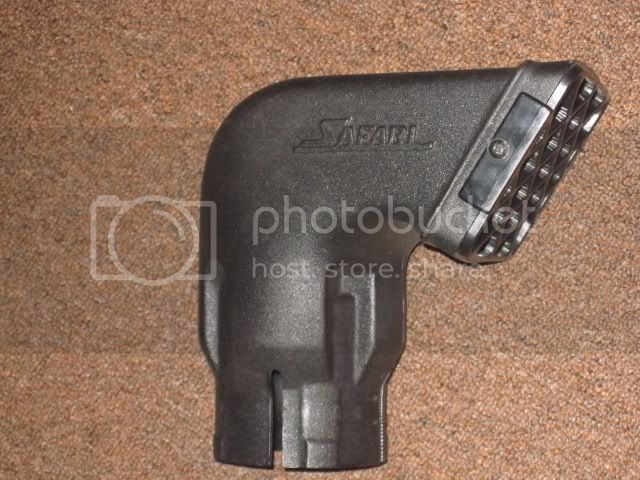
New design
Like Daniel said, using a different head should fix any issues with water getting in. That said my friend has had a safari snorkel on his FJC for over a year and has yet to mention any problems with water in the intake.
Old design
New design
Like Daniel said, using a different head should fix any issues with water getting in. That said my friend has had a safari snorkel on his FJC for over a year and has yet to mention any problems with water in the intake.
- Thread starter
- #140
pman said:Paul and some other brought up the head design of the knockoff snorkel. Based on this picture, the head Nick has is a knockoff of the old safari head. Apparently they changed the design somewhere along the line.
Old design
New design
Like Daniel said, using a different head should fix any issues with water getting in. That said my friend has had a safari snorkel on his FJC for over a year and has yet to mention any problems with water in the intake.
Mine does not look like the old version. Has the new curves, old grate. Best of both worlds if it was the same quality as a safari. I can always outfit this snorkel will Safari gear and still have saved a bundle.
Sent from my iPhone using IH8MUD