What I come away with from reading almost all of the LMP is that timber harvesting plays a big part in what they do with access and how they manage those areas - that is what the FS is for afterall - not providing recreational areas for us. From looking at the big PDF map, the majority of the trails we ride are on "non timber production" tracts of land. Only Sugar Creek (including Sugar Creek Gap) and Rough Butt are on "timber production" tracts of FS Land. Cullowhee land falls into Manage Area 4C, upper right section that borders Pisgah NF on the map.
MAP
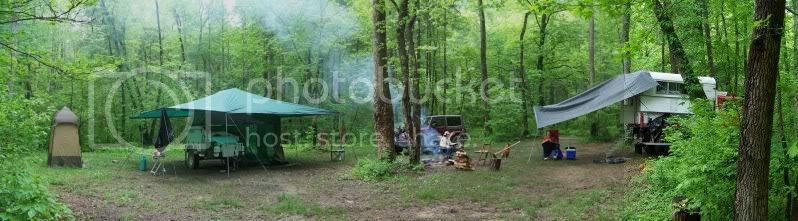
However, it seems the very goal is to reduce vehicular traffic based on the Preferred alternative in the Record of Decision document. Note the distinction between "backcountry recreation uses" and "roaded recreational uses" throughout the entire read. In other words, they are supporting the backpackers and campers, but not our style of expedition camping.
Land Management Plan: Amendment Five (Both links on
this page for the original document and Amend 5 are the same. They replaced the original doc with the amendment doc.)
From pg 21:
Alternatlve E-modifled. (Preferred Alternative)
The alternative balances priorities to achieve all the goals to some extent. Priorities would shift toward establishing desired conditions that mimic natural processes. After synthesizing scientlfic research, systems are established for habitats of forest interior breeding birds and old growth. A flow of early successional habitat is maintained. A high priorlty on diversifying silvicultural systems becomes evident: clearcutting is used only where necessary to rehabilitate damaged ecosystems. Priority is given to key backcountry areas to enhance remote, recreational experiences.
Lower priorlty is given to roaded recreation opportunities. Visually senstive areas are protected. High quallty hardwood goals are set at economically efficient levels that can be achieved and sustained through time.
Extracted from pg 12 of the document:
Of the 586,000 acres identified as available for timber production in the 1987 Plan, 527,000 acres were identfied as available for timber production in the plan amendment. This reduction in lands available for timber production was accomplished by adjusting management area boundaries to exclude some lands with sensitive biological, physical, or social values that were previously identified as available for timber production. The following process was used to adjust management area boundaries.
skipped down the page to this paragraph...
Check the backcountry recreation potential of the 'NC Mountain Treasures' booklet and the semi-primitive inventory.
Where backcountry recreation settings overlap with old growth, black bear or forest interior bird habltats,
choose management areas to accomodate backcountry recreation uses. Also, check the site capabilty to produce high value hardwood. When a high proportion of the area is marginal site quality (less than site index 70) and would be economically inefficient, adjust to management areas not suited for timber production.
From pg 15:
The key difference between timber program versus other methods for providing non-timber benefits is road construction. Roads provide a social benefit by providing access into the forest. Often, roads are seeded in grasses and provide micro-environments beneficial to many wildllfe species.
Roads are a social cost when adverse effects to backcountry recreation settings occur when a permanent edge may adversely affect some wildllfe species.
There is no way of measuring quantitatively these social benefits and costs of roads. My decision provides for backcountry recreation and forest interior settings to account for these values.
Less road construction should occur in the future and on slopes less steep, thus reducing effects to soil, water and scenic resources.
After reviewing the pattern of management area allocations,
I believe future road construction will occur in places that provide higher social benefts than costs.
In the end, I'm not sure where we make our stand. I'm hoping my distillation will make it easier for others to understand and theorize. Perhaps we market ourselves as campers and less to do with 4WD enthusiasts. Remember this plan refers to all NC Managed lands not just Cullowhee. So we've got to be prudent with our actions and words.