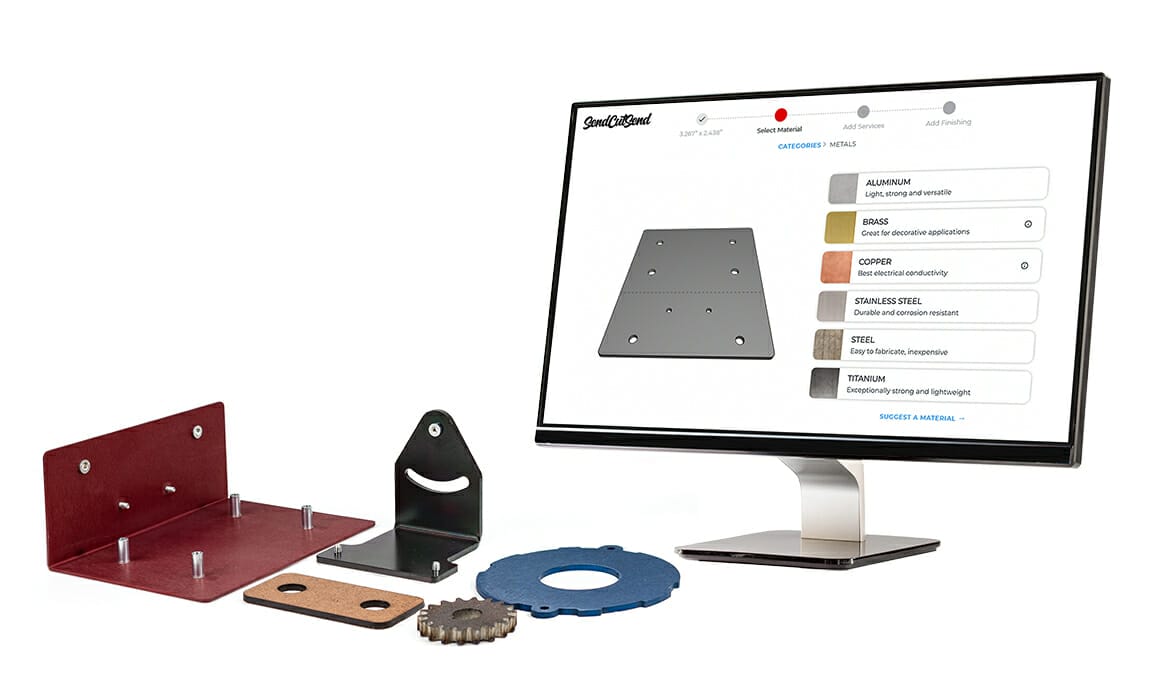
PEM hardware is pretty cool stuff. There's a thousand options for one, but one advantage of using PEM nuts over rivnuts is that the PEM hardware sits flush so when tightening up two components, you are tightening one against the other instead of just against the rim around the rivnut.
Downside to PEM hardware is you need a PEM press to install it and you need the specific tooling for each PEM bit you want to install. Any precision sheetmetal shop worth a hoot has a nice PEM press and a mountain of tooling and usually a huge stockpile of the hardware bits in stock.
One other thing I would like to mention while you are in the design phase of this project-
Sheetmetal gets real cheap when the quantity gets in the tens of thousands and higher. Low quantity sheetmetal is usually laser cut today. If you're a better designer and your part can get away with it you can design your part for turret punching which is faster and cheaper than laser and can have some big advantages for the right applications.
However,
Sometimes sheetmetal isn't even the right answer at all.
See today, in north America, labor is the #1 cost of making anything. Sheetmetal is pretty cheap materialwise. But it's pretty labor intensive. Setup costs can be pretty big for a small run of press brake parts.
I make a lot of parts today machined from solid aluminum plate and barstock on a horizontal machining center where I can reach 5 sides in one operation. Sure, the material might be $6 instead of $0.69, but I only touch the part one time and it comes out perfectly deburred with threads and cool features and prettiness that's hard to match with sheetmetal. 6061 is way, way better material than 5052 that formed parts are made from.
So anyway, CJK, if in your designing phase it starts to look like those 3 pieces could be made out of 3/8" x 4", 6", 10" or whatever wide 6061 flatbar with M6 holes machined into the edges don't be affraid to dump the sheetmetal design altogether. Sometimes machining from solid is just cheaper, faster, simpler and better.