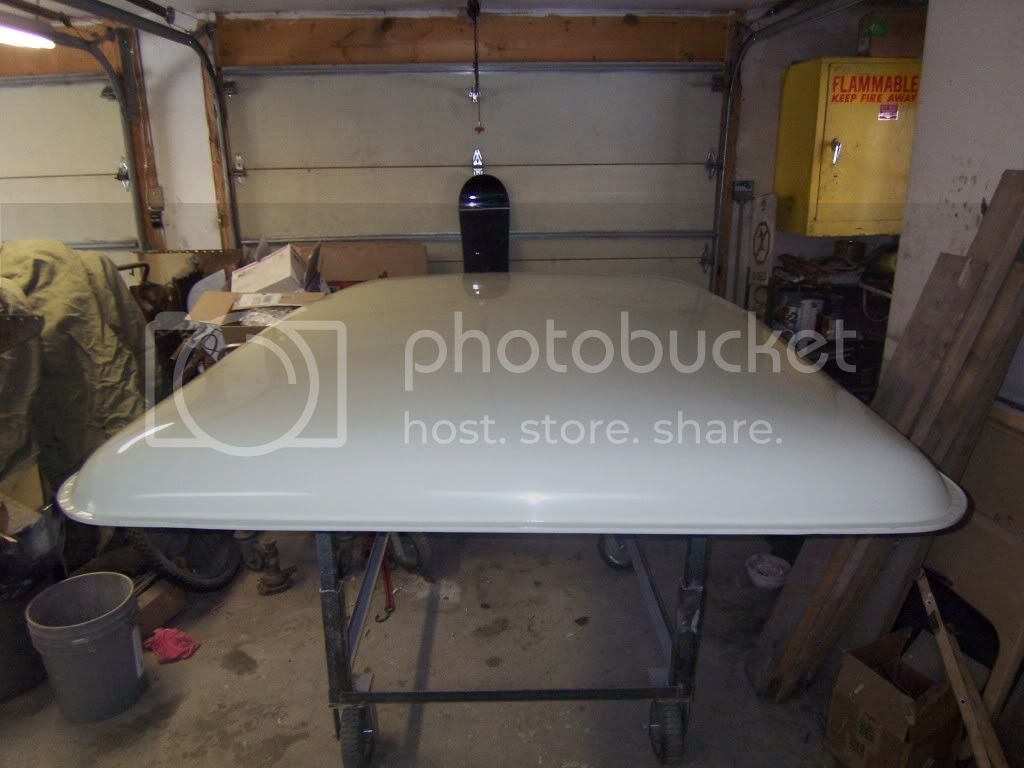
I think it was just seam sealer too, you are right, does not seem to be anything between the two.
I know what did not work. Pouring liquid fiberglass resin in the trough. It is too brittle, looked beautiful, covered the rivets and everything. After a short time, it started to crack in the rear corners due to body flex. Once cracked it let water inside, and I had water in the interior rain gutter sloshing about. Then I had a rollover, good bye to that top.
Second attempt was a good body caulk I got at NAPA, supposed to stay pliable. Layed a good bead of that in with a caulking gun all around the top. Smeared a little over the rivets. Got a good smooth bead using laquer thinner or something on my finger as I recall to dress it up. Left the rain gutter more functional than filling with fiber glass resin too. Paint will pretty much seal the rivets by the way, it is the seam that is crucial. Also used caulk to reattach the front peice, as I had to change it out. It can and will leak air, moisture fine snow between the fiberglass and metal lip if not sealed. This approach worked very well until I rolled again. It lasted several years though. I would do that again.
I have had good luck too using a good paintable latex caulk. I would not be afraid to run a bead of that under the fiberglass when putting in a new gutter. Clean off all the excess and then use body seam filler on the outside. It would be removable down the road, could be pried apart.
Under rustoleum type fininshes the paintable caulk has done well for me, just used some as seam sealer on a tractor cab I just built, painted over it with John Deere paint. In a hidden application like that I think it would work well, you could still paint it on the interior rail. For external use, I think the auto seam filler does better for shrink swell and the automotive paints. For my cab, if it cracks a little down the road, not a big deal, on a nice car paint job, I would be a little worried.




 It remains my last mountain ...