


Way to many parts that are to heavy. WouldCan anyone confirm is these are still coming LTL? Looks like they could ship UPS in a couple boxes and save some $$
Take 10 boxes at least.
Follow along with the video below to see how to install our site as a web app on your home screen.
Note: This feature may not be available in some browsers.
This site may earn a commission from merchant affiliate
links, including eBay, Amazon, Skimlinks, and others.
Way to many parts that are to heavy. WouldCan anyone confirm is these are still coming LTL? Looks like they could ship UPS in a couple boxes and save some $$

Way to many parts that are to heavy. Would
Take 10 boxes at least.

Thanks for posting this update. Hit the same roadblock and Dissent still has the prototype instructions on their site. It looks like they updated the combo light mounting as well for anyone interested.Just received confirmation my install is correct.
Photos on their site are of the proto.
It looks like on their install photos the inside braces (2 running from next to trailer hitch at 45* to the inside of the frame) mount with 4x bolts on each side to a plate that goes between the wing and the frame. How I installed:
View attachment 3277760
How the dissent site shows:
View attachment 3277762


There is a junction plug under the back tailgate where people plug in trailer wiring harnesses where the wires and the plugs are already outside where you will need them to wire the lights for your bumper.


Which harness did you use?Here it is. I used a trailer wiring harness to splice in using plugs in place of vampire clips.
View attachment 3846261
Which harness did you use?

 forum.ih8mud.com

 Hope this helps the next person!
That's exactly how I wired mine minus whatever is going on in that last picture with the rodent-chewed wires. lol Sorry Tim, I had to.I wired up my rear bumper today. I searched for a definitive how-to thread and this is the closest I could find... I can add a little bit of info here now that I've spent like 5 hours on this... after spending a bit of time poking around the plugs underneath I wasn't able to find a reverse light so I just went to the taillight for that.
The harness going to the DS taillight is pretty easy to get to, just take off the cover plate, take out the jack, the tools, etc. Then find the largest of the two plugs that's going to the tail light.
Upper left (red/black) wire is the reverse light +.
View attachment 4115971
Upper right (green with silver dots) is the running light.
View attachment 4115970
Poke a wire up the drain grommet, then connect it to the reverse and running light wires to jumper those feeds down to your lights below.
View attachment 4115974
View attachment 4115975
View attachment 4115973
I didn't have my 80 at work last week so I couldn't check for you.  That said, Vince is working on wiring diagrams to help customers in the future.
Yeah I was waiting for that comment, lol. but my method for tapping into factory wires has been working well for me, so I keep doing it, though there's probably a more elegant solution out there. But this works, even if there's only an inch or so of wire available.... basically with the utility knife I'll shave off the insulation from the wire, but don't actually cut the wires. Then poke the blade into the wires to separate it, then the new wire gets fed into that slot and wrapped around.That's exactly how I wired mine minus whatever is going on in that last picture with the rodent-chewed wires. lol Sorry Tim, I had to.

Not going to argue that. T-taps can sometimes cut the original wire and interupt the flow if too many strands are cut.Yeah I was waiting for that comment, lol. but my method for tapping into factory wires has been working well for me, so I keep doing it, though there's probably a more elegant solution out there. But this works, even if there's only an inch or so of wire available.... basically with the utility knife I'll shave off the insulation from the wire, but don't actually cut the wires. Then poke the blade into the wires to separate it, then the new wire gets fed into that slot and wrapped around.
View attachment 4117072
So a little more intrusive than a t-tap connector, but in my experience has been more reliable as it can't really jiggle loose, and the contact area is much larger compared to the plastic things. For extra credit I'll even dab a little solder on there sometimes, prior to wrapping it up in electrical tape.

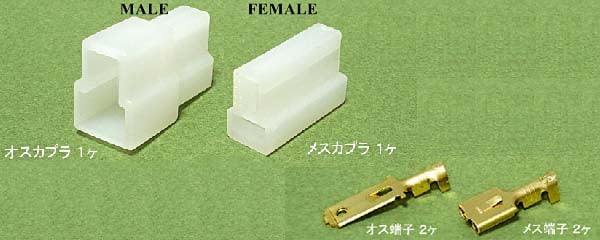
Thank you! I've managed to not cut into my OEM harness and want to make my own. Probably would be better to switch to a Deutsch plug of sorts.If memory serves, Stop, LT, RT, Tail and Reverse are all in those two plugs under the vehicle in the rear. Looking at the EWD I found that those should be:
Green wire: Taillight
Green/White wire: Stop
Red/Black wire: Reverse
Green/Black: LT
Green/yellow: RT
I was able to order plugs and connectors from Eastern Beaver and make my own wires up that plugged right in.
The only downside is that the factory plugs aren't weatherproof. One could easily upgrade to Sumitomo or Yazaki connector with weather seals if you live in a humid environment.
Save the German connectors for German cars ha ha ha! Yazaki or Sumitomo plugs are readily available from Corsa Technic, if your version of OCD is like mine and you wanna keep it all Japanese.Thank you! I've managed to not cut into my OEM harness and want to make my own. Probably would be better to switch to a Deutsch plug of sorts.
This is what I did.As easy as it is to source plugs and pins, one could make a p-n-p harness and not have to cut any wires....


