Synthetic Oil

This site may earn a commission from merchant affiliate
links, including eBay, Amazon, Skimlinks, and others.

Joined
Jun 2, 2005
Threads
28
Messages
48
I'm thinking of changing over to synthetic oil for my FJ40. Would that just be a waste of money as it would probably leak more. I haven't replaced any seals or gaskets and it already leaks on conventional oil. Would it really leak that much more with synthetic?

Thanks,
Rob
1976 FJ40
 
I cannot think of any reason to consider synthetic oil in these engines. A good dino oil that has zddp is the best we can hope for .
 
Synths are pretty good at running lube and oxidation prevention(plus heat tolerance). They do not do well in an engine that only runs infrequently(say once per week). Synths have a bad habit of running off the lubed surface after a time(>1 week-way faster than petroleum-based lubes--not surprising, since they generally are not carbon-based oils--which is what the rods/bearings/bushings, etc. are) The result is you start your engine in a somewhat "dry" mode.(they don't "wet" the surface as well)
If you are running all the time(daily) it may not be an issue.
Rotella is a Shell product. They have a history of adding PANA(Phenyl-alpha-naphthylamine) to their lubricants to supposedly help with oxidation and wear. I can tell you, this stuff is seriously destructive to high pressure(3000psi) and high temp(160 deg F) turbine lubrication systems.-It will form varnish components within a year of being installed-I have been retired from the industry for a few years, and they may have changed their formulations since, so applications to the automotive market may have changed--you can tell if the oil has PANA in it by pouring a small amount into a glass container and sitting it out in the sunlight for a few hours-if it has PANA in it, it will turn a bright purple color--if it does, take it back to the place you bought it and ask for some Chevron 2300
 
Synths have a bad habit of running off the lubed surface after a time(>1 week-way faster than petroleum-based lubes--not surprising, since they generally are not carbon-based oils--which is what the rods/bearings/bushings, etc. are) The result is you start your engine in a somewhat "dry" mode.(they don't "wet" the surface as well)


No disrespect, but the "not carbon based" is wrong. Of course they are carbon based. They are long hydrocarbon chains synthesized from ethelyne gas.

Rods and more importantly the bearing surfaces are metal, last time I looked.

There is no evidence here or anywhere else that what you are saying about "running out of the bearings" is true either. All engines are designed to retain small amounts of lube to aid start ups. Whether it's synthetic or mineral based makes no difference.

Back to the original poster-synths are better in every possible way. They are not even close to worth it though, in an older engine like a 2F. Maybe if you have a fresh perfect rebuild and you plan to run it 300K miles it would be but for your average good running but worn 2F, not worth it.

 
Fwiw synthetics

I've managed a small fleet of service trucks (12-15) for about 25 years... ALWAYS used synthetics when changing fluids- We run our trucks 150K-200K we have almost no problems. We are crazy about maintenace, so I am sure that has somthing to do with it. But with no scientific eveadence.. Im in
 
I use rotella triple t 15 w40 with a wix oil filter. Have not had any issues. Just make sure you use a new crush washer on the drain plug.
 
Speaking of myths... I have NEVER, I repeat NEVER, replaced a crush washer, on any drain plug, on any vehicle, I have ever owned. I have also never had a drain plug leak. I did get a new one for my FJ40 but only because I lost the old one. :D
YMMV!
 
I put Mobil 1 HM 10w-40 in mine. The "HM" has a seal conditioner that actually stopped a slight rear main dribble on my 60.

Btw, contrary to what's been posted, synthetic is slicker yet "sticks" to metal surfaces better than conventional. That's probably a good thing for something that doesn't get driven all the time or spends any time cranking before a start.
 
More important than the syn, non-syn oil argument for these engines is the additive package. If the oil you're running does not have sufficient anti-wear stuff in it for antique flat-tappet engines, you will get premature wear. I run Rotella or Chevron 15w-40 diesel-spec oil with proper dosing of zddp additive.
 

Attachments

I would run synthetic if my truck 1. Didn't leak any oil (I've spent hours and hours trying to fix leaks) and 2. I had the special bypass oil filter that amsoil sells. In that situation, I'd probably run 15,000 mile oil changes with filter changes at 5k.

But I run regular Valvoline 10-30, and run 7,500 mile oil changes with filter changes at 2.5k.
When I replaced the oil pan in my '40 a few years ago, I plasti-gauged the mains and rod bearings and they were all well within spec (this was 10 years after the motor was rebuilt BTW).

That said, in the last 5 years, I've barely put 2500 miles on the truck...
 
I'm thinking of changing over to synthetic oil for my FJ40. Would that just be a waste of money as it would probably leak more. I haven't replaced any seals or gaskets and it already leaks on conventional oil. Would it really leak that much more with synthetic?

Thanks,
Rob
1976 FJ40

'Been running synthetics in all of our vehicles and small engines for over 25 years.

We run 10W-30 synthetics in our '71 FJ40 which as the original F motor.
-No leaks.
-No oil usage
-good oil pressure
-15.4 hwy mpg using 87 octane, Toyota points distributor, running on 33x9.5x15 BFG ATs.
-stock 3-speed transmission.
-extra weight = high lifter jack, roof rack, winch and winch bumper on front
Amsoil and Valvoline only 2 companies I've found that are making synthetics with the proper zinc and phosphorous amounts. The Valvoline synthetic VR1 is getting harder to find.

1)Amsoil Z-Rod 10W-30 and 20W-50
http://www.amsoil.com/shop/by-produ...rod-10w-30-synthetic-motor-oil/?code=ZRTQT-EA

2) Valvoline Racing Synthetic VR1 10W-30 and 20W-50
http://www.valvoline.com/products/consumer-products/motor-oil/full-synthetic-motor-oil/8


Alternatively, and we've done this too, use a conventional oil and add a zinc phosphate oil additive. We've used Howard Cams Max ZPM. http://www.howardscams.com/other/break-in-lube-oils


Average oil change costs:
Conventional: $60
(8 quarts x $5/quart + $10 Wix or high-filtration filter + $10 zinc phosphorous oil additive)

Synthetic: $90
(8 quarts x $10/quart + $10 Wix filter).

Cheap oil change: $45-$50
(on sale conventional in gallon or 5-quart jug + cheap filter = $25-$30 special + 3 quarts x $4/quart + $10 additive)


Of course you can find conventional and synthetic oil on sale. So, will you pay $30 more per oil change (on average) for synthetic oil over conventional? We do most of the time because of the C-O-L-D weather startup protection, plus I don't like the idea of having to add anything else to the crankcase but motor oil.
 
Thinking of synthetic

Depends what you do. The principal benefit of synthetics is improved performance at elevated temperatures, so if you are using your vehicle very hard (like competition) then synthetics may be valuable. Otherwise just stick to a mineral oil from a reputable suppler bearing in mind whether you are petrol or diesel and the viscosity recommendations for your vehicle linked to the normal operating conditions.
 
Spike, what Rotella are you running, if you don't mind. I was looking at it and there are several types of Rotella.
 
I took your comment to heart, and was wondering if I had remembered my oil experiences correctly.(I was not aware of the PAO formulation from ethylene gas)
Here's a blurb from Wiki/ReliablePlant/Noria Corp. on the PAOs(synthetics)--They specifically cite the low wet out.
You can envision this effect that PAOs have(further down in the article when it talks about the relative molecular size) by thinking of filling a bowl with, say golf balls(PAOs) Then fill a similar bowl with BBs(petroleum oils). the BBs will have much higher "surface contact" --ie. more BBs will be touching the bottom of the bowl than golf balls.
All this is really kind of moot, since most of us-just like you said wouldn't go the almost three times expense for these lubes
if nothing else, at least it's kinda interesting info.


Polyolefin surfaces are not effectively joined together by solvent welding because they have excellent chemical resistance and are unaffected by common solvents. They can be adhesively bonded after surface treatment (they inherently have very low surface energies and don't wet-out well (the process of being covered and filled with resin)), and by some superglues (cyanoacrylates) and reactive (meth)acrylate glues.[2] They are extremely inert chemically but exhibit decreased strength at lower and higher temperatures.[3] As a result of this, thermal welding is a common bonding technique.
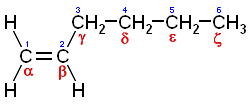
A more specific type of olefin is a poly-alpha-olefin (or poly-α-olefin, sometimes abbreviated as PAO), a polymer made by polymerizing an alpha-olefin. An alpha-olefin (or α-olefin) is an alkene where the carbon-carbon double bond starts at the α-carbon atom, i.e. the double bond is between the #1 and #2 carbons in the molecule. Alpha-olefins such as 1-hexene may be used as co-monomers to give a alkyl branched polymer (see chemical structure below), although 1-decene is most commonly used for lubricant base stocks.[1]
1-hexene, an example of an alpha-olefin


Many poly-alpha-olefins have flexible alkyl branching groups on every other carbon of their polymer backbone chain. These alkyl groups, which can shape themselves in numerous conformations, make it very difficult for the polymer molecules to align themselves up side-by-side in an orderly way. This results in lower contact surface area between the molecules and decreases the intermolecular interactions between molecules.[4] Therefore, many poly-alpha-olefins do not crystallize or solidify easily and are able to remain oily, viscous liquids even at lower temperatures.[5] Low molecular weight poly-alpha-olefins are useful as synthetic lubricants such as synthetic motor oils for vehicles and can be used over a wide temperature range


No disrespect, but the "not carbon based" is wrong. Of course they are carbon based. They are long hydrocarbon chains synthesized from ethelyne gas.

Rods and more importantly the bearing surfaces are metal, last time I looked.

There is no evidence here or anywhere else that what you are saying about "running out of the bearings" is true either. All engines are designed to retain small amounts of lube to aid start ups. Whether it's synthetic or mineral based makes no difference.

Back to the original poster-synths are better in every possible way. They are not even close to worth it though, in an older engine like a 2F. Maybe if you have a fresh perfect rebuild and you plan to run it 300K miles it would be but for your average good running but worn 2F, not worth it.

 
Last edited:
Looking at changing the 40's oil for the first time, let's just say a few hours of research has taken place. After an exhaustive search for which is the best oil, ZDDP additive, and oil filter....I haven't a clue as to what is best, but it appears to be whatever product the owner/mechanic is confident with, then it goes in their rig. With that being said, has anyone ever heard of the Petroleum Quality Institute of America (PQIA)? I happened across their website after looking for chemical compositions in conventional motor oils. Understanding that the F & 2F flat tappet motors need the composition of the old motor oils, I found that the 15W-40 for diesel motors still are somewhat similar to the old oils. That is to say, these oils have a higher amount of the Zinc than the other conventional oils. I believe that reaching a level of 1400 - 1800 PPM is what the F & 2F engines like. That can be achieved by going with the high-dollar boutique racing oils, or use conventional oils with ZDDP additives. And the ZDDP additives were another hour or so worth of researching. And the filters, I saw a comment saying that any of today's oil filters are 10-times better than what was available back in the 70's, thus pick your favorite brand and go with it. (Seems reasonable to me)

My conclusion for a budget oil change: Per the "Petroleum Quality Institute of America" (if this is an actual accredited group, which I hope it is.), the Delo LE 400 has 1,490 PPM of Zinc (the highest of the bunch & at $11/gal at wally-world, sold), add in 8oz. of the Redline Engine Oil Break-In Additive, and a Wix filter. Should be a good mixture for a happy 2F.

I realize; To each, their own......this is just something I thought might be interesting, check out the PQIA website for their test results.
 
Last edited:
Can't speak to the technical stuff above but I put valvoline syn in after 300 miles on a rebuild and had more oil seeping after 500 miles. Just my experience on this, I'm goin back to regular oil
 
Back
Top Bottom