Should I give up trying find Tundra steel wheels?

This site may earn a commission from merchant affiliate
links, including eBay, Amazon, Skimlinks, and others.

Joined
Jun 22, 2005
Threads
182
Messages
3,010
Location
Atlanta
Website
www.prequel.agency
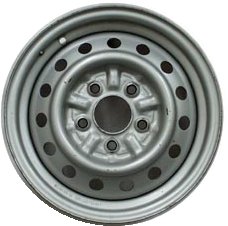
I want a set of these...

STL69321U.jpg


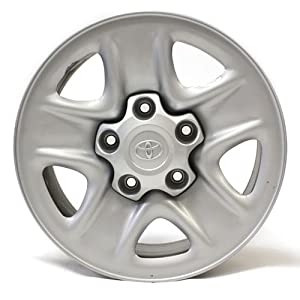
... and keep checking Craigslist with no luck. There are TONS of these...

41hoXxDV8WL._SL300_.jpg


...out there.

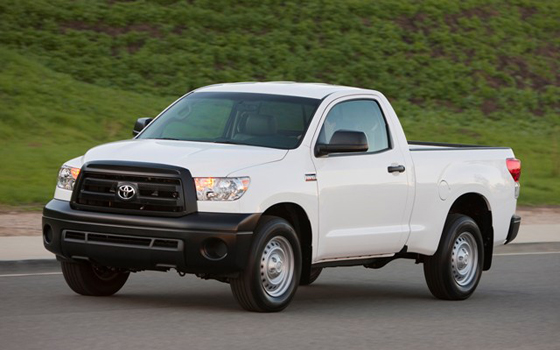
I've found the wheels with holes (not star) on Ebay, but as one-offs. My assumption at this point - not knowing *#$& about Tundras - is that they were/are used mostly for the spare tire and on base models - which must be rare, or rarely modified...

6a00d83451b3c669e2014e8c0af1ab970d-800wi


And, that I should probably abandon all hopes of a set of 4 showing up locally (shipping doubles the price).
 
Last edited:
Nope, they were regular rims, not just spares. They show up regularly on classifieds here, $50-200 for 4. But, word of caution, friend went to them with some Toyos and they are ungodly heavy.

X a bunch. I went with them with highway tires thinking I'd save gas and wear on the NTG's. Extra weight cancelled out any mpg benefit of highway treads.. :frown: Back to the alloys.
 
Damn. 27 vs. 40 pounds is ridiculous. So much for that idea. Thanks for the heads-up on that one.

Is an additional 13 lbs on each wheel necessarily a bad thing?

I am aware of the physics of inertia, and the theoretically significant relationships between rotating mass, acceleration, braking, unsprung weight, handling and shock absorbtion.

In practice, I'm not convinced that 13 extra lbs on each wheel of a V8 Land Cruiser would be all bad.

You might lose a fraction of an mpg in fuel economy and go through brakes a little quicker. But you might gain enough rotational inertia to make up for it, depending on what kind of driving you do.

-As a point of reference, I just put 17" steelies and ATs off an FJ Cruiser on my wife's 4 cyl. Tacoma. Those wheels and tires weigh ~64 lbs per corner- much heavier than stock- and the handling is excellent.

Due to the increased inertia, the heavier wheels do a better job of rolling through potholes and ditches. The heavier wheels are also more stable over washboards at high speed.

I would assert that the heavier wheels are not necessarily a bad thing-
In theory, they would be less efficient in dynamic situations that involve lots of speeding up and slowing down, but because of the heavy wheels' higher moment of inertia at a given speed, they might actually be preferable for medium speed cruising over rough terrain.

Heavy steel wheels would be ridiculous on a high-performance sports car built for acceleration, but I do not see anything ridiculous about running 40 pound steel wheels on a V8 Land Cruiser.
 
Last edited:
These guys are making a big deal out of weight and MPG. I think they thought this was the Prius Forum. The stock 18" alloys are sweet. But those Tundra steelies are even nicer. Don't give up.

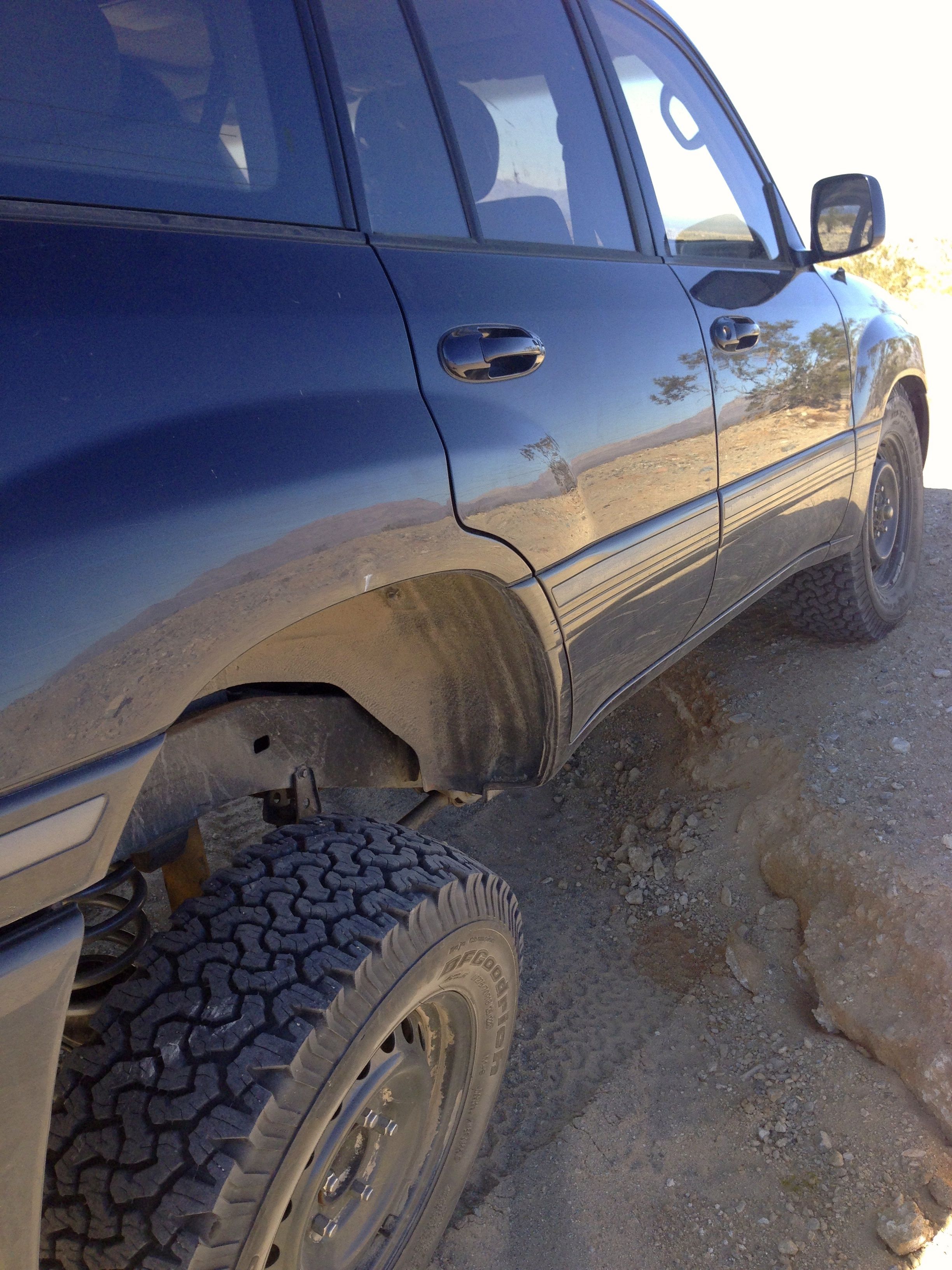
Exactly. Besides, I like to think all that extra weight helps me get a bit of extra droop.

sleesprings.jpg
 
I have 6 of them sitting in my garage. Let me know if you want them. I'll sell them to you for what I paid for them which was $25 each.:D

I was going to use them on the truck and the trailer but didn't get around to it
 
will these work on the 200 series also?
 
Due to the increased inertia, the heavier wheels do a better job of rolling through potholes and ditches. The heavier wheels are also more stable over washboards at high speed.

I'm not sure I get your assertion of inertia being better. 6000lbs of truck is plenty of kinetic energy to plow through stuff without additional flywheel effect from the wheels. That rotational and added mass also absorbs energy that could otherwise be translated to acceleration in an uphill climb for example.

A common rule of thumb is that for each 1lb of unsprung mass equals 2x the equivalent of static mass when accelerating on a flat surface. So that 13 lbs/corner translates to (13x4)*2=104 lbs of perceived mass the engine has to accelerate. Now say you want to accelerate going uphill, which now involves accelerating and lifting that that mass of 104 + 52 = 156 lbs. Not so minor for any perceived benefit.

Lighter is truly better. Though I get why you guys might compromise weight for strength. But high strength and light weight together is even better still - but that typically costs money. :p
 
I'm not sure I get your assertion of inertia being better. 6000lbs of truck is plenty of kinetic energy to plow through stuff without additional flywheel effect from the wheels. That rotational and added mass also absorbs energy that could otherwise be translated to acceleration in an uphill climb for example.

A common rule of thumb is that for each 1lb of unsprung mass equals 2x the equivalent of static mass when accelerating on a flat surface. So that 13 lbs/corner translates to (13x4)*2=104 lbs of perceived mass the engine has to accelerate. Now say you want to accelerate going uphill, which now involves accelerating and lifting that that mass of 104 + 52 = 156 lbs. Not so minor for any perceived benefit.

Lighter is truly better. :p

Rotating mass, by itself, does not absorb energy, provided it is already rotating. Accelerating the mass is what requires energy. The more mass you have the more energy it takes to accelerate to a given speed. But once you are up to speed, the additional energy is stored as kinetic energy and can be applied for useful purposes- like rolling through ditches and going straight through washboard bumps.

Lighter is better for acceleration. If the measure of performance is accelerating up a smooth hill, then the lighter wheels would perform better.

Heavier is better for maintaining velocity. If the measure of performance is maintaining a constant speed over an uneven surface, then the heavy wheel will perform better.

For an exaggerated example- consider riding a bicycle down the middle of a railroad track. The bicycle with the light wheels gets stuck in between the railroad ties- you decelerate every time the wheel hits a railroad tie, and have to expend energy to accelerate and get the wheel unstuck and over the top of the tie.

The bicycle with the heavy wheels maintains a more constant speed and direction; and it does a better job of maintaining velocity through the obstacles. Assuming you are already rolling at a reasonable speed and everything else is equal, the bicycle with the heavy wheels is easier to ride down the railroad tracks.

With regard to wheel weight, it is a trade off between acceleration and intertia. In theory, there must be an ideal wheel weight for every application. Lighter wheels are better for smooth surfaces, like a racetrack (think Lotus Elan). Heavier wheels are better for maintaining velocity (and direction) through obstacles (think Land Cruiser).

Lighter is sometimes better, but not always.

You will certainly get better fuel economy with the light wheels, but you will feel the potholes more and will be more likely to lose control when driving over washboards at high speed.

 
Last edited:
Call Sam at Lowe Toyota. IIRC he quoted me $120 per rim. I gave up on craigslist a long time ago trying to find those same rims you are trying to find. They are the Tundra spares, most people just swap out the rims that they actually use on a daily basis.

Manhattan- Let's grab lunch soon! It's been a while since I almost ran over you at the airport. Best MUD member introduction ever!
:lol:
:lol:
:lol:
 
Go to classified , some guy is selling 4 wheels for cheap , my undrestanding was when u go off road with your truck u wanna put smaller wheels and beefier tires with long side walls , thats the only reason i never liked 16+ wheels on my off roafing rigs
 
Rotating mass, by itself, does not absorb energy, provided it is already rotating. Accelerating the mass is what requires energy.

Agreed, and it is why I specifically framed my point around acceleration.

For your point, I think what you may be experiencing as better is likely mass dampening suspension response and the associated higher frequency NVH, giving you a false perception that things are performing better. Again, a 6000lb vehicle has plenty of kinetic energy without any added inertia from the spinning wheels to dampen any loss in momentum.

Greater unsprung mass naturally decreases the suspensions ability to respond to higher frequency disturbances. So instead of the suspension helping the wheel/tire nicely track against and into the uneven surface (i.e. pothole), and therefore ensuring greater traction, a heavy unsprung setup, due to its slowed response, may just completely blow over the obstacle. Basically the opposite quality of what a good suspension/tire setup should do to increase traction.

Imagine a big heavy monster truck tire bounding down a hillside. It will be smooth sailing and likely spend a fair amount of time in the air. A lighter tire will be more flinty but spend more time against the ground - and possibly be slower which might be your point.

But the reality for a car, is that more tire time on the ground is ultimately more desirable for it's ability to increase traction and control for things like corning and acceleration. Or even the case of accelerating aggressively uphill, where you want your tire to not ricocheting off the ground, but to come back down quickly to put power down.
 
As for your assertion that "6000lbs of truck is plenty of kinetic energy to plow through stuff without additional flywheel effect from the wheels":

Thats like saying that a 230 hp truck has plenty of horsepower already,
which is true for most situations.

But high performance comes in small increments, and is predicated on the metric used for measuring "performance."

In some situations, the heavy wheels make the truck ride smoother and handle better. In particular, heavy wheels really excel on rough roads at constant speeds. The theoretical physics back this up.

If you spend most of your time accelerating and decelerating, which is what most people do, then the light wheels are preferable.

If you drive washed out gravel roads with the cruise control on 70mph, then the heavy wheels are your friend.

That said, your point about the inverse relationship between unsprung weight and suspension performance is absolutely correct.

If you drive washed out gravel roads with the cruise control on 70 then you will need to replace wheel bearings and suspension bushings pretty frequently. The LC is still a pretty awesome vehicle for fast gravel roads, and the heavier steel wheels only make it better for this application.
 
Back
Top Bottom