Ratcheting wire crimpers

This site may earn a commission from merchant affiliate
links, including eBay, Amazon, Skimlinks, and others.

Joined
Mar 5, 2007
Threads
100
Messages
604
Location
Spokane, Wa
Ratchets really aren't required - all they do is ensure the user of the tool completes a full cycle. They're designed for use in a manufacturing environment where a person is making many crimps day after day.

If you're confident in your ability to close the handles until the crimp dies bottom out against each other, you don't need a ratchet.

Generally, in the crimp tool world, you get what you pay for. I had a Harbor Freight ratchet crimper sitting on my desk and within a couple months the ratchet had failed - and this was without actually crimping anything, just people playing with the tool.
 
I'd recommend a decent quality ratcheting crimper. You get consistent results and no risk of over crushing the crimp.

Since you're doing your whole vehicle, the price of a $50 or $100 crimper is the least of your worries. Get one with interchangeable jaws and you'll be able to do a variety of jobs in the future including coax etc.

Most important is to get the CORRECT jaws for the particular crimps you need to do. Get a model that is actually 'mainstream' so that the different jaws are available a year or three down the road.

I also use strippers that have the various gauge openings to ensure a clean strip without nicking the strands.

Spend a few $ more and do the job correctly - unless you want to be debugging wiring/connector issues in the future :)

cheers,
george.
 
I'd recommend a decent quality ratcheting crimper. You get consistent results and no risk of over crushing the crimp.

If you're using a decent quality tool and the correct terminations for the tool, you can't over crimp. You have two forming dies that come together and bottom out - they can't go any farther.

I've seen quality ratchet tools that even at the point of ratchet release there is a gap between the crimp dies meaning they really aren't completing a full cycle. Of course these are tools that have been in use for many years and are worn out.

If you look at a couple of the ratchet tools linked in the first post, you'll see an adjustment that is used for setting the handle force. As tools wear the amount of force at die closure decreases which can result in an incomplete crimp.

If you want to check the ratchet on your crimp tool, crimp a termination just to the point of ratchet release and try to stick a 0.001" shim between the dies. If the shim goes, the tool is out of adjustment.

And one more thing, if you're going to get a quality crimper and wire stripper, make sure you get good terminations and wire.
 
OK, you guys convinced me I need a better crimper tool. I've been using the "pinch" style for years, and I also have a pair that is similar to the Channellock #909 tool, but I'm not happy with the results.

I have a Paladin 1300 frame in my networking tools kit, with dies for coax (RG-58) and RJ-45. So I guess a natural choice would be to get another set of dies. I'm shopping on Amazon, since I have a Prime account. Not sure which to choose...

I prefer using non-insulated terminals, with heat shrink after. If it's gonna be an exterior exposure, I use the heat shrink with the thermo setting adhesive stuff inside. But I also occasionally use pre-insulated terminals. I guess that means I need to get 2 sets of dies? #2033 or 2031 for non-insulated? #2035 or #2040 for insulated?

Any experience with these?
 
Last edited:
I have a Paladin 1300 frame in my networking tools kit, with dies for coax (RG-58) and RJ-45. So I guess a natural choice would be to get another set of dies. I'm shopping on Amazon, since I have a Prime account. Not sure which to choose...

A lot of companies that make the terminations are buying their tools from someone else and rebranding them with their name. I think your Paladin tool may be made by Pressmaster. I bought a tool for crimping Power Poles and it's pretty much out of the same mold. If you look at the tools linked in the first post, they're pretty similar too.

I prefer using non-insulated terminals, with heat shrink after. If it's gonna be an exterior exposure, I use the heat shrink with the thermo setting adhesive stuff inside. But I also occasionally use pre-insulated terminals. I guess that means I need to get 2 sets of dies? #2033 or 2031 for non-insulated? #2035 or #2040 for insulated?

Any experience with these?

When I'm working on the truck, I tend to use uninsulated with heat shrink, mostly because I'm too cheap to buy quality insulated terminals.

I looked at those die and it looks like you want the 2040 and the 2031. There's not a lot of description giving the difference between the 2035 and the 2040 so I'm going by shape and the fact that the 2040 says it's for standard commercial terminals. The 2031 is for closed barrels and the 2033 is for open barrels. An open barrel is where tabs on the termination are folded over the wire to make the crimp.

The tool that Tapage linked isn't a great tool. It'd probably be a ok for the tool box in the truck and doing field repairs but I wouldn't use it if I was at home. The tool says it's good for 10 -22 and there is only one crimping position. For red/blue/yellow lugs you really need a different die position for each color. This is the type of tool that would lead to an over crimp as George mentioned above.
 
... I know that a ratcheting crimper is superior to the standard crimpers, however there seems to be some major price differences.
...

Define "superior"? If I'm paying/using relatively unskilled help, yep, ratchet or pneumatic every time, they can be more consistent. But, not all connectors are the same, they very in thickness, etc. The good ratchet type are adjustable, so to get the most out of them, someone has to know what they are doing. They need to be setup for the connectors, wire, etc, used for the job, when any of that changes, need to be reset. IMHO great for production, not so great for work where wire, connectors, etc, may/will change often.

I have been in the tool biz for a longtime, sold/used/owned just about all of them, including pneumatic (there are still a couple of those around here,,, somewhere)?:hillbilly:

IMHO it's less about the tool and more about experience, practice, doing, so you know the "feel" and what to look for. Get some wire and ring connectors, crimp them, hook the ring over a spike, nail, whatever, pull, jerk on the wire, shouldn't be able to pull the connection apart, should cut your hand with the wire first. Cut the connector off try again, repeat, practice, get good at it before starting the wiring job!

Have built a ton of harnesses, mostly used off road, with very low failure rate, close to zero. For most work, my tools of choice are the Channel-Lock 909 and this type of stripper.

https://forum.ih8mud.com/attachment.php?attachmentid=666010&stc=1&d=1345442987
 
...
I prefer using non-insulated terminals, with heat shrink after. If it's gonna be an exterior exposure, I use the heat shrink with the thermo setting adhesive stuff inside. ...

Agree about non-insulated, can't see to make a good crimp with insulated.

If in an area where environment, vibration, etc, is a concern, I often double shrink wrap. First ~1/4" past the connection, second longer ~1/2" past. The works as a strain relief, supports, moves the flex away from the connection.

Re-post of some I did a while ago:


Been doing a bunch of wire splicing, so shot some pix of my favored method. Own, have used tons of crimpers, for small wires, this type is my favorite. For this type of work I never use insulated terminals or, like in this case, remove the plastic.

Hold the crimp with the split at the spike on the crimper. Put it over the wire and crimp solid. Then using the rounded part, close the gap, use good solid force.


When using off the shelf connectors, this makes the closest to factory crimp that I have found, is very solid, never had one fail. With shrink wrap, it isn't much bigger than the wire, so doesn't make much of a bulge in the harness.

Also, if possible, when splicing whole harnesses, never cut all of the wires at the same place. Cut each wire about the length of the splice away from the last. If all of the splices are in the same place it will make a big, stiff bulge in the new harness and the splices are much more likely to fail, short out on each other.

attachment.php


attachment.php
 
More:

How I do spade connectors, not the only way or maybe the best way, but the best way that I have found. For critical connections, I don't like the plastic sleeves on the connectors, can't see to make a solid, quality crimp with them in the way. So, either buy them without or remove and discard.

Need the connector and two pieces of shrink wrap, sized for the wire and connector. Slide the small piece of shrink wrap over the wire, then crimp the connector, I crunch it with the "spiked" part of the tool, then fold it together with the rounded part.

attachment.php


attachment.php


attachment.php
 
Slide the smaller shrink wrap up to the neck of the connector and shrink, slide the larger piece on till even with the end of the connector and shrink.

This does two things: Provides insulation, more importantly acts as a strain relief, moves most of the flex down the wire, away from the crimp. Allowing the wire flex to happen at the strip/crimp point is a leading cause of failure.

attachment.php


attachment.php
 
Kevin

Every time I look at your crimping techniques it make me cringe a little. You've reduced a highly reliable process to an art form. I don't doubt your methods work your applications but I could never recommend the use of that tool.

In manufacturing crimps are considered uninspectable. Crimp tools are treated like torque wrenches and calibrated on a regular basis. Tools/terminations/wire combinations are all evaluated to make sure they produce a reliable crimp joint.

That said, I don't use a calibrated crimp tool or torque wrench or DMM. Heck, I've been known to not use a crimp tool or torque wrench at all. And my current supply of DMMs come from Harbor freight.
 
damn ... and I was happy ( at some point proud ) of my connectors .. :frown:

I do my connectors the way Kevin describe, from 22 to 10 all the same way .. I do for my own projects and if I had a fail has been very low rate through years and different applications I do ..

anyhow not proud anymore .. :crybaby:
 
Looks pretty much like the crimps I've been doing for as long as I can remember. I guess my pliers aren't as bad as I thought.

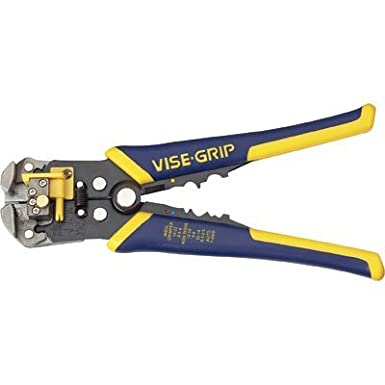
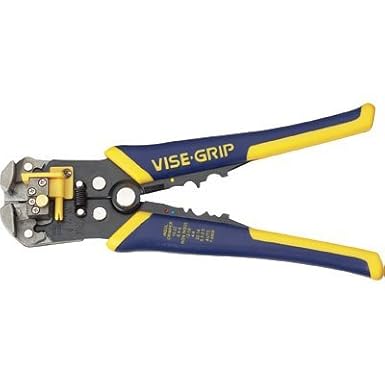
What are your thoughts on these strippers?

31KZ5T66-pL._SX385_.jpg
 
Last edited:
Looks pretty much like the crimps I've been doing for as long as I can remember. I guess my pliers aren't as bad as I thought.

What are your thoughts on these strippers?

31KZ5T66-pL._SX385_.jpg

I have the exact same one .. I'm not gonna said it's a good one .. just meet my needs and exceed my expectations .. ;)
 
I have a couple of those, they work well. The main reason they aren't my first go to, is size/bulk, find the parrot nose style handier, especially in close quarters, under dash, etc.
 
Have them and love them. I don't use them for small jobs, but a stereo or something... all the time.

Looks pretty much like the crimps I've been doing for as long as I can remember. I guess my pliers aren't as bad as I thought.

What are your thoughts on these strippers?

 
Not sure what the OP means by rewiring the entire truck, but if I were him, I would spend the $$$ to get matching dies for whatever types of terminals he plans on using. A company I used to work for used a lot of Packard and Deutsch connectors, and ratcheting type crimpers were used on the assembly line. When volumes went up, we had semi-automated machines for crimping the terminals. I personally like soldering terminals when I do any wiring on my truck, but this is mostly due to the fact that I don't have a good multiple-use crimping tool.
 
I ended up getting a couple sets of dies for my Paladin frame, they really do a nice job, much better than I was able to get before. I also bought a set of those Vise-Grip/Irwin strippers, they do work really well.
 
Back
Top Bottom