


I'm a big fan of Adventure Sole RT (www.adventuresolert.com) which is headquartered not to far away from me in Spokane, WA. They build great tents and are always competitively priced.

Navigation
Install the app
How to install the app on iOS
Follow along with the video below to see how to install our site as a web app on your home screen.
Note: This feature may not be available in some browsers.
More options
Style variation
You are using an out of date browser. It may not display this or other websites correctly.
You should upgrade or use an alternative browser.
You should upgrade or use an alternative browser.
opinions on roof top tents
- Thread starter dogfishlake
- Start date
This site may earn a commission from merchant affiliate
links, including eBay, Amazon, Skimlinks, and others.


I have a Maggiolina Air Top. I prefer hard-shells. Although the fold-outs give you more square footage, I think they obviate much of the advantage of an RTT which is set up time and space savings (it takes about 30 seconds to pop up the Air Top and the bedding is stored inside, ready to go).
The reason I like the RTT over a ground tent is the ability to pitch camp quickly, which for me often happens in the dark. Just park and 30 seconds later accommodations are ready for sleeping. There are plenty of situations where I might use any number of ground tents: backpacking, accommodating other guests on a trip, winter camping where you need a tent that accommodates a wood stove, etc.
And another advantage of my RTT: my back thanks me in the morning.
The reason I like the RTT over a ground tent is the ability to pitch camp quickly, which for me often happens in the dark. Just park and 30 seconds later accommodations are ready for sleeping. There are plenty of situations where I might use any number of ground tents: backpacking, accommodating other guests on a trip, winter camping where you need a tent that accommodates a wood stove, etc.
And another advantage of my RTT: my back thanks me in the morning.

http://www.gordigear.com/company/company.php?l=en
Good to hear this guy give a run down on things people may not be considering when investigating a purchase such as this
I'm glad I watched the whole video. When he reviewed the ladders and gave the disadvantage of the telescoping kind (which I have & came with my CVT). I suspected one would have that problem if somehow, it got that dirty. The ladder looked like it was thrown in to a mud bog. I would think though, if you just emersed the ladder in a creek (with reasonably clean water) you could get it back in working order quickly. Might be hard to find a creek in some areas in the Austrailian Outback. But usually, where there is mud, there is also water.
There's nothing wrong with a good ground tent, especially if you are camping while backpacking or away from your vehicle. My CVT sets up, ready to sleep in (because the bedding/sleeping bags are stored and ready to just jump in, inside the tent) in less than 5 min. Most of that time is pulling out the ladder and setting it up. And you don't have to dig through your rig to find your tent, or rearrange stuff if you're sleeping in the rig. In the a.m., it takes maybe twice as long to get ready to roll (10 min) since you need to use care not to pinch the tent fabric closing it up.What's wrong with a good ground tent? They are about 1/8 the cost and pack a lot smaller. Are the roof top tent super easy to set up?
I am wondering the same thing. I have been camping in ground tents my whole life without problems. In severe weather and conditions. A good tent is cheaper, lighter, and packs smaller then roof tents. I currently use a Sierra Mokena and love it.http://www.sierratradingpost.com/sierra-designs-moken-tent-4-person-3-season~p~1485d/ I can't see any advantages to roof tents. I think they look awkward and cumbersome. Maybe someone can tell me what I am missing here.
There is no way to convince someone if they don't have an open mind, and even then they might still favor their original preference. A good ground tent that sets up quickly and easily even in inclement conditions (blizzard, dust storm, etc) is a valuble thing to have. And yes, they are probably much cheaper than a RTT. The +s & -s of each kind are listed in many threads and reviews all over the web, so I'm not going to try and blow smoke either way. I've camped both ways when campsite is near my rig. I much prefer the RTT and believe it is worth the extra $.


Just my personal opinion regarding the ladders but I think anyone who has used both types (sliding/telescoping) will prefer the telescoping type. I know I do. It's smoother, quieter, lower profile, the locking mechanism on the rungs is better IMO, and there's no need to buy an extra ladder extension like there is with the sliding types if your tent is mounted up high. Even camping in lots of blowing sand and muddy areas I've never had a problem with grit causing the ladder to not extend properly. But it's a quick fix with a bit of WD40 if it does get tight.
I've had several people order new telescoping ladders from me to replace their sliding ladders.
I've had several people order new telescoping ladders from me to replace their sliding ladders.

The first Extend & Climb telescoping ladder I bought didn't fare so well with all things Utah red grit. After getting back home (couple weeks worth of use in Utah) no amount of several different kinds of lube nor high pressure water stream would allow it to fully collapse again.
The company via Amazon.com did swap me for another new unit. Have a couple years on the current Extend & Climb and hoping it doesn't succumb to the same fate...especially as its out of the warranty period now.
The ladder thing, especially for the non-folding RTT (think Columbus, Maggiolina, etc.) is IMO a big PITA.
I've got an idea for a sliding/collapsing roof rack mounted ladder to get up/down to my Autohome Columbus...that will sit right next to my roof rack mounted aluminum table...that will put an end to my telescoping ladder worries .
.
The company via Amazon.com did swap me for another new unit. Have a couple years on the current Extend & Climb and hoping it doesn't succumb to the same fate...especially as its out of the warranty period now.
The ladder thing, especially for the non-folding RTT (think Columbus, Maggiolina, etc.) is IMO a big PITA.
I've got an idea for a sliding/collapsing roof rack mounted ladder to get up/down to my Autohome Columbus...that will sit right next to my roof rack mounted aluminum table...that will put an end to my telescoping ladder worries
.
Not all telescoping ladders are created equal. Tepui has even updated the ones used on their tents. I never had issues with my older version Tepui ladders but the new ones are even better.The first Extend & Climb telescoping ladder I bought didn't fare so well with all things Utah red grit. After getting back home (couple weeks worth of use in Utah) no amount of several different kinds of lube nor high pressure water stream would allow it to fully collapse again.
The company via Amazon.com did swap me for another new unit. Have a couple years on the current Extend & Climb and hoping it doesn't succumb to the same fate...especially as its out of the warranty period now.
The ladder thing, especially for the non-folding RTT (think Columbus, Maggiolina, etc.) is IMO a big PITA.
I've got an idea for a sliding/collapsing roof rack mounted ladder to get up/down to my Autohome Columbus...that will sit right next to my roof rack mounted aluminum table...that will put an end to my telescoping ladder worries
Here's a photo of one of the old style ones. Notice the set screws on the rung attachments at the front of the ladder. That's one telltale sign. These weren't as secure and the locking mechanism was not as robust. Also the rungs themselves had sharper corners and weren't very comfortable for bare feet.

New style Tepui ladder. Rung attachments are stronger with allen keyed set screws at the outside "clamping" the rung in place. Much stronger this way. Locking mechanisms are also stronger and smoother action. Rung corners were rounded off for better comfort.


I own a Variant columbus and have the telescoping ladder..use it for when the wife comes, but when alone, it stays home.
I use the rungs I incorporated into one of my swing outs......
Is it perfect?.... not by a long shot, but it is practical and does what I needed it do, which is, help me get up and down from my rtt.
To the OP (original post).
It is expensive, It has been trouble free since 2012, and has been on top of my rig full time since new.
It's my second one... ( I down sized.)
First one is going strong on a third owner, so I heard....
BTW the argument made in some of these post is apple to oranges.....
Both have their place....
EDIT: BTW I like those telescopic ladders, they easy to use and put away...
I use the rungs I incorporated into one of my swing outs......
Is it perfect?.... not by a long shot, but it is practical and does what I needed it do, which is, help me get up and down from my rtt.
To the OP (original post).
It is expensive, It has been trouble free since 2012, and has been on top of my rig full time since new.
It's my second one... ( I down sized.)
First one is going strong on a third owner, so I heard....
BTW the argument made in some of these post is apple to oranges.....
Both have their place....
EDIT: BTW I like those telescopic ladders, they easy to use and put away...

The only issues I've had with my telescopic ladder is now that my tent is on my M101 trailer the ladder is too short and the bottom rungs dont stay locked. NOt a big deal until you get used to the rungs moving on you 

Are all roof tents the same? (a roof top tent buyer's guide)
http://www.gordigear.com/
This was very informative and seems like he knows his stuff. Anyone using these products?
http://www.gordigear.com/
This was very informative and seems like he knows his stuff. Anyone using these products?
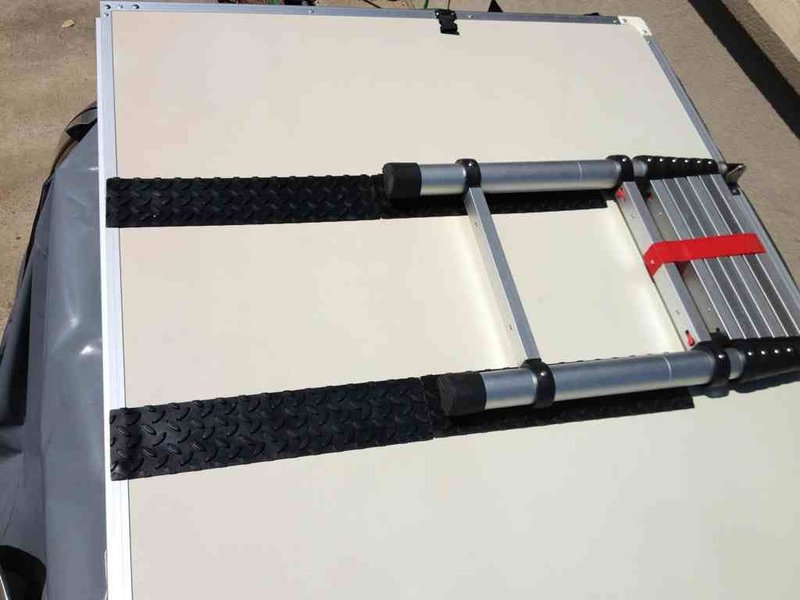
The points in the video bring up some good points to consider when looking at tents. A couple of things I'd like to add. First in regards to the tent base. I agree that a plywood base probably isn't ideal because of weight as well as potential for rot. One thing to consider with the sandwiched aluminum like is shown in the video is that it is lightweight, yes, but it's also prone to dents from the ladder when collapsed if you aren't careful.

I have seen some people add some kind of protection for this like some inexpensive rubber adhesive diamond plate strips like this. I have seen these at Walmart.
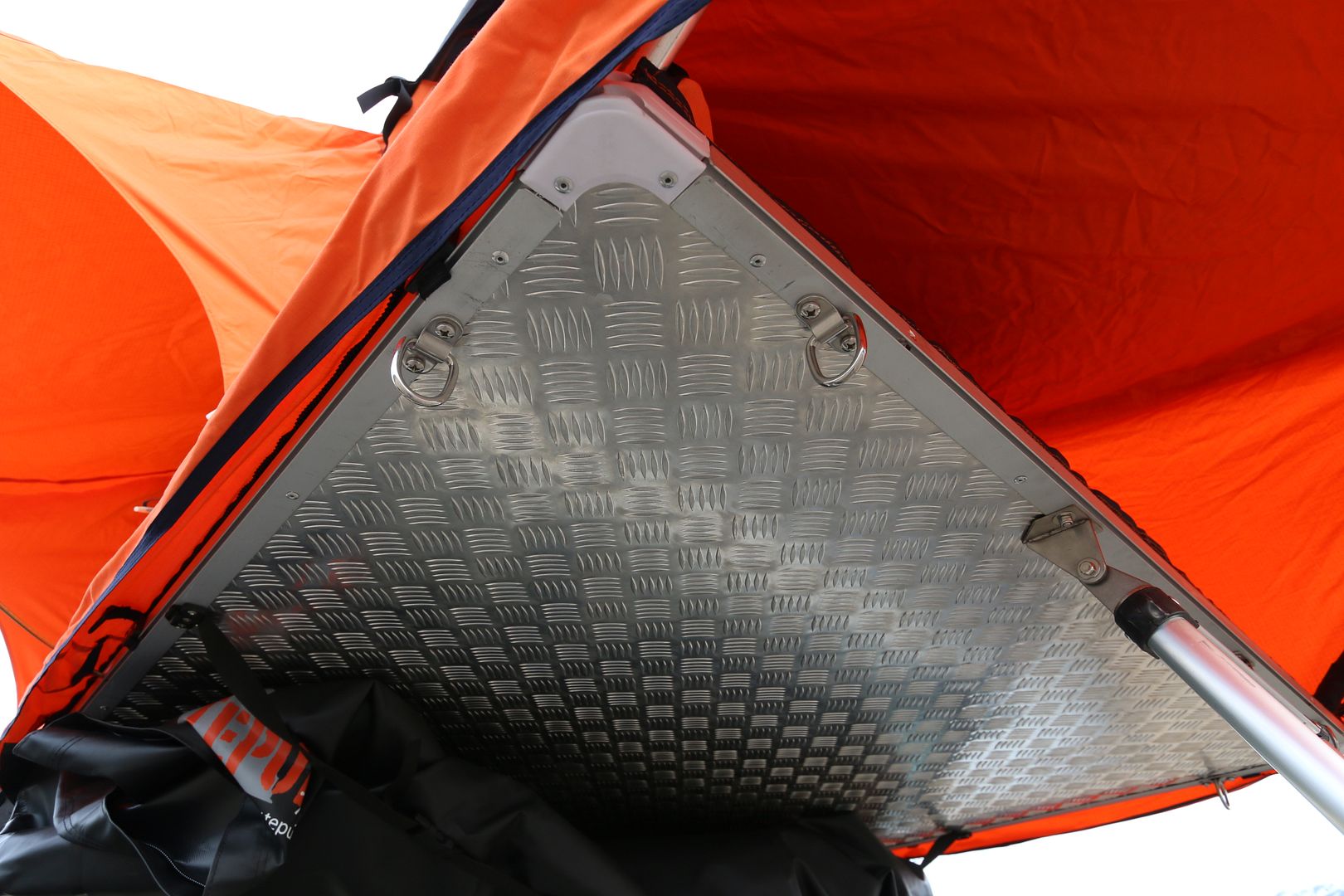
Better yet, exclusive to the Tepui Ruggedized tents are a raw aluminum diamond plate base. Still relatively lightweight but much more durable than the sandwiched bases and plywood bases.
His demonstration of the ladders in the video makes me chuckle a bit. I think that was over-dramatized a bit. We've discussed the ladders earlier in this thread. That video has been around a while and maybe there were issues with some types of early telescoping ladders but I can tell you I've had mud on my new Tepui ladder and other desert sand and grit and have never had issues with it collapsing smoothly. The sliding type ladders like he says are preferrable are just as susceptible to sticking and binding from mud etc. One of the big pluses for me with the telescoping ladder is the low profile. In the video he mentions several times the weight and fuel economy considerations. Drag from a RTT can have just as much or more of an effect on fuel economy as weight. Folding RTTs are essentially a brick on top of the car so aerodynamics aren't ideal.
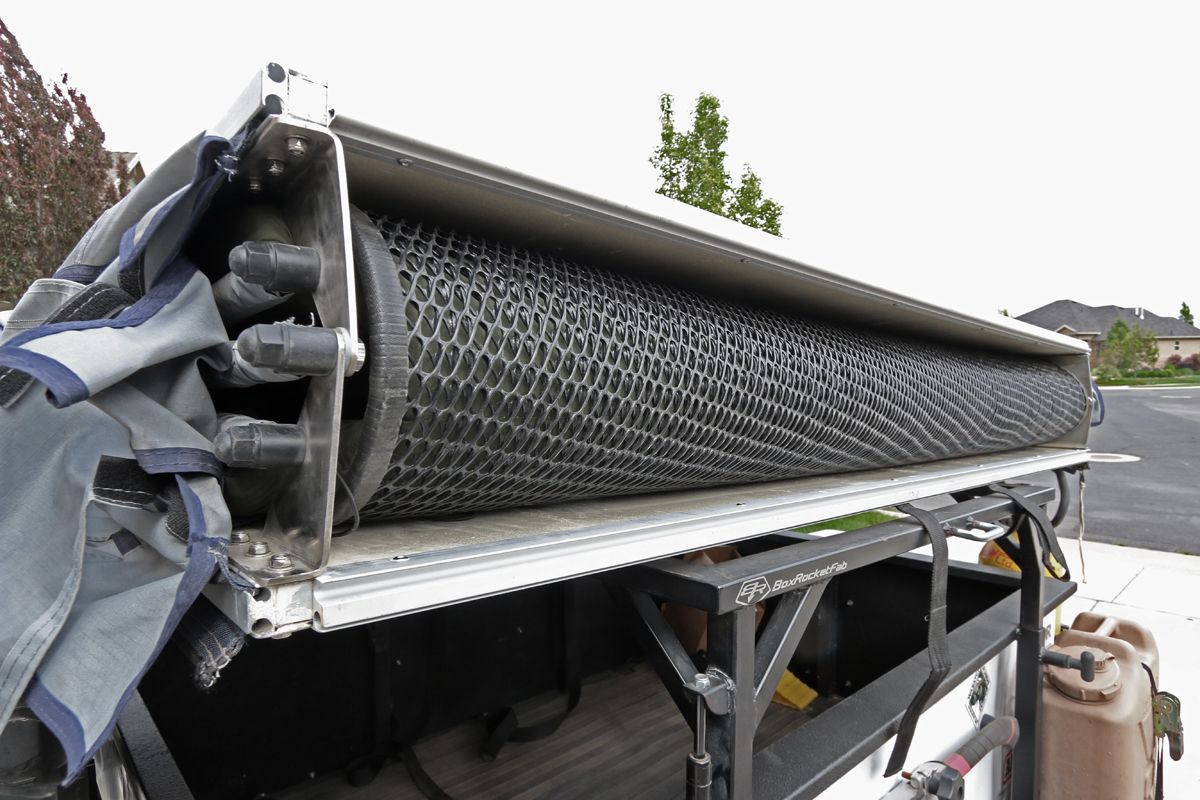
I'm not trying to call out one particular brand here since many brands use a similar sliding type ladder but they add several inches to the height of the tent when collapsed. Like this one.

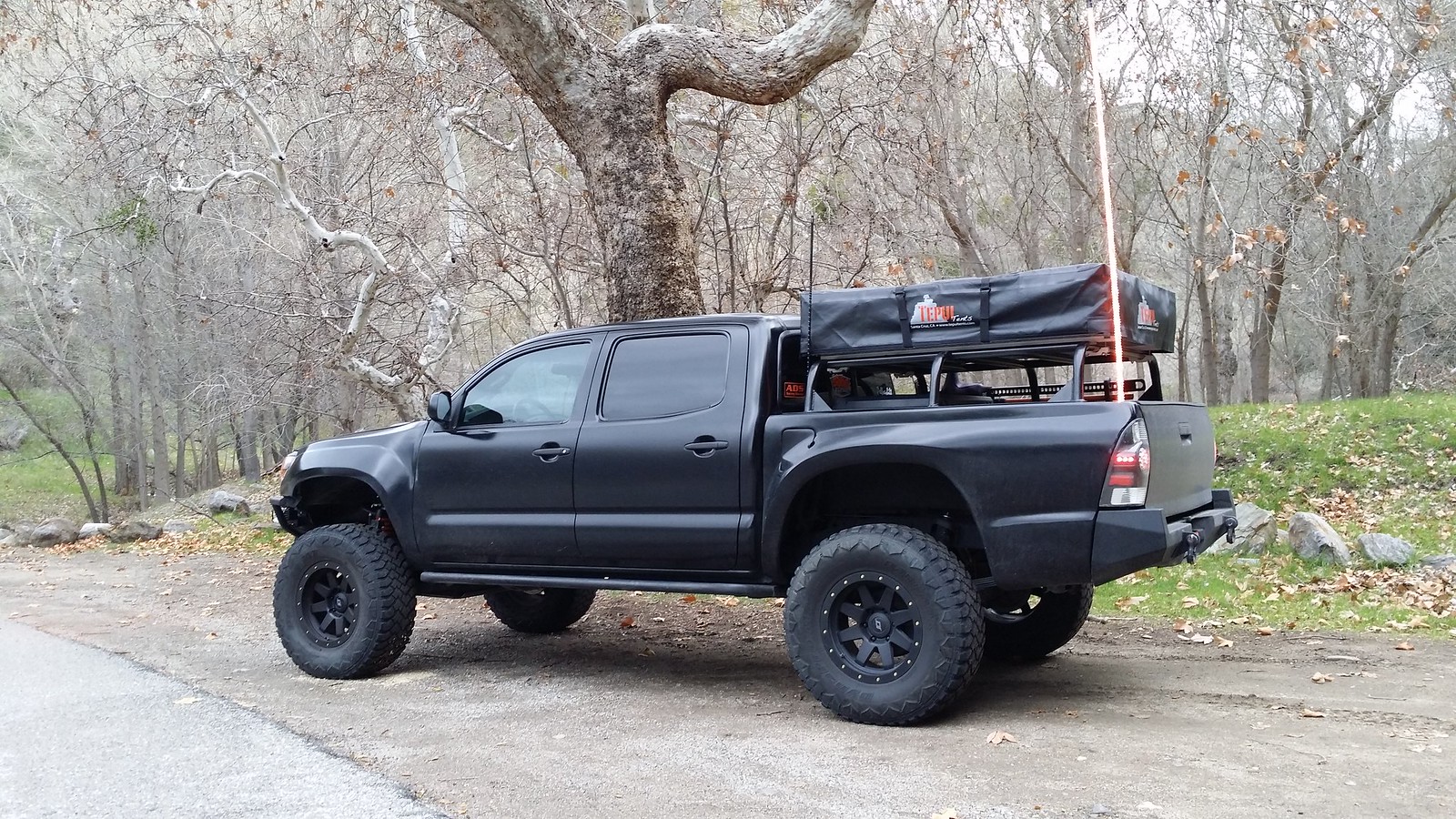
Compare that to the much slimmer profile of this Tepui tent with a Telescoping ladder. There will be much less drag with this ladder type.
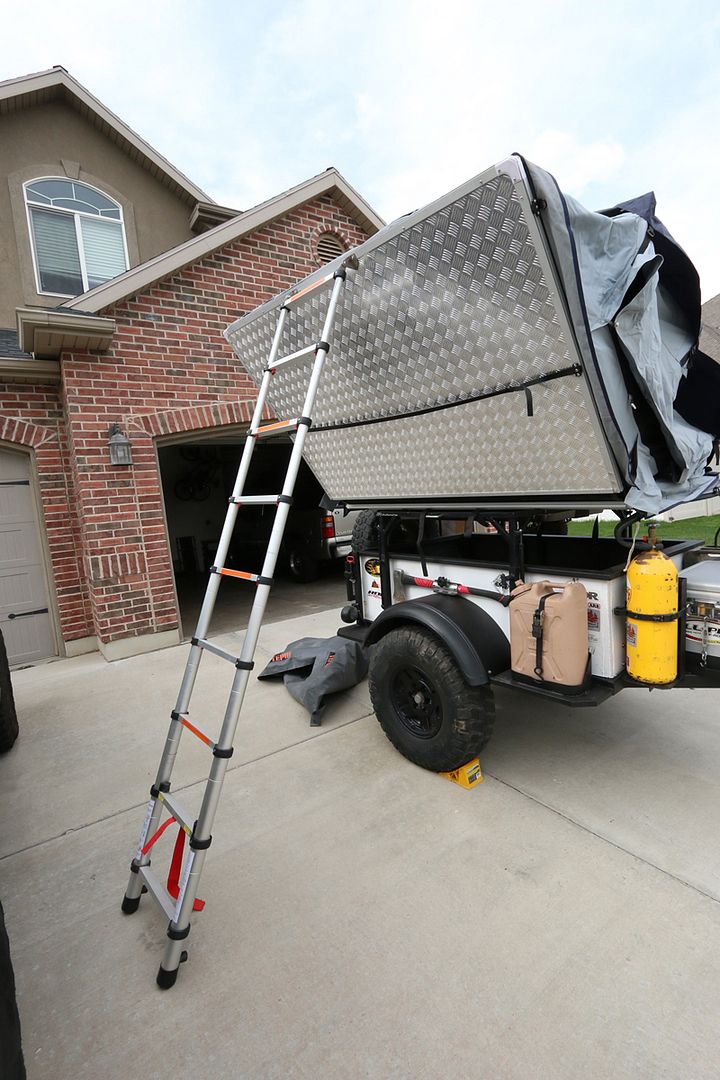
The sliding ladders often aren't long enough either if your tent is mounted up high. This requires an additional ladder extension to be purchased. The Tepui telescoping ladders extend to a full 8'6" and are adequate height for almost any vehicle.
Another feature that I like from Tepui are their anti-condensation mats. They're optional for all standard tents, but standard on Ruggedized models. These are much higher quality than other mats and won't trap moisture and create mildew. They create a layer of air between the mattress and floor to eliminate condensation.
Another thing to consider with condensation is the internal tent frame. Most tents use bare aluminum tent bows like this.
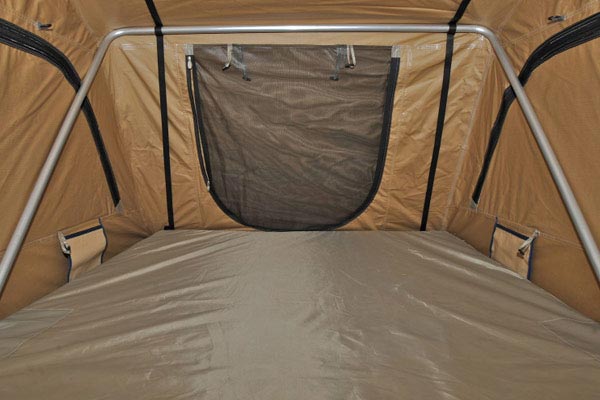
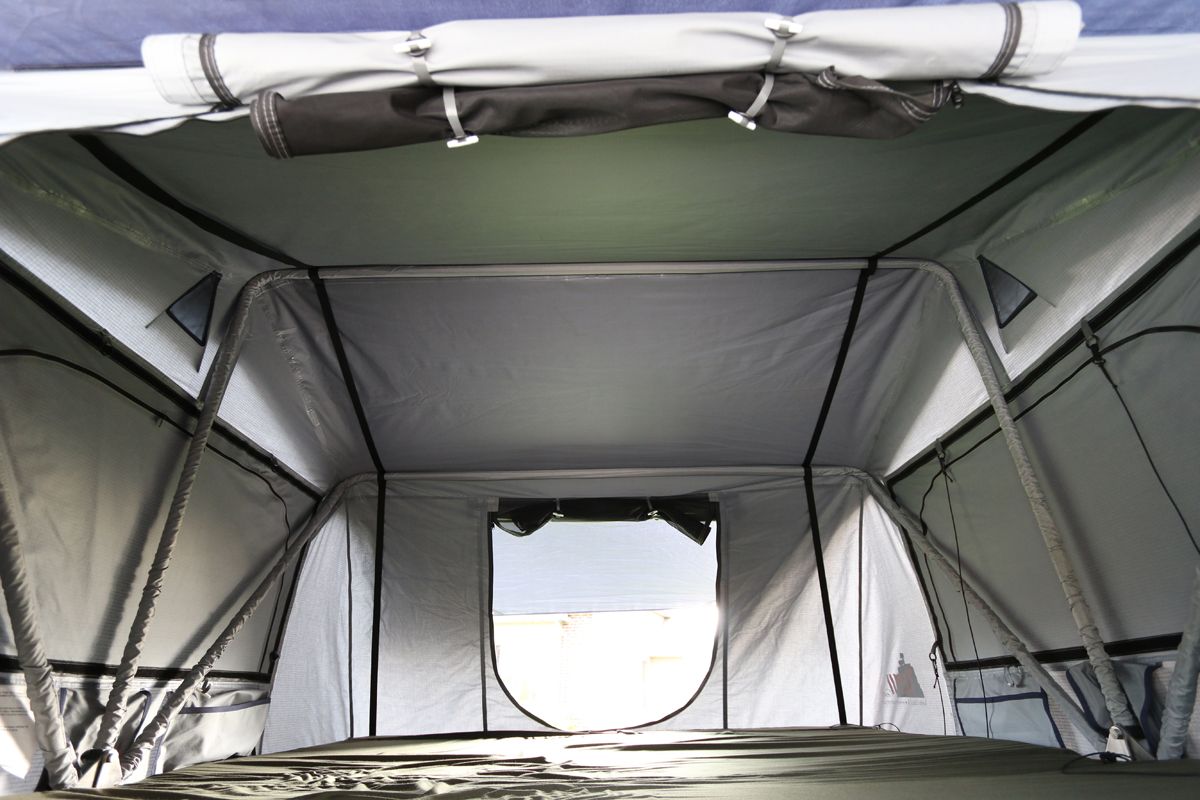
As you know aluminum is excellent at collecting condensation and it can build up on these bows. It's not a fun way to wake up on your camping trip to have water (condensation)drip off the bows onto your face. Tepui wraps the internal frame on their tents. It's a small thing but eliminates the possibility of the dripping condensation. Tepui Kukenam Ruggedized XL shown.
Lastly, in the video he talked about the thickness of the canvas having nothing to do with the waterproof ability. This is true but where a thicker canvas is a benefit is in terms of durability. Most tents use 280g ripstop canvas. Some are not even that good. The Tepui Ruggedized models use 360g ripstop canvas which is 40% heavier than most other brands. It's still breathable and waterproof but it's going to last longer.
one other thing to mention with any of the tent brands. If your tent has the little loops on the inside for the bungie cords used to hold the fabric in when you put the tent away, I'd recommend not using them. The tension on those loops can pull the stitching and separate the waterproof tape at the seams and allow for leakage. You're better off not using them at all.
Hope some of this helps and gives a few more things to consider.

I have seen some people add some kind of protection for this like some inexpensive rubber adhesive diamond plate strips like this. I have seen these at Walmart.
Better yet, exclusive to the Tepui Ruggedized tents are a raw aluminum diamond plate base. Still relatively lightweight but much more durable than the sandwiched bases and plywood bases.

His demonstration of the ladders in the video makes me chuckle a bit. I think that was over-dramatized a bit.
We've discussed the ladders earlier in this thread. That video has been around a while and maybe there were issues with some types of early telescoping ladders but I can tell you I've had mud on my new Tepui ladder and other desert sand and grit and have never had issues with it collapsing smoothly. The sliding type ladders like he says are preferrable are just as susceptible to sticking and binding from mud etc. One of the big pluses for me with the telescoping ladder is the low profile. In the video he mentions several times the weight and fuel economy considerations. Drag from a RTT can have just as much or more of an effect on fuel economy as weight. Folding RTTs are essentially a brick on top of the car so aerodynamics aren't ideal. I'm not trying to call out one particular brand here since many brands use a similar sliding type ladder but they add several inches to the height of the tent when collapsed. Like this one.
Compare that to the much slimmer profile of this Tepui tent with a Telescoping ladder. There will be much less drag with this ladder type.
The sliding ladders often aren't long enough either if your tent is mounted up high. This requires an additional ladder extension to be purchased. The Tepui telescoping ladders extend to a full 8'6" and are adequate height for almost any vehicle.

Another feature that I like from Tepui are their anti-condensation mats. They're optional for all standard tents, but standard on Ruggedized models. These are much higher quality than other mats and won't trap moisture and create mildew. They create a layer of air between the mattress and floor to eliminate condensation.

Another thing to consider with condensation is the internal tent frame. Most tents use bare aluminum tent bows like this.
As you know aluminum is excellent at collecting condensation and it can build up on these bows. It's not a fun way to wake up on your camping trip to have water (condensation)drip off the bows onto your face.
Tepui wraps the internal frame on their tents. It's a small thing but eliminates the possibility of the dripping condensation. Tepui Kukenam Ruggedized XL shown.
Lastly, in the video he talked about the thickness of the canvas having nothing to do with the waterproof ability. This is true but where a thicker canvas is a benefit is in terms of durability. Most tents use 280g ripstop canvas. Some are not even that good. The Tepui Ruggedized models use 360g ripstop canvas which is 40% heavier than most other brands. It's still breathable and waterproof but it's going to last longer.
one other thing to mention with any of the tent brands. If your tent has the little loops on the inside for the bungie cords used to hold the fabric in when you put the tent away, I'd recommend not using them. The tension on those loops can pull the stitching and separate the waterproof tape at the seams and allow for leakage. You're better off not using them at all.
Hope some of this helps and gives a few more things to consider.

i've posted about mine on several occasions.
I purchased a James Baroud space evo. I REALLY like it. Is it perfect, no, but it's really close.
Pros: VERY fast set-up, very durable and weather resistant fabric, comfortable mattress, weather proof, excellent in high winds (i have stayed in it in 30 mph winds and slept just fine).
Cons: about 4 inches too short, mosquito screen needs to be a little tighter, the quick set-up also leads to a more difficult take down because the gas struts that extend to set up are very stiff and hard to pull down, especially if it's hot.
I used to have one of the fold-over models and while it was nice if you were staying in one spot for a long time, it was just too large and heavy on the roof, took too long to set up and take down, and I never enjoyed half of the tent being held up by the ladder.


I purchased a James Baroud space evo. I REALLY like it. Is it perfect, no, but it's really close.
Pros: VERY fast set-up, very durable and weather resistant fabric, comfortable mattress, weather proof, excellent in high winds (i have stayed in it in 30 mph winds and slept just fine).
Cons: about 4 inches too short, mosquito screen needs to be a little tighter, the quick set-up also leads to a more difficult take down because the gas struts that extend to set up are very stiff and hard to pull down, especially if it's hot.
I used to have one of the fold-over models and while it was nice if you were staying in one spot for a long time, it was just too large and heavy on the roof, took too long to set up and take down, and I never enjoyed half of the tent being held up by the ladder.
Last edited:
i've posted about mine on several occasions.
I purchased a James Baroud space evo. I REALLY like it. Is it perfect, no, but it's really close.
Pros: VERY fast set-up, very durable and weather resistant fabric, comfortable mattress, weather proof, excellent in high winds (i have stayed in it in 30 mph winds and slept just fine).
Cons: about 4 inches too short, mosquito screen needs to be a little tighter, the quick set-up also leads to a more difficult take down because the gas struts that extend to set up are very stiff and hard to pull down, especially if it's hot.
I used to have one of the fold-over models and while it was nice if you were staying in one spot for a long time, it was just too large and heavy on the roof, took too long to set up and take down, and I never enjoyed half of the tent being held up by the ladder.
Honest question here. When you say you didn't enjoy half of the tent being held up by the ladder, what do you mean? Did you feel it was unstable?
Concretejungle, where are those pics of?
Before I decided on my first Tepui tent I looked long an hard and several of the different hard shell tents. No doubt about it there are some attractive things about a hardshell tent. Here's what it came down to for me.
Pros of a hardshell tent:
Slightly lower profile when closed and better aerodynamics
Most are slightly lighter weight than folding RTTs
Durable hardshell case means good weather resistence and less prone to damage from trees etc
Quick setup
Stable in the wind with less flapping fabric
Cons of a hardshell tent:
Cost
Cost
Cost
If the shell is damaged it's often a much more costly repair than replacing a folding tent travel cover
Small Sleeping footprint when compared to folding tents (most can fit 2 people comfortably at most)
Occasionally troublesome lifting mechanisms
Sub par ladders on some of them
My conclusion is that there is not a single right answer for everyone when it comes to what type of tent is best. Everyone has a different set of needs and even the environments we camp in can dictate the type of tent that makes more sense. For me I ended up with a soft-side folding RTT for a few reasons. Cost was one factor for sure because I could get a high quality folding tent for about half the cost of a mid-level hardshell tent. I needed space for more than 2 people. The biggest drawback to a hardshell tent IMO is that the closed footprint is the same size as the sleeping footprint. That means for most hardshell tents you can squeeze 2 people into them. Nearly all folding RTTs double in size when they're opened, making it possible to comfortably sleep 3-4 people in larger models. Additionally the folding tent allows for the use of an annex for even more room for additional sleepers if needed and space for gear and a place to change clothes in privacy without having to sit or hunch over inside a tent. So the bottom line for me was the cost and the available space. It's America and often-times the attitude is if something is more expensive it's better. For me that was not the case when it came to RTTs. The expensive ones (even the expensive folding ones like Eezi-awn) either lacked some features or the higher cost was not justified by better features which were also found in less expensive brands. I'm not saying that cheapest is best either. Do your homework. There's a reason the cheapest tents are priced where they are. And before you think I'm just trying to steer you toward Tepui, I'm not. Again, everyone has a different set of needs. Your needs may steer you toward an Eezi-awn, or a James Baroud and the higher cost makes sense. That's fine. Find what works for you and you'll likely be satisfied for a long time. For me, I ended up choosing a Tepui tent. I used it for quite a while with zero complaints before the opportunity to sell them ever arose. Selling the tents isn't my main job either so I don't feel like I have some kind of loyalty to a particular type or brand to maintain my livelihood . I chose to sell Tepui because I thought they had the best features for the best price not only for myself but for the widest range of people. Your individual needs may steer you to something else, but mine steered me here.
Pros of a hardshell tent:
Slightly lower profile when closed and better aerodynamics
Most are slightly lighter weight than folding RTTs
Durable hardshell case means good weather resistence and less prone to damage from trees etc
Quick setup
Stable in the wind with less flapping fabric
Cons of a hardshell tent:
Cost
Cost
Cost
If the shell is damaged it's often a much more costly repair than replacing a folding tent travel cover
Small Sleeping footprint when compared to folding tents (most can fit 2 people comfortably at most)
Occasionally troublesome lifting mechanisms
Sub par ladders on some of them
My conclusion is that there is not a single right answer for everyone when it comes to what type of tent is best. Everyone has a different set of needs and even the environments we camp in can dictate the type of tent that makes more sense. For me I ended up with a soft-side folding RTT for a few reasons. Cost was one factor for sure because I could get a high quality folding tent for about half the cost of a mid-level hardshell tent. I needed space for more than 2 people. The biggest drawback to a hardshell tent IMO is that the closed footprint is the same size as the sleeping footprint. That means for most hardshell tents you can squeeze 2 people into them. Nearly all folding RTTs double in size when they're opened, making it possible to comfortably sleep 3-4 people in larger models. Additionally the folding tent allows for the use of an annex for even more room for additional sleepers if needed and space for gear and a place to change clothes in privacy without having to sit or hunch over inside a tent. So the bottom line for me was the cost and the available space. It's America and often-times the attitude is if something is more expensive it's better. For me that was not the case when it came to RTTs. The expensive ones (even the expensive folding ones like Eezi-awn) either lacked some features or the higher cost was not justified by better features which were also found in less expensive brands. I'm not saying that cheapest is best either. Do your homework. There's a reason the cheapest tents are priced where they are. And before you think I'm just trying to steer you toward Tepui, I'm not. Again, everyone has a different set of needs. Your needs may steer you toward an Eezi-awn, or a James Baroud and the higher cost makes sense. That's fine. Find what works for you and you'll likely be satisfied for a long time. For me, I ended up choosing a Tepui tent. I used it for quite a while with zero complaints before the opportunity to sell them ever arose. Selling the tents isn't my main job either so I don't feel like I have some kind of loyalty to a particular type or brand to maintain my livelihood . I chose to sell Tepui because I thought they had the best features for the best price not only for myself but for the widest range of people. Your individual needs may steer you to something else, but mine steered me here.
Are you saying that the screen mesh is not fine enough to keep out mosquitos? If so, that would really suck. Also hopefully, with struts that stiff - the strut mounts are well built. I really like your setup, though! Where were these pics taken? Looks familiar for some reason.i've posted about mine on several occasions.
I purchased a James Baroud space evo. I REALLY like it. Is it perfect, no, but it's really close.
Pros: VERY fast set-up, very durable and weather resistant fabric, comfortable mattress, weather proof, excellent in high winds (i have stayed in it in 30 mph winds and slept just fine).
Cons: about 4 inches too short, mosquito screen needs to be a little tighter, the quick set-up also leads to a more difficult take down because the gas struts that extend to set up are very stiff and hard to pull down, especially if it's hot.
I used to have one of the fold-over models and while it was nice if you were staying in one spot for a long time, it was just too large and heavy on the roof, took too long to set up and take down, and I never enjoyed half of the tent being held up by the ladder.

Honest question here. When you say you didn't enjoy half of the tent being held up by the ladder, what do you mean? Did you feel it was unstable?
Yes, i didn't feel really stable since either all the weight was on the rack and being cantilevered off if the ladder was to come loose or kicked out.
my trip this year to Northern Nevada, Jarbidge area with some great cruiser friends.Concretejungle, where are those pics of?
Are you saying that the screen mesh is not fine enough to keep out mosquitos? If so, that would really suck. Also hopefully, with struts that stiff - the strut mounts are well built. I really like your setup, though! Where were these pics taken? Looks familiar for some reason.
The screen mesh is similar to other tents i've seen but in my opinion, especially on the east coast, small gnats or what we call "no-see-ums" can get through. Most mosquitoes get caught and don't pass through, but i'm not saying it's impossible.
The struts are very strong. It's a huge plus in high winds because the tent doesn't seem to be affected by the wind at all. And i'm not a paid advertiser for JB, just stating my findings. I first experienced this at cruise moab a couple years ago; i was camped out a few days before the event started in a canyon and one night the wind just ripped through the canyon. The tent did very well. Then just this last 4th of july i camped on the outer banks of NC and we had sustained winds for 2 days of over 25mph with gusts up to 30-35 and the tent did excellent.
One thing that i would say i'm not sold on is the fan. It works well as far as staying charged with the little solar panel, but i just can't seem to notice any air movement. I "think" that it limits the inside condensation, but again i feel that i can't measure that and maybe it's just me wanting to think it works well.
Those pics were from just a couple of months ago in Northern Nevada near Jarbidge, NV.
Before I decided on my first Tepui tent I looked long an hard and several of the different hard shell tents. No doubt about it there are some attractive things about a hardshell tent. Here's what it came down to for me.
Pros of a hardshell tent:
Slightly lower profile when closed and better aerodynamics
Most are slightly lighter weight than folding RTTs
Durable hardshell case means good weather resistence and less prone to damage from trees etc
Quick setup
Stable in the wind with less flapping fabric
Cons of a hardshell tent:
Cost
Cost
Cost
If the shell is damaged it's often a much more costly repair than replacing a folding tent travel cover
Small Sleeping footprint when compared to folding tents (most can fit 2 people comfortably at most)
Occasionally troublesome lifting mechanisms
Sub par ladders on some of them
My conclusion is that there is not a single right answer for everyone when it comes to what type of tent is best. Everyone has a different set of needs and even the environments we camp in can dictate the type of tent that makes more sense. For me I ended up with a soft-side folding RTT for a few reasons. Cost was one factor for sure because I could get a high quality folding tent for about half the cost of a mid-level hardshell tent. I needed space for more than 2 people. The biggest drawback to a hardshell tent IMO is that the closed footprint is the same size as the sleeping footprint. That means for most hardshell tents you can squeeze 2 people into them. Nearly all folding RTTs double in size when they're opened, making it possible to comfortably sleep 3-4 people in larger models. Additionally the folding tent allows for the use of an annex for even more room for additional sleepers if needed and space for gear and a place to change clothes in privacy without having to sit or hunch over inside a tent. So the bottom line for me was the cost and the available space. It's America and often-times the attitude is if something is more expensive it's better. For me that was not the case when it came to RTTs. The expensive ones (even the expensive folding ones like Eezi-awn) either lacked some features or the higher cost was not justified by better features which were also found in less expensive brands. I'm not saying that cheapest is best either. Do your homework. There's a reason the cheapest tents are priced where they are. And before you think I'm just trying to steer you toward Tepui, I'm not. Again, everyone has a different set of needs. Your needs may steer you toward an Eezi-awn, or a James Baroud and the higher cost makes sense. That's fine. Find what works for you and you'll likely be satisfied for a long time. For me, I ended up choosing a Tepui tent. I used it for quite a while with zero complaints before the opportunity to sell them ever arose. Selling the tents isn't my main job either so I don't feel like I have some kind of loyalty to a particular type or brand to maintain my livelihood . I chose to sell Tepui because I thought they had the best features for the best price not only for myself but for the widest range of people. Your individual needs may steer you to something else, but mine steered me here.
I agree, there is no one perfect tent. I think the quality of the Tepui tents are excellent, for that style of tent.
Are the hard shell tents more expensive, yes. Is it worth it? well, to me and my use it is for sure. I can say that with my old fold over tent, just removal and set up of the cover SUCKED! And, the cover sucked. It would wear holes in the cover on the sharp corners of the tent just from me driving down the road. I could feel it up there, i could hear it up there. On the hard shell tent i barely notice it's up there.
Also, if it was cold, like winter camping and freezing temps, the cover got so stiff it was a real PITA to take off and put back on. That's just my experience, and then i had this huge cover I had to stash somewhere and try not to get it muddy or dirty.... is that being picky, maybe.
One thing i would give the "fold over" tents a huge advantage for is being able to enter from a covered area that you can enclose with a zip in room (annex). Now that, i would say, is a huge deal! It really is. My tent now, if it's raining and you go to get in it, expect to get some rain in since there is just no way to shelter you from that. Also, at night, if i had to pee and it was raining, i could just climbed down in a protected area and pee.... not now. I fixed that with a large gatorade bottle, but i don't use that if the GF is up there. For that very reason alone, if I were camping in a spot for extended times, like for example if i went to Baja and camped on the beach for 2-3 weeks and didn't move, i would prefer the fold over tent.
As long as i stay mobile, i prefer a hard shell tent.
The hard shell has always been my choice for a RTT, since I had "empty nest" when I started getting interested in them. As I and others have said, 2 would be the limit for most hard shells. I do like having all the choices available and it makes sense that camping parties come in all sizes and people have different tastes, so why not have a selection to choose from.I agree, there is no one perfect tent. I think the quality of the Tepui tents are excellent, for that style of tent.
Are the hard shell tents more expensive, yes. Is it worth it? well, to me and my use it is for sure. I can say that with my old fold over tent, just removal and set up of the cover SUCKED! And, the cover sucked. It would wear holes in the cover on the sharp corners of the tent just from me driving down the road. I could feel it up there, i could hear it up there. On the hard shell tent i barely notice it's up there.
Also, if it was cold, like winter camping and freezing temps, the cover got so stiff it was a real PITA to take off and put back on. That's just my experience, and then i had this huge cover I had to stash somewhere and try not to get it muddy or dirty.... is that being picky, maybe.
One thing i would give the "fold over" tents a huge advantage for is being able to enter from a covered area that you can enclose with a zip in room (annex). Now that, i would say, is a huge deal! It really is. My tent now, if it's raining and you go to get in it, expect to get some rain in since there is just no way to shelter you from that. Also, at night, if i had to pee and it was raining, i could just climbed down in a protected area and pee.... not now. I fixed that with a large gatorade bottle, but i don't use that if the GF is up there. For that very reason alone, if I were camping in a spot for extended times, like for example if i went to Baja and camped on the beach for 2-3 weeks and didn't move, i would prefer the fold over tent.
As long as i stay mobile, i prefer a hard shell tent.
CJ, I responded to a post by you in my RTT evaluation that you might find interesting and even the playing field for hard shells vs fold over. It would need a person gifted in tent fabrication to prototype the idea and hopefully somewhere it's in the works as we speak. I've seen many an awning on rigs with hard shell RTTs. With current design, when the awning is deployed, it shuts out the ability to have access to that door of the RTT from the ground.
I do the same thing at night - keep a bottle to pee in up in the RTT, but like you said, having a companion with you might alter the strategy.
