All of which would be agreed with if we were on the coast.
We’re 3 hours from the water.
The wind and rain will suck. All 30-50mph of it.
And yes, I went through Hurricane Gloria a cat 4. 145mph it was rough being right there in the direct hit area on the coast.
If I’m wrong and we get 120mph winds and 15”+ of rain I’ll be an a-hole

I think our group tends to be on the "prepared" side for things in general. To many, its not going to be a big deal, but for some, its gonna be an absolute cluster.
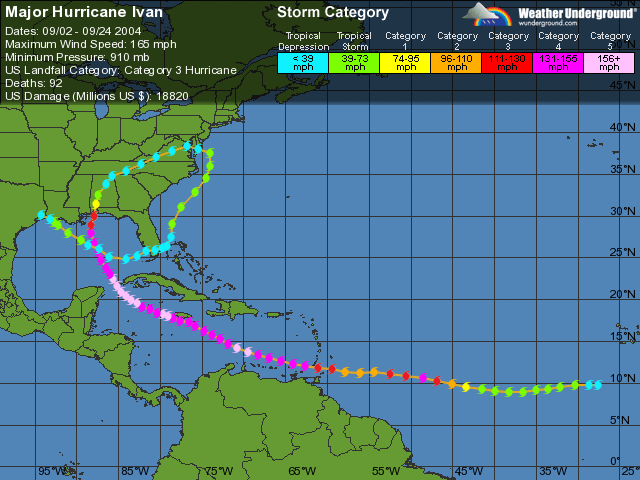
I believe it was Ivan that came up through the gulf into the panhandle, and stalled out over the mountains. It dumped 15+ inches of rain and caused torrential flooding over the mtns and into the foothills. Ivan's impact made it all the way up to Canada, then did a freakin froot loop, and came back for sloppy seconds in the gulf.
Heres an excerpt from Wiki about Ivan
Elsewhere in the United States
Further inland, Ivan caused major
flooding, bringing the
Chattahoochee River near
Atlanta and many other rivers and streams to levels at or near 100-year records. The
Delaware River and its tributaries crested just below their all-time records set by
Hurricane Diane in 1955. Locations in southern
New Hampshire and
Massachusetts received over 7 inches of rainfall from the remnants of Ivan, causing flooding and mudslides. In
Connecticut, high winds moved in quickly and unexpectedly, and a boater was killed when his
trimaran capsized in 50-knot winds on
Long Island Sound.
[45]
In western
North Carolina, many streams and rivers reached well above flood stage in an area that was heavily flood damaged just a week and a half prior from the remnants of
Hurricane Frances, causing many roads to be closed. High winds contributed to widespread power outages throughout the mountainous region. The
Blue Ridge Parkway as well as
Interstate 40 through the
Pigeon River gorge in
Haywood County, North Carolina sustained major damage, and landslides were common across the mountains. There was major flooding along the
French Broad River and
Swannanoa River in
Asheville, North Carolina and along the Pigeon River near
Canton, North Carolina. As a result of the rain, a major debris flow of mud, rocks, trees, and water surged down
Peek's Creek, near
Franklin, North Carolina, sweeping away 15 houses and killing five people.
[46][47]
The system also
spawned deadly
tornadoes as far north as
Maryland[48] and destroyed seven oil platforms in the
Gulf of Mexico while at sea. While crossing over the Mid-Atlantic states, Ivan's remnants spawned 117 tornadoes across the eastern United States, with the 40 tornadoes spawned in
Virginia on September 17 setting a daily record for the commonwealth.
[49] Ivan then moved into the
Wheeling, West Virginia and
Pittsburgh area, causing major flooding and gusty winds.
Pittsburgh International Airport recorded the highest 24-hour rainfall for Pittsburgh, recording 5.95 inches (151 mm) of rain.
[50] Ivan's rain caused widespread flooding. The
Juniata River basin was flooded, and the Frankstown Branch crested at its highest level ever.
[51] After Ivan regenerated in the Gulf of Mexico, it caused further heavy rainfall up to 8 inches (200 mm) in areas of
Louisiana and Texas.




 Hoping to dig out behind it tomorrow and put in some drainage pipe.