dmaddox's 1981 BJ42 restoration and information thread!

This site may earn a commission from merchant affiliate
links, including eBay, Amazon, Skimlinks, and others.

A voltage drop is an indicator that something is drawing current. Doesn't have to be a bad thing. It can be that something is "on" like the wipers or so.
No spark + no voltage drop: OK
Little spark + a little voltage drop (0.5V or so): something is "on"
Big spark + voltage drop more then a volt: check what is hooked up in the circuit that you are working on.

If everything is "off", key, switches, interior light etc. there should be no sparks and voltage drops.

Rudi
 
Hello crew.

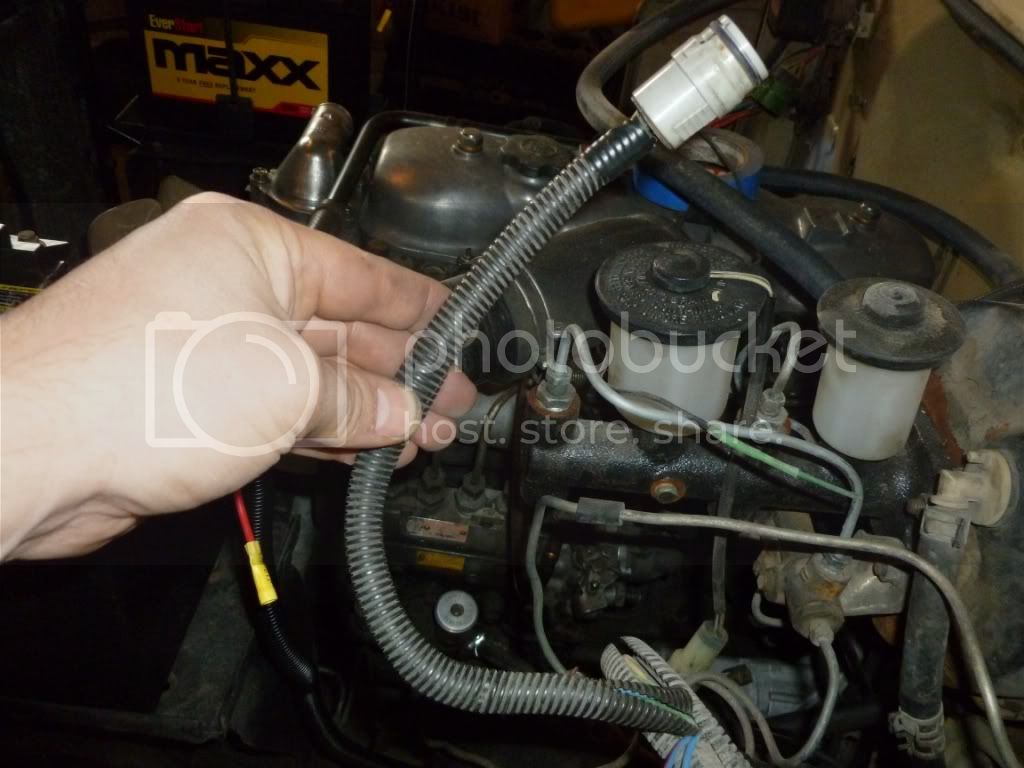
EDIC harness soldered into the harness like it used to be:

ALMOST2.jpg


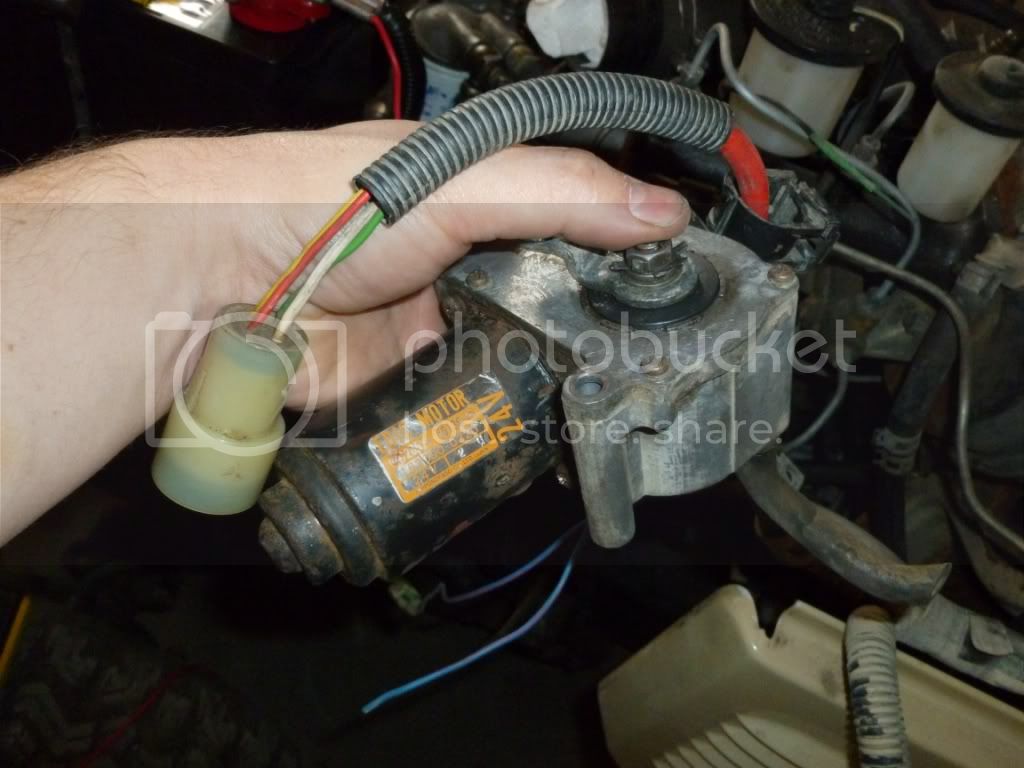
New (to me) EDIC, single plug - correct for my cruiser. (however I think this one, even with the correct part number, has one wire (white) where according to my harness should be blue. So, I connected my blue wire to the white wire on the EDIC motor. Yellow/Green/Red were the other 3, which left white on the motor, blue on my harness.

ALMOST3.jpg


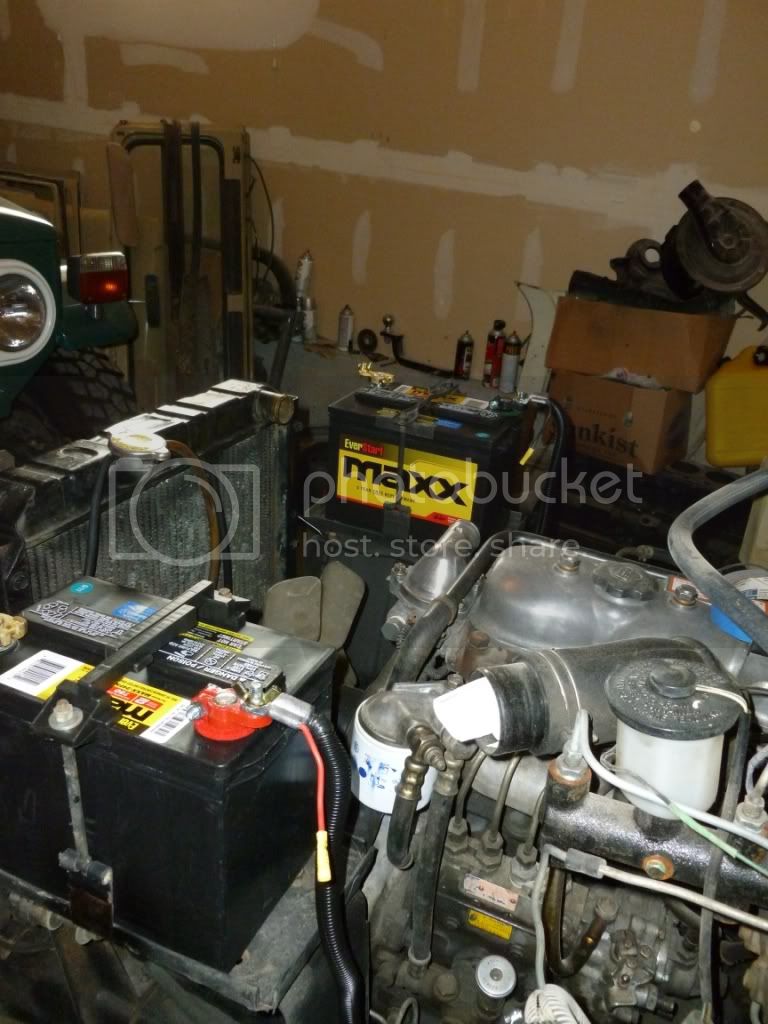
Batteries mounted - leaving the tie disconnected for now.

ALMOST4.jpg


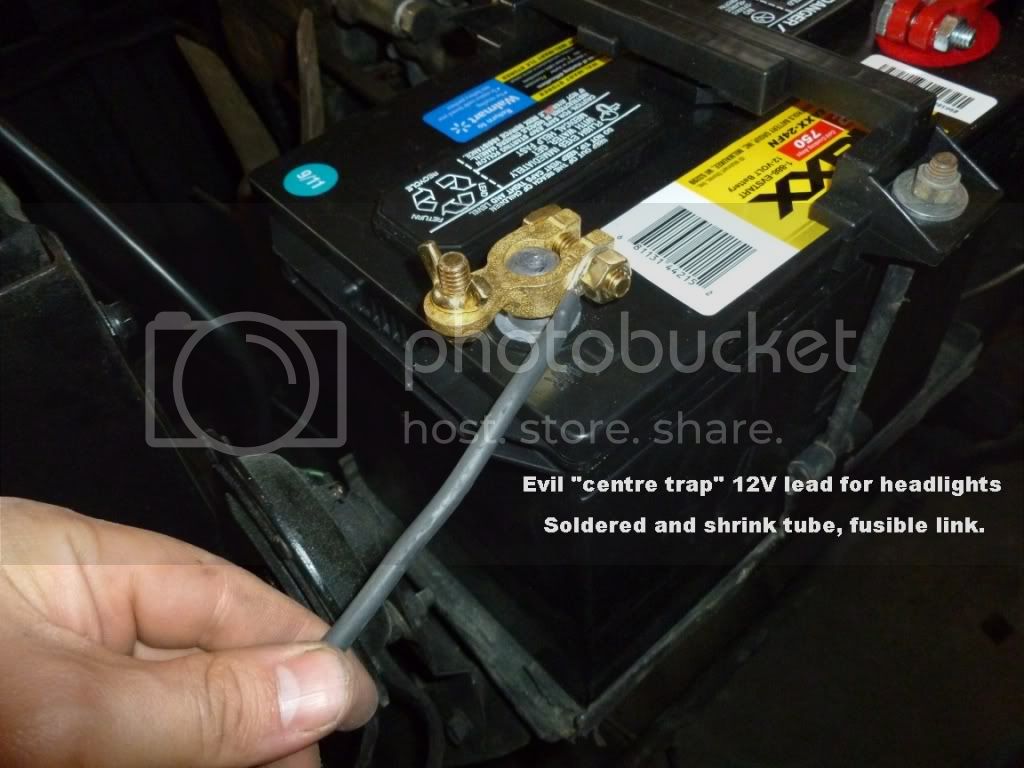
ALMOST5.jpg


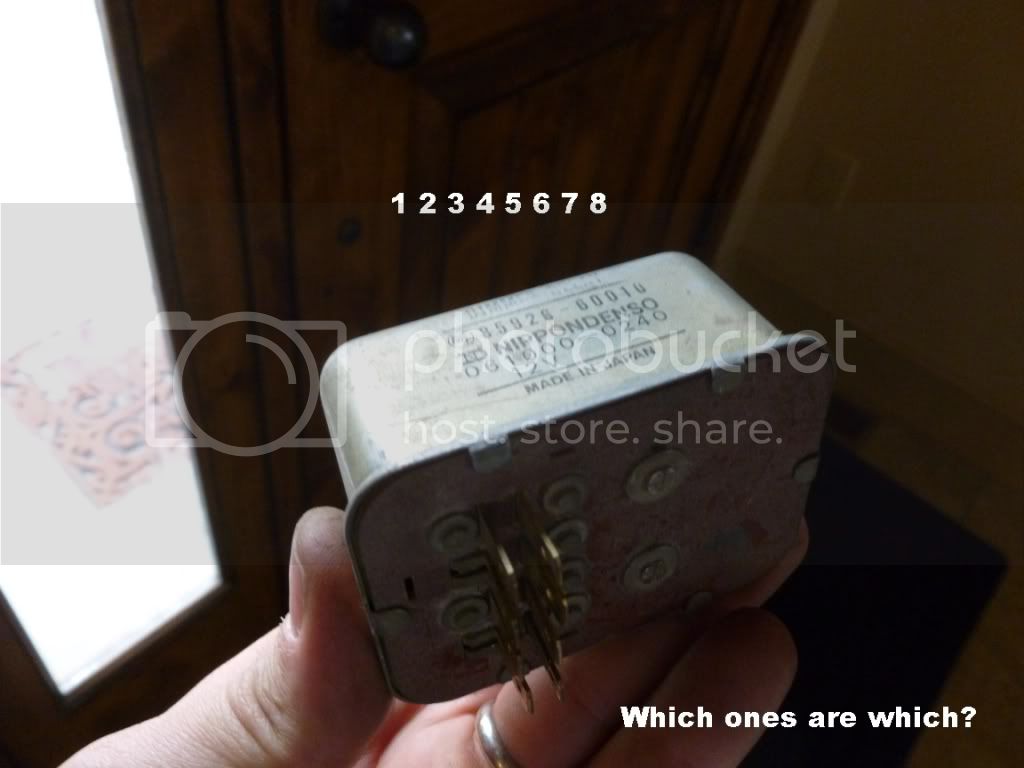
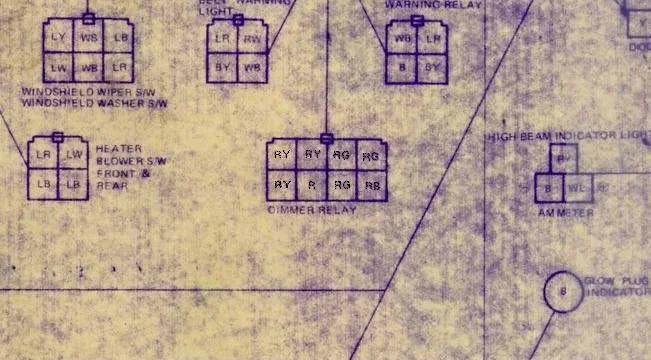
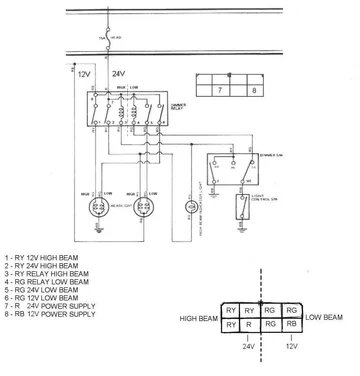
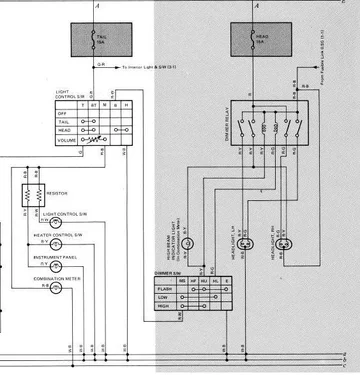
This brings up a question. On the 12V (since 24V and 12V BJ's use the same DIMMER RELAY) dimmer relay, which prongs are which? The wiring diagram shows 1 through 8, but I have no idea which are which.

ALMOST.jpg


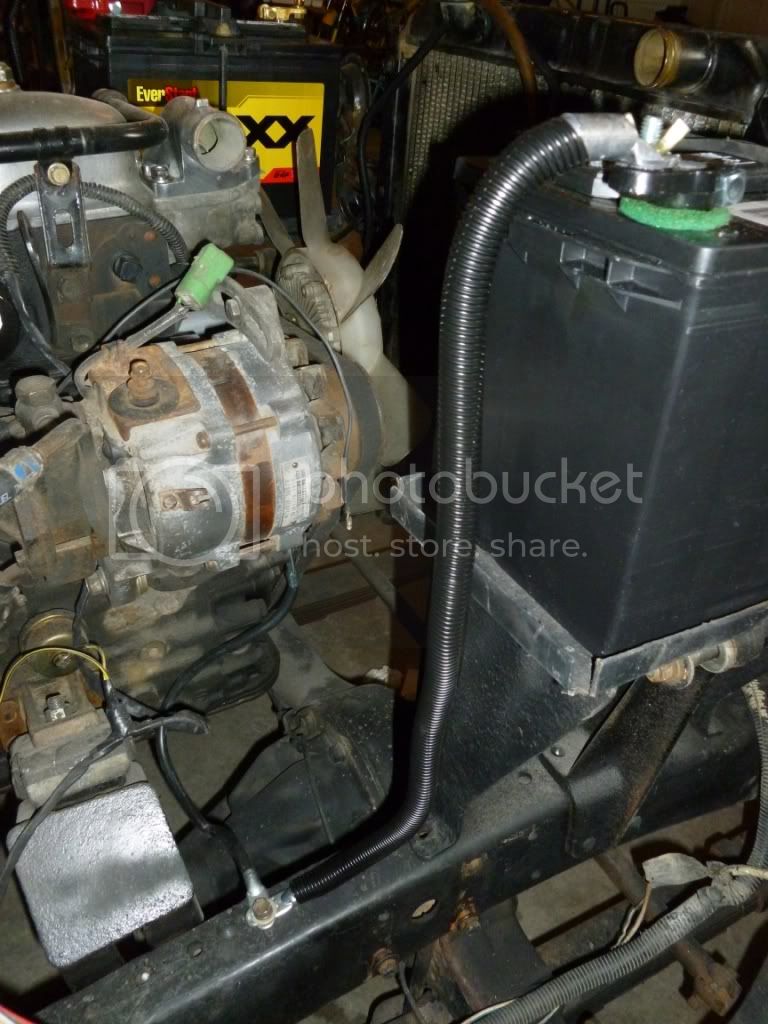
Per Tom's suggestion, I not only ground the battery, but run a grounding cable over to the block. I then did a continuity test between the "-" terminal and the engine with success.

ALMOST6.jpg


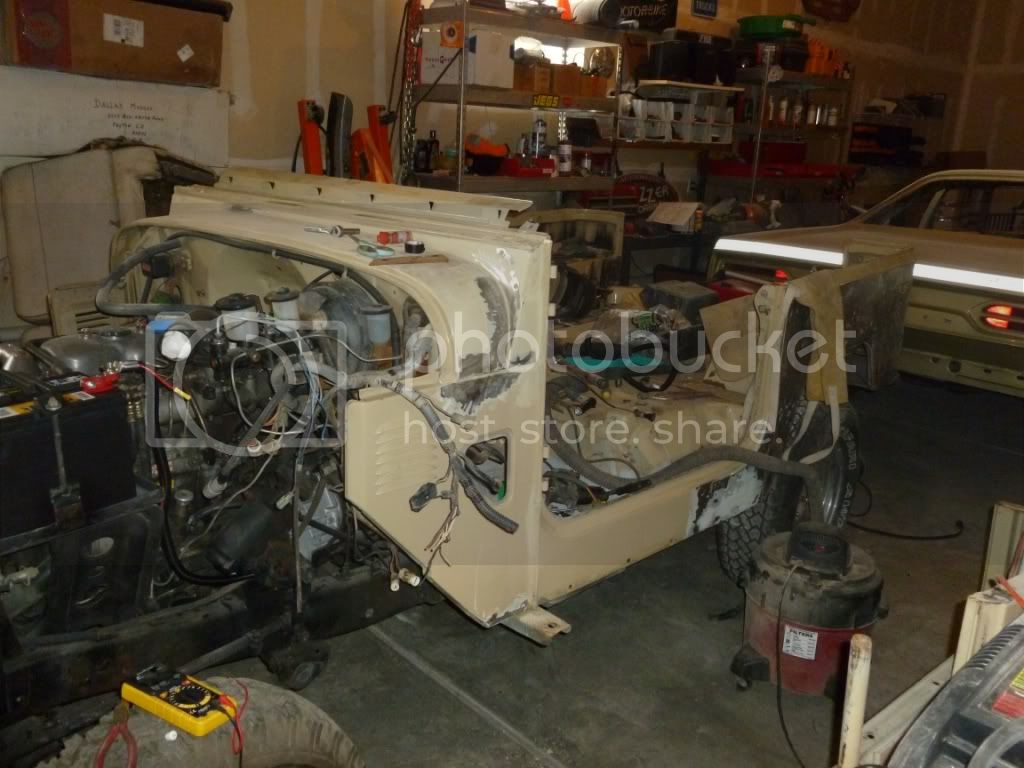
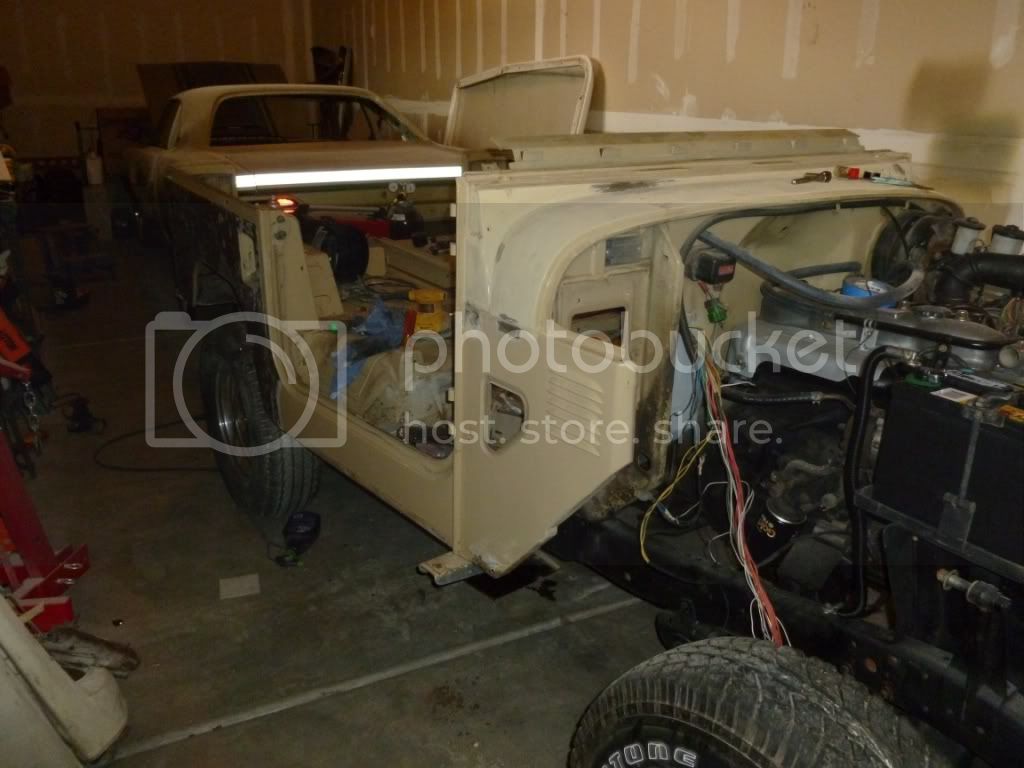
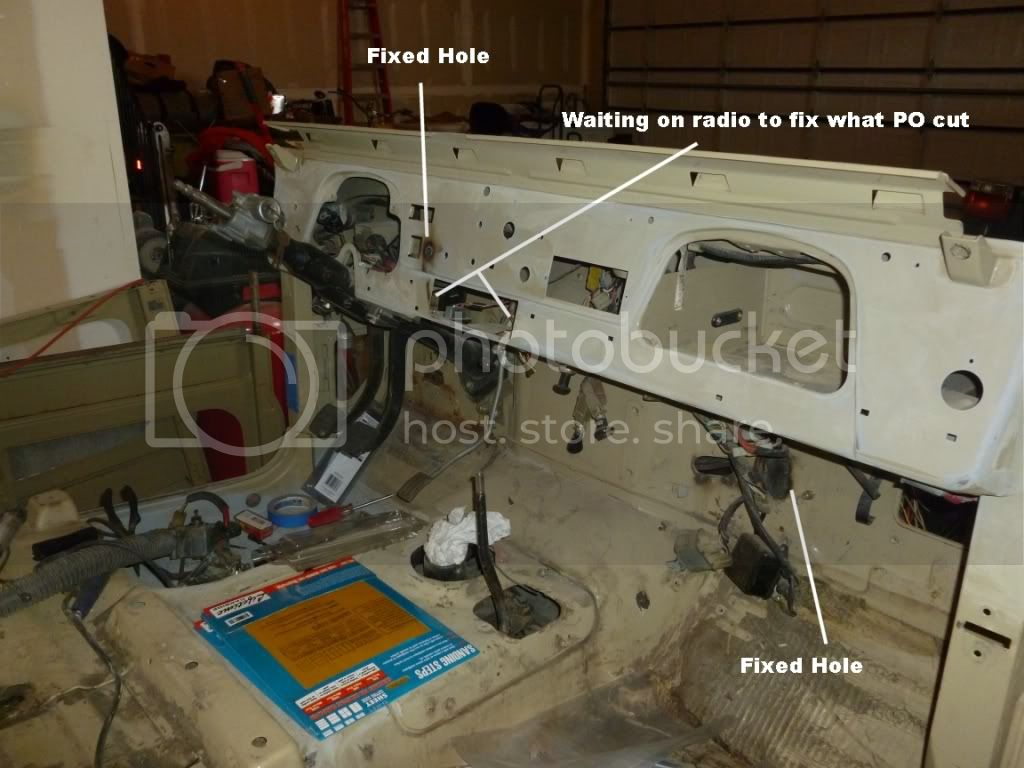
There is no longer ANY rust on the tub, it has all been filled or cut out and fresh steel welded in.

ALMOST7.jpg


ALMOST8.jpg


I should be in paint within a month.

ALMOST9.jpg


We are moving along. Thanks again for all of the assistance.
 
Are you going to keep the cream color? In my opinion, that would look really nice.
 
Of course - It will be as correct as in my power. I shrill when I see these corvette yellow cruisers with 454 chevy's in them....or metallic silver with 20" wheels. The only time I have ever messed with the stock color was on my FJ45. It was supposed to be cream, but I painted it rustic green. Still a Toyota color - but was not correct on the truck. I plan on painting this the stock beige. Thanks for staying tuned!!
 
Hi Dallas,
Looking good, nice job. Why is the "center tap" under the clamp nut and not under the butterfly nut. Is that for a special reason?

Rudi
 
Hi Dallas,
Looking good, nice job. Why is the "center tap" under the clamp nut and not under the butterfly nut. Is that for a special reason?

Rudi

I'm going to lie and say I'm just holding it there temporarily. He he he. I'll move it :-).

The problem I am having with the Dimmer Relay is that all of the wires just have a push connect at the end, there is not an 8 wire plug.

It's getting chilly here!
 
Is there not a tiny marker on the bottom next to the prongs?
Sometimes it's indicated just with a 1 and a 8.
If not then we have to figure it out ourselfs. Which is..... we tell you what to do and you report back.
We have to find the two (internal) coils from the relay. Once we know where the numbers 3 and 4 are we know them all.
We are looking for the numbers 3 and 4 and they share #8 (the 12V power supply).
So take your ohm meter and start searching for a resistance between # 8 and two other prongs.
Every corner can be #8 so start with top left. Hook up one test lead and search with the other test lead for continuity (do I spell this right?) If no result go to te top right and do the same, if no bottom left and last bottom right. You'll find a combination at a point. Write it down and show it here.
The final result should be that you have 5 readings OL (Open Loop) and 2 readings any value more then zero ohm. I guess the value is somewhere between 50 and 200 ohm.

Good luck with your homework ;););)

Rudi

P.s. reading this back I sound like a school teacher:o
 
Last edited:
....EDIC harness soldered into the harness like it used to be:....

You reckon you're a novice as far as the electrical is concerned but I have tremendous respect for anyone who chooses to use soldered connections Dallas.

When crimp connections were introduced (to replace soldered ones), the sellers did their best to discredit soldering.

But when done properly I still reckon soldering is THE BEST way of making trouble-free permanent electrical connections.

Looks very professional with that protective sleeving system too.

Well done.

...
New (to me) EDIC, single plug - correct for my cruiser. (however I think this one, even with the correct part number, has one wire (white) where according to my harness should be blue. So, I connected my blue wire to the white wire on the EDIC motor. Yellow/Green/Red were the other 3, which left white on the motor, blue on my harness. ...

I would have done the very same thing.

(I've often seen the colour-codes differ in pigtail wiring. And I think it is because Toyota had trouble ensuring "subcontrators" - such as Denso - used the same colour-codes they used in their looms.)

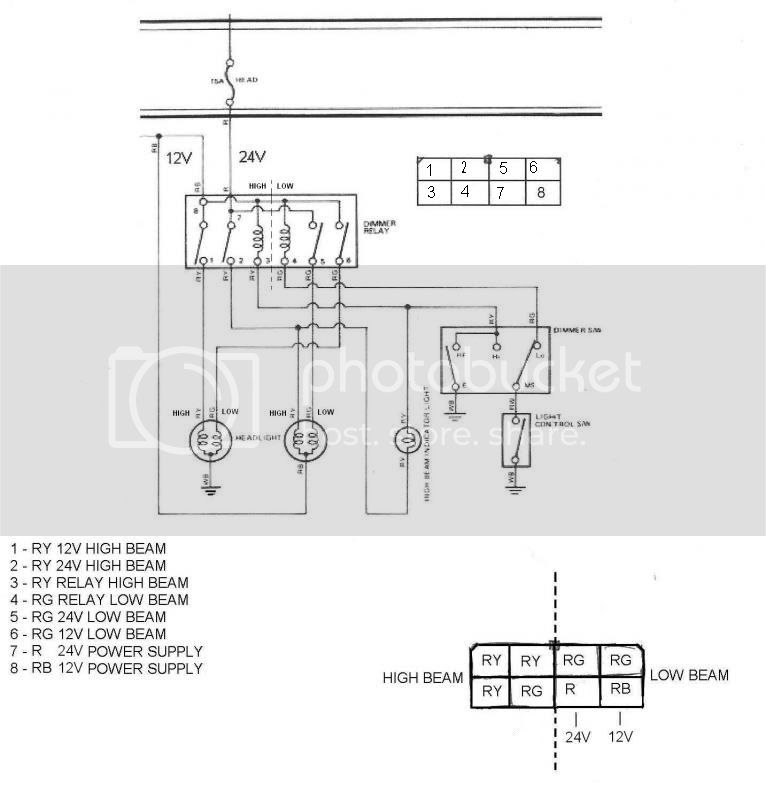
..This brings up a question. On the 12V (since 24V and 12V BJ's use the same DIMMER RELAY) dimmer relay, which prongs are which? The wiring diagram shows 1 through 8, but I have no idea which are which....

This image may be alittle bit of help:

DimmerConnections.webp
(I think I already emailed you the wiring diagram that contains this.)

And perhaps this thread too:

https://forum.ih8mud.com/diesel-tech-24-volts-systems/68379-78-bj-40-headlight-diagram.html

Any further questions and I think you'll need to contact electrical-savvy owners of similar vehicles etc.

Edit... Just noticed that Rudi is working on this too ... So he may well come up with more useful stuff.


....Per Tom's suggestion, I not only ground the battery, but run a grounding cable over to the block. ...

Yes. I think Toyota was a careless about properly earthing the engines on 40-series diesel cruisers.

The starter motor is the BIGGEST load by far for your electrical system .... and Toyota neglected to provide an effective return path for this massive current IMO.

(In my BJ40, the factory simply ran the negative from my battery to my LH guard/fender. And then they relied on the fender-mounting bolts ... assuming they bit-through the paint ... to connect the circuit to the chassis. And from there they ran a thick cable to my engine.)


...There is no longer ANY rust on the tub, it has all been filled or cut out and fresh steel welded in....

Great job. :clap:


:beer:
DimmerConnections.webp
 
Last edited:
Actually .............

the diagram I posted above, and again here:
DimmerConnections.webp
shows where to connect your R and RB wires Dallas. (Because there is only one of each of these wires.)

These two wires supply 24V and 12V (centre-tap) power to your DIPPER relay.

However if R connects to terminal 7 and RB connects to terminal 8 (which it does according to the 36044FSM wiring diagram) then the image I've posted above (which is again supposed to apply to your vehicle) suggests your terminals are NOT numbered in any recognisable sequence. :eek:

Bugger!

This makes it awkward of course.

For the other connections, you have three RY wires and three RG wires. And you can of course use a multimeter to determine which is which ... but this still leaves you wondering which terminals to connect each one to.

BTW - The word "dimmer" must surely be the result of a Japanese/English translation problem? Because it looks to me like it is actually a "dipper switch" (enabling you to dip you're silly 12V headlight bulbs for oncoming traffic)!!!! This is why I'm now calling it a DIPPER relay.

Sooooooo.....

I suggest you carefully connect your BR (evil centre-tap wire) to the appropriate terminal on your DIPPER relay leaving all other terminals unconnected. Then use a multimeter to find out which terminals get 12V voltage/potential relative to your body/chassis. (ie - the same voltage that your BR wire is feeding in.)

Hopefully there are just two other terminals that show 12V (beside the one you connected the BR wire to). If so, these will go to your DIP switch (which they call a DIMMER switch of course).

Earthing one of these terminals will represent "DIP" (and will operate one internal relay to put 12V across both your low-beam headlight filaments) whereas earthing the other terminal will represent "HIGH BEAM" (and will operate another internal relay to put 12V across your high-beam headlight filaments). From this
(and using your multimeter), you should be able to connect these terminals (that became 12 +Ve) to your RY and RG wires coming from your dip switch.

And then you could work from there.

Note: Even with your dipper relay unconnected
  • The common terminal on your RH headlight should be 12V (relative to your body/chassis)
  • The common terminal on your LH headlight should be earthed (ie connected to the body/chassis)
:cheers:
DimmerConnections.webp
 
You reckon you're a novice as far as the electrical is concerned but I have tremendous respect for anyone who chooses to use soldered connections Dallas.

When crimp connections were introduced (to replace soldered ones), the sellers did their best to discredit soldering.

But when done properly I still reckon soldering is THE BEST way of making trouble-free permanent electrical connections.

Absolutely. Western Union splice soldered and shrink wrapped has yet to fail on me (and the faux-lux has a few hundred of them in the engine harness).

Dallas: you are positively flying through this. I'm sure it feels like a long time tangling through wires and bundles of wires, but you're getting to the bottom of it, that's for sure!

Dan
 
Hi Dallas,

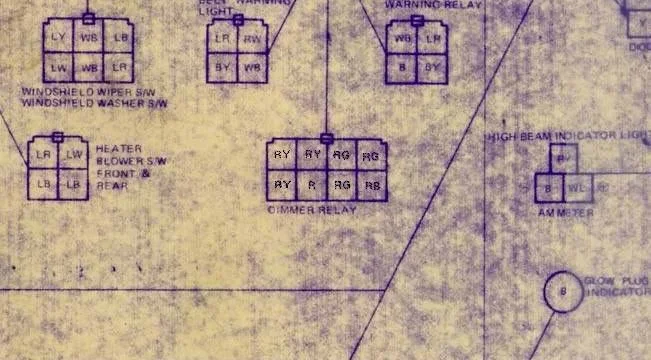
Below you see my "worksheet" for figuring out which wire goes where.
As Tom said, there is no logic to the numbers other then Toyota did the numbering counter clockwise starting bottom left in the diagram, so that's not helpfull.
Thanks to Tom for supplying the connector lay out we can establish RB (#8) on bottom right and R (#7) on bottom 2nd from the left.
Now looking at my worksheet you'll notice that the 3 RY and 3 RG wires are in a cluster.
The RY wires are on the left side and the RG wires are on the right side.
If we can figure out the 2 (#3 and #4) relay terminals, then we know the terminals for high and low beam.
If we hook up the relay with the 2 power lines and the relay terminals connected we can simply meassure which voltage comes from which terminal and then we can hook up the light bulbs.
headlights connector crop.webp
Ok, it's late, time for a :beer: or 2

Rudi
headlights connector crop.webp
 
Last edited:
After reading your post above Rudi, how does this sound for a revised approach by Dallas?

Get the multimeter and set it to "ohms". Then put one probe on prong # 8. (We should know which one is prong 8 .... provided the connector can push-on in only one way.)

Now find out which prongs have continuity with prong 8.

Hopefully there should be only two, and if so, these will be prongs 3 and 4.

After identifying prongs 3 and 4 in this way (but not knowing which is which), connect them to the RY and RG wires coming from the "dip switch" in any order.

Now mount the relay in the cruiser and use the batteries there to supply 12V to prong 8 and 24V to prong 7 as per the wiring diagram.

Now put the headlights on "dip" and see which prongs become live. (One prong should suddenly have 12V and another should suddenly have 24V.) Connect the 12V prong to the RG wire for the LH headlight and connect the 24V prong to the RG wire of the RH headlight.

Now put the headlights on high beam and see which 2 prongs become live. Connect the 12V prong to the RY wire for the LH headlight and the 24V prong to RY of the RH headlight.

Done.

(Of course this assumes that Dallas is able to safely liven-up his wiring.)

:beer:

Edit:

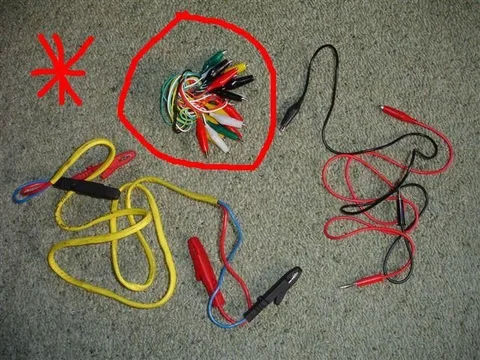
A set of leads like these are available from most electronics stores and are very useful for doing things like we're discussing here:

TestLeads1.webp

PS. While the dimmer/dipper relay sends 12V to the LH headlight filaments and 24V to the RH headlight filaments, ALL filaments get just 12V applied across them because the common-terminal (ie the terminal that is common to both high-beam and low-beam filaments) of the LH headlight is earthed whereas the common terminal of the RH headlight is "the evil centre tap". (Just saying this for the sake of anyone stumbling across this post who may mistakenly think the RH headlight needs a 24V bulb because it is getting fed with 24V by the dimmer/dipper relay.)

PPS. Another drawing of the same area we're looking at but with the switches drawn differently. (It may help some people but so far it hasn't told me anything new.) ...

AnotherDrawing.webp
TestLeads1.webp
AnotherDrawing.webp
 
Last edited:
Of course - It will be as correct as in my power. I shrill when I see these corvette yellow cruisers with 454 chevy's in them....or metallic silver with 20" wheels. The only time I have ever messed with the stock color was on my FJ45. It was supposed to be cream, but I painted it rustic green. Still a Toyota color - but was not correct on the truck. I plan on painting this the stock beige. Thanks for staying tuned!!

Careful now - the PO of my 40 painted it metallic silver and it's kinda growing on me ;)

On the wiring, I concur that if you've got the hang of soldering then you're not doing too bad on the wiring front. Soldering still doesn't come easy for me. Maybe I'm using the wrong type of soldering iron?
 
Hi Tom & Dallas,

I'll be back on this later this morning (for me).
First breakfast and the daily chores.

Rudi
 
Hi Tom, sounds good but I've some remarks. I'll write in red in your text.

After reading your post above Rudi, how does this sound for a revised approach by Dallas?

Get the multimeter and set it to "ohms". Then put one probe on prong # 8. (We should know which one is prong 8 .... provided the connector can push-on in only one way.) The relay doesn't seem to have an indicator so there are 2 options. Depending how you have the relay in front of you. Prongs on the bottom side or prongs on the top side.

Now find out which prongs have continuity with prong 8. Use the bottom right prong as #8.

Hopefully there should be only two, and if so, these will be prongs 3 and 4. If you can't find the prongs turn the relay 180 degrees and start all over.

After identifying prongs 3 and 4 in this way (but not knowing which is which), connect them to the RY and RG wires coming from the "dip switch" in any order. If you have found the 2 prongs while holding the relay in such position that #8 is bottom right, the prong #3 is in the left (RY) section and #4 is in the right (RG) section.

Now mount the relay in the cruiser and use the batteries there to supply 12V to prong 8 and 24V to prong 7 as per the wiring diagram. And connect RY and RG from the dipper/dimmer switch to the prongs you have found above or...... wait and report here so we can check. If you are sure you are on the right track continue...

Now put the headlights on "dip" and see which prongs become live. (One prong should suddenly have 12V and another should suddenly have 24V.) Connect the 12V prong to the RG wire for the LH headlight and connect the 24V prong to the RG wire of the RH headlight.

Now put the headlights on high beam and see which 2 prongs become live. Connect the 12V prong to the RY wire for the LH headlight and the 24V prong to RY of the RH headlight.

Done.

(Of course this assumes that Dallas is able to safely liven-up his wiring.)

So far my comment, if Dallas is not sure (and I don't blame him, because this is a whole new world for him) we can split this up in 2 steps.

Talk to you guys later,

Rudi
 
Hey I think you plugged the hole for the heating lines... lol, maybe just a bad picture, but there is supposed to be an oval hole to the right of the tranny hump (on the firewall)
 
TurboDiesel69 said:
Hey I think you plugged the hole for the heating lines... lol, maybe just a bad picture, but there is supposed to be an oval hole to the right of the tranny hump (on the firewall)

It's the picture... The stock oval is just to the left of what I welded. When the po put the v8 in, it blocked the stock holes, so the genius torched another big hole and used plastic plumbing fittings to hook it all up.

Don't scare me like that!!!

I'm in the process of digesting all ofthis wonderful information.
 
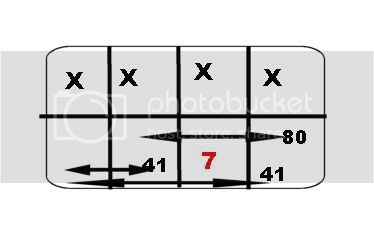
Ok, so just using the Ohms meter and continuity test - this is what I came up with:

BigT is working with me this weekend and discovered a faint "7" on one of the prongs - which I have noted in RED. The other numbers are unknown. 7 does not have connectivity to any other prongs. An "X" denotes no connectivity to any other prongs.

DIMMER-1.jpg


Note the grid here is just as you are looking at the plugs.

KEEP IN MIND - I don't have the harness plug that plugs into the relay - the PO crimped 8 little female plugs onto the ends of the wires. So, I have to individually solder these.

Hmm.....
 
Last edited:
Another homework test.....

I braved hooking up the batteries again (connecting them live) and ONLY the 12V evil centre trap (#8, RB) and hooked it onto what I show above as the #8 12V POWER SUPPLY in Rudi's worksheet.

Sure enough - I have 12.6V on 8, and the above proposed #3 and 4 positions.
 
Last edited:
Back
Top Bottom