



For a while I had been wanting to order me a Condensator. I didn't buy into the claims of improved performance and fuel economy, but liked the idea of keeping my intake clean and free of the nasty sludge and carbon buildup that Toyota's F series engines are prone to. I did some research and heard of some great results other people had by building their own catch cans, so I decided to give it a shot. Using Overhanger's method as a jumpoff point, I decided to use an air/oil separator bought from Home Depot to see what kind of results I would have. This is more an experiment than anything else, but if I like the results, I'm going to turn it into a more permanent installation.
First thing, same as with Overhanger's setup, was to find a way to fix the drain valve on the bowl. It's designed to seal against pressure inside the bowl, but not vacuum, which is how the engine draws the gas and sludge from the crankcase via the PCV system. Instead of dicking around with the valve, I just popped it out, cut some threads in the hole at the bottom of the bowl, and installed a 1/4 NPT plug. This will hopefully make draining a little easier as well.
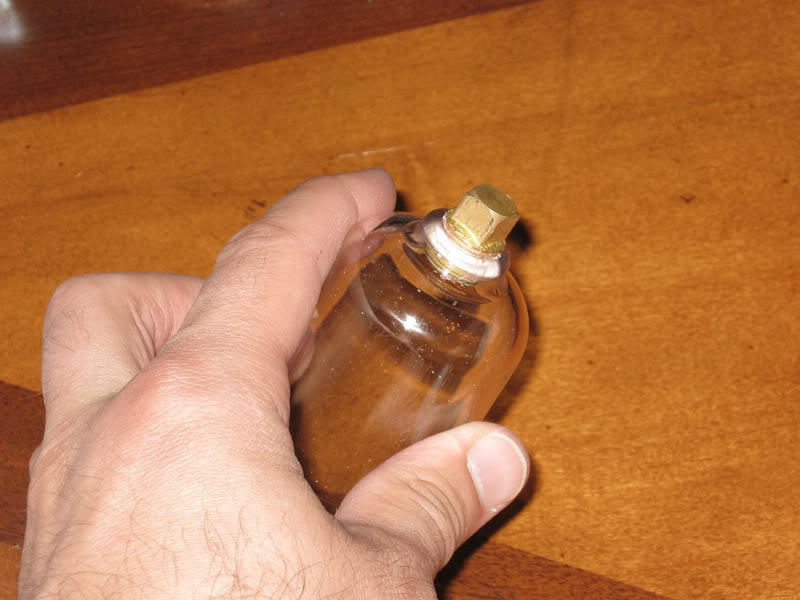
During my research on PCV filters and catch cans, I read from several people that free airflow is necessary to ensure that the PCV system itself still works properly. The filter element in the Husky unit I bought was made of brass, so I drilled several 1/16" holes in it to make it less restrictive. In the next two pics you can see a few of the holes I drilled. There were 8 holes total. Also, I used 3/8 NPT barbed fittings for 3/8" ID hose.
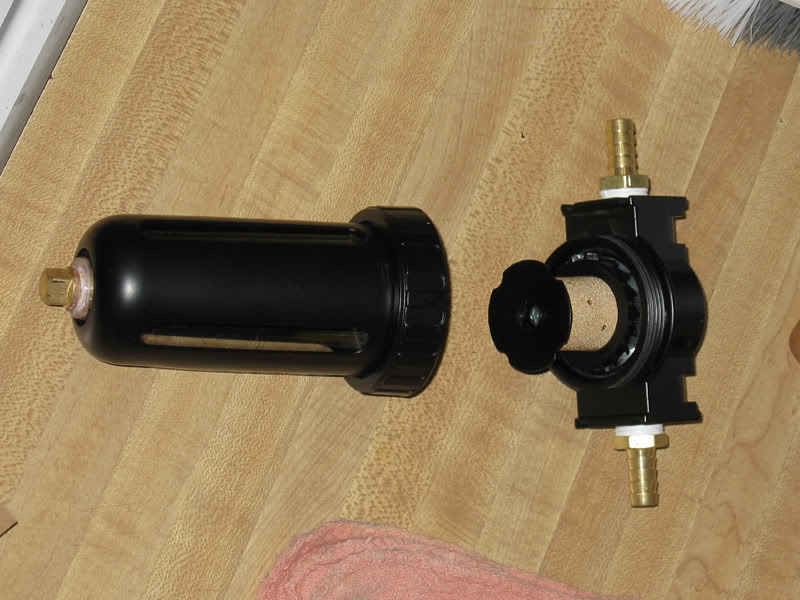
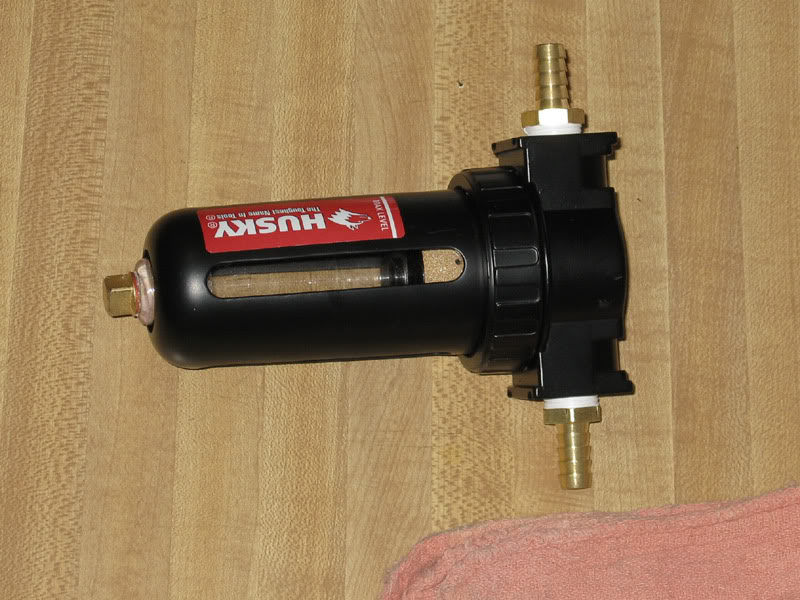
I got too focused on the overall goal of my project and neglected one small detail until I tried to figure out where this would be installed exactly: the fact that the Husky unit doesn't have any provisions for mounting!
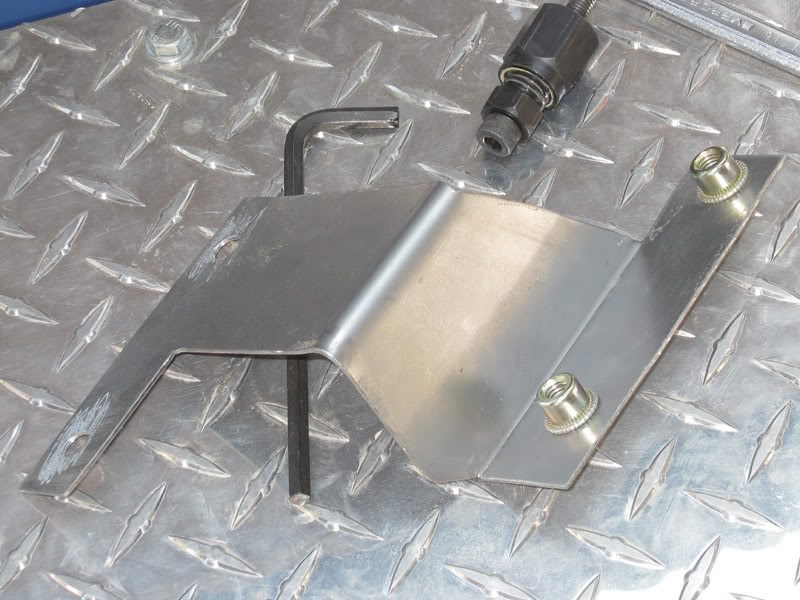
Well as I seem to have built up quite a skill doing, I improvised. I found a large adel clamp and a few nutserts that I had left over. After doing up a cardboard template, I cut a piece of 16ga steel and drilled it for the mounting bolts and the adel clamp, which was opened up and will be mounted via the nutserts. Here you can see the front and back of the bracket. For those of you not familiar with nutserts, they're the zinc-looking nuts crimped onto the bracket. The black thing is the installation tool. I absolutely love these things. They're also what I used to secure the diamondplate to my tailgate.
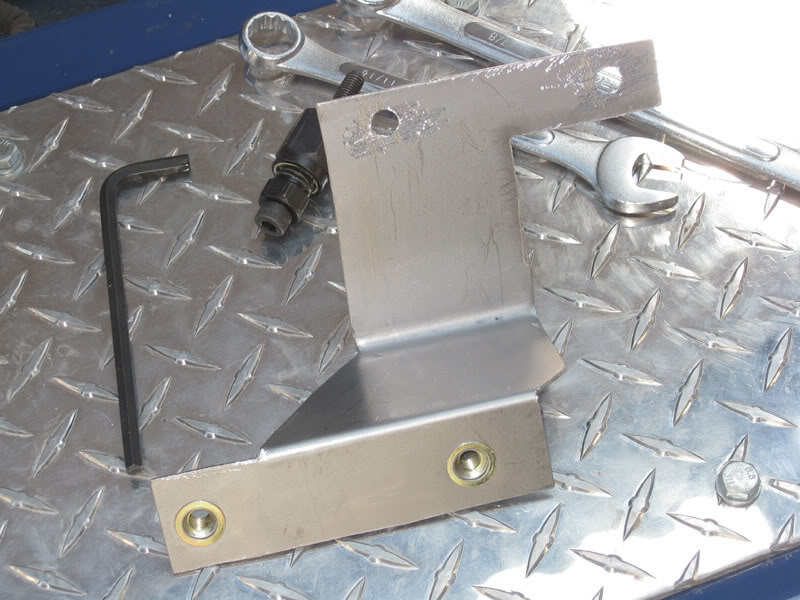
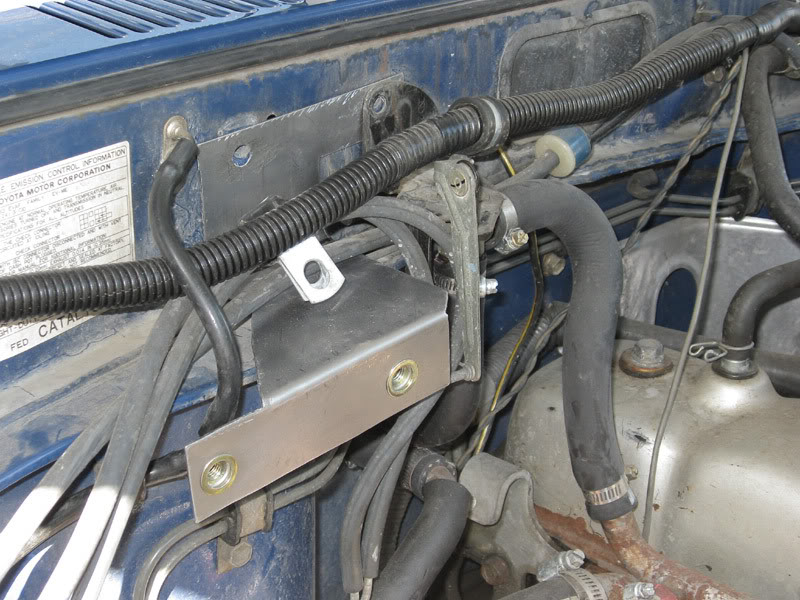
A test fit of the bracket...
And the bracket painted black with the adel clamp and filter assembly installed. It's kind of wobbly because the steel isn't very thick and the filter is a bit heavy for that long of a stretch of flat 16ga steel. In the future I'm going to redesign the bracket and see if I can maybe beef it up a bit, or just make one out of beefier material. I'll also replace the Husky filter with a Craftsman one, or at least one that's got provisions for mounting it. The adel clamp holds it securely, but not securely enough for my taste. Like I said, this is more of an experimental setup.


Results? After just one 40-mile round trip commute to work and back, there's already some sludge in the bottom of the bowl, so I know it's working in that aspect. The big test will be at the end of August when I drive over to Everett to see my family. I'll empty the bowl before then and measure how much sludge ends up in there. Performance-wise, there does seem to be an improvement, but it's small enough that it could just be psychological. I really wish I could get some before & after dyno numbers to see if there really is a difference. Feels stronger when climbing hills though.
As far as economy, right now I'm averaging 13.5-14 MPG. After a couple weeks I'll see if it changes at all and report back.
Overall, given that everything that ends up in it is NOT making its way into my intake, I'm pretty happy with it. Worth doing, IMO.
First thing, same as with Overhanger's setup, was to find a way to fix the drain valve on the bowl. It's designed to seal against pressure inside the bowl, but not vacuum, which is how the engine draws the gas and sludge from the crankcase via the PCV system. Instead of dicking around with the valve, I just popped it out, cut some threads in the hole at the bottom of the bowl, and installed a 1/4 NPT plug. This will hopefully make draining a little easier as well.
During my research on PCV filters and catch cans, I read from several people that free airflow is necessary to ensure that the PCV system itself still works properly. The filter element in the Husky unit I bought was made of brass, so I drilled several 1/16" holes in it to make it less restrictive. In the next two pics you can see a few of the holes I drilled. There were 8 holes total. Also, I used 3/8 NPT barbed fittings for 3/8" ID hose.
I got too focused on the overall goal of my project and neglected one small detail until I tried to figure out where this would be installed exactly: the fact that the Husky unit doesn't have any provisions for mounting!
Well as I seem to have built up quite a skill doing, I improvised. I found a large adel clamp and a few nutserts that I had left over. After doing up a cardboard template, I cut a piece of 16ga steel and drilled it for the mounting bolts and the adel clamp, which was opened up and will be mounted via the nutserts. Here you can see the front and back of the bracket. For those of you not familiar with nutserts, they're the zinc-looking nuts crimped onto the bracket. The black thing is the installation tool. I absolutely love these things. They're also what I used to secure the diamondplate to my tailgate.
A test fit of the bracket...
And the bracket painted black with the adel clamp and filter assembly installed. It's kind of wobbly because the steel isn't very thick and the filter is a bit heavy for that long of a stretch of flat 16ga steel. In the future I'm going to redesign the bracket and see if I can maybe beef it up a bit, or just make one out of beefier material. I'll also replace the Husky filter with a Craftsman one, or at least one that's got provisions for mounting it. The adel clamp holds it securely, but not securely enough for my taste. Like I said, this is more of an experimental setup.
Results? After just one 40-mile round trip commute to work and back, there's already some sludge in the bottom of the bowl, so I know it's working in that aspect. The big test will be at the end of August when I drive over to Everett to see my family. I'll empty the bowl before then and measure how much sludge ends up in there. Performance-wise, there does seem to be an improvement, but it's small enough that it could just be psychological. I really wish I could get some before & after dyno numbers to see if there really is a difference. Feels stronger when climbing hills though.
As far as economy, right now I'm averaging 13.5-14 MPG. After a couple weeks I'll see if it changes at all and report back.
Overall, given that everything that ends up in it is NOT making its way into my intake, I'm pretty happy with it. Worth doing, IMO.


