Earl - my HJ47 Project

This site may earn a commission from merchant affiliate
links, including eBay, Amazon, Skimlinks, and others.

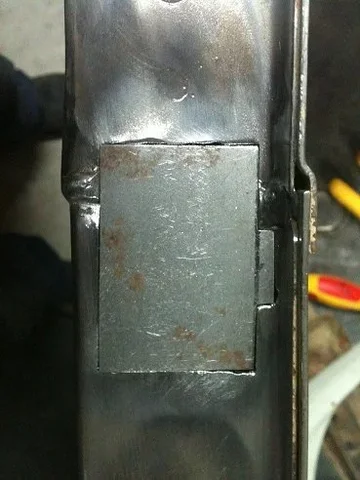
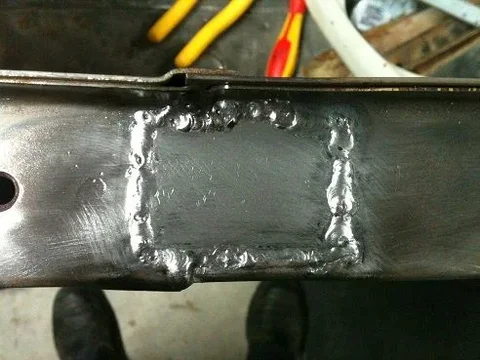
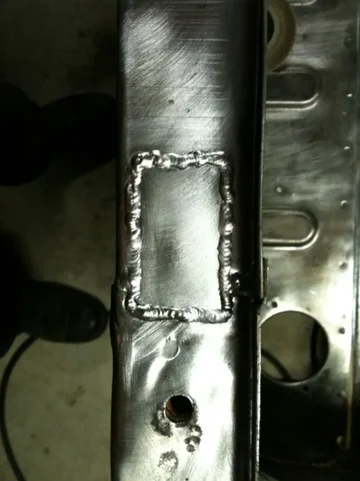
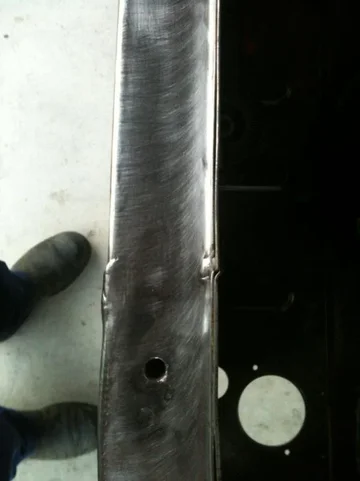
I was very fortunate to of met an old guy who had been in the body repair business all his life. This guy had all the old school tricks to repairs but use modern products such as POR 15. I thought I would try something that he showed me by not having to use a welder on small repairs. The bib in the photo is costly to replace just for that one area shown. He showed me how to cut out that area and install a new replacement piece of medal without welding, mainly due to is is very thin medal. He used the POR15 paste with a reinforcement backing plate to fill the damaged area put clamps on it to hold in place. After some clean up work the next day the dam thing was like new and will never rust due to the product he used. Of course there is more to it than that but from his knowledge and help saved the bib and some cash. Looks good now, no weld seams light glaze fill. You have to consider the areas when using this technique. Is it a high stress area, high vibration, and most of all is it a constant wet area. If it is any of the above then this is not the repair to use.This truck sat in one spot outside for many years.:wrench:
_9163103.webp
_9193185.webp
_9243231.webp
 
I was very fortunate to of met an old guy who had been in the body repair business all his life. This guy had all the old school tricks to repairs but use modern products such as POR 15. I thought I would try something that he showed me by not having to use a welder on small repairs. The bib in the photo is costly to replace just for that one area shown. He showed me how to cut out that area and install a new replacement piece of medal without welding, mainly due to is is very thin medal. He used the POR15 paste with a reinforcement backing plate to fill the damaged area put clamps on it to hold in place. After some clean up work the next day the dam thing was like new and will never rust due to the product he used. Of course there is more to it than that but from his knowledge and help saved the bib and some cash. Looks good now, no weld seams light glaze fill. You have to consider the areas when using this technique. Is it a high stress area, high vibration, and most of all is it a constant wet area. If it is any of the above then this is not the repair to use.This truck sat in one spot outside for many years.:wrench:

Thanks for sharing the detailed info love2fly, this is why mud is so good. Heaps of good ideas and experience.

POR15 is available in Oz so I can get some of the POR15 paste. So the way forward would be cut out the badly rusted sections and weld in new, sandblast pitted sections and fill with POR15 paste skim of quality filler then DTM epoxy primer? Should body filler be put directly onto bare metal, then epoxy primer over that? probably should read the product info. Another question, how much DTM primer would I need roughly to do all the panels, chassis and a bed if I find one? All will be taken back to bare metal.

I am really keen to get stuck into some body work so tonight I will do a test patch panel and see how I go! Cheers

Sent from my iPhone using IH8MUD
 
Body

My first suggestion to you and this is mine, is to slow down everything you are doing and find the one area you want to focus on. If it's the body work, then take some time and bag all the other parts to storage and out of the way as the body work is going to be a critical area if you are new to it.
Put all the body parts that need work in one area, door, windshield frame, and such. Make notes to the damage and felt pen or tag the areas of damage or repairs needed. Gut the doors of glass and parts, and so on. I would start if new to metal work with the least of work needed, pitting and surface rust or a dent or just paint removal. This way you can get a better feel of what is going to come in the future when you tackle the rot areas and cutting out panels. Just prep all parts for now so you can buy what is needed all at one time instead of bit by bit.
The secret is take your time. You get much better results compared to doing everything at once.
I am going to ask you a few question on what you have for tools, this is important for us who are reading your thread.
What kind of metal cutter do you have. 3" or 4" disc
What kind of welder and range of metal settings.
What size disc sander do you have and speeds, 6"-7"
Do you have a paint spray gun with air
Do you have a caliper for metal thickness check
I am sure I am missing some items but to do the job right you will need the right tools.
As for the primers, this will depend on how well your body work is done. If you do not care about dents or warped patch's that were welded in then you can do the whole thing (with LWB) with maybe one gallon and be done with it. But if you want it done right it may take two shots of primer and lots of sanding with a long board block to get it all perfect. It took me three weeks for all the cab, hood, bonnet, doors, fenders, and smalls to be completed, and that was not 3 week in a row, had to work. I ended up using one gallon DTM on all those parts and one gallon 464 color paint. I am still working on the bed, slowly. You can see in the photos were I am still working the surface area with glazing compound after my welding in large panels. While welding the panels in it is wise to go slow and move ahead by 4-5" after four spot welds, helps keep the warping down. I had a long run and had very little if any warping , go slow let the areas cool.
Start looking checking around body shops that will do panel welding for you if you don't have the equipment, and check on paint price if not already, not cheap. Some places do not like to paint car in pieces. All this will dictate on what you can afford to do or not. If your a millionaire then you good to go.
:beer:
1-8-20131-200 s.webp
DWL Photos 13 (2).webp
P3275047.webp
 
My first suggestion to you and this is mine, is to slow down everything you are doing and find the one area you want to focus on. If it's the body work, then take some time and bag all the other parts to storage and out of the way as the body work is going to be a critical area if you are new to it.
Put all the body parts that need work in one area, door, windshield frame, and such. Make notes to the damage and felt pen or tag the areas of damage or repairs needed. Gut the doors of glass and parts, and so on. I would start if new to metal work with the least of work needed, pitting and surface rust or a dent or just paint removal. This way you can get a better feel of what is going to come in the future when you tackle the rot areas and cutting out panels. Just prep all parts for now so you can buy what is needed all at one time instead of bit by bit.
The secret is take your time. You get much better results compared to doing everything at once.
I am going to ask you a few question on what you have for tools, this is important for us who are reading your thread.
What kind of metal cutter do you have. 3" or 4" disc
What kind of welder and range of metal settings.
What size disc sander do you have and speeds, 6"-7"
Do you have a paint spray gun with air
Do you have a caliper for metal thickness check
I am sure I am missing some items but to do the job right you will need the right tools.
As for the primers, this will depend on how well your body work is done. If you do not care about dents or warped patch's that were welded in then you can do the whole thing (with LWB) with maybe one gallon and be done with it. But if you want it done right it may take two shots of primer and lots of sanding with a long board block to get it all perfect. It took me three weeks for all the cab, hood, bonnet, doors, fenders, and smalls to be completed, and that was not 3 week in a row, had to work. I ended up using one gallon DTM on all those parts and one gallon 464 color paint. I am still working on the bed, slowly. You can see in the photos were I am still working the surface area with glazing compound after my welding in large panels. While welding the panels in it is wise to go slow and move ahead by 4-5" after four spot welds, helps keep the warping down. I had a long run and had very little if any warping , go slow let the areas cool.
Start looking checking around body shops that will do panel welding for you if you don't have the equipment, and check on paint price if not already, not cheap. Some places do not like to paint car in pieces. All this will dictate on what you can afford to do or not. If your a millionaire then you good to go.

:beer:

love2fly, thanks for the reply:cheers:the more help that I get, the better my 47 will end up. It is funny that you should say slow down and focus on one thing, as that is exactly what I decided to do last week. The cab/body work prep is my main focus at the moment as it has most of the paint off and I don't want to have it sitting here slowly rusting up again creating more work. All my body panels are in one corner of the shed, ready for body work and the other stuff is on the shelf waiting its turn. I agree one thing at a time is good.
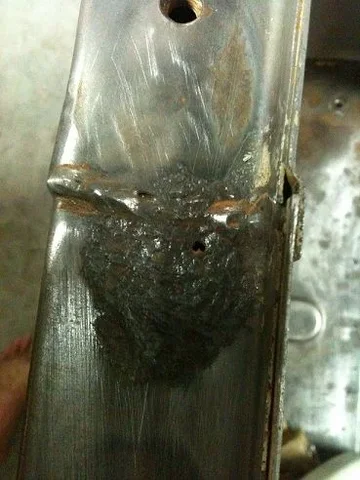
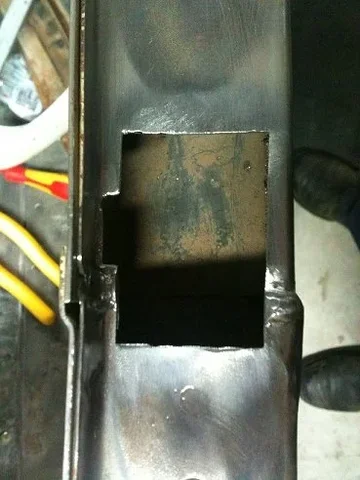
I am not new to metal work as I am a fitter/machinist of several years, have done some welding and a few other things, generally pretty handy. But I am new to doing body work on a vehicle so I have choosen to start on the rear sill as it needs small rust repairs and won't be seen once assembled, the perfect spot to start.

As for tooling I have-
-4", 5" and 7" angle grinders
-Cordless and electric drill
-Disc sander 6"-7" with adjustable speeds
-HVLP spray gun
-LVHP spray guns
-Vernier calipers
-Micrometers
-General engineering/manufacturing type hand tools, such as spanners, socket sets, files, hammers, squares, pin punches etc
-Gasless MIG(I'm not a big fan of it)
-Bench grinder
+soon to own a 10 gal portable sandblaster

At work I have access to and can use after work or borrow-
-LVHP spray guns
-440L/min - 15.5CFM compressor
-Lathes
-Milling machine
-Large pan brake
-Medium pan brake
-drill presses
-Sheet metal guillotine
-Shears
-10t workshop press
-MIG
-TIG
-Arc welders
-Various air tools
-Bearing pullers
etc...

So I have access to a fair amount of tooling/equipment. This is not a full list of what I can get my hands on, so if there is anything else you can remember post it up.

My aim is to get the body to as it came out of the factory, I don't mind seeing spot welds as thats how they came. Saying that, if I fill/cover the spot weld I don't mind either. I DON'T want to see any of my patch work/welding. So if I need to sand with a long board block for days and days so be it.

I picked up the weld some here, weld over there/let it cool trick while doing my trade so I am up to speed with that method. I have read it here on mud a fair bit as well, it is a great tip.

I won't be getting a shop to do my repairs or my paint as I wan't to do it myself, more satisfaction, and I am not a millionaire, so its up to me. My Dad has painted some cars and he used to paint trucks back in the 80/90s so he will be helping me with that.

Thanks again for your advice, experience and taking the time to reply. It is greatly appreciated. I owe you a beer:beer:
Soot
 
This is one spot of the rear sill rust. This is my first crack at removing rust from the 47. Here goes nothing.
161.webp

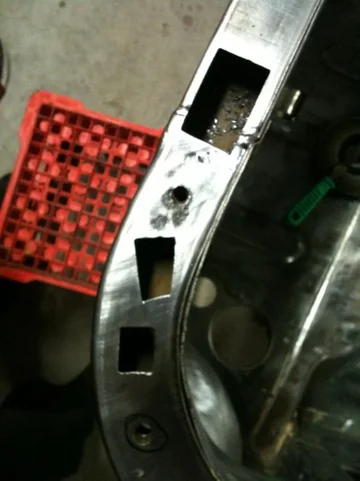
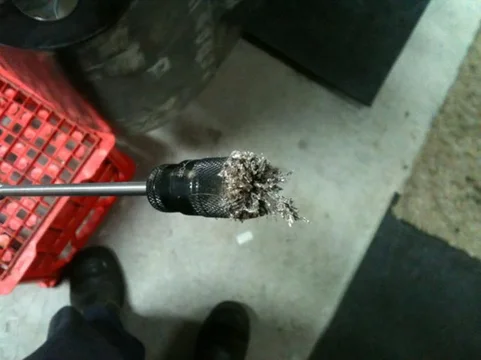
Rust section completly removed, I checked underneth with a mirror on a stick to make sure. Suprisingly the factory weld had very liitle penetration in this area. I put a magnet on telescopic stick down the hole to pick up as much swarf and metal filings as possible before welding in the new patch.:hillbilly:
IMG_0287.webp
161.webp
IMG_0287.webp
 
Patch panel made out of same thickness, This photo doesn't show it but I sanded and put a coat of etch primer on the bottom side of the patch panel befor welding in, the welds will burn some of it off but it is better then nothing.
IMG_0286.webp
I used a TIG to weld the new patch in, my welds didn't start off looking pretty but they should have good penetration as I did some test welds on the same material the patch was made from and had good penetration.:hillbilly: I welded about 3/8" long then moved to the other side, then the area cool and continued welding.
IMG_0290.webp
Very happy with the results,:bounce: smooth and no holes, put light skim of filler on, sand and done.:bounce:
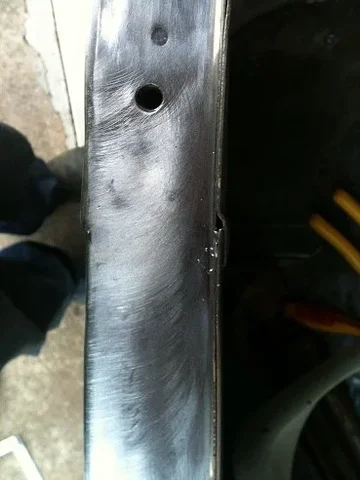
IMG_0299.webp

Onto the next section of the rear sill:cheers:
IMG_0286.webp
IMG_0290.webp
IMG_0299.webp
 
Cut out the other rusty section, filed and ready to patch up.

image-1174259826.webp

I put a magnet down into the rear sill space after removing the rust section to get all the swarf and metal filings out before I sealed it back up, better doing this now then doing it later and forgetting. I welded the two small ones first and checked the weld penetration with a small inspection mirror, good penetration so nice and strong.
image-4084714792.webp

Fully welded ready for grinding down flat and smooth.
image-3589758446.webp

Sent from my iPhone using IH8MUD
image-1174259826.webp
image-4084714792.webp
image-3589758446.webp
 
That's coming along nicely....super 1st rust repair!

Thanks for the comments andrews520,:cheers:

I only used the TIG as it is quite small and easy to bring home from work and take back when I need it. It did a great job! If I had to do some major panel work I would have taken the cab to work and used the MIG, but the TIG came through! Work is about 40 minutes from where I live, bit of a hassle to cart it up and back but if that's what I need to do then so be it. As I said before I am very happy with the results of the first few rust repairs. More to come.:hillbilly:
 
That looks fantastic! I wish I could weld in body panels like that with my Mig.

Thanks D'Animal, I just had a quick look at you 64 fj45 swb build and it looks like you have the welding thing down pat, very creative body work indeed.

I think I'm lucky that I have to grind the welds down so they can't be seen:p

I am thankful that someone invented body filler!
 
Nice.
What tool do they fix on to & how?

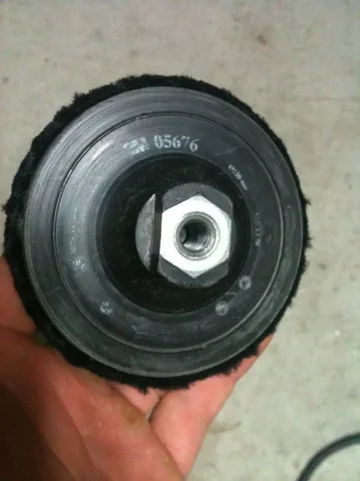
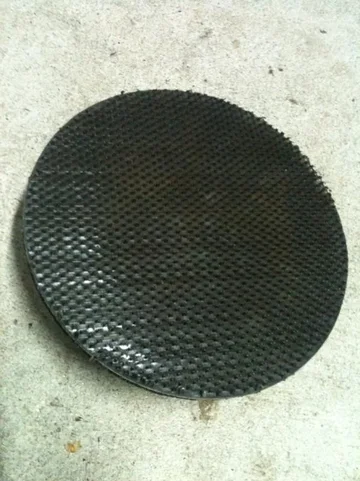
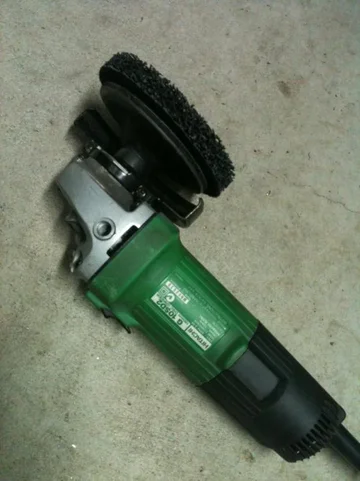
They stick onto a backing disc via Velcro that goes on an angle grinder, this one is a 4" backing disc but the 4 1/2" discs still fit on it and clear the guard. They come in other sizes, 3M should sell the backing discs, there is a part number in the photo, hope this helps cheers

image-1051970799.webp
image-1647114150.webp
image-2215132999.webp

Sent from my iPhone using IH8MUD
image-1051970799.webp
image-1647114150.webp
image-2215132999.webp
 
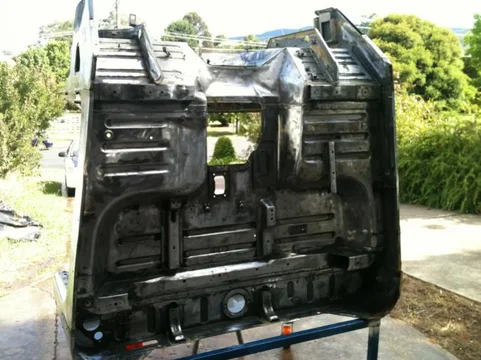
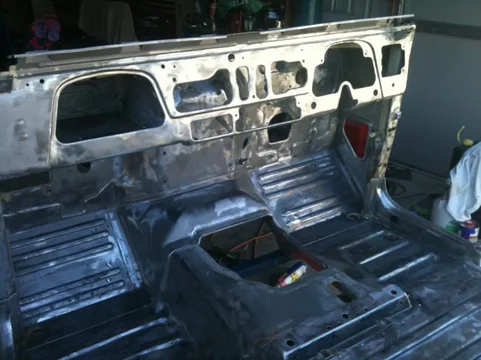
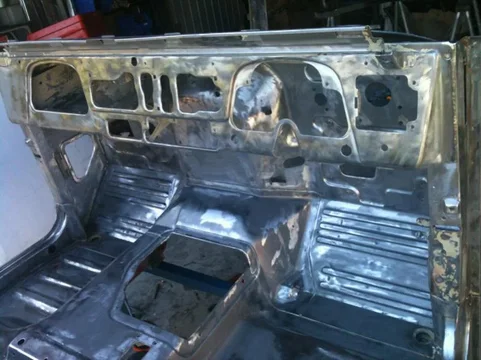
Well I earned my nickname as I was covered in crap and looked like a chimney sweep after getting the underbody coating off the cab.
image-2762057271.webp


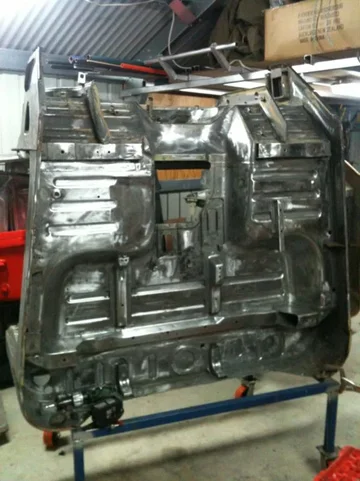
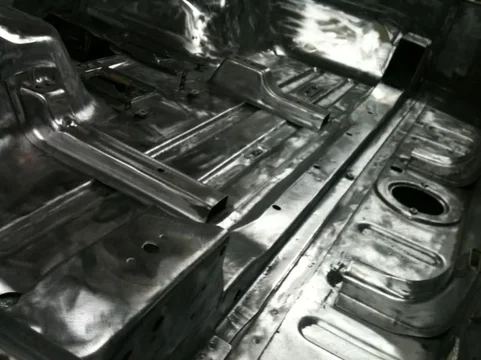
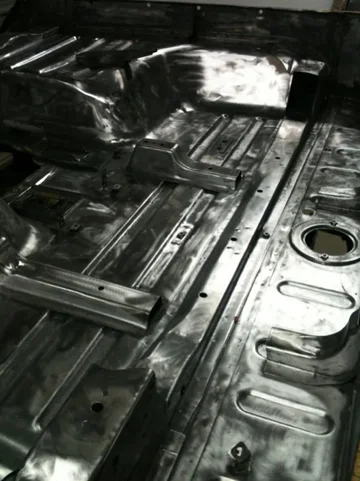
I can tell you I had a lot of beers whilst getting it to this stage, I was bored and couldn't make too much noise after dinner, so cordless drill/ wire brush and off I went!
image-764035324.webp

Sent from my iPhone using IH8MUD
image-2762057271.webp
image-764035324.webp
 
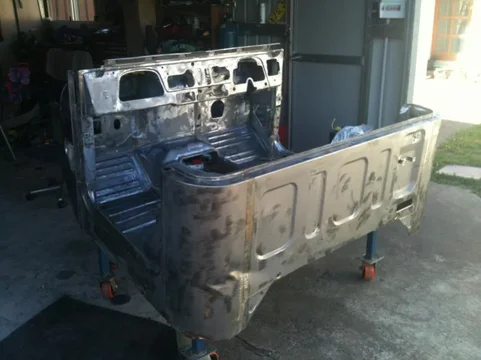
Looks really good SOOT. There's something cool about bare metal Landcruiser parts.
 
You really went to town on getting all of the old paint off. I had more paint left on mine even after it was sandblasted.

Great attention to detail.

Yeah I got a little bit carried away, probably could have just done what I need to move on with body repairs but I had the tools in my hands, I was already dirty and thought what the heck.:meh: when I finish off the body repairs and get my sand blaster I will give it a hit with that to make sure most of the nooks and crannies are paint free. :banana:
 
Back
Top Bottom