Onesprung60: 1967 FJ40 Frame Off Restore

This site may earn a commission from merchant affiliate
links, including eBay, Amazon, Skimlinks, and others.

Got a few other things done tonight; some of this was already in progress, it just got finished tonight.

First, the warn hubs are overhauled and installed. I had a rough time finding the o-ring for dial, even the local warn dealer couldn't get one for me. Luckily after many failed attempts at other places I was able to track one down at a local hydraulic shop. I really like how the hubs turned out, I painted the whole dial flat black and then sanded the paint off the flat surfaces and polished the brass a little. It really makes the lettering stand out.
1967 FJ40 113 (Medium).webp
 
Also got the taillights temporarily installed, I need to get some teethed washers so they will ground properly and then I will bolt them up permanently.

Along with the taillights I was able to keep the original taillight guards as well. I used a little WD40 and a fine scotchbrite pad to clean them up, and then a little back to black to darken them up a little. I am pretty surprised they look as well as they do, and it seems like a pretty rare item that is no longer available so I am glad I could save these ones.
1967 FJ40 095 (Medium).webp
1967 FJ40 087 (Medium).webp
1967 FJ40 120 (Medium).webp
 
A few more things wrapped up tonight.

Got some wheel cylinder rebuild kits in the mail from Cruiser Outfitters (Thanks Kurt!), so I could finish up the right front brakes, made some adjustments to the brake lines to make the bends a little cleaner and tighter like they should be and disassembled the steering gear box.

I think the steering gear box must have been loose at some point because the housing near the pitman arm was all mushroomed out. I was able to use a dremel tool and get it cleaned up. I will get it blasted tomorrow and the start putting it back together tomorrow night. Still waiting for some other parts to show up and then I can get started on getting the engine back in the frame.
1967 FJ40 123 (Medium).webp
1967 FJ40 127 (Medium).webp
1967 FJ40 139 (Medium).webp
 
Found a picture of a '64 in an other tread with an extra set of taillights mounted high on the hard top using brackets that look like yours.

They appear to be original, don't know if they where still used on a '67.

waiting for time, Those rear lights on the top are not original...nor is the second/bottom glass on the bifold.

onesprung60, Looking forward to more pics as you get them :cheers:
 
waiting for time, Those rear lights on the top are not original...nor is the second/bottom glass on the bifold.

onesprung60, Looking forward to more pics as you get them :cheers:

I understood they where an option in the 60s, not shure do.
 
Man that looks good.

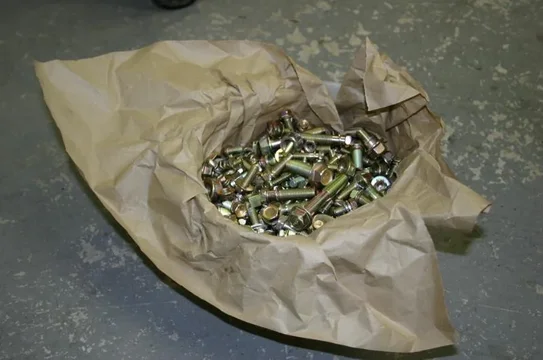
New yellow JIS hardware though? You have a ways to go in the anal-retentive department my friend...:grinpimp:
anal retentive bolts.webp
Yes, those are all Toyota bolts, replated (unfortunately you can't get as good of plating today as original). I'm such a nerd.

I might have missed it: are you converting to dual circuit brakes? If not, please do. It's a safety issue, AND other than a few differences in brake lines and the brake MC, nobody will know the difference...

As to your air cleaner question: you should easily be able to make an early air cleaner fit that 2F. The hardest part will be the bracket for the air cleaner. It originally bolts to the block, but the later 2Fs have a PS pump in that spot, so I'm not sure if the bolt holes line up exactly, but even if not--it's an easy bracket to fabricate.

Keep it up! That's looking incredible so far!:clap:

Dan
anal retentive bolts.webp
 
Awesome BTW, I am in a similar position restore wise. Question on brake lines. I couldn't find 9mm brake line either, so bought new fittings from SOR and was going to buy new steel line from a local auto parts place and do the flaring myself. No worries there, right?

Awesome thread!!!!!


Once the frame was back it was time to bolt the axles back in place, and then decide where to go from there. I am trying to get the chassis ready for the engine. Before I drop the engine in I want the rolling chassis complete. So I have been working on the brakes, including replacing all the brake lines, getting the steering links back on and finishing up the axles.

A couple more pics.

Pic 1- Wheel cylinder rebuild in progress

Pic 2- Fabbing the brake lines. I am using the original 9mm fittings, but searched high and low in town for some new 9mm steel brake line. After no luck finding any new stuff, I am reusing the fittings but with new steel lines. The frame really looks better then the picture leads on, its a little dusty and the flash is making it all show up against the black.

Pic 3- A bunch of new hardware. I am probably a little too anal, but the stainless stuff just looks out of place. It was a pain to track down yellow zinc JIS hardware and I actually had to source it from 3 different palces, but I think it will make a big difference in the final product.
 
Question on brake lines. I couldn't find 9mm brake line either, so bought new fittings from SOR and was going to buy new steel line from a local auto parts place and do the flaring myself. No worries there, right?

That is pretty much what I did, except I reused my old fittings after I wire wheeled them.

3/16" Steel brake line is what I used and its pretty much identical to the factory brake line dimensions. Bent and flared my own lines using the 3/16" steel line from napa and a double flaring tool. With a little patience you can get the lines to look pretty good, just take your time on the flares and make sure there are no burrs on the line inside or out before you start flaring. Also a couple of the radius' are pretty tight and close to the fittings so a couple of the lines need the fitting put on and the line flared before you start bending or you won't have the room required to fit the line in the flaring vise.

If I get some time tonight I will post a little about double flaring as I have a few tips I have learned over the years.
 
Man that looks good.

New yellow JIS hardware though? You have a ways to go in the anal-retentive department my friend...:grinpimp:
View attachment 481762
Yes, those are all Toyota bolts, replated (unfortunately you can't get as good of plating today as original). I'm such a nerd.

I might have missed it: are you converting to dual circuit brakes? If not, please do. It's a safety issue, AND other than a few differences in brake lines and the brake MC, nobody will know the difference...

As to your air cleaner question: you should easily be able to make an early air cleaner fit that 2F. The hardest part will be the bracket for the air cleaner. It originally bolts to the block, but the later 2Fs have a PS pump in that spot, so I'm not sure if the bolt holes line up exactly, but even if not--it's an easy bracket to fabricate.

Keep it up! That's looking incredible so far!:clap:

Dan

That bag of bolts is dead sexy. I am trying to find someone local who does yellow zinc, there are quite a few brackets and some other OEM only bolts that I need to have done. Had I started this project I think I would have spent the money on plating the existing hardware; but by the time I got it a bunch of the OEM hardware had already been replaced with stainless, so its the best option I had available.

I have to look at what parts I have, but a dual circuit brake master is definitely in the works.

Thanks all for the compliments so far, this has been fun so far and its only getting better.
 
That bag of bolts is dead sexy. I am trying to find someone local who does yellow zinc, there are quite a few brackets and some other OEM only bolts that I need to have done. Had I started this project I think I would have spent the money on plating the existing hardware; but by the time I got it a bunch of the OEM hardware had already been replaced with stainless, so its the best option I had available.

I have to look at what parts I have, but a dual circuit brake master is definitely in the works.

Thanks all for the compliments so far, this has been fun so far and its only getting better.

Start by putting every piece of hardware you replaced into a bucket. If the bucket isn't full enough, go to the junkyard and take bolts from Toyotas. Get funny looks when you check out. ;) A gallon of bolts cost me about $5. Plating the bucket cost about $50 IIRC, but it was done with all those other bits you end up replating at the same time (fan shrouds, heat shrouds, etc...). Then you'll have a bucket of sexy clean plated Toyota bolts!

The Yellow Zinc is about all you'll be able to do, which isn't as good as the yellow cad Toyota used, but it's not half bad. Hit it with a real high pressure sprayer and the yellow will come off, but you've got to work at that, so not a huge deal.

Definitely try to plate them locally. The thought of shipping all those odds and ends is just asking for some lost parts. I could help you out if you were in the Albuquerque, NM area! ;)

Dan
 
Which brings me to my first question. How can I tell if this was originally an FST truck?

Something I noticed about my rig that made me realize it was a FST. I am likely worng as I am still learning...but.... It had holes on the side walls to bolt a hard top on, but they weren't from the factory with welded in nuts. Also, the brackets in the rear corners to "clamp" the soft top to are welded in, and wouldn't be there on a hard top truck. then there are the footman loops on my tailgate... (I have a drop down one piece) Of course mine came with the wrong year hardtop on it, so my work is finding a FST. I already have a corugated top to use if needed once i restore it. I love the look of both.

Chris
 
I have been bending and flaring a few brake lines lately and had a few tips I thought I would share.

If your 9mm fittings are in good shape they can be re-used with new 3/16" steel brake line, this is true for newer trucks with 10mm fittings as well since the ID of the fitting is the same.

First things, get some decent tools. You will need a tubing cutter and a decent double flaring kit. Its also a lot easier if you have a good solid vice to mount the pipe clamp in.

To start make a nice clean cut, a hack saw won't cut it. After you run the tubing cutter around the pipe and it cuts all the way through, use a sharp screwdriver to clean any burrs from the inside of the tube; then use some fine sandpaper or light emery cloth to make the end of the pipe nice and smooth. Like many things a little prep can make the outcome much nicer; the better the end of the tube looks before you start the better your double flare will look when your done.

It should look something like this:
1967 FJ40 157 (Medium).webp
 
Once the end of the tube is ready, fit the tube in the vice and tighten it down. Make sure the pipe vice is tight, otherwise the tube will just be pushed out the bottom when you tighten down the die. Also, this is important; make sure that both sides of the tube vice are flush. Its easy to get the tube vice out of wack and your flare will end up crooked.

Last thing and your ready to tighten the die. Make sure you are using the correct die, it should have the tube size stamped on it. It should also have a step machined into it. This step is the guide for how much tube should be exposed above the tube vice. If properly installed it should look something like this:
1967 FJ40 158 (Medium).webp
 
Next, flip the die over and insert the tip into the tube. Put the clamp over the die and tighten it down until its flush with the tube vice. This is why its nice to have a good bench vice, it will take some force to compress the pipe and the vice prevents everything from moving around.

At this point you have a single flare. A single flare works great on low pressure fuel lines and other low pressure application where you have a rubber line attaching to a steel line. But since this is for the brakes you still have to make it a double flare. Now remove the die and insert the taper end on the clamp. Tighten it down until its fully seated the tube.

A couple pics, one of the die fully tightened and the taper seated:
1967 FJ40 160 (Medium).webp
1967 FJ40 165 (Medium).webp
 
Next loosen the tube vice and remove the brake line. There will be some serrations on the line from the vice. Take some fine sandpaper or emery cloth and smooth out the line and your ready to bend or install your new brake line. Don't forget to put the fitting on before you flare the line or you will doing the job over again, and sometimes you may not have room to insert the tube in the vice after bending the tube so its a good idea to install the fittings and double flare the line before you start bending any lines.

If your flare is done correctly is should be nice and even and smooth inside the flare, and should look something like this:
1967 FJ40 170 (Medium).webp
 
Aside from flaring a couple brake lines tonight, I also got some work done on the steering gear box. I got the box all cleaned up, blasted the case and covers clean and got all the bolts wire wheeled, just waiting for some gaskets and then I can get it reassembled and painted so I can put it on the truck.
1967 FJ40 179 (Medium).webp
1967 FJ40 176 (Medium).webp
1967 FJ40 183 (Medium).webp
 
i'm done waiting for the invite, Will, to come see the progress. i'm just going to show up. i can't believe it was only a month ago we loaded that thing up on the trailer. very quick and quality work.

Most of its been an hour here and there, when I know I will be in the garage for a few hours I will shoot you a message.

Once I get some more parts I should be able to make some pretty good progress again.
 
Back
Top Bottom