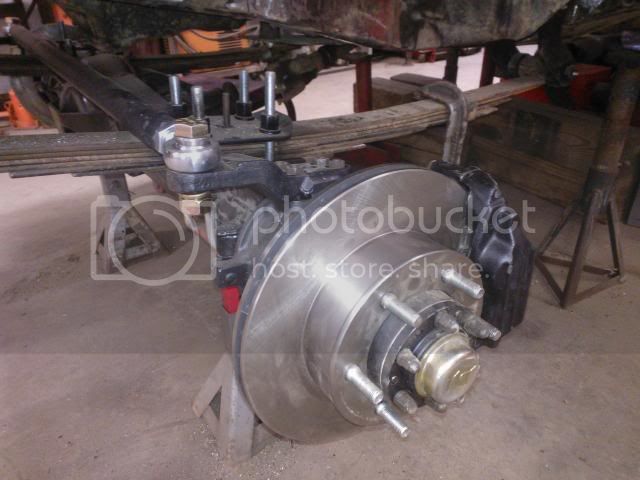
LONGER FRONT WHEEL STUDS

This site may earn a commission from merchant affiliate
links, including eBay, Amazon, Skimlinks, and others.

cruisermatt

Un-manufacturable
Supporting Vendor
SILVER Star
Joined
Jul 22, 2012
Threads
633
Messages
17,260
Location
Winter Park, Florida
Website
www.cruisermatts.com
This has been discussed in the past but no one to my knowledge has come up with a definitive answer:

Are there any metric wheel studs that will work on the 60 series front hubs that are longer than stock?
 
hey Cruisermatt, I had the same question somewhat, a few months ago but I posted in the tire and wheel thread. Had no replies so I figured they didn't make them for our cruisers.So I bought 1.5 wheel spacers instead. Just seen the thread " where can I get longer wheel studs", replied by Hoser earlier today. So I guess they do make them after all but a little pricey.
 
Yes. The ARP lexus is300 wheel studs will work. The knurl depth, diameter, and size is all the same. All you have to do is redrill your existing rotor holes to 3/4 inch. This will allow the rotor to bolt back into factory position, snugly fitting over the stud heads. The size discrepancy between the new hole and the head of the stud is .01 or .001-ish i don't remember exactly. I have been running this setup on my 60 for the last 3 months or so, and have put 1900 miles on it, they haven't slipped or even hinted at letting me down yet.

And before anyone says its unsafe, or impossible, it's neither. Ifs pickups and 4 runner rotors are held in place the same way with the 2 bolts over studs.
 
So the studs aren't pressed into the rotor?
 
new studs should press in back of the wheel hub and rotor is held in place with two bolts. The bolts are the only thing holding rotor to hub and IIRC are torqued to 34 ftlbs
 
So the studs aren't pressed into the rotor?

The OE studs are pressed through the rotor. The knurl in the OE stud doesn't make any real contact with the rotor. The extended studs have less of a shoulder than the OE type stud, so once the rotor is drilled out to accept the head of the new stud, the rotors just fit right over the top of them and snug down around the heads. They're essentially converting the factory fj60 knuckle to an ifs style, by drilling the rotor.


I really wish i had taken pictures of it when i did it.
 
I see you have a 62 Matt, are the hubs different on a 62 than on a 60 series. I just did new wheel studs on mine and they were pressed into the wheel hubs. Bought new rotors and they fit on the back side of the hub and are bolted down. So if that makes sense : rotor, wheel hub, rim onto the new studs. This all slides onto the spindle.
 
So, 62 hubs are already similar to an ifs hub. In that case, i can still assume that it's done in i similar way as to the 60s.
 
I see you have a 62 Matt, are the hubs different on a 62 than on a 60 series. I just did new wheel studs on mine and they were pressed into the wheel hubs. Bought new rotors and they fit on the back side of the hub and are bolted down. So if that makes sense : rotor, wheel hub, rim onto the new studs. This all slides onto the spindle.

60 and 62 hubs are the same.
 
Ok, so since rheyre the same its simple. Drill out your rotors to 3/4in holes (stud holes, not the 2 fasteners) pound/ press in your new, shiny arp studs, install rotors, bolt rotors down.

The only difference in assembly is the studs no longer go through the rotor. They only go through the hub.
 
Screenshot_2015-10-27-10-27-13_zps87uok0jf.png


Screenshot_2015-10-27-10-30-21_zpsuhj0go5k.png


The only difference between the two studs (Dorman and ARP) is .001 head diameter and knurl length. The difference in knurl length/depth, which is pretty close to the thickness of the rotor. So, the arp goes straight into the hub, vs the oem stud going through the rotor to the hub.

Also, pictures are for part number reference and for specs on the studs.
 
If those new studs only go through the hub, not the rotor, that is 100% unsafe. IFS hubs utilize a "floating rotor" design where the rotor slips over the wheel studs, so that the rotor is squeezed between the wheel and the hub with lug nuts. You are right that the IFS setup has studs that press into the hub, so you're right there, but the rotor then slips over the studs. For example, you can see here how the studs come through the rotor. The studs are pressed into the hub which exists behind the rotor:

WP_001555_zps63d718c4.jpg


If you drill the rotor out to 3/4" to fit over the back of the stud, then press the studs directly into the hub, then the only two things holding the rotor in place are the two small bolts and the sides of the stud.

Bad idea. Don't do that. It doesn't matter how many miles it's worked for, it's dangerous.


To answer @cruisermatt's question, I don't think anyone has found a longer metric stud that will work. It wouldn't be that big of a deal to switch to a standard pitch stud though, just keep some extras on hand.
 
Last edited:
Ifs hubs are also fastened on with 2 bolts, the same as the 60 hubs design. The rotors are not floating on the ifs setup. The 2 bolts to fasten the rotors down, are also over the stud shoulders, just not through the front as on an ifs setup. Having had an engineer look at this new setup, as well as an entire shop of offroad race truck fabricators look at the design, and all deem it safe enough to be road worthy, I'm not too concerned.
 
Ifs hubs are also fastened on with 2 bolts, the same as the 60 hubs design. The rotors are not floating on the ifs setup. The 2 bolts to fasten the rotors down, are also over the stud shoulders, just not through the front as on an ifs setup. Having had an engineer look at this new setup, as well as an entire shop of offroad race truck fabricators look at the design, and all deem it safe enough to be road worthy, I'm not too concerned.

I'm having trouble visualizing this. Do you have any photos?
 
I would go with the suggested larger/longer standard thread lug nut studs... and call it a day. Of course getting new matching lug nuts.
 
Ifs hubs are also fastened on with 2 bolts, the same as the 60 hubs design. The rotors are not floating on the ifs setup. The 2 bolts to fasten the rotors down, are also over the stud shoulders, just not through the front as on an ifs setup. Having had an engineer look at this new setup, as well as an entire shop of offroad race truck fabricators look at the design, and all deem it safe enough to be road worthy, I'm not too concerned.

Ok, sure, but the big picture you're missing here is that the vast majority of the braking force is transmitted through the wheel studs, which you've eliminated in your design. Post up some pictures next time you have it apart, but based on how you've described it, let's just say I'm glad we don't live in the same region.
 
Johnny is 100% correct, that is NO BUENO!
 
Ok, sure, but the big picture you're missing here is that the vast majority of the braking force is transmitted through the wheel studs, which you've eliminated in your design. Post up some pictures next time you have it apart, but based on how you've described it, let's just say I'm glad we don't live in the same region.
I've always been under the impression the wheel studs mainly see tensional forces which clamp the wheel to hub (and rotor). The friction between the hub to wheel interface resists the torque force associated with braking and acceleration... like a clutch and flywheel.

As we know, most modern vehicles have the rotor mounted over the hub and practically floating. Usually one screw just keeps it aligned. Remove the screw and there is play between the studs and the rotor. That one screw does not resist the torque forces. If there was any movement between the rotor and hub or wheel mounting surface, there would be evidence of scuffing.
 
I've always been under the impression the wheel studs mainly see tensional forces which clamp the wheel to hub (and rotor). The friction between the hub to wheel interface resists the torque force associated with braking and acceleration... like a clutch and flywheel.

As we know, most modern vehicles have the rotor mounted over the hub and practically floating. Usually one screw just keeps it aligned. Remove the screw and there is play between the studs and the rotor. That one screw does not resist the torque forces. If there was any movement between the rotor and hub or wheel mounting surface, there would be evidence of scuffing.

Yes this is true but on the 60 the rotor is BEHIND the hub so there is no frictional force beside the 6 studs with 0.01" gap on each.
 
Back
Top Bottom