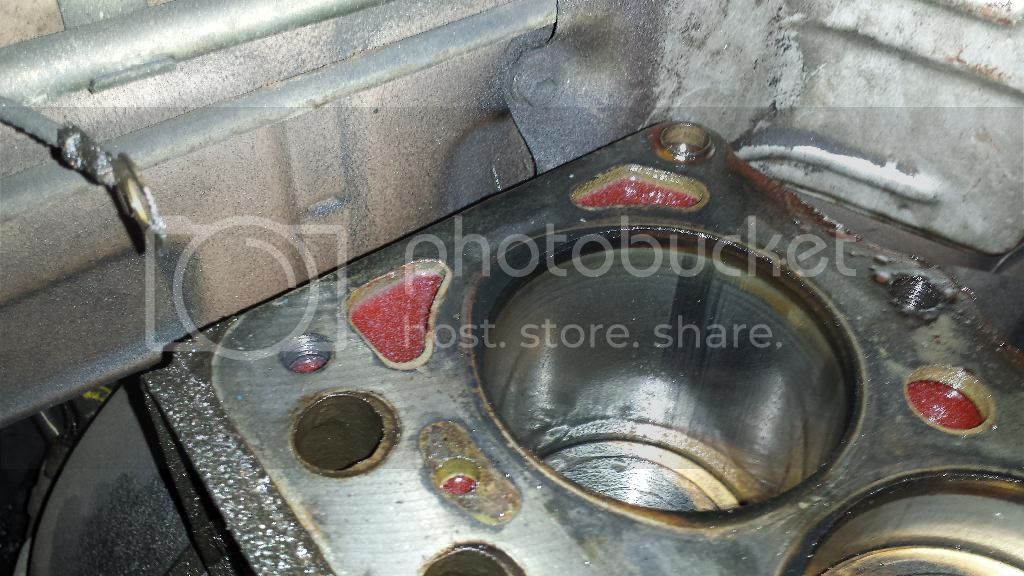
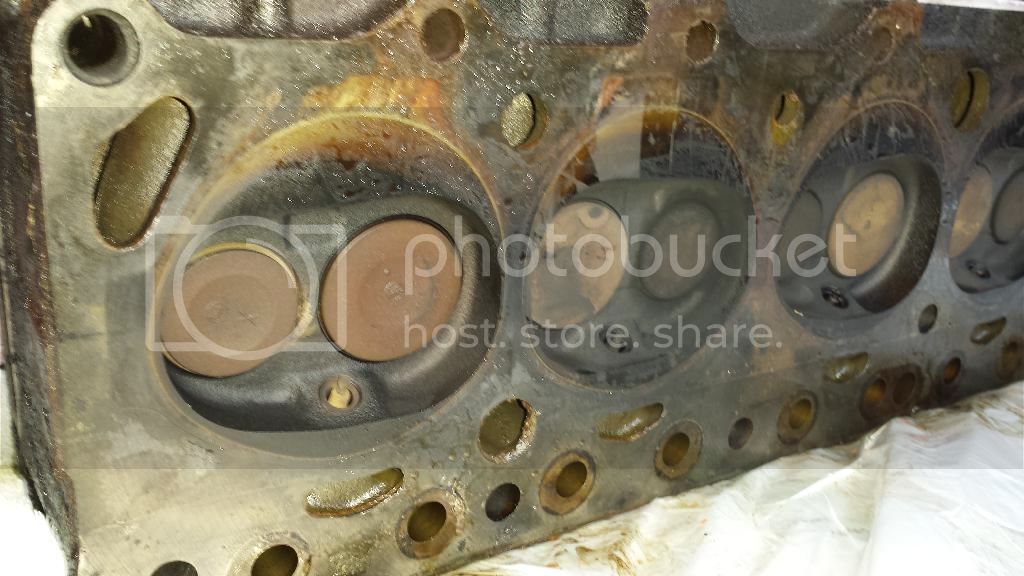
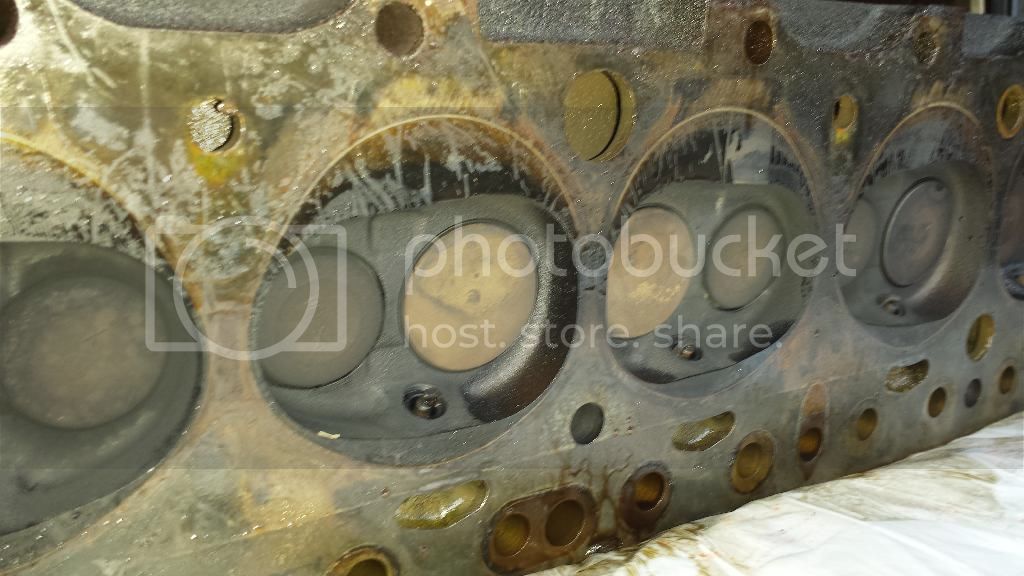
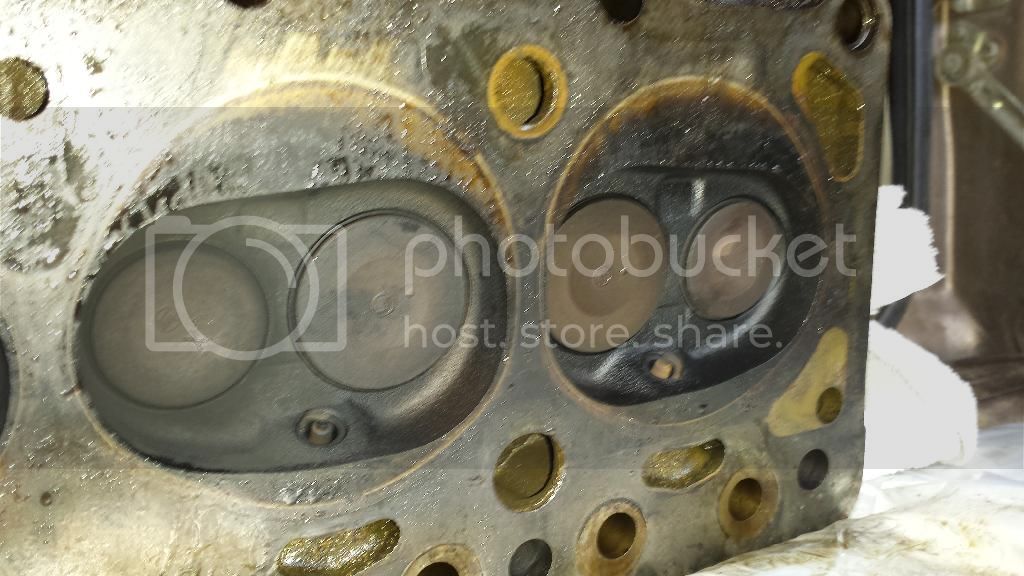
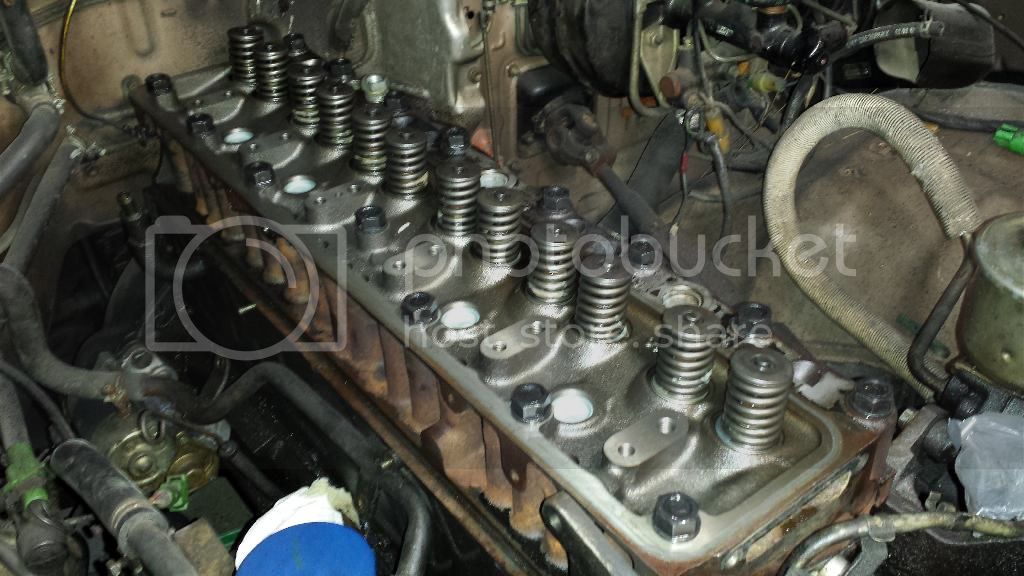
Here I go...removing the head

This site may earn a commission from merchant affiliate
links, including eBay, Amazon, Skimlinks, and others.

one more pic request:

Take pics of the valve side of the head. My valves were sunken into the seat, and had one intake that looked too rich

dougbert
 
Thanks Benjamin. That was a good tip about the engine block. I never would have thought about rust inside a garage. i vacuumed it and wiped the surfaces down with WD-40 until I can find some hyperlube after church today.
Thanks again.
 
How's the water pump, btw? Asking cuz that pretty rusty coolant in there... If it's an original pump, now might be the time to change.

This is how your new puppy turns into the beast with a thousand teeth...

And though Hyperlube is great stuff, you really don't need anything special to protect the block, if it's not going to be exposed too long. Just make sure it's dry and covered with any kind of oil. I've used everything from WD to KY :hhmm:
 
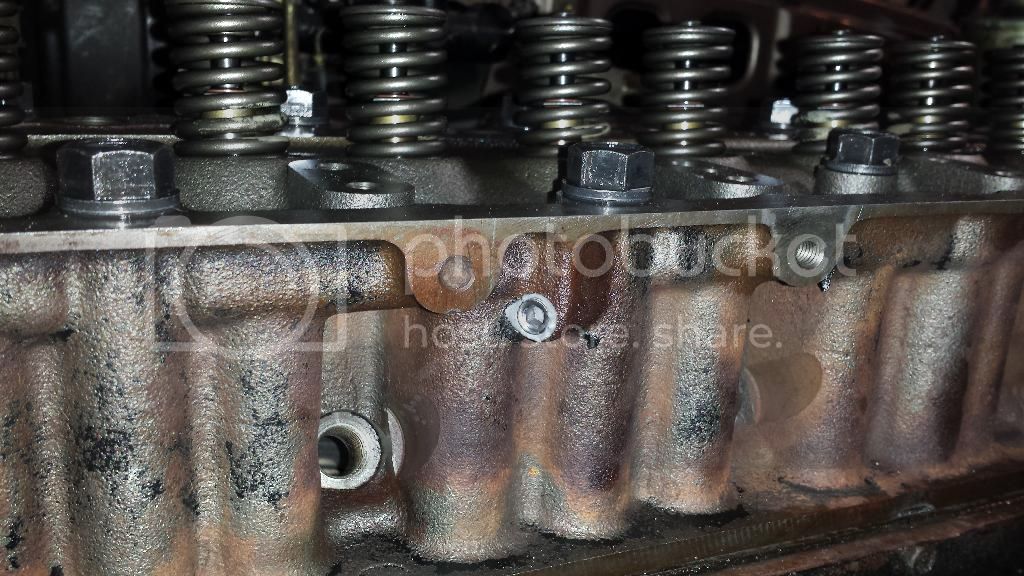
Can you take a closer, well lit picture of the firewall side of the #6 cylinder wall? It probably is just the picture but there looks to be scuffing and some sort of crack...I'm sure it's nothing...maybe just a bead of antifreeze working it's way down the side...

Luckily it is not a crack. nice a smooth. Just oil or antifreeze drip.
20140119_141647.jpg
 
Last edited:
How's the water pump, btw? Asking cuz that pretty rusty coolant in there... If it's an original pump, now might be the time to change.

The water pump was replaced recently by the PO. It looks new, so I am going to leave it in place. Good advice though. I can tell that it would be much easier to replace with the head off the block.

I THINK that the the coolant is just a red variety, and not rusted. It seems pretty clean. Guessing that it was changed at same time as water pump.
 
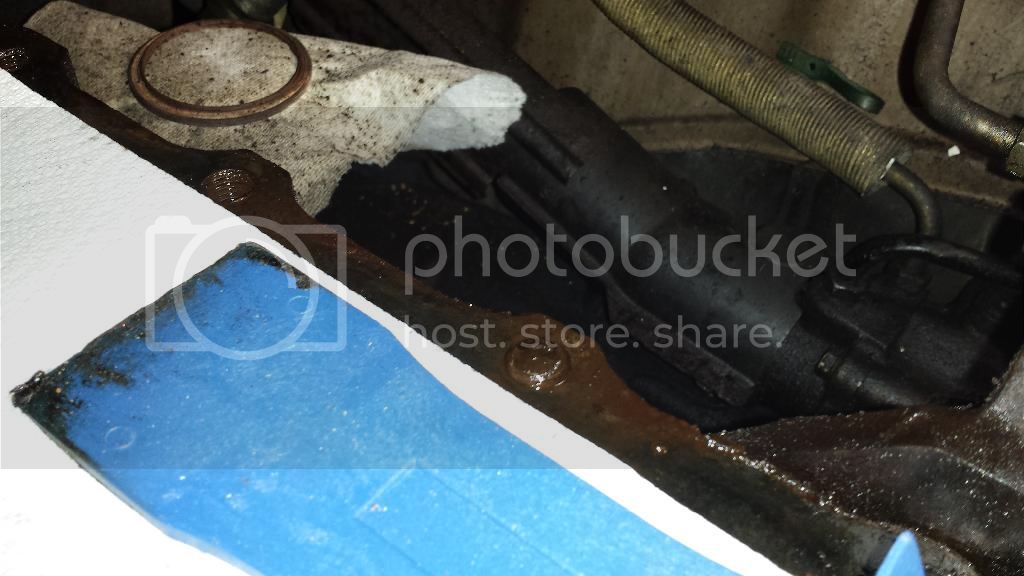
So today I set out to correct the issue that started this whole thread, the snapped head/bolck bolt. These were waters that I have never waded before.

20140119_142252.jpg


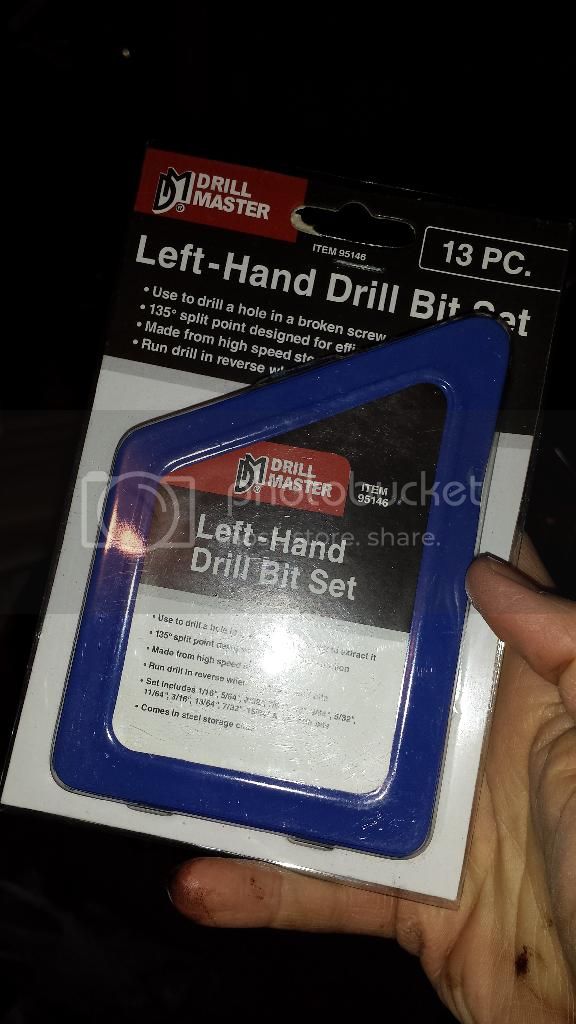
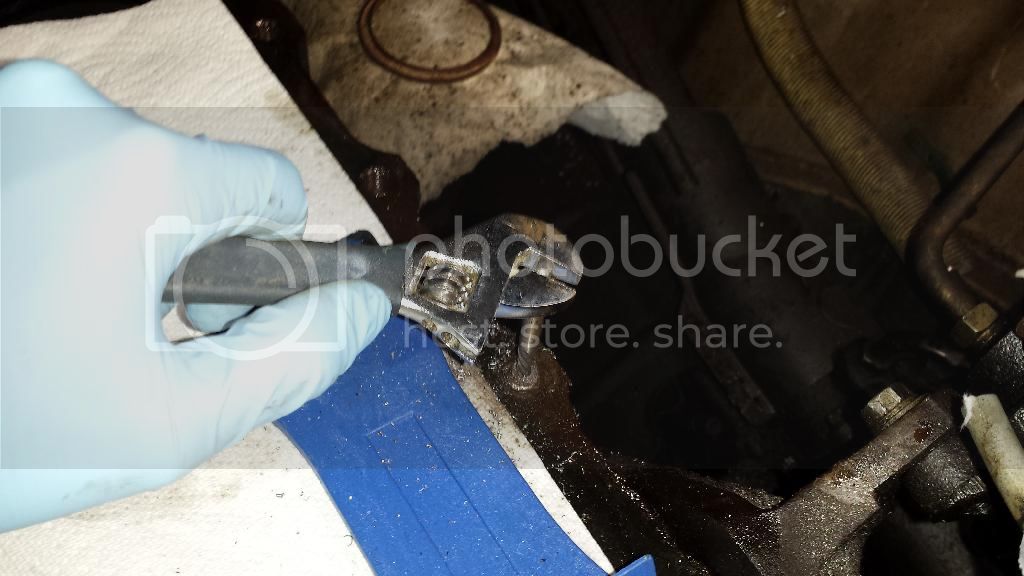
After covering the cylinder cavity with a towel, and center tapping the broken bolt, I started out by drilling into it with a small left hand drive bit ($6 at Harbor Freight). I had been advised that often a left hand drive bit will grab enough to spin out the broken bolt's threads. No such luck.

20140119_142419.jpg


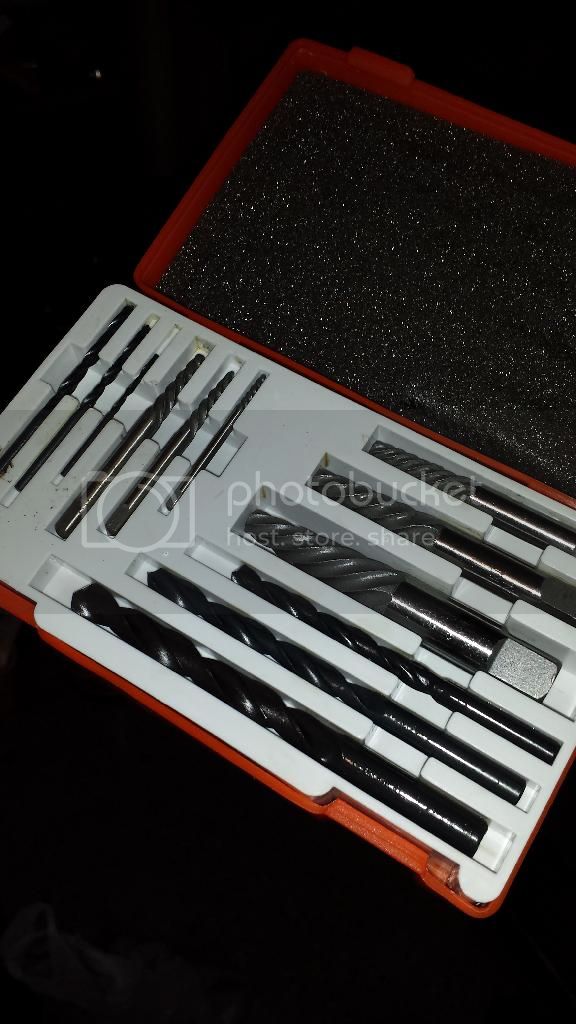
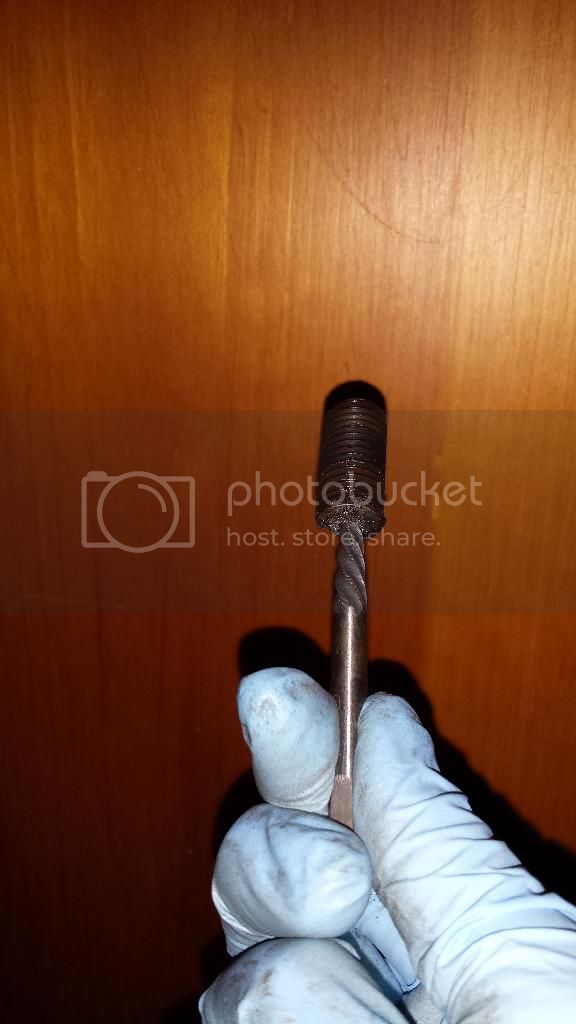
After starting with a small bit, then moving up to a 1/8, then up to a 5/32, I finally had a large enough opening to tap in the extractor tip from my newly purchased $8 extractor set (also from Harbor Freight).
20140119_144203.jpg


20140119_143823.jpg


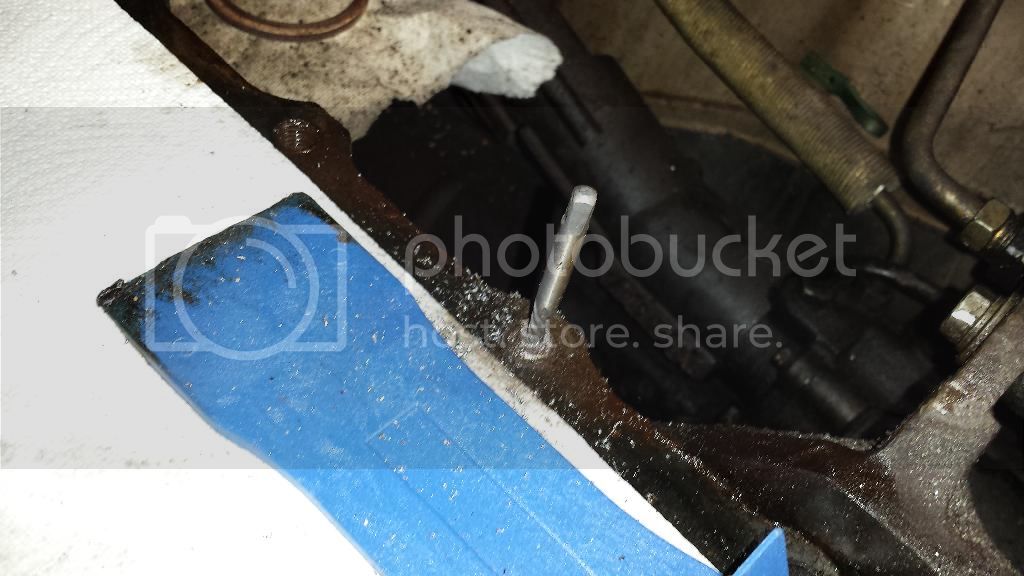
As I turned on the extractor with the wrench, it dug in, and I could tell that I was walking the line of snapping it off in the bolt. That thing was in there!

20140119_143840.jpg


Finally, it broke free. Success!
20140119_144056.jpg
 
You got lucky, as I would have gone with a larger hole, and a good quality US made extractor.

Those valves look ok from here. You could fill the ports with some 0wt oil, as to see if they are holding a seal.
 
X2 I have had too many high quality USA made extractors break. Glad it worked out for you.
Dyno
 
Congrats! You got it out.

A sunken valve, is where it becomes "buried" down into the seat and is lower than the other valves. Don't look from the pics there are any.

Since it is off, have it rebuilt - and again: Get the oil galley fixed

and great that bolt is out!!!

dougbert
 
I'm sure there is a chart somewhere.....but there is fine line in using a too small extractor on the bolt and then having the extractor break too. You got lucky...glad it worked for you.

I had a nice Snap-on extractor break one time.....was not a good day..
 
Second exhaust valve from left in the top picture *might* have a minor seat issue. If these are induction hardened exhaust seats (as opposed to hard insert seats) then grinding them will go thru the hardening. I'd suggest just biting the bullet and going with hard insert seats for at least the exhausts if the head will allow it and doesn't already have them.

My machine shop uses HOT water in the ports for a qwik and simple test to gauge how good or bad the seal is on a cyl head coming in for work. Prop the head on it's side and carefully fill each port with hot water. Look for water leaking past the valve/seat interface. It's a qwik & simple way to find the problem valves.

I try to always use the biggest extractor that will fit, which means that I try to drill out the stuck bolt almost to minor diameter of the threads. I also prefer the square type of a extractor rather than the spiral type for this.

Get the right size tap and chase the head bolt threads before you go much further. Iron taps the best dry, no lube. Iron is very abrasive and will dull the tap faster with lube (ironic, huh?).

 
agree.... I learned the lesson the hard way when the extractor I had broke. I drill out the bolt as far as I think I can go....that allows for whatever size extractor I have that will fit. I got in a hurry and paid the price on the incident I described above... Of course drilling the bolt is a fun deal too.

What's great is when you buy something (a car/truck/whatever) and it comes with broken parts that no-one bothers to let you know about, and or the mechanic or whomever worked on it last...broke it and never said anything...
 
I try to always use the biggest extractor that will fit, which means that I try to drill out the stuck bolt almost to minor diameter of the threads.

The problem with that is that the extractor will then expand the thread material
left. It doesn't take much, and then the threads get bound in the hole. With something like a head bolt that's nice and hard, it's not a big problem, but with a 4 or ungraded bolt, that sucker will swell up and weld itself to the casting in a heartbeat. Then it's taptime.

I've done it a dozen times. It beats trying to get a broken screw extractor
out, though!

And I never would have expected HF stuff to work for that. Glad it did!

t
 
I try to always use the biggest extractor that will fit, which means that I try to drill out the stuck bolt almost to minor diameter of the threads.
The problem with that is that the extractor will then expand the thread material left.
Which is why I NEVER use and totally dislike the spiral type of extractor. The square type that I mentioned above do not try to wedge the broken remains tighter into the hole, and with more of the broken remains drilled away they tend to relax in the hole and not fit as tightly from the corrosion that usually started the problem.

A trick that I picked up a while back is to use a transfer punch on the broken bolt before removing what ever the part is that the broken fastener is intended to hold down. As long as it isn't too thin, the empty hole in the part guides the transfer punch to be on-center of the broken bolt.

 
Got the head back from the machine shop and reinstalled. They said that everything looked good after it was disassembled. I did get some new valve seals and had those installed. They decked the head and installed a galley plug for me. Also milled flat the intake/exhaust manifold for me. I think that it was $290 out the door. I could have likely found a cheaper place in town, but this guy came highly recommended by a few people that I trust.

20140208_150545.jpg


Galley plug
20140208_150558.jpg
 
Back
Top Bottom