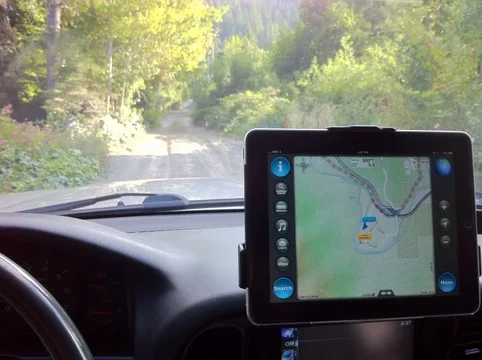
The OP wants a compact all in one GPS. If you open things up to tablets, then the options of course increase and then if you open it up to Win tablets/computers then you have even more options.
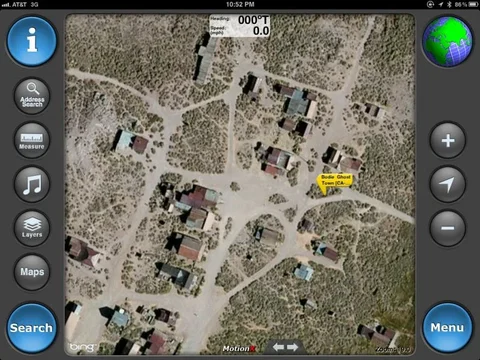
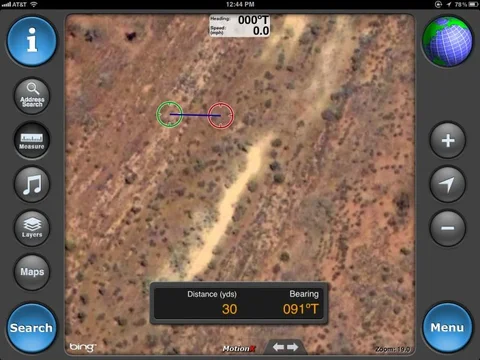
I prefer to run a compact GPS unit since most of the time I want easy confirmation to the tracks I'm on but then when I want real detail I run a laptop since I will cache a few gig of terrain via google earth aerial photography and use a plug in to feed google earth with GPS data from my bluetooth GPS unit.
I'm waiting (maybe forever...) for the day that google allows caching a few gig on their tablet versions of google earth.
I used google earth cached imagery on my last trip to Oz and it was fantastic since it would show recent tracks that aren't on the older topo maps. It also allows you to 'see' anything interesting within reasonable range of where you are that may be worth investigating. Maps are great when you are just trying to figure out where you are or where you want to go (assuming they are recent enough) but it's hard to beat recent/detailed aerial photography when you are exploring.
Choice of GPS/tablet/laptop etc is VERY specific to where you are. In the US there's plenty of quality maps and companies updating those maps, in other parts of the world... not so much.
I bought my first GPS back in 1989 when Magellan released the first consumer handheld GPS unit. It had a single multiplexed channel and cost a hair under $3000. It provided lat/long info and at that time you would need to plan when to use the GPS since there wasn't 24 hour coverage (either 2d or 3d). You had windows of a few hours here and there where you could receive sufficient sats with decent geometry to get a lat/long solution. Then you would take the paper map and locate your lat/long on it. Oh what fun

Pre-GPS we would navigate in the bush via maps and dead reckoning and good luck + sense of adventure. We were never lost, rather just unsure of where we were. Lots of adventure and good times. Then with basic GPS and paper maps our world changed, we would now be able to determine accurate positions and be able to choose tracks correctly and a sense of adventure was gone. Finally with integrated maps+gps there is no longer any doubt of where we are and where we're heading and even more of that sense of adventure has been lost. To gain it back we now head to more remote places and often venture cross country as old tracks have faded to nothing in places.
I have several bluetooth gps dongles and one that has integrated memory that can store at least 1000 miles of tracklog (which beats any GPS unit since it's always running in the vehicle and always in my pocket on hikes). I have a tablet with GPS running ozi and androzic, a few handheld GPS units, a few garmin type vehicle GPS units and of course laptops that run ozi and the garmin nroute etc.
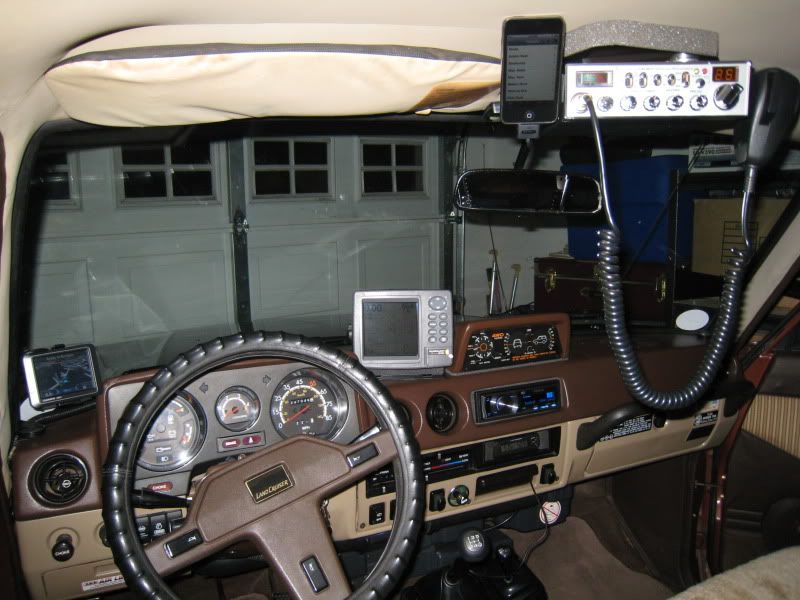
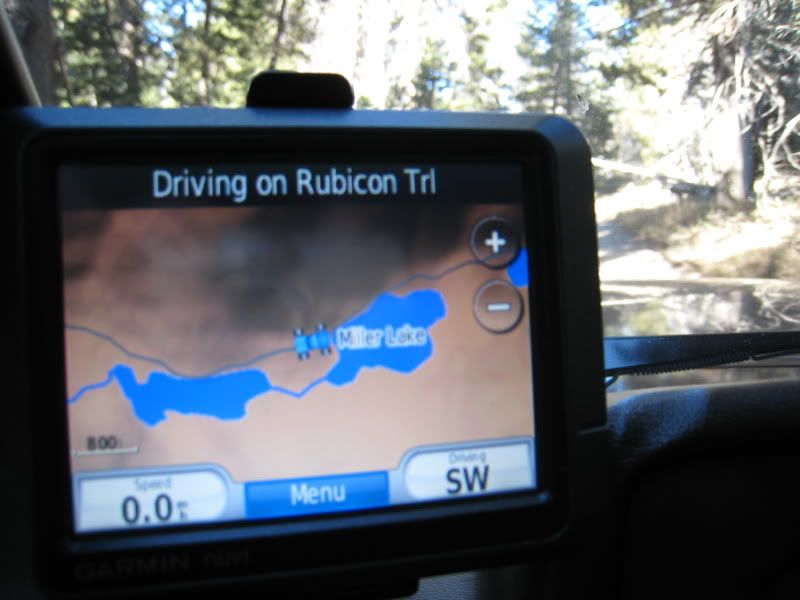
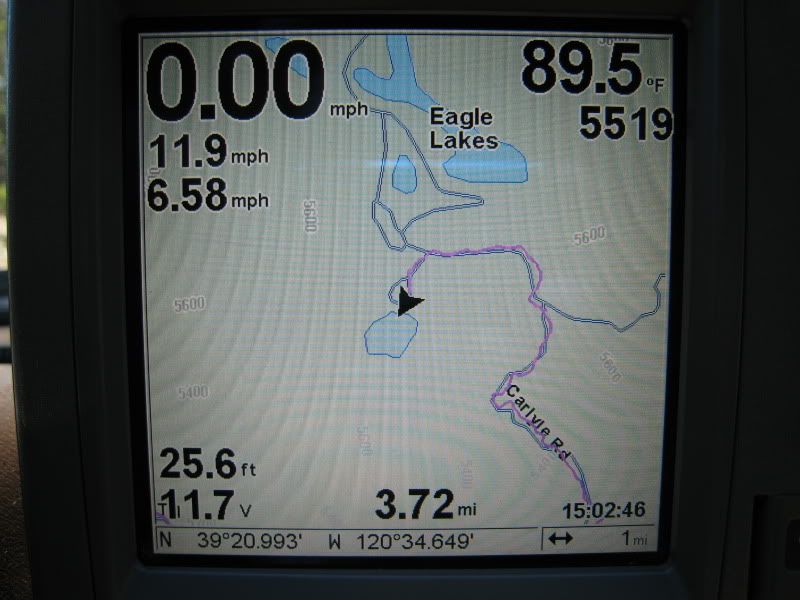
On a typical trip I'll have the garmin on the dash, the bluetooth tracker running 24/7 and a laptop and tablet as well. The garmin covers most of the needs, the tablet comes out for access to ozi and topo maps and the laptop comes out if google earth aerial photography is needed. One other issue, at least in Oz, is that different maps have different info. Old topo maps have old fence line info along with various water holes, wells and buildings etc. Newer topo maps have "lost" a lot of that info - I have the conspiracy theory that the oz government/mapping authorities would love everyone to just stay in the city. But the new topos have newer roads/tracks. So, often you can't just rely on one map when really exploring, so a choice of a few maps running simultaneously.
So, in summary, I've not found a one size fits all solution and am happy to range from a couple of inches to a full one footer+ to deal with whatever situation arises
cheers,
george.