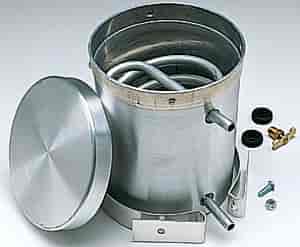
Has anyone ever considered something like this?
Amazon.com: Flex-a-lite 4136 Fuel Cooler - 4,500 GVW: Automotive
Amazon.com: Flex-a-lite 4136 Fuel Cooler - 4,500 GVW: Automotive
Follow along with the video below to see how to install our site as a web app on your home screen.
Note: This feature may not be available in some browsers.
This site may earn a commission from merchant affiliate
links, including eBay, Amazon, Skimlinks, and others.


Has anyone ever considered something like this?
Amazon.com: Flex-a-lite 4136 Fuel Cooler - 4,500 GVW: Automotive
I suppose part of the problem is we don't know what's going on in there. I wonder how difficult it'd be to tap a temp gauge into the fuel line to measure the return fuel temperature.
It looks like there are some vehicles that have a fuel temp sensor OEM, and some heavy equipment that does, but I'm not seeing much else. I would think that you can't just slap any old temp sensor in there since fuel can be corrosive.
I can use my IR thermometer on the line at a few different points. That would get us close to the actual fuel temperature.


Better than nothing, but difficult to do while driving.
Unless you remove the hood and hang out the window Hollywood action style...


Another Tucson victim of the fuel vapor phenomenon. I had noticed it on a couple of occasions before, but the trip up Mt. Lemon on Saturday really seems to have exacerbated it. The gas smell was pretty strong and lasted quite a while. I thought about venting the cap, but visions of another "Aspen" fire made me reconsider.
I have made it a point to not top-off when filling, but I've not done any other troubleshooting. I'm heading to Bisbee this weekend, so I'm going to check the temp in the gas tank before leaving and when we arrive, and see what (if any) difference there is.
There has to be an answer, right?


Another variable in your case is your large extra fuel capacity that exceeds the design limits of the evap system on the truck.