

Navigation
Install the app
How to install the app on iOS
Follow along with the video below to see how to install our site as a web app on your home screen.
Note: This feature may not be available in some browsers.
More options
Style variation
You are using an out of date browser. It may not display this or other websites correctly.
You should upgrade or use an alternative browser.
You should upgrade or use an alternative browser.
Brown radiator
- Thread starter camino70
- Start date
This site may earn a commission from merchant affiliate
links, including eBay, Amazon, Skimlinks, and others.

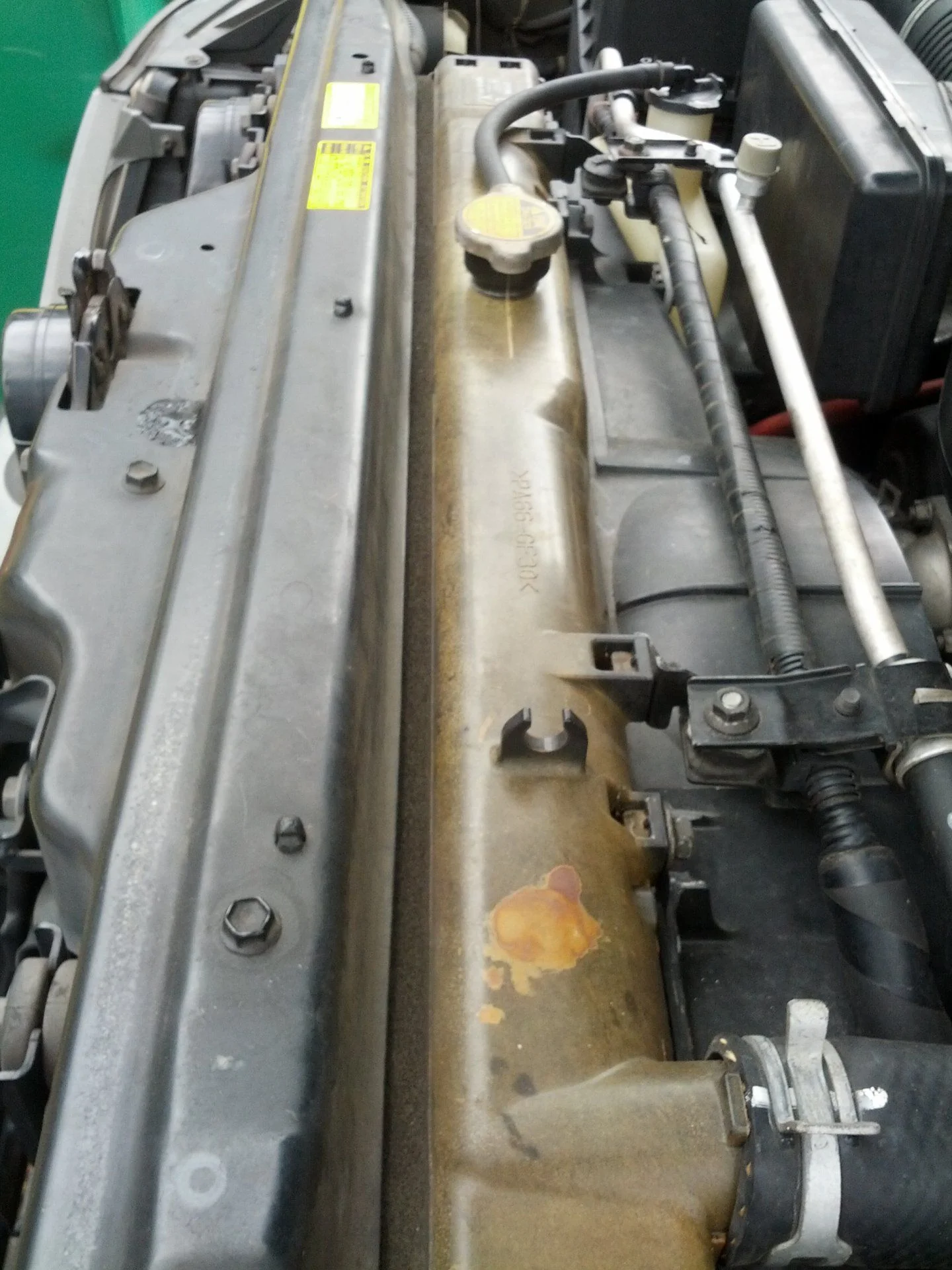

Someone ran green anti-freeze in your cooling system at some point. If not the proper type it can turn your radiator green. I used to only run Toyota red anti-freeze, but a couple of years ago BENO told me that the correct "green" anti-freeze would not cause any problems and I've been running it since.
Do I think it's catastrophic, no. Just make sure you have anti-freeze that is meant for aluminum blocks/engines.
Do I think it's catastrophic, no. Just make sure you have anti-freeze that is meant for aluminum blocks/engines.


I do believe the brown tells radiators & T's life are limited. I don't believe green is the same as red, as I once did.
A brown radiator top could last years/miles if properly maintained, and not over heated IMHO. I'd not drive to remote area, where replacement would be difficult to obtain. Cheap insurance to replace.
I've two 2001.
LC over-maintained for 13 yrs (110K miles), with red, never overheat (on gauge), No brown at 165K miles.
LX under-maintained, that evidence it's had green at some time, brown with micro cracks now at 214K miles.
Both sets of T's are still black.
Brown may indicate coolant was run slightly low, which would run hot. If those in the Desert see brown earlier than in cooler areas of the world, would be interesting antidotal evidence.
Is it the miles, containments, running low coolant level, running hot or combination that made the difference ???


A brown radiator top could last years/miles if properly maintained, and not over heated IMHO. I'd not drive to remote area, where replacement would be difficult to obtain. Cheap insurance to replace.
I've two 2001.
LC over-maintained for 13 yrs (110K miles), with red, never overheat (on gauge), No brown at 165K miles.
LX under-maintained, that evidence it's had green at some time, brown with micro cracks now at 214K miles.
Both sets of T's are still black.
Brown may indicate coolant was run slightly low, which would run hot. If those in the Desert see brown earlier than in cooler areas of the world, would be interesting antidotal evidence.
Is it the miles, containments, running low coolant level, running hot or combination that made the difference ???

In my experience, that brown color is when auto plastics are brittle. For what little a Denso radiator costs on Amazon, and the consequences of a catastrophic failure, I'd replace that thing in a heartbeat.
For what its worth, I think there are some quality control issues with the new OEM radiators. I had someone warn me about this, but I did not listen thinking Toyota OEM would be best. In the last two weeks I installed TWO brand new OEM radiators only to have both of them leak at the top where the plastic and metal meet. Much worse than the 16 y/o radiator they were replacing. Guess the third time is the charm because I elected to go with a Denso radiator and there were no issues whatsoever. Plus, at 167 bucks how can you beat that when compared to OEM. Now I am dealing with the process of shipping to radiators back so I can get my money back.
Did your radiator top turn brown after switching to green?Someone ran green anti-freeze in your cooling system at some point. If not the proper type it can turn your radiator green. I used to only run Toyota red anti-freeze, but a couple of years ago BENO told me that the correct "green" anti-freeze would not cause any problems and I've been running it since.
Do I think it's catastrophic, no. Just make sure you have anti-freeze that is meant for aluminum blocks/engines.
The Denso radiator I installed a few weeks ago has been perfect.For what its worth, I think there are some quality control issues with the new OEM radiators. I had someone warn me about this, but I did not listen thinking Toyota OEM would be best. In the last two weeks I installed TWO brand new OEM radiators only to have both of them leak at the top where the plastic and metal meet. Much worse than the 16 y/o radiator they were replacing. Guess the third time is the charm because I elected to go with a Denso radiator and there were no issues whatsoever. Plus, at 167 bucks how can you beat that when compared to OEM. Now I am dealing with the process of shipping to radiators back so I can get my money back.

Did your radiator top turn brown after switching to green?
Brownish black.
I have had no issues, and when I replaced my heater T's they were fine as well - not brittle. I'm at nearly 230k and don't plan on replacing my radiator until it fails and I have no reason to believe it's going to anytime soon. I've driven my 100 from Atlanta to Seattle multiple times and would do it again tomorrow - it's the most reliable vehicle I've ever owned. Unless you're positive your radiator is about to fail/crack/whatever I would leave it alone. I'm a firm believer in using OEM parts/Toyota coolant, but when a trusted member of the forum and Toyota parts guy tells me that running the Toyota coolant isn't necessary I'm going to listen and save money/hassle.
Would be very interest to get more input from members on plastic top color. Reports with vehicle history too see if we have a pattern.
For me after doing a T-belt job without changing water pump, do to missing one seal on a Sunday. I became very concerned, as I had put in green. After doing some research I promptly flushed out the green. I wanted my factory water pump to have the very best possible, so I babied it.
As mentioned, I too once thought red or green are all the same, and tap water was ok. One thing changed my mind, I read the ingredients and found a slight difference. A few words difference in Red not in others on my bench; Organic Acid Salt & Hydrated Inorganic salt. My understanding is these deal with the silicates. Whereas coolants may come from the same or a handful of manufactures with different labels, they may formulated differently.
An interest example of differences in formulation of fluids: We all (Toyota shops, parts counters, back yard mec) once thought brake fluid is brake fluid, it is not. Toyota had a master brake cylinder recall that proved this. Few knew that the factory brake fluid we have/had in our rigs is not obtainable in the USA. Had I known this prior to flushing as a PM, I would not have. The Dealer OEM can we buy is not the same. This is because of EPA import rules.
Toyota DOT 3 Brake Fluid Composition ?
I've been searching for antidotal evidence of why some turn color and some don't. I didn't have the LX470 that turned pre change in color, only evidence it had other than red in it. Now we have yours indicating post change, which is very interesting.
BTW, thanks for starting this thread....
For me after doing a T-belt job without changing water pump, do to missing one seal on a Sunday. I became very concerned, as I had put in green. After doing some research I promptly flushed out the green. I wanted my factory water pump to have the very best possible, so I babied it.
As mentioned, I too once thought red or green are all the same, and tap water was ok. One thing changed my mind, I read the ingredients and found a slight difference. A few words difference in Red not in others on my bench; Organic Acid Salt & Hydrated Inorganic salt. My understanding is these deal with the silicates. Whereas coolants may come from the same or a handful of manufactures with different labels, they may formulated differently.
An interest example of differences in formulation of fluids: We all (Toyota shops, parts counters, back yard mec) once thought brake fluid is brake fluid, it is not. Toyota had a master brake cylinder recall that proved this. Few knew that the factory brake fluid we have/had in our rigs is not obtainable in the USA. Had I known this prior to flushing as a PM, I would not have. The Dealer OEM can we buy is not the same. This is because of EPA import rules.
Toyota DOT 3 Brake Fluid Composition ?
I do find it interesting your answer; radiator turned brownish black after switching to green. You mentioned "years back BENO said" and "I switched", could you be a little more précises on time/years & millage?Brownish black.
I have had no issues, and when I replaced my heater T's they were fine as well - not brittle. I'm at nearly 230k and don't plan on replacing my radiator until it fails and I have no reason to believe it's going to anytime soon. I've driven my 100 from Atlanta to Seattle multiple times and would do it again tomorrow - it's the most reliable vehicle I've ever owned. Unless you're positive your radiator is about to fail/crack/whatever I would leave it alone. I'm a firm believer in using OEM parts/Toyota coolant, but when a trusted member of the forum and Toyota parts guy tells me that running the Toyota coolant isn't necessary I'm going to listen and save money/hassle.
I've been searching for antidotal evidence of why some turn color and some don't. I didn't have the LX470 that turned pre change in color, only evidence it had other than red in it. Now we have yours indicating post change, which is very interesting.
Had your old radiator top change color? Can you give any history like; miles, millage at change in color, red or other coolant, over heated, factory recommend temp of thermostat or other, tap water or demineralized or run low on coolant etc.?I'll be installing a Denso this weekend. My OEM sprung a leak(s) a few weeks back on the top rim. Got mine from rock auto. Hopefully no damage in shipping as I haven't opened it yet.
How about you camino70, any history pre & post brown or what has been used in coolant system?After reading another thread that mentioned fatiguing T's and how they change color (thanks ton504), I noticed how brown my radiator is.
Is this dire?
BTW, thanks for starting this thread....
Last edited:

- Thread starter
- #12
My brown top is a '98 LX with 210k that I bought from original owner. It was brown when we got it. The original owner was not a wrencher, all scheduled maintenance done at Lexus until 100k, then a local respected Toyota shop. Said shop replaced tb/WP 20k ago and the red looks good. I can't imagine either using green, but after talking with local dealers, I can imagine super long life being mixed with long life. When mixing with water, local dealers I have spoken with use tap water, so...
"Brownish black.
I have had no issues, and when I replaced my heater T's they were fine as well - not brittle. I'm at nearly 230k and don't plan on replacing my radiator until it fails and I have no reason to believe it's going to anytime soon. I've driven my 100 from Atlanta to Seattle multiple times and would do it again tomorrow - it's the most reliable vehicle I've ever owned. Unless you're positive your radiator is about to fail/crack/whatever I would leave it alone. I'm a firm believer in using OEM parts/Toyota coolant, but when a trusted member of the forum and Toyota parts guy tells me that running the Toyota coolant isn't necessary I'm going to listen and save money/hassle.
I do find it interesting your answer; radiator turned brownish black after switching to green. You mentioned "years back BENO said" and "I switched", could you be a little more précises on time/years & millage?
I've been searching for antidotal evidence of why some turn color and some don't. I didn't have the LX470 that turned pre change in color, only evidence it had other than red in it. Now we have yours indicating post change, which is very interesting.
Maybe my response was misleading. My radiator top has always been brownish black since I've owned it (99 LX470). Sorry if that was confusing. and it wasn't "years back" that Beno told me the above - it was 2015.
I have had no issues, and when I replaced my heater T's they were fine as well - not brittle. I'm at nearly 230k and don't plan on replacing my radiator until it fails and I have no reason to believe it's going to anytime soon. I've driven my 100 from Atlanta to Seattle multiple times and would do it again tomorrow - it's the most reliable vehicle I've ever owned. Unless you're positive your radiator is about to fail/crack/whatever I would leave it alone. I'm a firm believer in using OEM parts/Toyota coolant, but when a trusted member of the forum and Toyota parts guy tells me that running the Toyota coolant isn't necessary I'm going to listen and save money/hassle.
I do find it interesting your answer; radiator turned brownish black after switching to green. You mentioned "years back BENO said" and "I switched", could you be a little more précises on time/years & millage?
I've been searching for antidotal evidence of why some turn color and some don't. I didn't have the LX470 that turned pre change in color, only evidence it had other than red in it. Now we have yours indicating post change, which is very interesting.
Maybe my response was misleading. My radiator top has always been brownish black since I've owned it (99 LX470). Sorry if that was confusing. and it wasn't "years back" that Beno told me the above - it was 2015.
I found evidence while cleaning the reservoir that green was used, and wipe test of radiator neck. Tap water is all to often used, but many Dealer just go with premix red.My brown top is a '98 LX with 210k that I bought from original owner. It was brown when we got it. The original owner was not a wrencher, all scheduled maintenance done at Lexus until 100k, then a local respected Toyota shop. Said shop replaced tb/WP 20k ago and the red looks good. I can't imagine either using green, but after talking with local dealers, I can imagine super long life being mixed with long life. When mixing with water, local dealers I have spoken with use tap water, so...
Thanks for clearing that up!"Brownish black.
I have had no issues, and when I replaced my heater T's they were fine as well - not brittle. I'm at nearly 230k and don't plan on replacing my radiator until it fails and I have no reason to believe it's going to anytime soon. I've driven my 100 from Atlanta to Seattle multiple times and would do it again tomorrow - it's the most reliable vehicle I've ever owned. Unless you're positive your radiator is about to fail/crack/whatever I would leave it alone. I'm a firm believer in using OEM parts/Toyota coolant, but when a trusted member of the forum and Toyota parts guy tells me that running the Toyota coolant isn't necessary I'm going to listen and save money/hassle.
I do find it interesting your answer; radiator turned brownish black after switching to green. You mentioned "years back BENO said" and "I switched", could you be a little more précises on time/years & millage?
I've been searching for antidotal evidence of why some turn color and some don't. I didn't have the LX470 that turned pre change in color, only evidence it had other than red in it. Now we have yours indicating post change, which is very interesting.
Maybe my response was misleading. My radiator top has always been brownish black since I've owned it (99 LX470). Sorry if that was confusing. and it wasn't "years back" that Beno told me the above - it was 2015.
Had your old radiator top change color? Can you give any history like; miles, millage at change in color, red or other coolant, over heated, factory recommend temp of thermostat or other, tap water or demineralized or run low on coolant etc.?
Ill replace it tomorrow. Mine was brown already before the heater T blew. It was afterwards that it started leaking. 196k miles, Toyota SLL Pink, new thermostat at timing belt service, i used 4 gallons of pink. No water aded.
I will be using Zerex Asian 50/50 this weekend. Toyota coolant is overpriced.

I've been advised by more than one Toyota parts guy / service guy (including Beno) that you want to use the coolant specified in your year model's owners manual ONLY. Toyota Super Long Life coolant (SLL - pink) is NOT diluted Toyota Long Life coolant (LL - red). They are different formulations altogether, and each should only be run in the year model(s) for which they were designed. They all were convincing in their admonitions, so I saw no reason to question them (or the manufacturer's instructions, for that matter)Ill replace it tomorrow. Mine was brown already before the heater T blew. It was afterwards that it started leaking. 196k miles, Toyota SLL Pink, new thermostat at timing belt service, i used 4 gallons of pink. No water aded.
I will be using Zerex Asian 50/50 this weekend. Toyota coolant is overpriced.
Just my $0.02 worth. You can't go wrong taking the instructions of the people who actually made the vehicle.
$50 to use 2gal Red LL + 2gal DM water + 4Gal DM water flush. My preference.Ill replace it tomorrow. Mine was brown already before the heater T blew. It was afterwards that it started leaking. 196k miles, Toyota SLL Pink, new thermostat at timing belt service, i used 4 gallons of pink. No water aded.
I will be using Zerex Asian 50/50 this weekend. Toyota coolant is overpriced.
$50 to use 4 Gal ZA pink SLL.
I've seen 50/50% Red LL, but hadn't even looked at any other than 100% for years!
So how many of 230k miles did you enjoy putting on?"Brownish black.***
Maybe my response was misleading. My radiator top has always been brownish black since I've owned it (99 LX470). Sorry if that was confusing. and it wasn't "years back" that Beno told me the above - it was 2015.
Last edited:
Actually Toyota does state you can substitute pink for Red. I feel very strongly that 110% of all red must be flushed before switching. If not the SLL should be flush more often the first two or three times to be safe. Again my preference is to flush w/DM water regularly, which Red LL 100% lends itself to. Switching to Pink SLL would require flushing at 50k whereas every 20k for Red LL.I've been advised by more than one Toyota parts guy / service guy (including Beno) that you want to use the coolant specified in your year model's owners manual ONLY. Toyota Super Long Life coolant (SLL - pink) is NOT diluted Toyota Long Life coolant (LL - red). They are different formulations altogether, and each should only be run in the year model(s) for which they were designed. They all were convincing in their admonitions, so I saw no reason to question them (or the manufacturer's instructions, for that matter)
Just my $0.02 worth. You can't go wrong taking the instructions of the people who actually made the vehicle.
Generally I'm in the camp of using only what was Toyota recommended in the model year.
Last edited:
So how many of 230k miles did you enjoy putting on?
Bought it with 88k on the odometer.