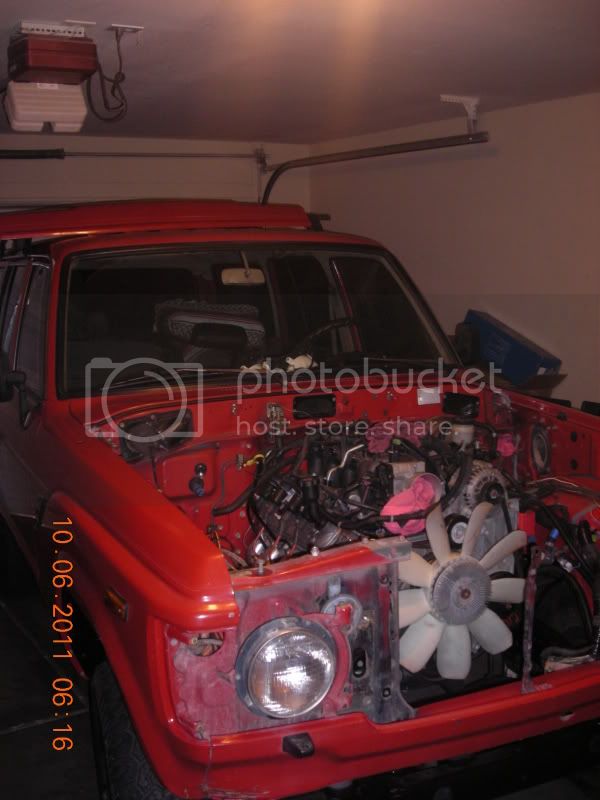
American Heart Transplant: FJ60 + Vortec

This site may earn a commission from merchant affiliate
links, including eBay, Amazon, Skimlinks, and others.

STOP!!!!!


why would you let a rear pinion angle determine the placement and angle of an angine? the pinion is a variable, engine angle should not be.

that's like building a cross member around an exhaust system. :rolleyes:

you need to go in order of priority. that's how any build should be done. start with the most important item and work your way down the list.

the engine should sit at 4 degs. measured at the valve covers.

don't trust that cheapy angle finder. they're usually off by 1-3 degs. buy or borrow a digital angle finder. it's the only way to go.

you don't have to cut the rear perches off to set the angle. it should be pretty close. if not, put some steel shims in there to bring it to the desired angle.

don't worry about the front so much. that's what cv joints are for.

georg
 
STOP!!!!!


why would you let a rear pinion angle determine the placement and angle of an angine? the pinion is a variable, engine angle should not be.

that's like building a cross member around an exhaust system. :rolleyes:

you need to go in order of priority. that's how any build should be done. start with the most important item and work your way down the list.

the engine should sit at 4 degs. measured at the valve covers.

don't trust that cheapy angle finder. they're usually off by 1-3 degs. buy or borrow a digital angle finder. it's the only way to go.

you don't have to cut the rear perches off to set the angle. it should be pretty close. if not, put some steel shims in there to bring it to the desired angle.

don't worry about the front so much. that's what cv joints are for.

georg

I wouldn't worry to much about the difference between 2.5 and 4 degrees on the engine. The tilt on the later motors believe it or not has very little to do with the engine and more to do with pinion angle ... For example Corvettes LS motors come mounted at zero degree tilt. Perfectly level.

I agree defiantly do not trust those angle finders. They seem to be at best good for +- 2 degrees.
 
you need to go in order of priority. that's how any build should be done. start with the most important item and work your way down the list.

the engine should sit at 4 degs. measured at the valve covers.


georg

Georg,

This 4* is based off the frame being level? Wouldn't 4* @ the rear pinion flange be the same as 4* on the valve cover. The motor trans and T/C are all connected in a straight line and the rear flange should be perpidicular. I'm going to see what happens by trying to use the factory rear cross member. Should locate the T/C close to the stock postion and we'll see what it does to the motor location. Got to go take the stock mount off the frame this morning. I'm going to mock up before I rebuild the T/C. I'll start posting pictures on the thread I started later. Dan not trying to steal your thread. later matt
 
Im going to run out and buy a digital angle finder. As far as the motor being 4*... its pretty damn close to that as it sits. The rubber mounts are a little forgiving.

BTW where did the 4* reccomendation comer from? I wish you would have mentioned that earlier...

I think Im going to run with my setup, because everything came out so nice. Driveline is all inline with one another. Clearances are all good on all sides.

Cheers
 
4* has been the standard on mounting a small block forever. Its pretty much how every Chevy engine up until the ls motors has been mounted. It doesn't matter on the new engines. Ok it might matter if you did it at something ridiculous like 25 degrees but the difference between 2.5 and 4 degrees isn't going to matter as far as your engine is concerned.
 
Last edited:
4* has been the standard on mounting a small block forever. Its pretty much how every Chevy engine up until the ls motors has been mounted. It doesn't matter on the new engines. Ok it might matter if you did it at something ridiculous like 25 degrees but the difference between 2.5 and 4 degrees isn't going to matter as far as your engine is concerned.

Exactly... very small difference, and that 2.5* is on my mounts, the engine sits more like 4* so its perfect in my eyes. Like I said... rubber mounts have some room to play.

Matt brings up a good point. If the T-case flage is 4* then the motor has to be 4*... drive line is perpendicular to flange...
 
Keep an eye on the motor rubber mounts.... I have only got a few years out of them before they need replacement...
Set them up so that its easy to gain access to them when the time comes to replace them..
Its a biotch once everything is put together and you need to get to them...
Also on that TC shifter.. it might be a tad too close to the seat and I know it will be waaay to close when you decide on putting a tuffy console.....
I bent to fit my shifter before I went to twin sticks....
 
Keep an eye on the motor rubber mounts.... I have only got a few years out of them before they need replacement...
Set them up so that its easy to gain access to them when the time comes to replace them..
Its a biotch once everything is put together and you need to get to them...
Also on that TC shifter.. it might be a tad too close to the seat and I know it will be waaay to close when you decide on putting a tuffy console.....
I bent to fit my shifter before I went to twin sticks....

Just test fit seat. No clearance issues with it fully foward and t-case in 4 lo. Should be fine with a smitty built console as well.
 
Guys,

Whats the minimum thickness metal you would use for a rectangle tube cross member?

My steel yard has

2X4 in 1/4 and 3/16

1x3 in 1/8

I'm thinking 3/16... What does everyone else think.
 
Made some progress last couple weeks. Slowly but surely, its coming along. I'll just post the pics now. (I had a computer crash and lost quite a few)

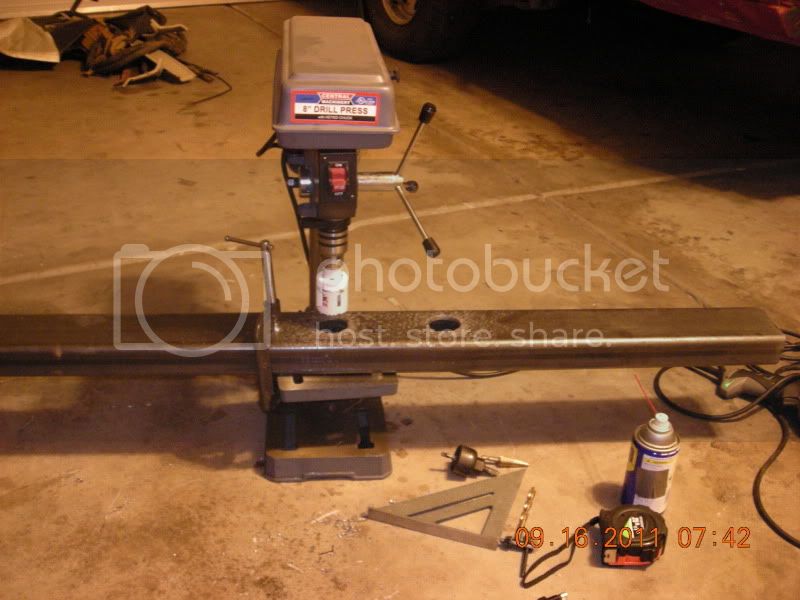
Fabrication of crossmember. 2x4 3/16" steel. lots of WD40 used.

DSCN4410.jpg


DSCN4411.jpg


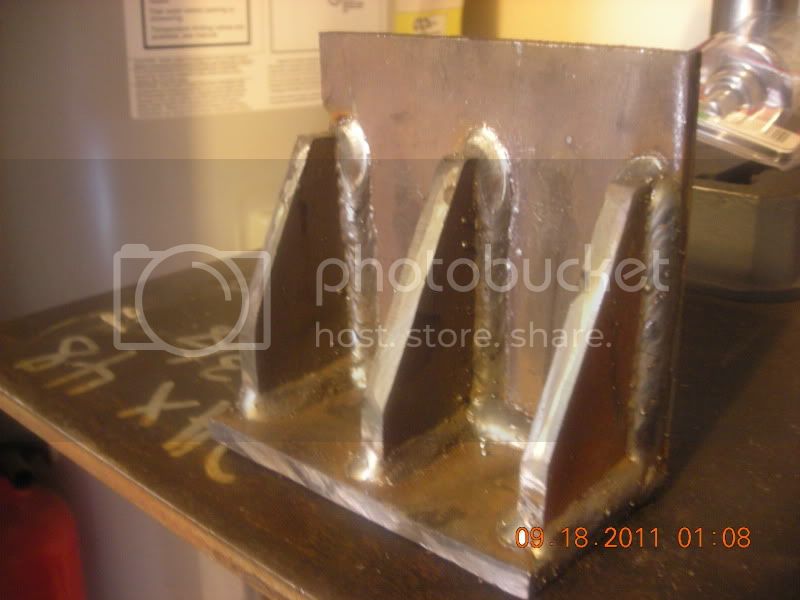
L-brackets hand made from 1/4" steel and triple gusseted.

DSCN4417.jpg


DSCN4415.jpg


Motor mounts fully welded.

DSCN4425.jpg


DSCN4426.jpg


DSCN4432.jpg


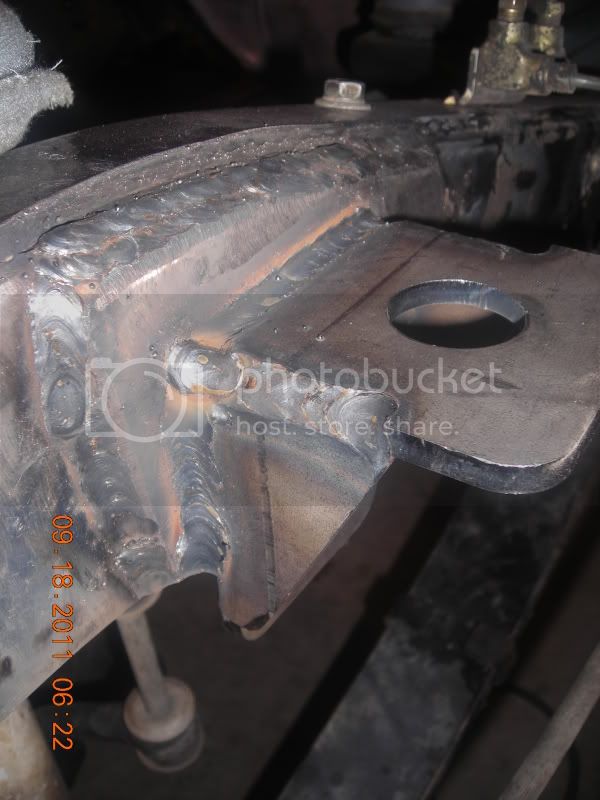
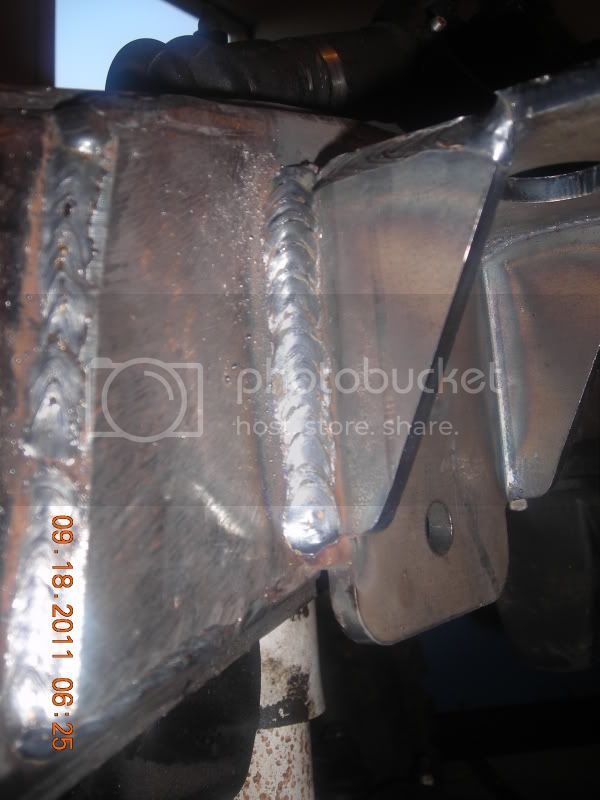
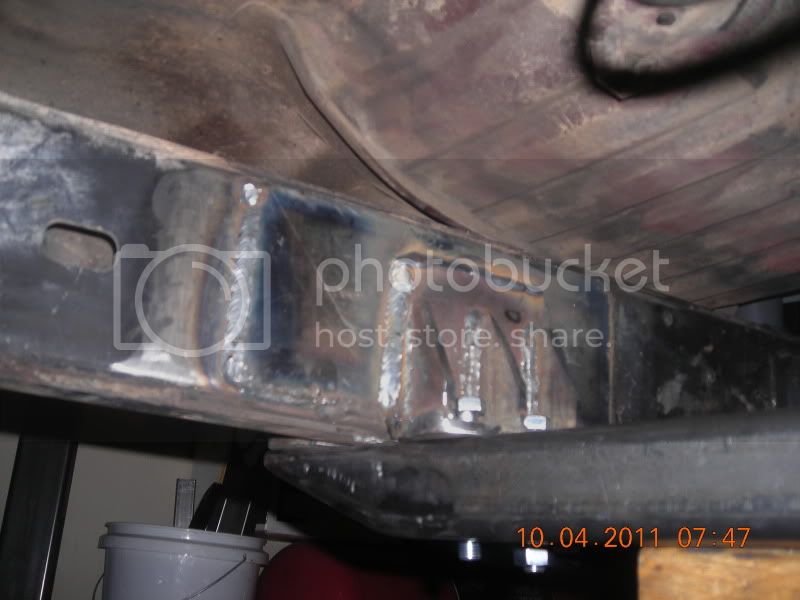
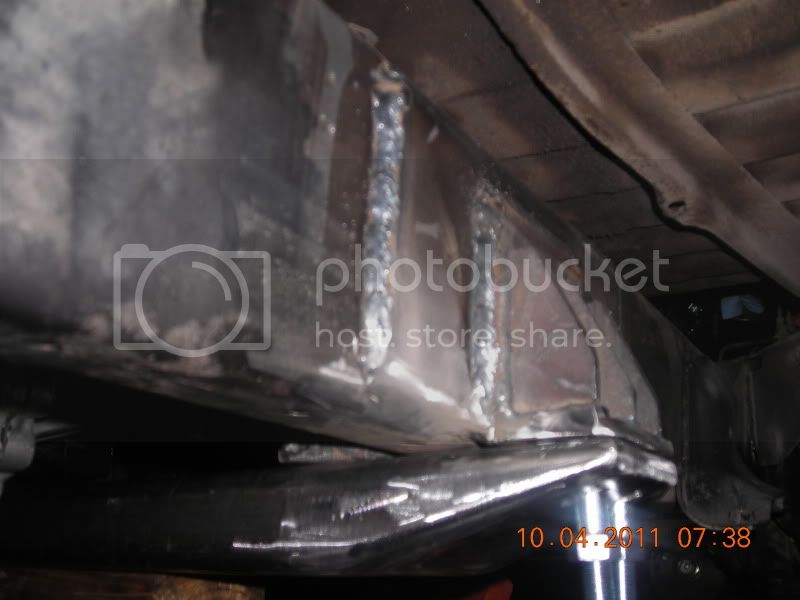
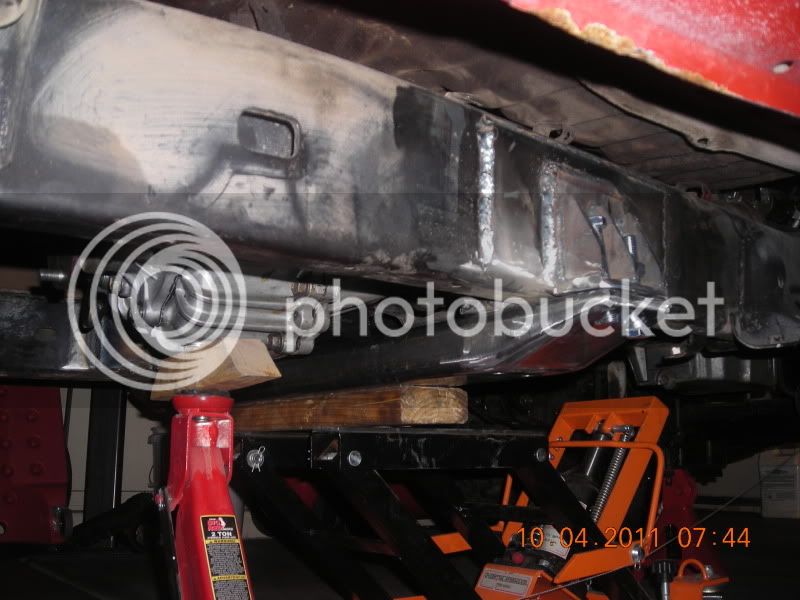
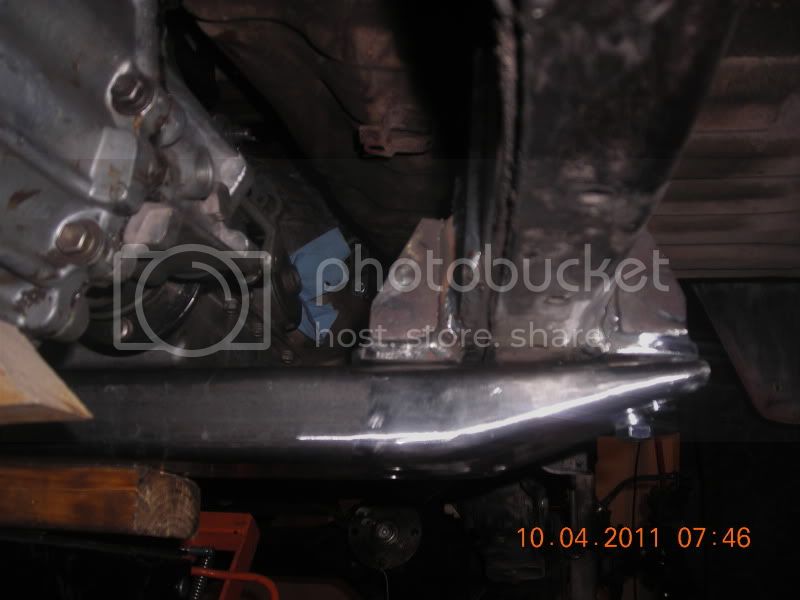
1/4" scab plate for crossmember L-brackets to weld to.

DSCN4428.jpg


How the crosmember mounts.

DSCN4443.jpg


DSCN4436.jpg


DSCN4438.jpg


Note the "wing" ends of the square tube. angled so that it looks nice from the side, not some funky square tube sticking out. lots of metal fabrication going on here. This was a very fun part of the build for me.

DSCN4440.jpg


Side view.

DSCN4439.jpg


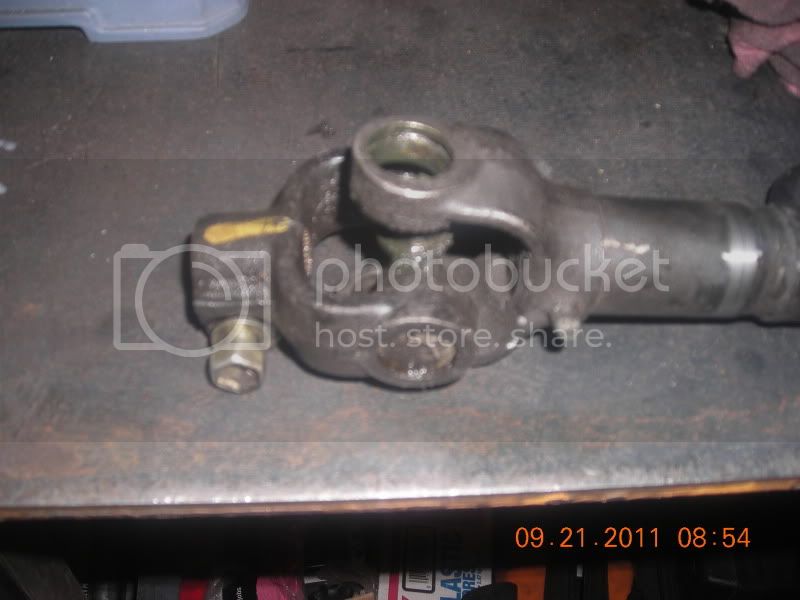
did new u joints in the steering shafts. part # PUJ 395 from NAPA 1968 corrola u-joint

DSCN4433.jpg
 
Last edited:
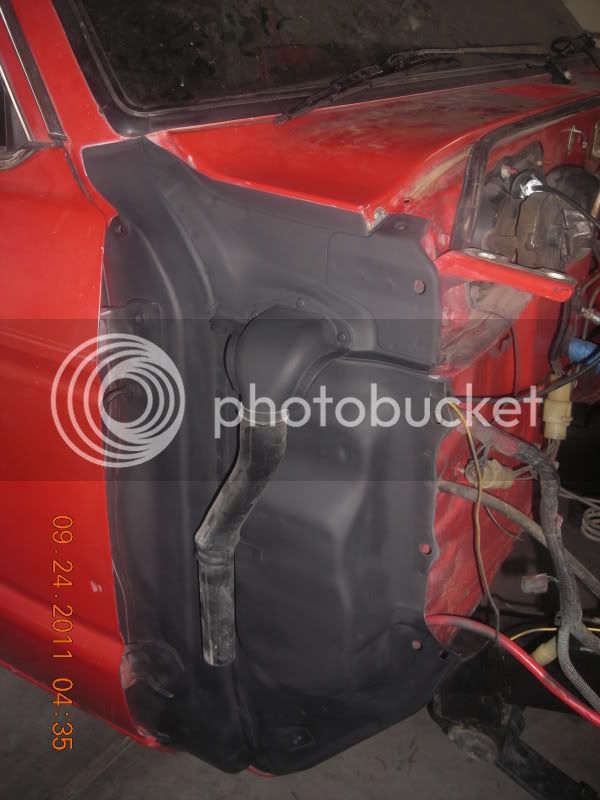
cleaned up the side and sealed with 3m body sealer.

DSCN4434.jpg


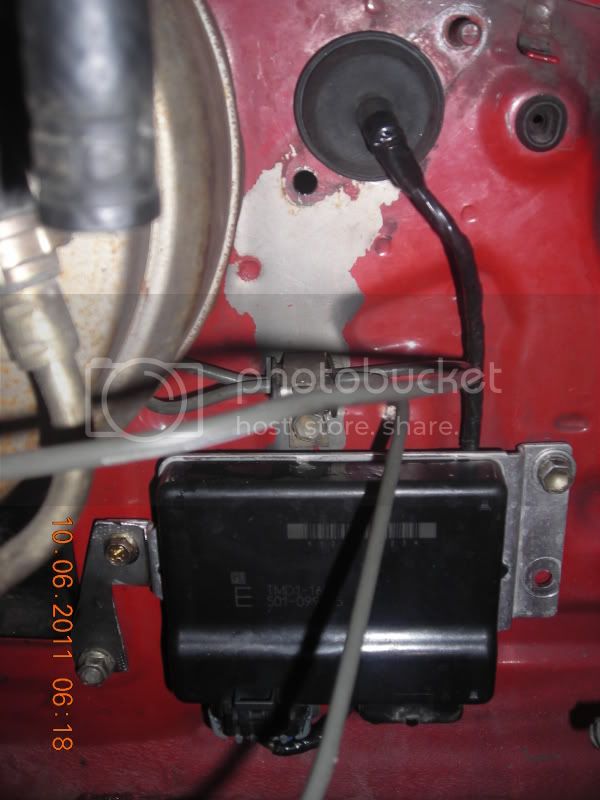
Used ALL stock holes in firewall no new holes drilled. TAC module mount with a little bracket made to bolt to a factory bolt hole. Also re-used hole from clutch master cylinder for the factory GM grommet from the TAC.

DSCN4448.jpg


DSCN4446.jpg


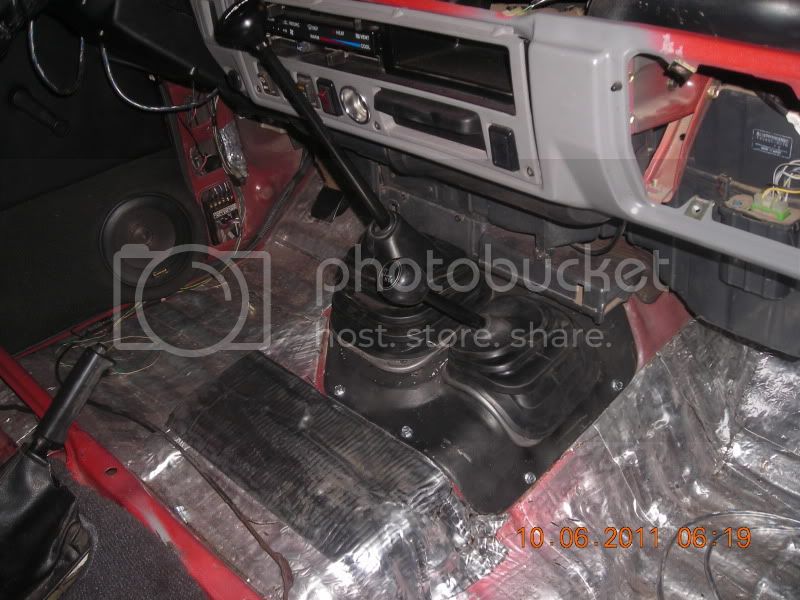
shifters in factory locations. I went back to factory location with the t-case shifter because I could re-use carpet this way. Factory boots look TITS.

DSCN4449.jpg


Put the doghouse back on bolted down, and gave the old boy a good wash. It was really dirty and I felt bad. this is where I'm at.

DSCN4445.jpg


Lots of details are not pictured.

Driveline angle was set up with string tied between pinions... the t-case pinions are perfectly in line.

The rear pinion angle on t-case ended up at 3.1* with a digital angle finder. this is exactly 1 degree more than the rear pinion (2.1*)

Got the frame painted with "epoxy in a can" and all other raw metal painted.

Currently working on the gas pedal mounting... shoulf be able to re-use factory hole and bolts.

Like I said I lost a lot of photos due to a cpu crash. sorry.

Until next time. :beer::cheers:
 
Last edited:
Nice work on that cross member, looks really nice.

Shifters look sweet too :grinpimp:
 
For your scab plates you should really have diamond, fish eye or scalloped edges… welding vertically on your frame really isn't a good idea… neither is welding vertical down on thicker steel, like 1/4". You lose penetration and have a very good chance of getting voids in your weld.
It is nice having the shifters in the stock location, tricks people a little more. You're going to love it once she's driving again!
 
For your scab plates you should really have diamond, fish eye or scalloped edges… welding vertically on your frame really isn't a good idea… neither is welding vertical down on thicker steel, like 1/4". You lose penetration and have a very good chance of getting voids in your weld.
It is nice having the shifters in the stock location, tricks people a little more. You're going to love it once she's driving again!

I'm aware of the scab plates... I'm not worried though because the plates are really long and big and distribute the load well. It's better than welding directly onto the thin factory frame like I see a lot of people do...that, is scary!

The crossmember is not going anywhere! My design is overbuilt, and stout.

On the vertical welds, I have been taught that structual vertical welds are best done by welding upward using a "V" pattern. this is what I do... and the welds are more than sufficient. Like I said, its much scarier people who weld directly to the frame :eek:

After examining some of Mr. Toyota's welds on the structual components :eek:, I have determined that I have absolutely nothing to worry about... if you dont beilieve me go look at the factor spring hangers and the factory crossmember mount. whoa, those are sketchy.

But thanks for the heads up.
 
Back
Top Bottom