Alright... 80amp and 100amp alternators interchangable?

This site may earn a commission from merchant affiliate
links, including eBay, Amazon, Skimlinks, and others.

Right. I was just thinking: Why this talk about 100 - 130 - 150 A alternators? It's at 250 it starts getting somewhere. And what's wrong with the 350 or 390 Amp models from the same source?

I think it's a durability vs output issue. IIRC the 250+ models are over-driven with small pulleys whereas the 150A from Toyota should be rock solid reliable. I'd rather go with a dual batt for reserve than rely so heavily on my Alt.
 
OregonLC said:
I think it's a durability vs output issue. IIRC the 250+ models are over-driven with small pulleys whereas the 150A from Toyota should be rock solid reliable. I'd rather go with a dual batt for reserve than rely so heavily on my Alt.

Based on the scarcity of failures of even the OEM 80 amp, I'd say they're all pretty darn reliable. :lol:

Typos sent from my HTC EVO using the IH8MUD app...
 
A good alternator guy told me long ago, it's all about output power at idle, not higher RPM's. More importantly, how much power do you get at idle in gear without the A/C turned on. 580-605 RPM.. I see a big difference with the stock alternator betweeen 900 rpm and 600 RPM. I have held off of the mean green series for this very reason. These SmartBatteryCharger ones seem to address this concern. I am going to try contact them this coming week and see just how crazy expensive they are.
 
A good alternator guy told me long ago, it's all about output power at idle, not higher RPM's. More importantly, how much power do you get at idle in gear without the A/C turned on. 580-605 RPM.. I see a big difference with the stock alternator betweeen 900 rpm and 600 RPM. I have held off of the mean green series for this very reason. These SmartBatteryCharger ones seem to address this concern. I am going to try contact them this coming week and see just how crazy expensive they are.

I sent them a message the other day Kirk. Haven't heard back from them. I am interested in their 1FZ-FE applications. I assume they are on holiday.

But I do agree that they are probably very, very expensive. These guys have Middle East operations which tells me that they probably supply military and NGO applications.
 
A good alternator guy told me long ago, it's all about output power at idle, not higher RPM's. More importantly, how much power do you get at idle in gear without the A/C turned on. 580-605 RPM.. I see a big difference with the stock alternator betweeen 900 rpm and 600 RPM. I have held off of the mean green series for this very reason. These SmartBatteryCharger ones seem to address this concern. I am going to try contact them this coming week and see just how crazy expensive they are.

I think most OEM ones purposefully unload (partially? fully?) at low idle to preserve fuel economy. Don't know if this is a function of the Alternator or if there is an external charging circuit that controls this. I remember when this technology first came out in the early 90's my Toyota dealer (where I worked briefly) had a vehicle with a persistent charging problem. Turns out the driver ran a paper route and would go hours never getting the car above 1200 rpm. Why you'd run a route like that in a new car is beyond me. IIRC the fix, was to put a resistor in the sensor line to trick the Alt into fooling the alternator logic.
 
beno said:
I sent them a message the other day Kirk. Haven't heard back from them. I am interested in their 1FZ-FE applications. I assume they are on holiday.

But I do agree that they are probably very, very expensive. These guys have Middle East operations which tells me that they probably supply military and NGO applications.


Hmm I can't wait to see what they have to say. Expensive is also relative to need I guess. If your gonna be wheeling all day with a few stops, cool then anything more expensive than stock is a waste. If you want to camp in the same spot for 3 days and only turn the truck on for a little to recharge the battery then mega amps at idle is key. Of course you have an 80 with the provisions for a hand throttle, so it's not going to be as critical for you.
(The hand throttle is the thing I most wish was available for the 100. I had one on my 80, it was great, especially for winching and camping.)

A proper dual battery setup in my LX is going to be probably 500 and that's only if I can find a good place to put the second battery. Well at least until my AHC dies. If the low end one comes in around a grand and does not have the "cannot weld from it problem", then I will save my pennies and put one in when I redo the whole front of the motor, TB, WP, idlers, fan clutch, fan bracket, new radiator etc etc. Pretty sure I also saw that they come with a 4 year warranty. They have some sick looking 3 alternator setups on their website.
 
OregonLC said:
I think most OEM ones purposefully unload (partially? fully?) at low idle to preserve fuel economy. Don't know if this is a function of the Alternator or if there is an external charging circuit that controls this. I remember when this technology first came out in the early 90's my Toyota dealer (where I worked briefly) had a vehicle with a persistent charging problem. Turns out the driver ran a paper route and would go hours never getting the car above 1200 rpm. Why you'd run a route like that in a new car is beyond me. IIRC the fix, was to put a resistor in the sensor line to trick the Alt into fooling the alternator logic.

I agree. I also can see the never going above 1200 RPM's as a problem. I run an ODB II sensor / torque app and am always monitoring voltage, trans temp, coolant temp, air intake temp, MPG and rpm. Sitting in traffic, in gear not moving, the voltage reading is between 12.6 - 12.9 volts, in park it jumps up to 13.3. At cruising rpm it is between 13.9 and 14.5 volts, again based on ambient temps. I'd like to throw an ammeter on there and see how many amps I am getting when I am seeing in the 12's.
 
I think most OEM ones purposefully unload (partially? fully?) at low idle to preserve fuel economy. Don't know if this is a function of the Alternator or if there is an external charging circuit that controls this. I remember when this technology first came out in the early 90's my Toyota dealer (where I worked briefly) had a vehicle with a persistent charging problem. Turns out the driver ran a paper route and would go hours never getting the car above 1200 rpm. Why you'd run a route like that in a new car is beyond me. IIRC the fix, was to put a resistor in the sensor line to trick the Alt into fooling the alternator logic.

Somebody needs to put this to the test, 'cause if I can get my idle voltage up with that little work, I'd be one happy camper.
 
Somebody needs to put this to the test, 'cause if I can get my idle voltage up with that little work, I'd be one happy camper.
You need to use a diode to drop the voltage, not a resistor. I have a pair of Schottky diodes patched into my alternator sense fuse giving me a .25v raise. Regular silicon diodes will likely raise the voltage too much and a single Schottky not enough in my case. How much of a correction you need is likely dependent on you specific alternator rather than being universal and I was never seeing above 14.2v from mine. Now I see 14.45 - 14.5 for a while after startup and it doesn't drop off as low as it used to. Other people seem to get 14.5 without messing so YMMV, I'm not sure this doesn't just indicate my alternator needs changing but its behavior has been consistent for my approx 30k miles of usage so it is failing slowly if it is failing.
 
I put the 130 from the 03+ in my 00 to upgrade from the 100. Bet the same is possible from the 80 to 130 since spresso swapped to the 100.
 
I put the 130 from the 03+ in my 00 to upgrade from the 100. Bet the same is possible from the 80 to 130 since spresso swapped to the 100.
Do those have the 3 pin oval connector or the 4 pin square connector?
 
The '03+ alternators have the square 4-plug connector...like the Sequoia.
 
The '03+ alternators have the square 4-plug connector...like the Sequoia.
That's what I thought you said but I wanted to check because I see Toyodiy is listing two part numbers for the 130amp for different year ranges but that would be too easy :rolleyes:
 
I wonder if it's possible to chop out the alternator end of the plug and make a simple in-line adapter.
 
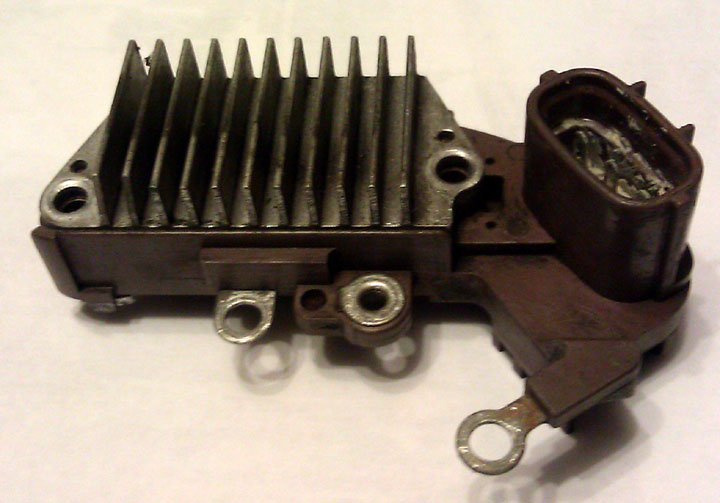
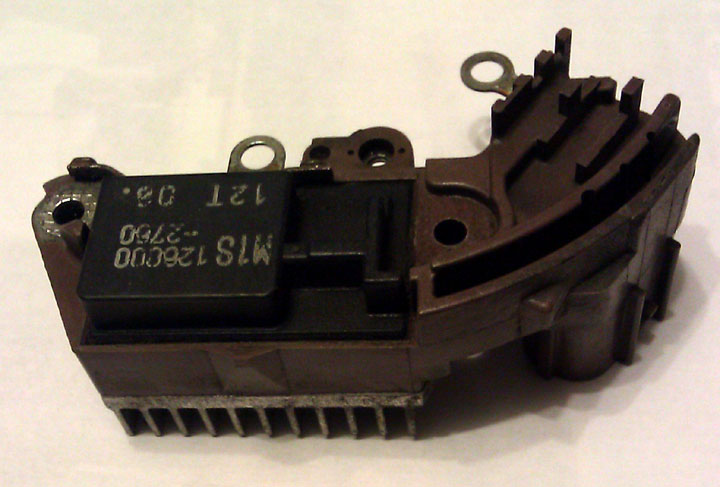
This is the part on the 80 amp alternator with the 3 pin plug and with some careful cutting you probably could cut the plug out in a re-usable state to make an adapter.

IMAG0730.jpg

IMAG0731.jpg


That's another option, I had been considering having dual plugs with the unused one sealed against the elements. I don't mind attacking the OEM wiring to convert to 4 pin but I do want an easy way to swap back to a 3 pin for back up seeing as I would have trouble sourcing a 130/150amp replacement in a hurry and will have a couple of 80 amp spares if I go this route.
 
That's what I thought you said but I wanted to check because I see Toyodiy is listing two part numbers for the 130amp for different year ranges but that would be too easy :rolleyes:


Well...seems to be a bit of variance at the various Toyota OEM parts sites :rolleyes:. I found a photo of an '03 alternator (130A) and it clearly shows the square type receptacle.

But I also see, specific to '05-'07, a different alternator part # but still 130A.

And another Toyota OEM parts site lists 80A, 100A and 130A options for '03-'04...but no photo to discern the connector style.
 
This is the part on the 80 amp alternator with the 3 pin plug and with some careful cutting you probably could cut the plug out in a re-usable state to make an adapter.

IMAG0730.jpg

IMAG0731.jpg


That's another option, I had been considering having dual plugs with the unused one sealed against the elements. I don't mind attacking the OEM wiring to convert to 4 pin but I do want an easy way to swap back to a 3 pin for back up seeing as I would have trouble sourcing a 130/150amp replacement in a hurry and will have a couple of 80 amp spares if I go this route.

That's exactly what I was thinking.
 
It's square. Joe@Slee just de-pinned the old plug and found the right connector in their pile of connectors. It's not a big deal to change the vehicle side of the plug.
 
Back
Top Bottom