

8series steel vs. aluminum rims strength?

This site may earn a commission from merchant affiliate
links, including eBay, Amazon, Skimlinks, and others.

CDan,

I checked the drawings for steel wheels as well and since it was also developed for the 80 Series, it is maxed out at around 1150kg.
SNIP

An interesting rule of thumb from fatigue testing is that if you reduce your load by 20%, the life will be extended approx. 3 times the original. So if I design a wheel for 500kg and 60,000miles and then only ever load it to a maximum of 400kg, it will last 180,000 miles. Or the reverse, if I increase the load to 600kg, it will only last 20,000 miles. Even more interesting is that aluminium and steel show the same relationship in most cases. It is possible to get "infinite" life from steel at very low loads, but when was the last time you removed weight from your Land Cruiser and kept it off?
Oh, yeah, when your girl left you because you prefer to spend your time with your truck...
SNIP

golgo,
Thanks, interesting rundown.

I certainly think the above explains the issues Blade is having. :whoops: He didn't bite on my dually comment.;) May I suggest a trailer might be in order?:hhmm:

Of course, Alco may save the day here. But once the wheels are no longer the weakest link, then the question is what breaks next?:confused:
 
thanks very much Lex for the great explanation!

So what's the difference then between Cast and Forged when it comes to wheels? Is the only reason for forged that it will be lighter than the same design of wheel but made in cast?

And does the cast not have risks of air pockets compared to the forged?

What about material fatigue or damage.. can't a forged wheel be repaired (welded) easier than a cast?

Thanks!
 
greentruck - I am on the other side of the world, to even find a little part for the car can cost DAYS of searching. Took me now 2 full days to find a 5/8" water hose!

Besides, as I said, 98% of the 70serie expeditions cars traveling have 3.5-4t! VERY rarely you see such a car below 3500kg!
My car has an official Toyota release of 3450kg. I try to be near 3600-3700kg when I go offroading, but sometimes (like now) when you leave to a very remote desert for a week I have to fill up water tanks and diesel tanks and probably am more in the 3700-3800kg region (all included).
That said, I am more on the light side compared to many others I met that had 4000kg or more on their 70series.
Most of those J7 are super tough and I so far heard only of one broken axle housing (this italian had OVER 4000kg on his 78series) and a broken frame in Laos (also way over 4000kg with a huge camper cabin on the back that generated a great leverage on the front flatbed point).
Also some complain about pulling out wheel studs on the 75 series (6 studs), never on the 5 studs (78), I guess Toyota knows why they changed from 6 to 5 stud setup! (M12 -> M14)

Anyway, I know that hunderts of people travel like me or with more weight and most have no issues with breaking stuff. So I will get the right wheel and hope the studs are not the next problem ;)
 
Eh I am a see it in writing kind of guy. Lol

In 10+ years I have not seen a broken 80 series wheel that shows the traditional cast signs, but I have seen 80's wheels bent and restraightened like a forged wheel.

If there are pics of broken 80's alloys out there let's see them. Should be fairly obvious from the break.
 
Last edited:
Still not enough evidence to take it from the guy who designs wheels for Toyota? Really?
They're cast.
And just because you have seen them straightened/"repaired" doesn't mean it is OK to do that.

Also for evidence of casting, get a nice x-ray machine and get some shots of the super tiny pores. Or notice the embossed detail of the "TOYOTA" rim size and JWL markings. Forging would require debossing to get details like that.
 
Last edited:
Nope, :flipoff2: like I said I am a see it in writing guy, if you want to come up with some docs, cool. Hopefully you can get some good wheel pushed through the current stuff has been terrible, like the current Tundra wheels. There isn't a single one from the work truck to the 1794 or Platinum that I would keep.

 
Last edited:
Haha, I only make sure they meet durability and manufacturing requirements. Styling comes from the hotshots at CALTY, our styling division.
 
lol, ok well I guess not much you can do about that, damn designers. But hopefully they are just spending too much time working on the FT-1 and not effing it up to put any time into the wheels. lol.
 
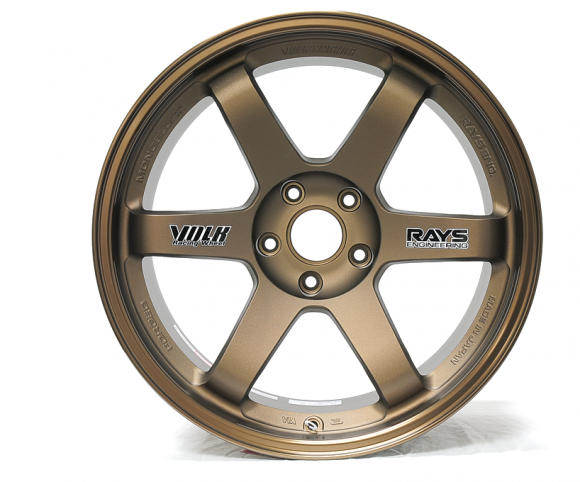
Not sure I follow your embossing logic. Rays has long been forging wheels with embossed letters in as much or more detail than we see on any Toyota wheel. I just grabbed the TE37 as it is well known but you can look at many of their wheels all forged and all have embossed letting. It would only have to be debossed if done after the fact.

http://www.mackin-ind.com/portfolio/te37/

te37-580x482.png


Still not enough evidence to take it from the guy who designs wheels for Toyota? Really?
They're cast.
And just because you have seen them straightened/"repaired" doesn't mean it is OK to do that.

Also for evidence of casting, get a nice x-ray machine and get some shots of the super tiny pores. Or notice the embossed detail of the "TOYOTA" rim size and JWL markings. Forging would require debossing to get details like that.
 
Oy, vey
 
Even if I could post a picture of the drawing without risking getting in huuuge trouble, you couldn't tell from the drawing except the material grade in the title block is shown as ASTM A356 - T6.
Look it up, its a casting alloy.
 
Still can't help it, every time I see the user name.

"I saw you....with a ticket stub in your hand.."


Hos 'bout changing that O to an I?

Edited: I've been told I've seen this twice in Texas, but, oddly, can't recall even being at those shows.....or in Texas, for that matter. :)
 
ahhhh, Phish...
I have a friend from Ypsilanti, Michigan who posed for this PostCard photo...She loves Phish...whenever they are in concert within 400 miles, she goes...
The object in the background is the Ypsilanti Water Tower AKA the Brick D*ck.

EDIT: The forum decided to delete an artistic photo of a friend... oh well...
 
Last edited:
greentruck - I am on the other side of the world, to even find a little part for the car can cost DAYS of searching. Took me now 2 full days to find a 5/8" water hose!

Besides, as I said, 98% of the 70serie expeditions cars traveling have 3.5-4t! VERY rarely you see such a car below 3500kg!
My car has an official Toyota release of 3450kg. I try to be near 3600-3700kg when I go offroading, but sometimes (like now) when you leave to a very remote desert for a week I have to fill up water tanks and diesel tanks and probably am more in the 3700-3800kg region (all included).
That said, I am more on the light side compared to many others I met that had 4000kg or more on their 70series.
Most of those J7 are super tough and I so far heard only of one broken axle housing (this italian had OVER 4000kg on his 78series) and a broken frame in Laos (also way over 4000kg with a huge camper cabin on the back that generated a great leverage on the front flatbed point).
Also some complain about pulling out wheel studs on the 75 series (6 studs), never on the 5 studs (78), I guess Toyota knows why they changed from 6 to 5 stud setup! (M12 -> M14)

Anyway, I know that hunderts of people travel like me or with more weight and most have no issues with breaking stuff. So I will get the right wheel and hope the studs are not the next problem ;)


This makes me think back to when I worked on the G-wagon project for the Canadian military. Originally the vehicle was spec'd by MB for a GVWR of 3800 kg, but we required GVWR of 4800 kg because of the payload requirement and ability to be up armoured. They said no problem, but it became apparent during our RAMD testing that many things would have to be changed. Some of the over 150 design changes they made for us to the vehicle were:

- strengthened frame (inserted middle support inside boxed frame)
- bigger dia front panhard rod
- thicker steel for panhard brkt on front axle
- upgraded front axle from 1.8 t to 2.2 tonne
- heavy duty springs
- heavy duty shocks
- reinforced body in trans tunnel area and other areas (the body already had two floor stampings)

Being one or two hundred kgs over weight will likely not be a probably in the short term, but excessive weight over time and extreme driving conditions will most certainly lead to all kinds of fatigue failures.
 
Back
Top Bottom