Opinions on tire sidewall strength

This site may earn a commission from merchant affiliate
links, including eBay, Amazon, Skimlinks, and others.

I have 315-75-16 BFG MT KM2. I've been running at 15 psi when I hit the dirt. It's night and day running at this lower tire pressure compared to the 34 psi that I have it at for my daily driving. I haven't tried it yet, but I think going down to even 10 psi would be fine. At 15 psi, the footprint increases, but it seems like the sidewall is still relatively stiff. Next time I go out, I just might try 10 psi and see how it handles.

Anyone have issues with this set up at 10 psi?

Try it, may work. It's impossible for others to predict, what works best depends on rig weight/setup, terrain, driver, speed, etc. So the best bet is to experiment to see what works best on your stuff.

When going really low without bead locks, there is a risk of breaking the bead loose, especially on off camber. Also spinning the rim in the tire, especially on chrome rims. One way to monitor is; mark each tire at the valve stem, then check for movement when airing up.


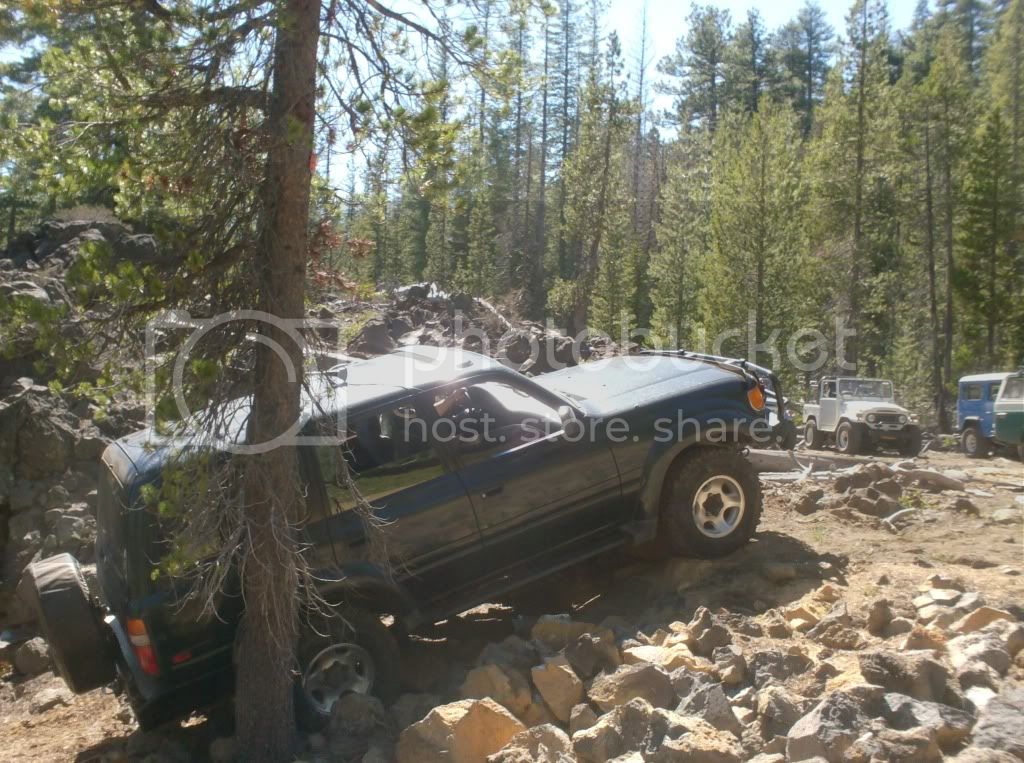
It wasn't a limb. It was a freakin' tree trunk.

Okay, a relatively small tree (lodgepole pine, probably).

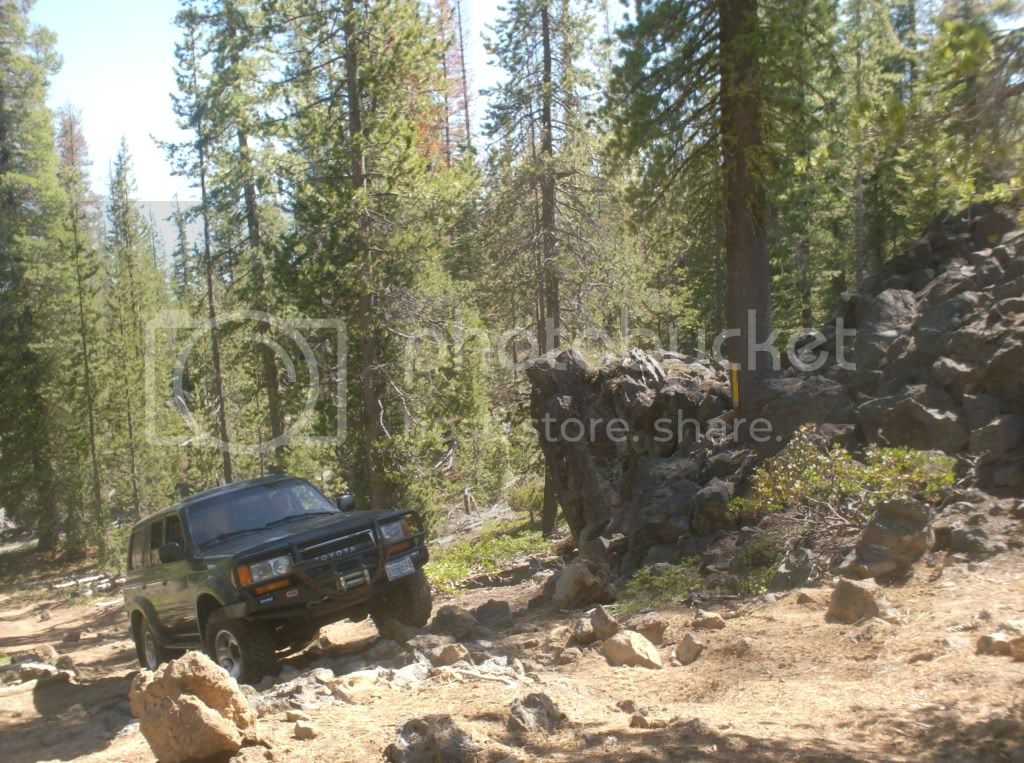
Thanks for the heads up! I'll be doing a trail with some of this on it this weekend:
HPIM0672-1.jpg

BTW, good thread on those Grabbers, Ebag.
 
Try it, may work. It's impossible for others to predict, what works best depends on rig weight/setup, terrain, driver, speed, etc. So the best bet is to experiment to see what works best on your stuff.

When going really low without bead locks, there is a risk of breaking the bead loose, especially on off camber. Also spinning the rim in the tire, especially on chrome rims. One way to monitor is; mark each tire at the valve stem, then check for movement when airing up.

Good tip. Next outing, I'll mark my tire. Thanks!
 
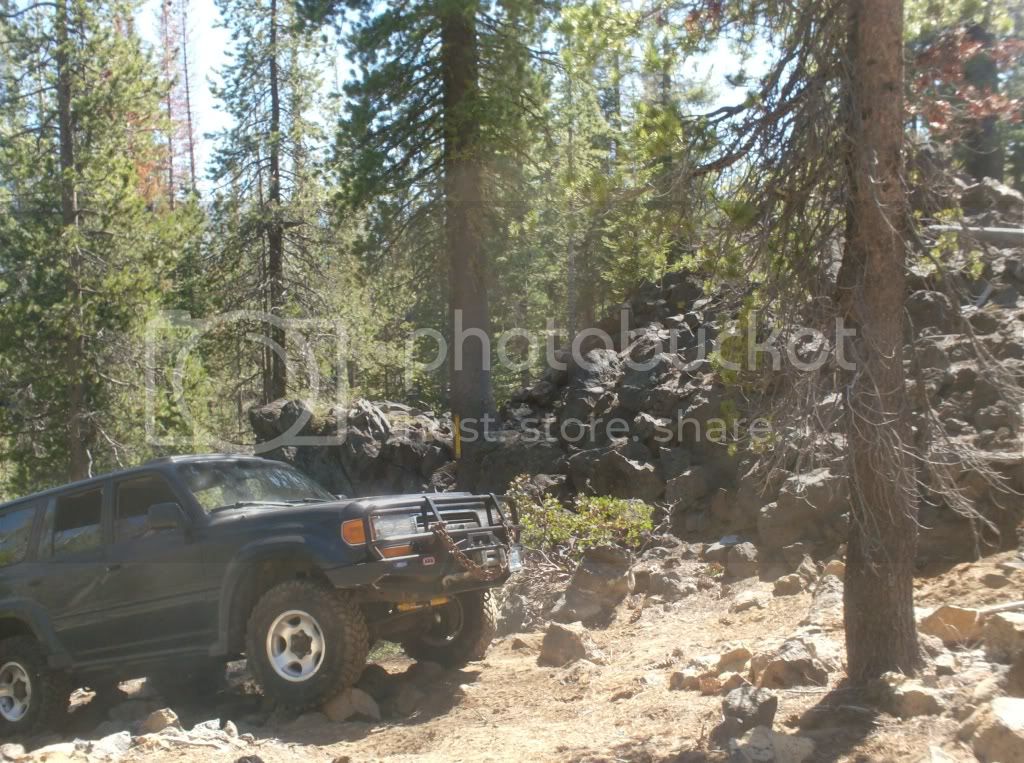
With the amount of snow that was still left on the higher sections of the trail from the scouting reports, I chose to put my M/Ts back on. The trail went from this:

HPIM0702.jpg


To this:
DSC_0674Large.jpg


I dropped to 20 psi before starting out, but still managed to get some minor sidewall damage from rocks and logs. My M/Ts are load range E so I'm hoping they won't be weakened too much. I'll post pics, but describing it - kinda resembles curb damage - like when tires get s****ed along curbs when you park to close to them. A couple of small holes in the rubber down to the cords have me concerned. It p*i*s*s*e*s me off 'cause my load range D A/Ts didn't get that damage last week on the same trail in the lower sections.
 
I dropped to 20 psi before starting out, but still managed to get some minor sidewall damage from rocks and logs. My M/Ts are load range E so I'm hoping they won't be weakened too much. I'll post pics, but describing it - kinda resembles curb damage - like when tires get s****ed along curbs when you park to close to them. A couple of small holes in the rubber down to the cords have me concerned. It p*i*s*s*e*s me off 'cause my load range D A/Ts didn't get that damage last week on the same trail in the lower sections.

At least in those pics, doesn't look like you dropped the PSI enough. When your PSI is low enough, there should be a noticeable sidewall bulge. Yours looks about like mine do at street pressure.....
 
At least in those pics, doesn't look like you dropped the PSI enough. When your PSI is low enough, there should be a noticeable sidewall bulge. Yours looks about like mine do at street pressure.....

Thanks, Gabe! First time on this trail (Edison) and I didn't want to pop a bead. As it worked out, we couldn't get to the most difficult sections - still too much snow. I'll drop it lower next time out.
 
Last edited:
I have 315-75-16 BFG MT KM2. I've been running at 15 psi when I hit the dirt. It's night and day running at this lower tire pressure compared to the 34 psi that I have it at for my daily driving. I haven't tried it yet, but I think going down to even 10 psi would be fine. At 15 psi, the footprint increases, but it seems like the sidewall is still relatively stiff. Next time I go out, I just might try 10 psi and see how it handles.

Anyone have issues with this set up at 10 psi?

By some degree of accident by setting my Stauns too low, I have been running my Trxus at 10 PSI. I don't run 15 anymore - it is too high to get my tires to flex well. A number of good trips at 10 has loosened the tires up and I am not comfortable with them for any type of speed, this is a pure crawling pressure.

I have not had any issues and I think 10-12 PSI is a good non-beadlocked PSI for a large load range D/E tire.

My 80 is not as heavy as many, and that may have some impact to my observations as well.
 
I have not had any issues and I think 10-12 PSI is a good non-beadlocked PSI for a large load range D/E tire.

I'd be careful with that recommendation, it'll depend heavily on the construction of the tire.

I know that my tires can run a significantly lower pressure (4-6 PSI) than some local mudders and have the same amount of flex in the side wall (same tires size, same load range, different brands). If they ran the same PSI I did, I would suspect that the chance of breaking a bead would go significantly up, as the sidewall would be extremely bulged.

For my tires I wouldn't hesitate to run 12 PSI, I've run them as low as 7 before. But other tires I've seen I wouldn't run below maybe 14.

The difference between D an E is quite large as well. That can be a difference of 300+ lbs max load per tire. The stiffness of the sidewall is quite different between the two. That being said, you'll probably be able to run E range lower than D range by and large.

And of course tire size makes a big difference....try running 10 PSI in a 31" tire. :lol:
 
I agree, most tires don't start working till ~15psi range, then tune for your needs.

Tire scuffing/abrasion is part of the game. It's one way of telling who the posers are, you can buff the paint, but the tires tell the story. :hillbilly:
xmas_2009.webp
315_rub.webp
 
Tire scuffing/abrasion is part of the game. It's one way of telling who the posers are, you can buff the paint, but the tires tell the story. :hillbilly:


Jeez man.
The only tires I see around here that look like that are on the mine pickups. I don't think our average wheeling conditions cause nearly that amount of wear and chipping on tires.

Of course, I might be a little more timid than some around here...

:flipoff2:
 
Arizona rock is "somewhat" unforgiving on tires.:hillbilly:

Yup, I think that's what the old timers said about wagon wheels, horse and oxen hooves, shoes, moccasins and just about anything that rolled on the ground or propelled a body across Arizona terrain.

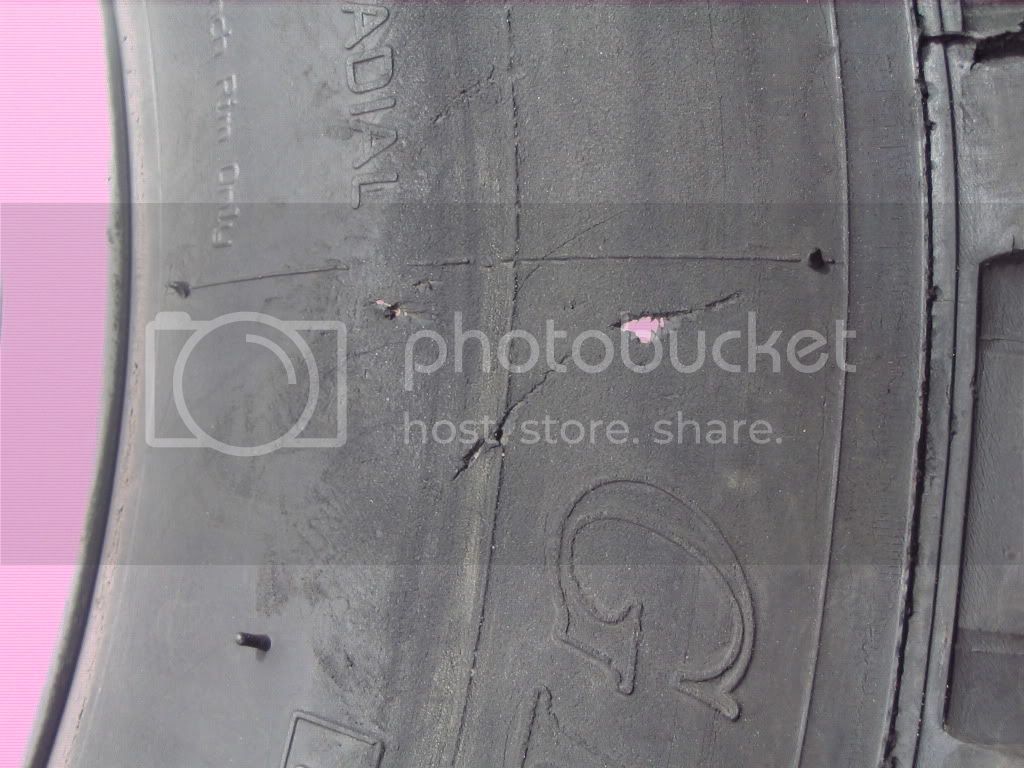
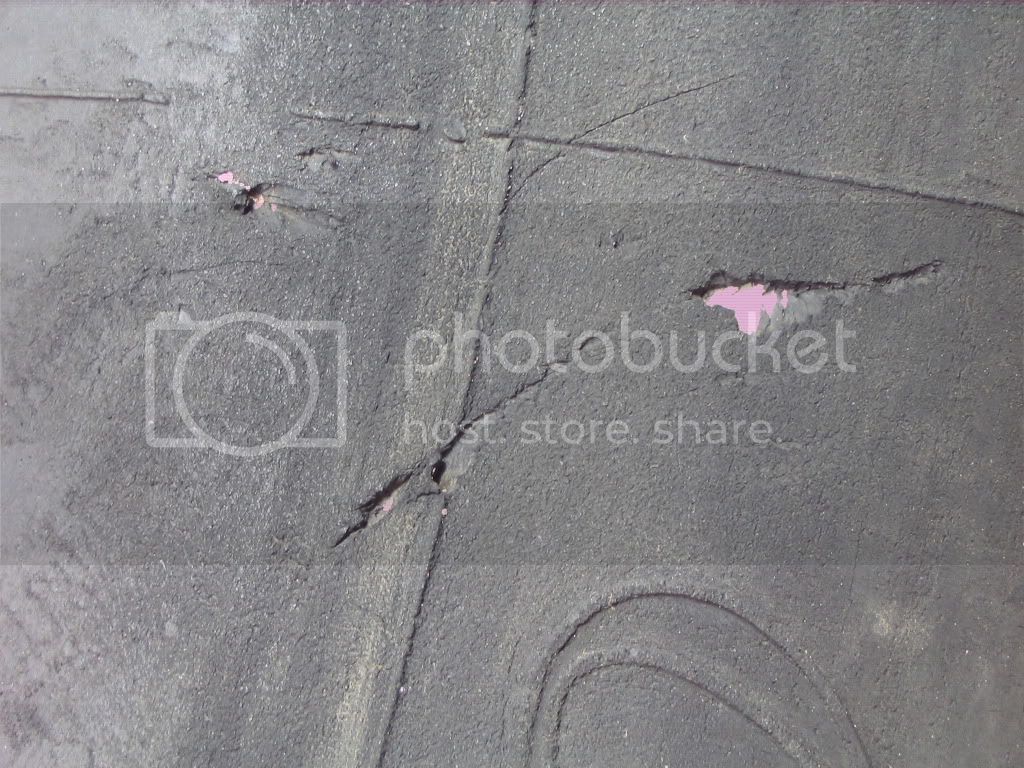
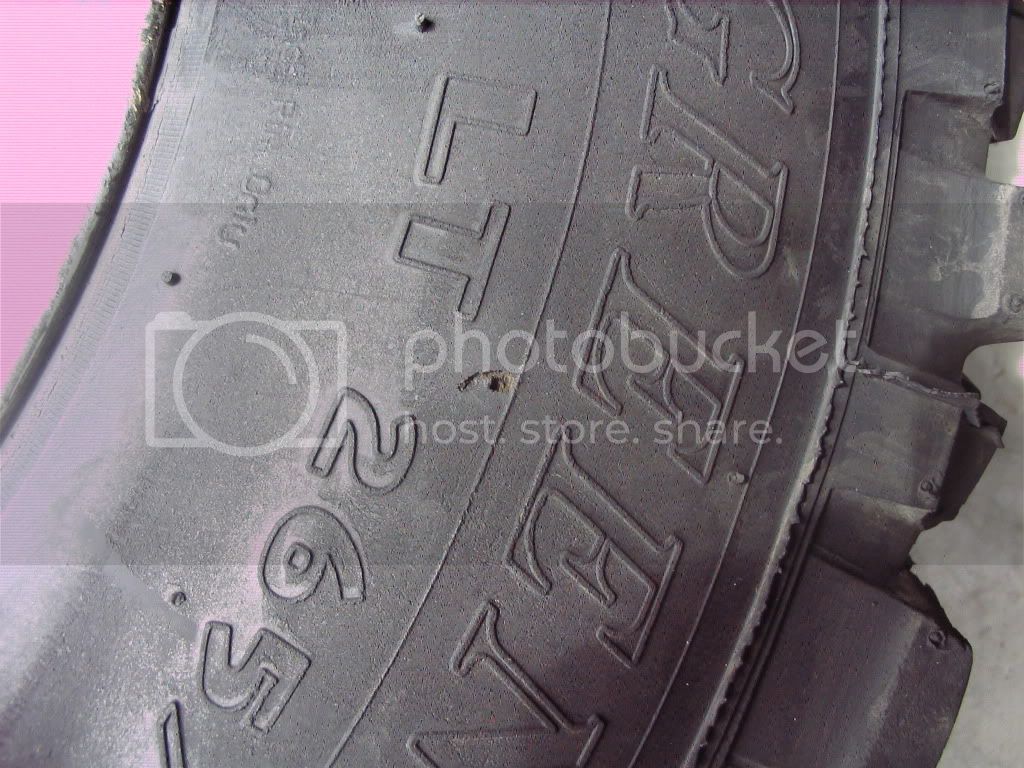
Finally got some pics of some of my rock rash or log rash on my sidewalls. If you ignore the pink tint (my camera's got some problems) you can see my concerns:
114_1421.jpg

Here's a close up:
114_1424.jpg

And a small chunk from another tire:


114_1425.jpg


I know it could be a lot worse, but these tires have 10K miles or less on them. Hell, some of the excess rubber from the molds hasn't worn off yet. Maybe it has something to do with the tires being recaps or remolded as Green Diamond calls it. You can see a difference on the sidewall where the rubber is smooth and there's other sections that are rough. It's invariably in the rough sections where the damage exists. But not all rough sections have chunks of rubber missing. Hopefully, they'll hold up to more abuse.
 
That's not from being a recap. I think the base tire they used has too soft of rubber. I've seen others that are like that (Coopers tend to be on the soft side, for example).

That closeup shot kinda scares me. What is the pink spot in th closeup?
 
.............That closeup shot kinda scares me. What is the pink spot in th closeup?

Sorry, Gabe! My camera has some problems. On the Macro settings it has been adding a pink tint to what should be white. What that pink spot is, is a void down to the white cords. It's kinda scaring me also, that's why I posted the pics. I've got an e-mail in to Rich with Green Diamond Tires with a link to a photo-bucket album showing these pics, plus a couple more. The cuts, voids and holes bother me, but the rubber going from smooth to grainy over much of the sidewalls is bothering me more. I hope it's not an indication of overheating from being run at low psi. Edison OHV park is only about 30 miles from my house and I had 30 psi in the tires to and from the trail. It barely got up in the 70s that day, so I don't know what to think!
 
The smooth to grainy is not an issue. That's just where the original carcass meets the new rubber. Looks kinda funky, but it's only aesthetic.

The chunk that's been tore out and is showing the white cords is.

If those were my tires, I would not be happy. As I already mentioned it's likely the carcass has too soft of rubber. That was one reason why I liked the TreadWright retreads, I requested and got BFG carcasses which I know are good and will hold up. Some tires I haven't been impressed with as IMHO the rubber is too soft, and I would not want them used for retreads as I think they'd do what your Green Diamonds did.

Let us know what Green Diamond does for you.
 
Thanks, Gabe! I'm curious as to what Green Diamond's response is going to be. It's not like I'm abusing the tires. They are M/Ts and meant to be taken off road. I'll post what they say and update my GDT tire thread.
 
It's really hard to tell from those pix, the parts where detail is needed are pink. If it's only happening in macro, try shooting from 3-4' at full zoom and cropping, or barrow a camera?

My basic rule is; as long as cords aren't cut I don't worry. What is the date code on the tires? As tires age the rubber becomes harder, making it less elastic, much easier to cut, chunk.
 
... (Coopers tend to be on the soft side, for example).
...

... I requested and got BFG carcasses which I know are good and will hold up. ...

Tire needs differ with terrain, but around here BFG's have the reputation as one if the easier tires to cut. In my experience, Coopers are a relatively hard compound tire, harder than I would prefer. Harder tires last longer in road miles, but have less grip off road, so tend to slip more increasing impact loads, harder rubber is less elastic, so easier to cut/chunk.

The Cooper picture I posted above is the oldest tire on my rig at the time. It was paired with a tire with about the same tread wear, but ~1yr newer. They were run on the same axle, the exact same trails, etc. The difference was very obvious, with the newer tire having suffered less than 50% of the trauma.

Rubber is a vulcanized, heat cured product. It doesn't stop curing, with age and heat cycling it becomes harder. The harder it gets, the easier it chunks/cuts and grip is reduced increasing the problem. Harder rubber is less adhesive, so older tires are more likely to have cord disbonding issues, like separations, out of round, bulges, etc.
 
Harder tires last longer in road miles, but have less grip off road, so tend to slip more increasing impact loads, harder rubber is less elastic, so easier to cut/chunk.

That makes sense. Same effect, just opposite cause as I was thinking.

Either way, those Green Diamonds are chunking rather badly.
 
Back
Top Bottom