My 1983 SR5 Long Bed Build.

This site may earn a commission from merchant affiliate
links, including eBay, Amazon, Skimlinks, and others.

I just finished the second rim, it leaked more than the first. I ended up cutting a 1/4 inch wide groove over the first welds around the rim, and re welded it. I think I have it figured out though, turn my welder as high as it can go and burn them in. Also use a wire wheel on the area to be welded, before that weld is in. For some reason the area around the earlier weld is contaminated and must be cleaned. Any other suggestions are welcome.
I am a mechanic not a welder. I get by but am not as good as a pro.
 
Last edited:
is your welder a 110v or 220v? a 220 will be able to weld these better.

Im not an awesome welder but I know some...

just make sure you clean clean clean the wheels AND rings they may have put some oil to protect the rings from rusting (think new brake rotors)

looks sweet though! whatd you pay for the whole bead-lock kit?
 
The welder is a 220v 175 amp welder. I think your right here, the problem is cleanliness. My first welds are great it is the welds that I am tying into that are the problem. I have to clean them with a wire wheel very throughly for any success. I too am happy with the way the rotor builds came out, thanks.
I paid $261.25 for the 5 beadlocks.
 
Last edited:
I finished the last two rims today. Yesterday I used the whole day on one rim, I just could not seem to keep out the pin holes. The last rim was a new rim, I did that one in less than an hour. It did not leak at all, from the first weld. The same technique was used on all rims.

This is how I did it.

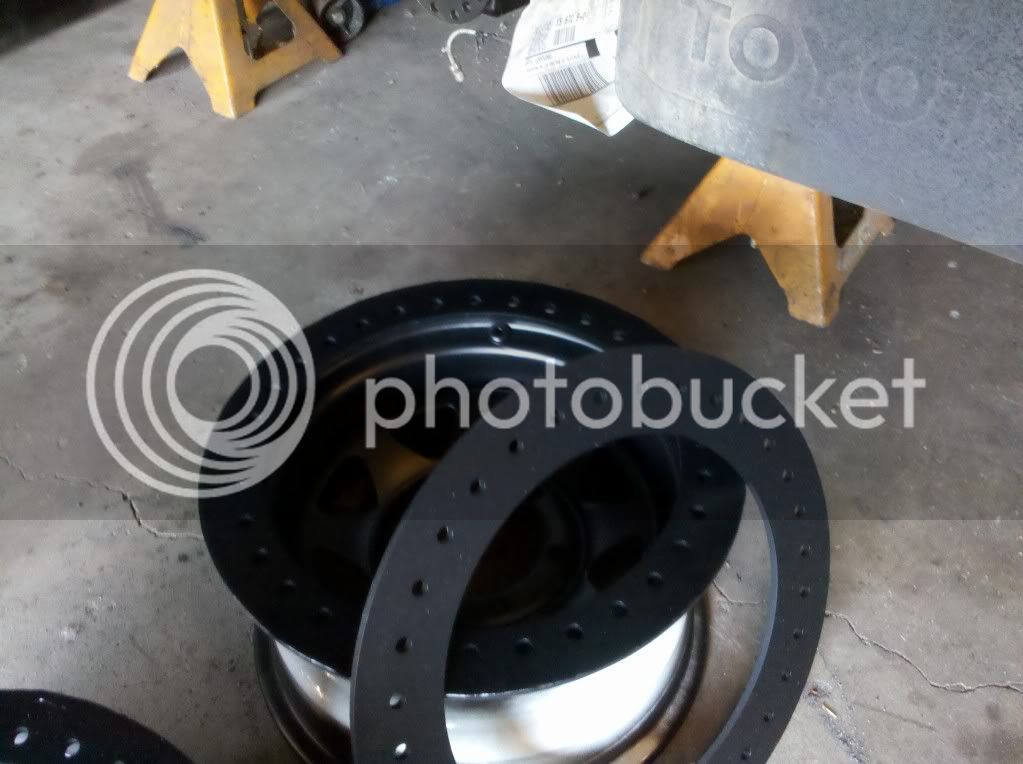
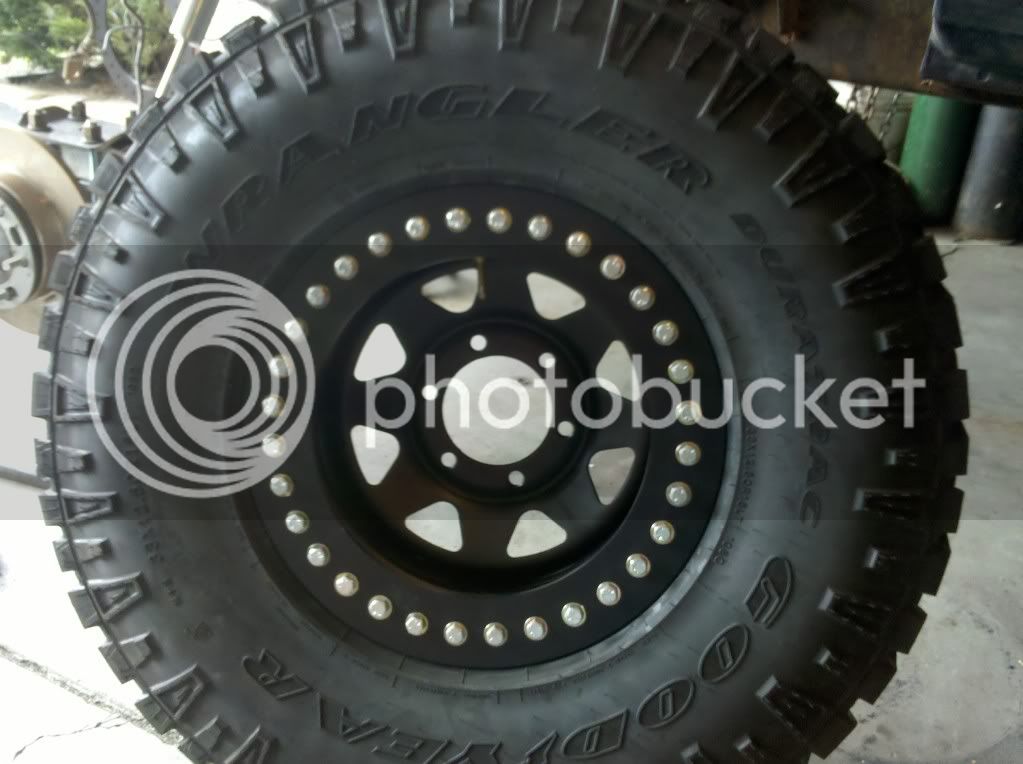
First I used pennies to shim the outer edge of the ring. The penny went between the rim lip and the beadlock ring. I checked by eye that the ring was centered, then I tacked ring at 12:00, 3:00, 6:00 and 9:00. I used a wire wheel on my 4.5 inch grinder to clean all of the tacks then welded a 2 inch pass over each tack continuing the clock pattern. I then cleaned the end of each weld and made another 2 inch pass, starting at the end of each previous weld. I over lapped each weld 1/4 inch. I followed this until I reached the first welds. I cleaned the beginning of the first welds and welded the circle shut. I hope this makes sense, I did not get any pics of this process but have the some of the finished welds.

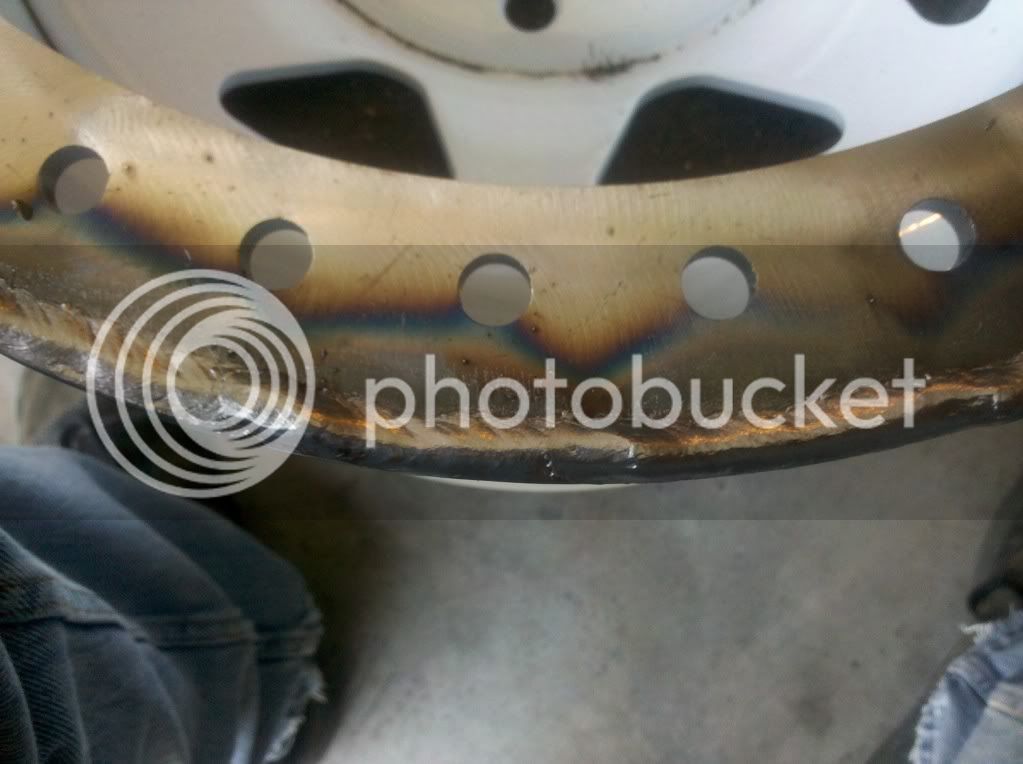
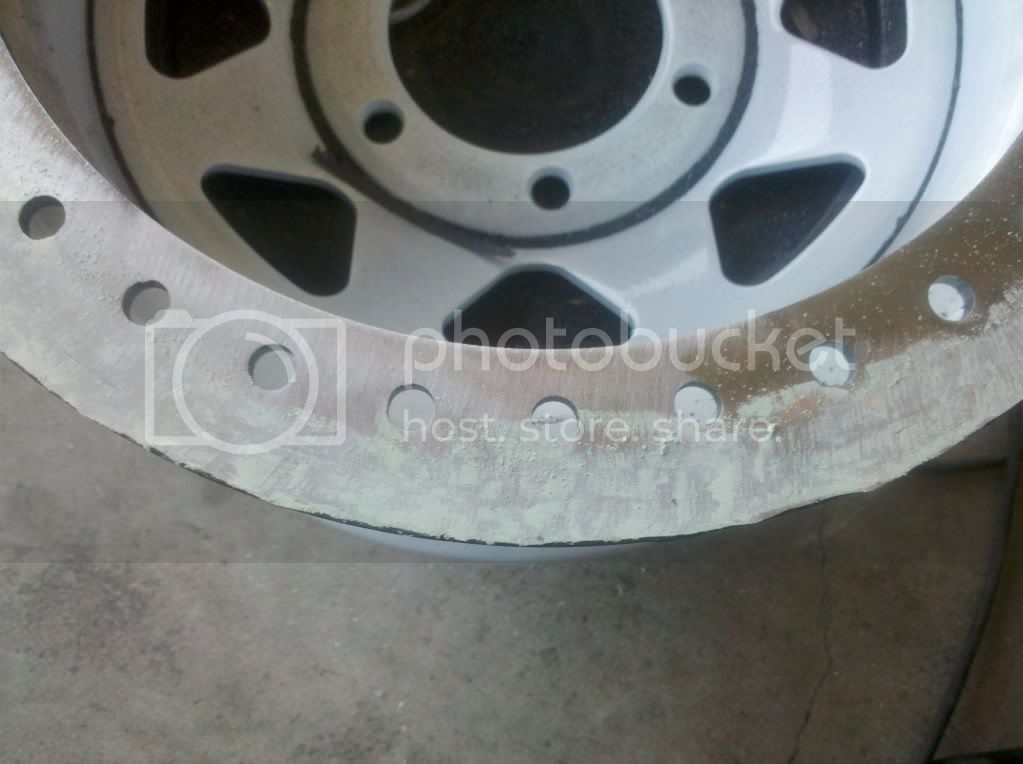
A close up of the welds,
IMG_20110626_120053.jpg


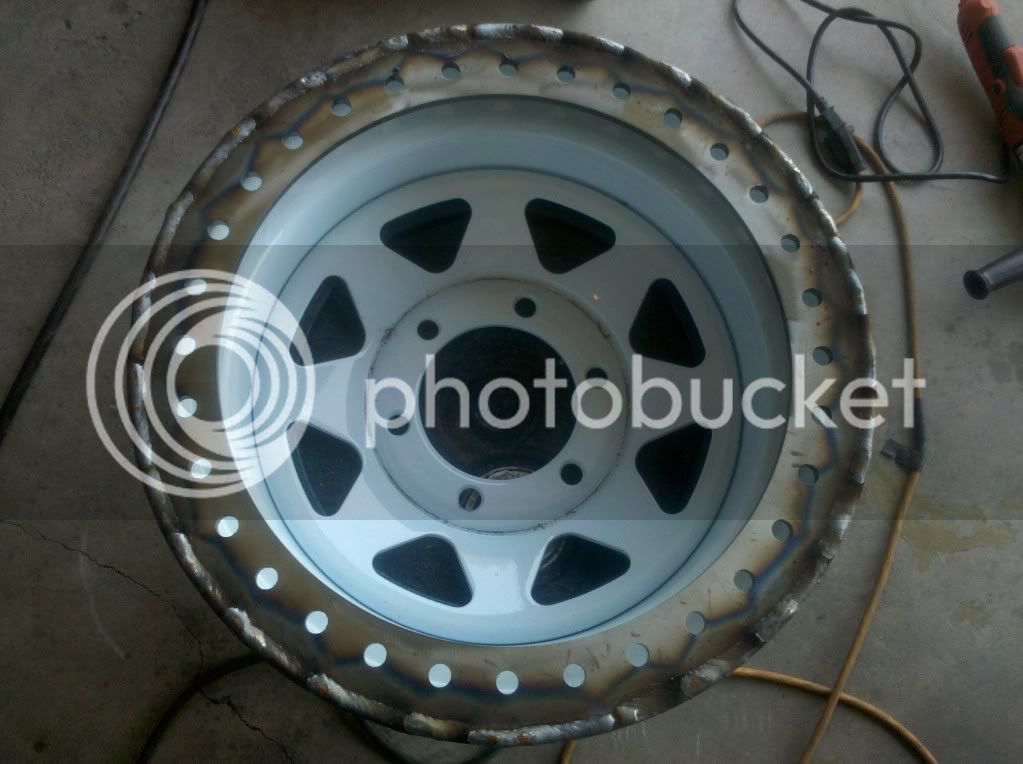
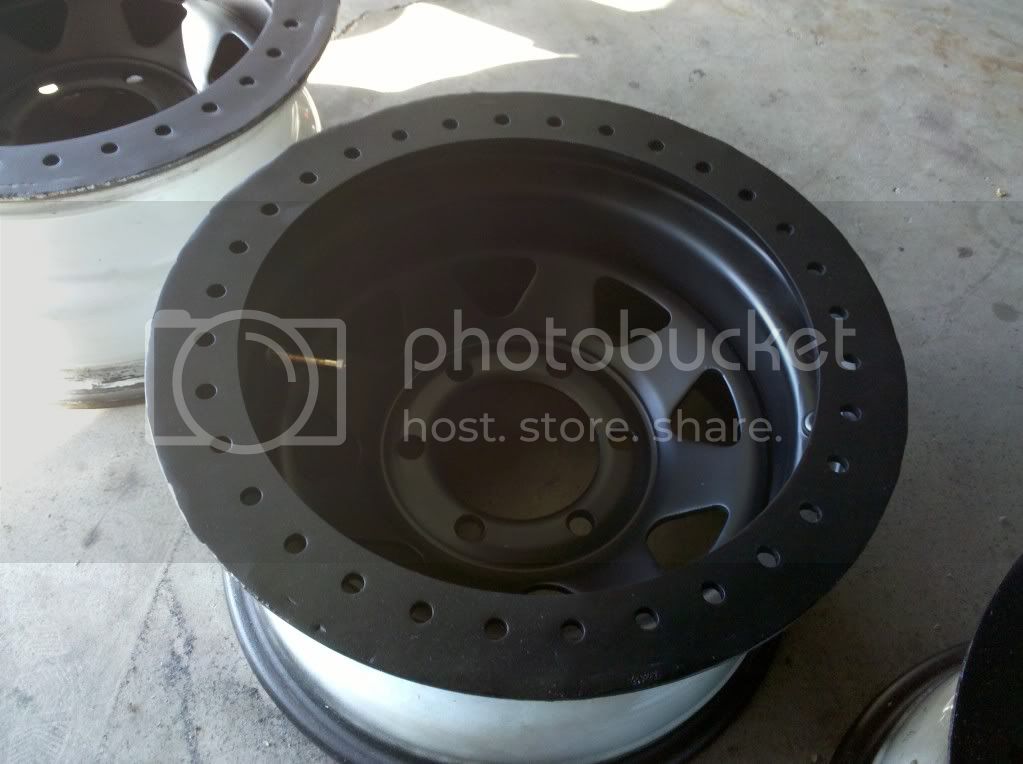
The welded rim.
IMG_20110626_115857-1.jpg


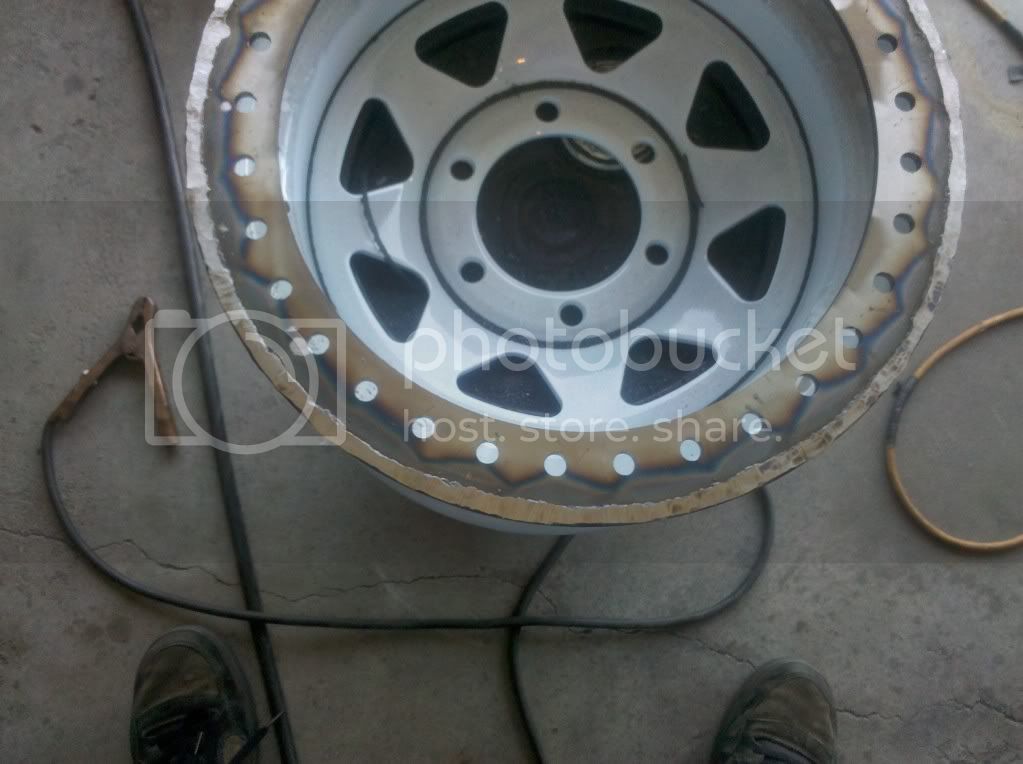
I then ground the welds flat with a 4.5 inch grinder...

IMG_20110626_121503.jpg


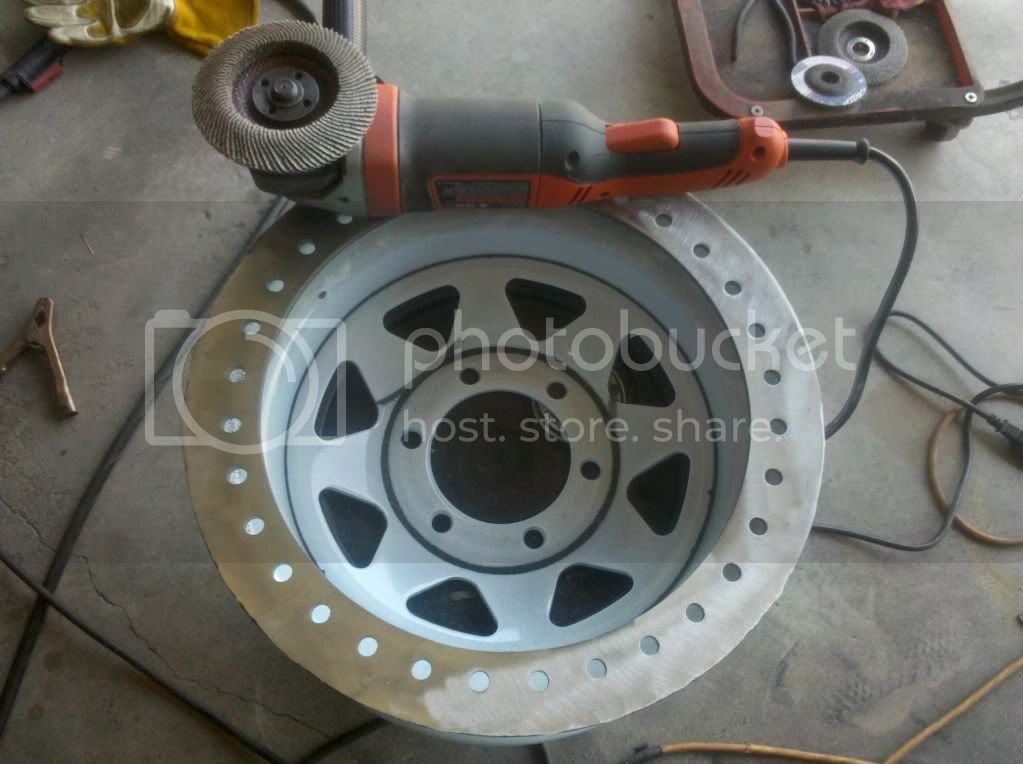
... and then smoothed them over with a flapper wheel. This is the grinder and wheel used.

IMG_20110626_122317.jpg


I then used chalk to put a film over the weld and put the rim on its edge. I filled the valley between the rim and the beadlock ring with mineral oil just below the ring of 3/8 holes. I rolled the rim and looked for any of the chalk to darken. If it did then I cut a grove on the darkened hole deeper than the weld. I refilled the weld, and started the process again. No pics of fixing the leaks this one did not leak. I did get one of the chalked rim.

IMG_20110626_122523.jpg


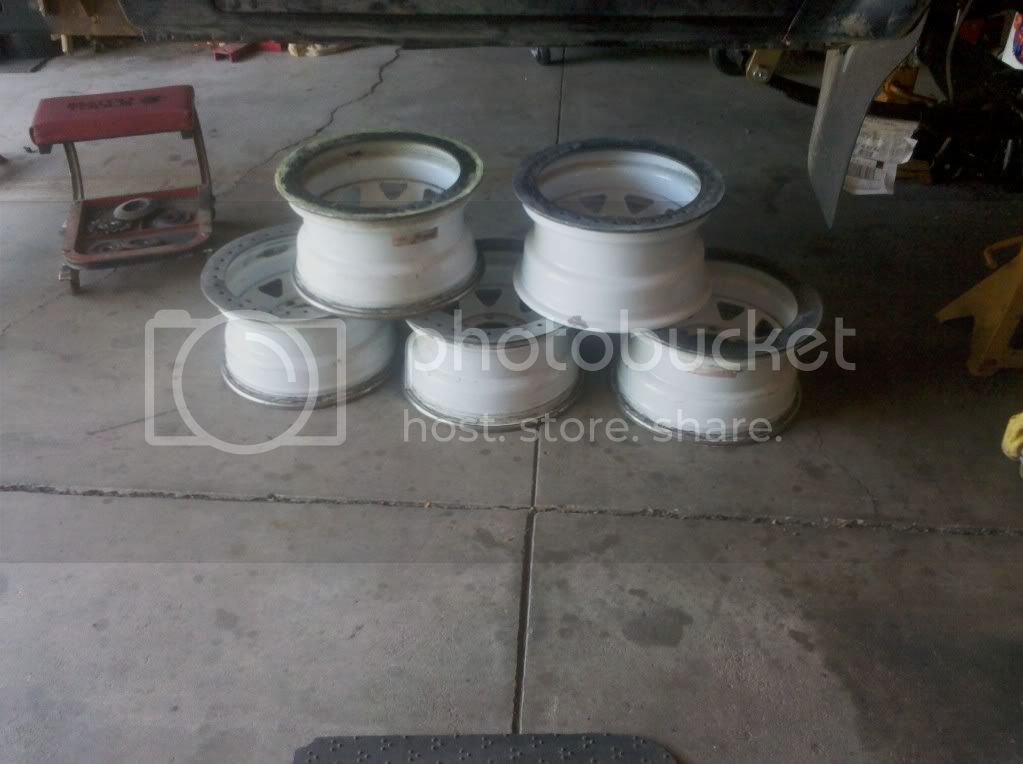
And now I have five rims ready for paint.

IMG_20110626_124704.jpg
 
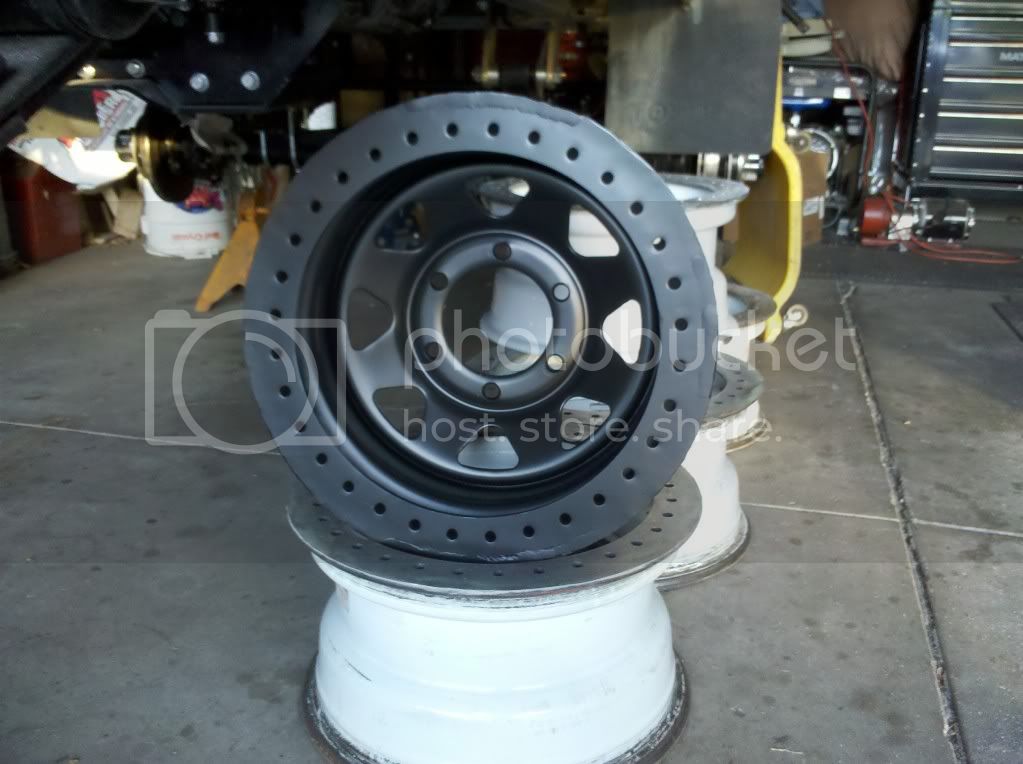
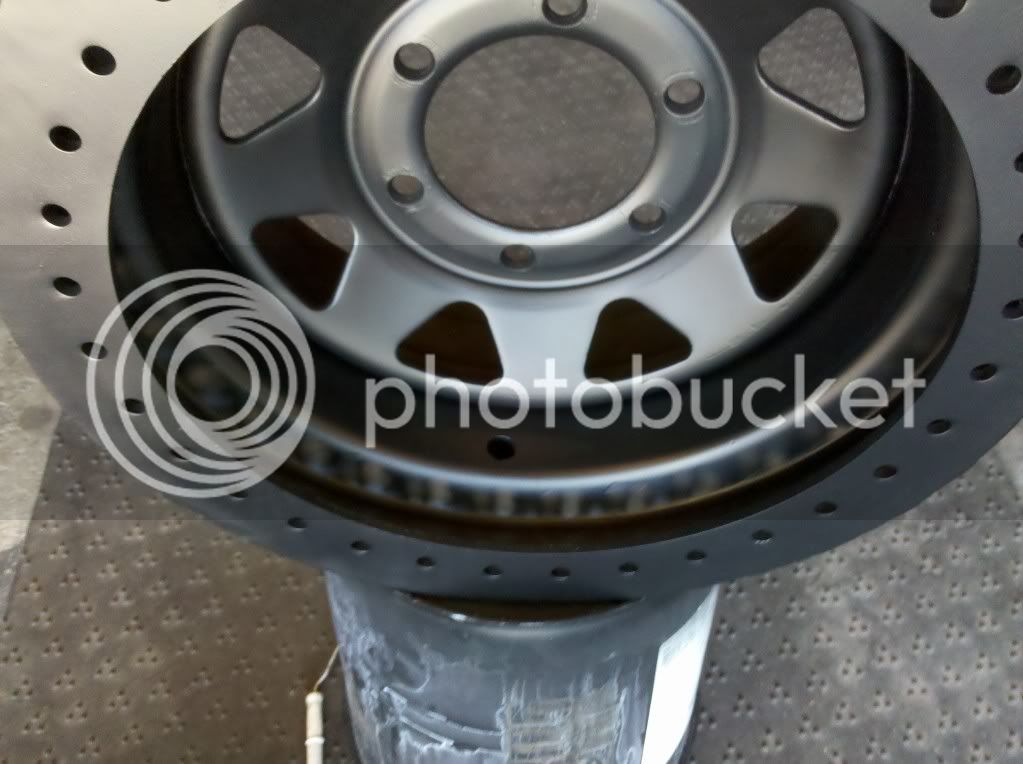
I thought what the heck and went out side and used a 3m wheel to scuff the rim and give it some paint. I plan on doing one each evening when the wind is low.
This rim was the third one, the rim that I had a heck of a time sealing. The last welds my grinder failed and I left the repair welds a bit raised. They were ground and smoothed but not flush to the ring. I think it should be fine because the sealing area is closer to the bolts. Anyone have any other knowledge feel free to voice it.
The outer ring is outside hanging wet. No pic of it but I have this for the rim.

IMG_20110629_201219.jpg
 
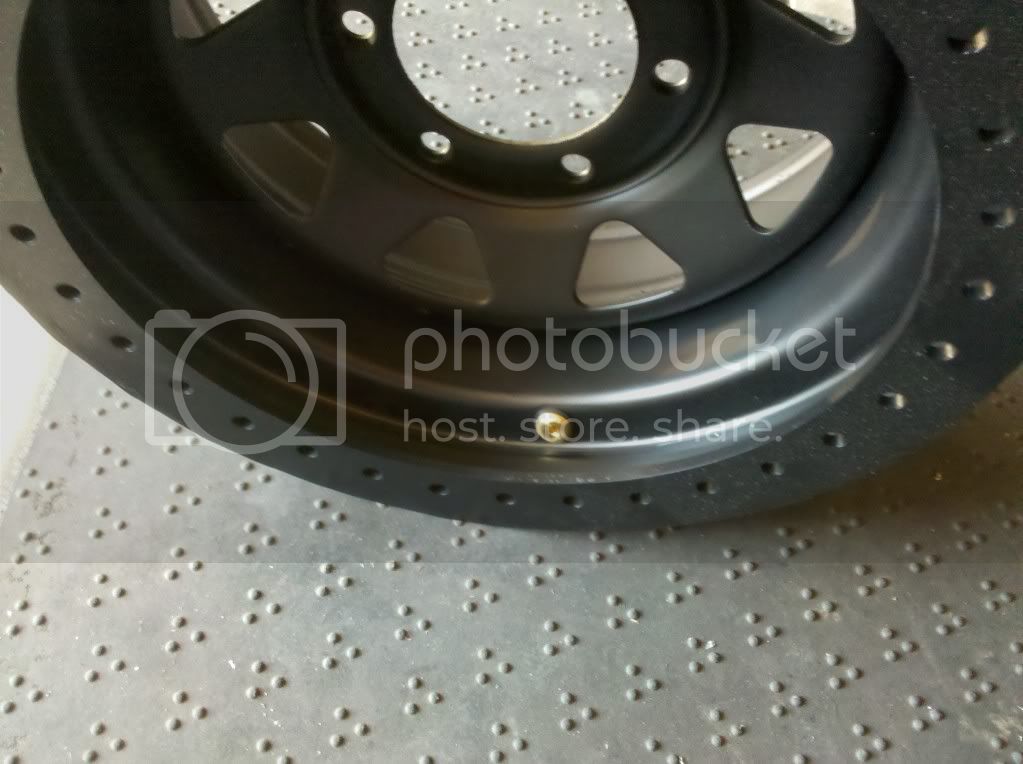
Today I used an abrasive to prep the remaining rims and then painted them. I also installed valve stems. Each tire took two, one facing in and the other the normal direction. I used a valve stem instead of welding up the hole for two reasons, the additional one might help balance the rim a bit and they were cheap enough why not? If the stem facing in the tire leaks or interferes with mounting I will cut it at the threads and braze it closed. One other thing I drilled both holes out to 5/8 to accommodate the new stems.

The new location of the valve stem.

IMG_20110701_175352.jpg


The back side of the valve stem facing the inside of the tire.

IMG_20110701_175402.jpg


I painted them so they do not stand out.

IMG_20110701_175415.jpg


And the finished rim with both stems and ready to mount a tire to it.

IMG_20110701_181405.jpg
 
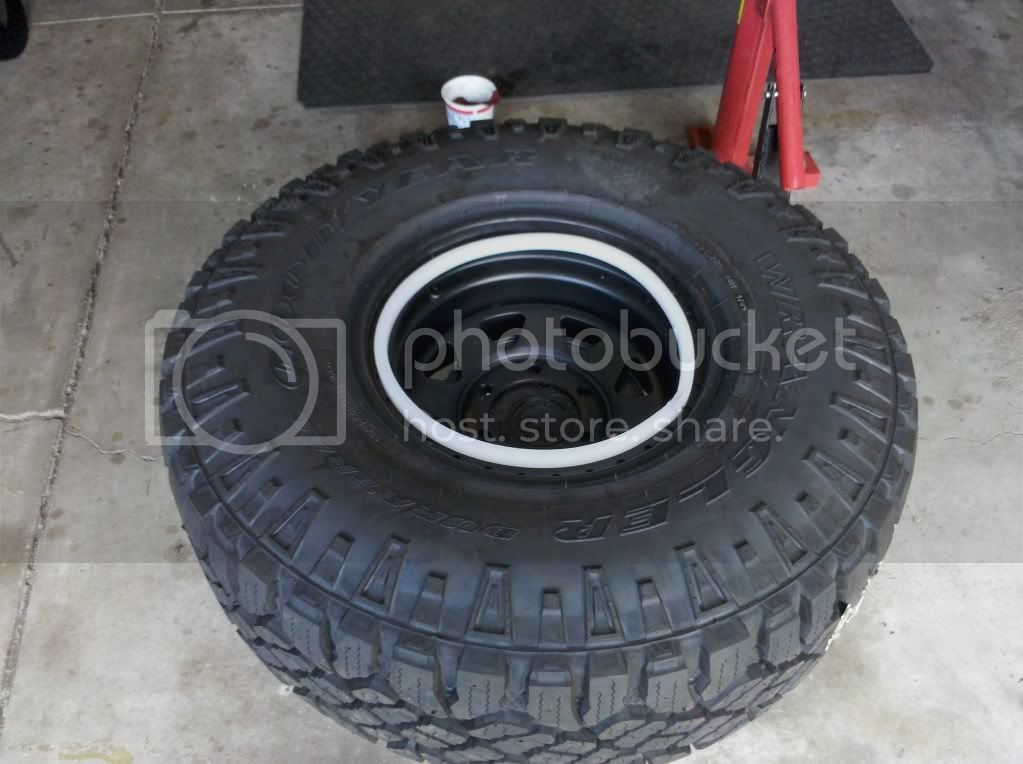
The first beadlock has a tire mounted and pressured to 25 psi. I will let it set that way overnight.

I made a anti-coning ring from 1/2 X 1/2 UHMW. I found information on this from a site (it may have been this one) how to do this. The guy just made a circle and overlapped the ends and put a screw through it to hold it together. I cut material out of the edges so it looks like a non overlapped circle. I have a rough pick of this but will give closer pics of one in the future. Now I let it sit and check for leakage.

I also added 6 oz. of .20 gram Airsoft BB's.

IMG_20110702_153639.jpg


And the finished product.

IMG_20110702_161455.jpg
 
I am done goofing around with tires and rims...sort of.
All weekend I have spent with just the beadlocks and tires. I put the firs one together with no problem. The second was a different story. First off, I bought the tires from Sam's Club and they said they would balance them, even if they had beadlock rims, I think the sales person thought they were cool and wanted to see them. So Friday night I finished the second wheel and Saturday I took them in to be balanced. When I came back with one more on Saturday night he said the darn things took a lot of weight. I knew it would, I bubble balanced the tires on another set of rims I had, the amount was pretty close to what I came up with 7.5 oz. When I took the first two home I wanted to leak test them so I pressured them up to 25 psi. The second wheel, the same one I had trouble welding, starting to making a air leak hiss. Saturday was a bust. Sunday I spent with the wife so it was a bust for the truck. This morning I finished the last two beadlocks and tires. I did not use silicone on the first three rims but after the leak was found on the second rim, I smeared it all over the welds on the last two rims. And off they went to Sam's for some more of that free balancing. When I when to picked up the last two rims the knuckle heads at Sam's put sticky weights on my rims. I told the guy that was there I wanted clip on weights, he said no one told him. I took the tires home and when I lifted them from the truck 4 of the sticky weights were laying in the bead. I did not get the tires back before they closed, this will wait until tomorrow.
I did not use the Anti-Coning (AC) stuff. When the first rim sat over night the AC ring started to move away from the O.D. of the rings. The reason must be because the AC ring material did no compress as much as the tire bead and slightly worked the opposite and created a reverse cone, allowing the AC to slip toward the I.D. of the rings. I built the tires with out it and it seems better for the tire, sort of matches the contour of the side wall.
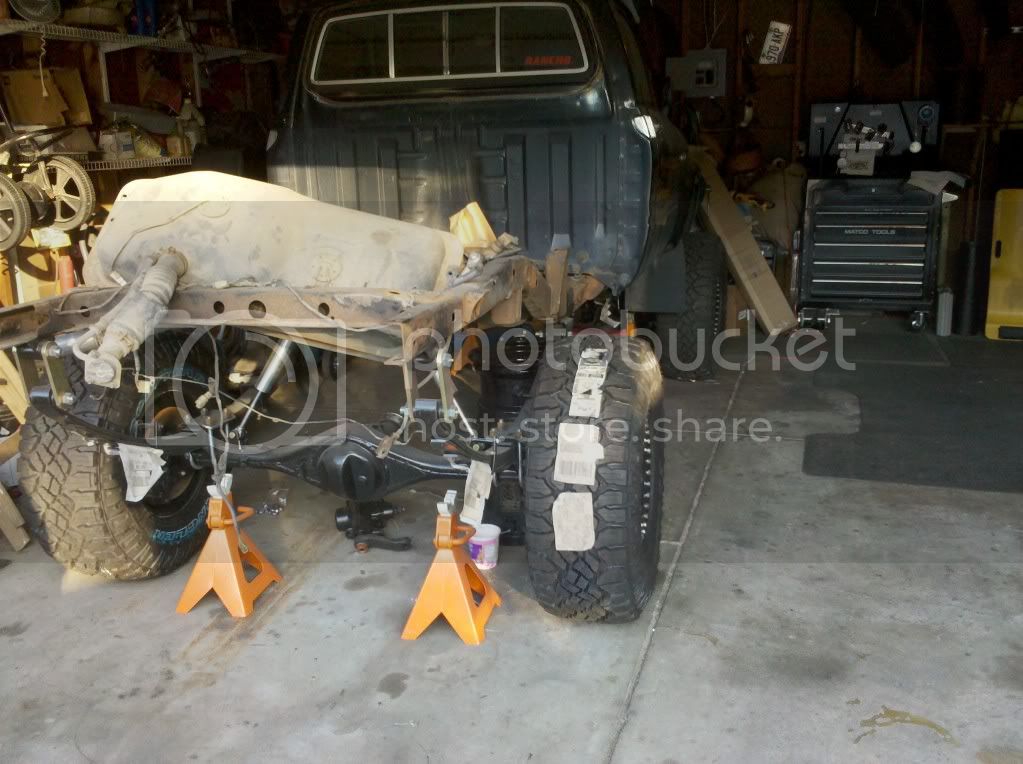
The rear rims and tires are installed on the truck the front right rim is sitting on the front spindle. The tires sit about three inches out further then the set I had on the truck since it was new. I ended up unable to continue because I need to do some machine work on the front calipers. That is enough of those rims, I am tired of fiddling with them

Here are a couple of blurry picks. The tires are a bit small but, that was expected after the purchase was done.


IMG_20110704_193538.jpg


IMG_20110704_193528.jpg
 
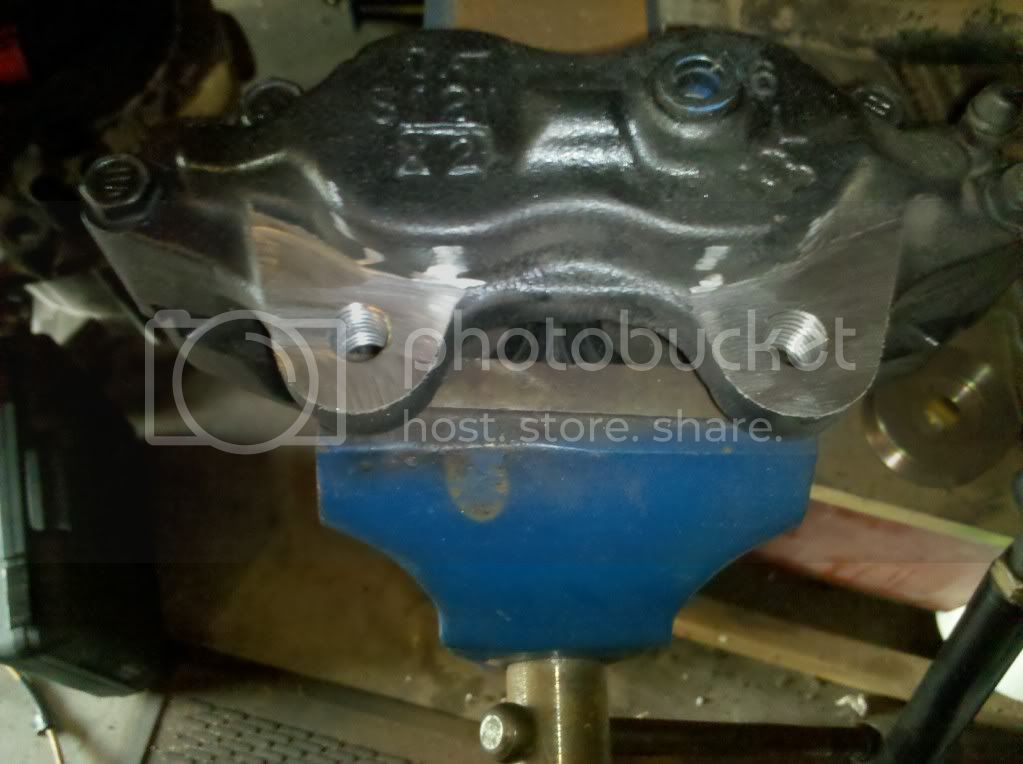
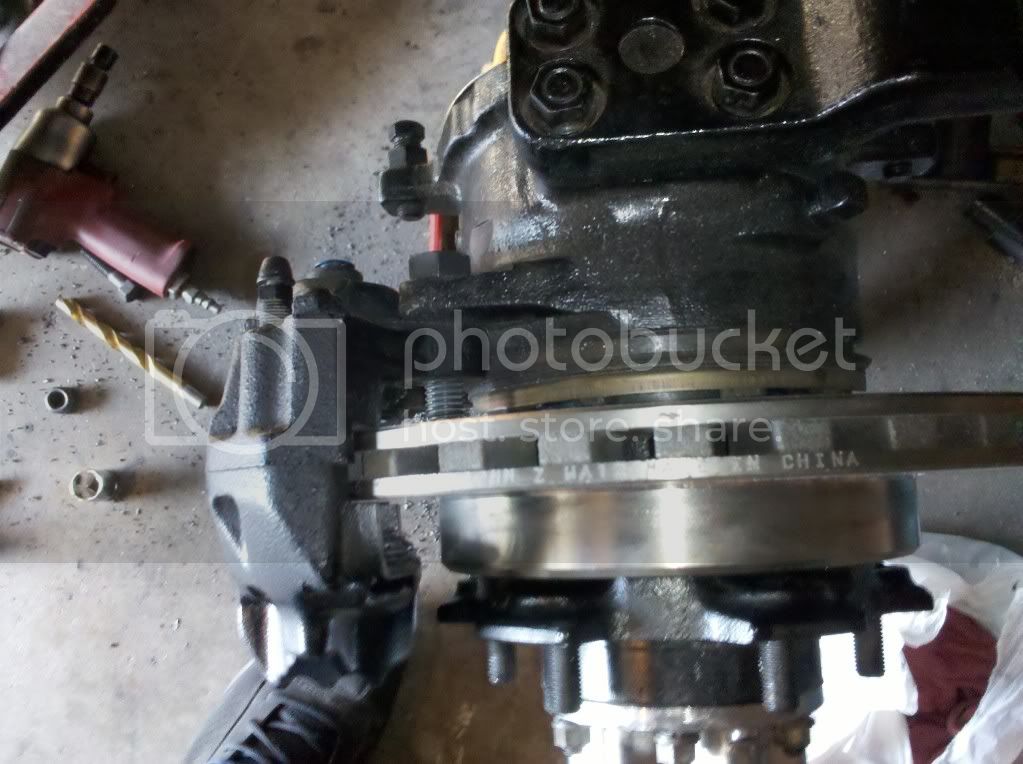
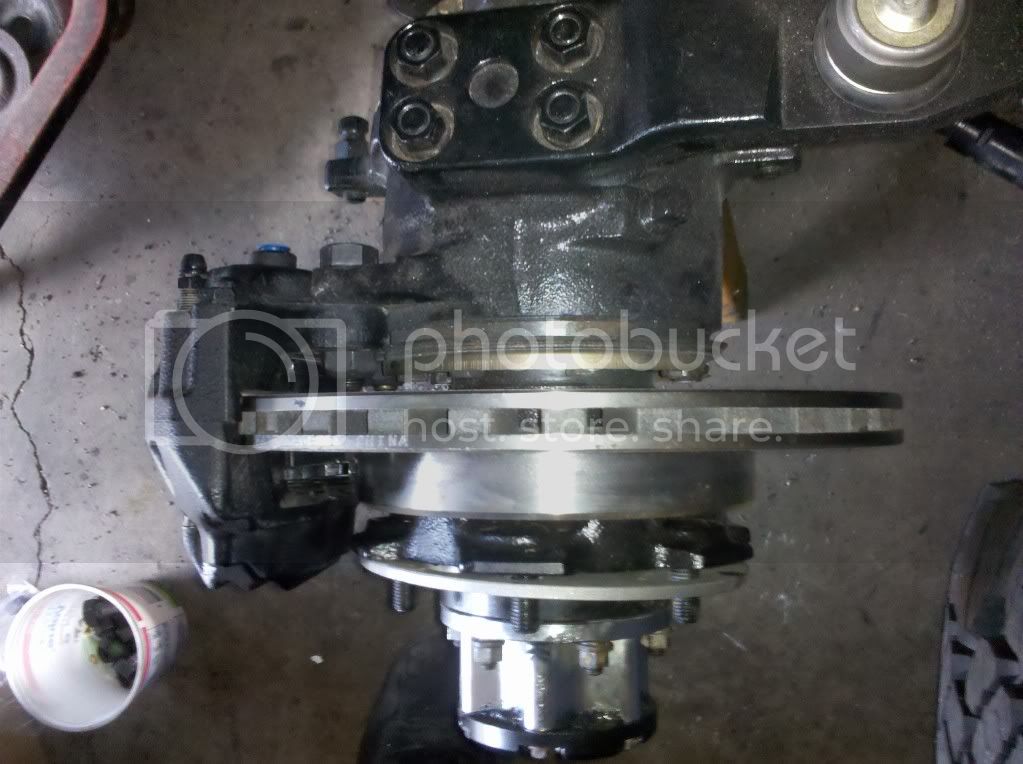
I spent this evening working on the front brakes. My calipers are from a '92 4 Runner. I also grabbed the booster and master cylinder from that vehicle, both will be installed later. I had to grind the ears on the calipers about 1/32nd to get the calipers to center. I also had to remove the hub and rotor assembly because I forgot to drill the knuckles during the axle assembly. The knuckles were drilled to 9/16. I tapped the calipers to 9/16 NC. I used grade eight hardware. In the lower pics you will see what seems like a long mounting bolt, my intention is to install crimped nuts on those bolts. The problem is I could not get a standard wrench in there to tighten the nuts. I will bring home a angle wrench to finish them off. 3 hours was spent on this project.

The ground ears.

IMG_20110706_195641.jpg


The installed V6 caliper.

IMG_20110706_184506.jpg
 
I finished the calipers by installing the crimp nuts. The angle wrench was the answer to that problem. I also installed the brake lines on the front calipers. Tomorrow I will install the rear brake lines and work a bit on the Proportioning Valve and i possibly install the 2 psi check valve.
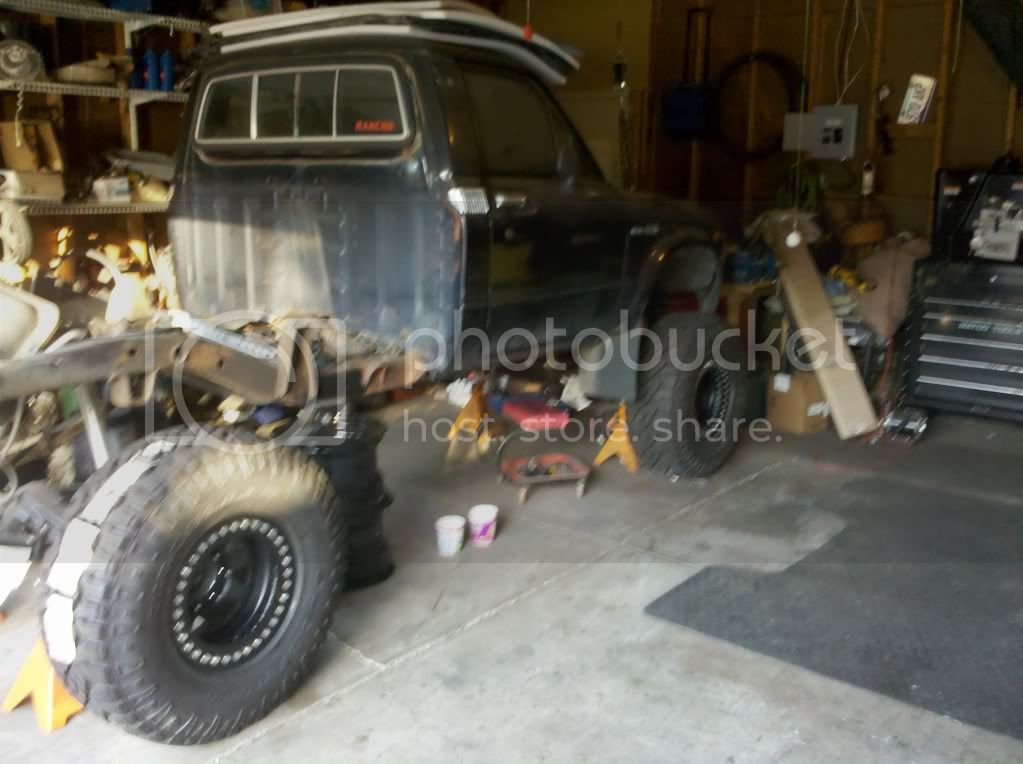
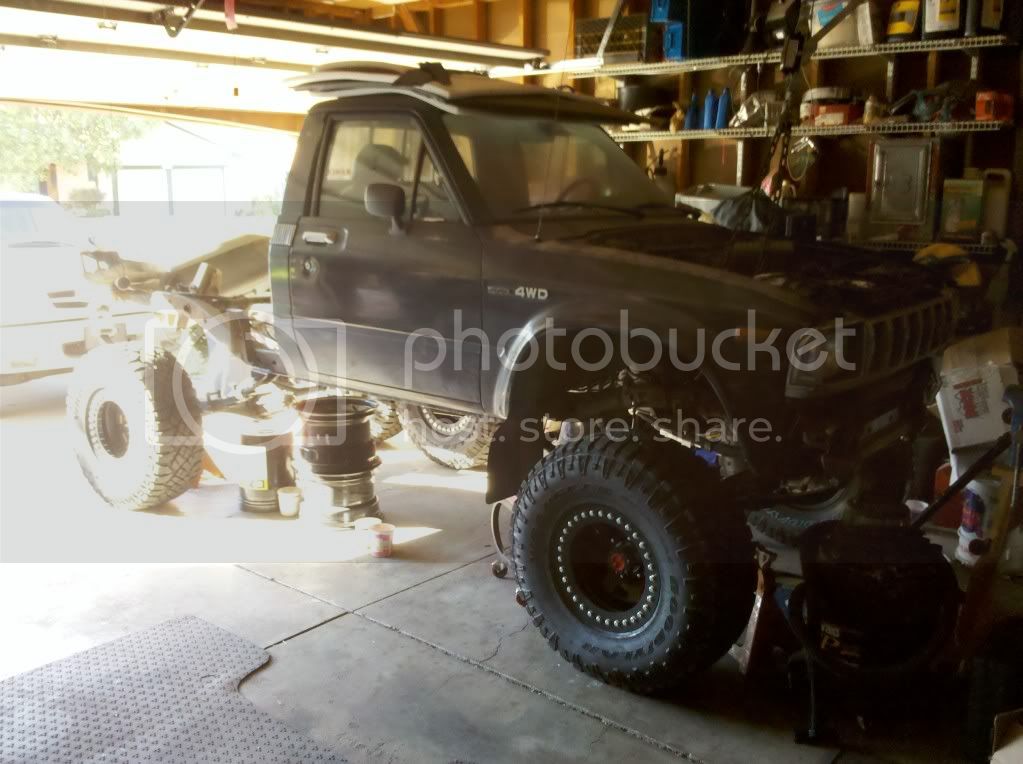
She is now sitting on all four tires. The top of the truck is 77.75 inches and the garage door lowest point is 78 inches. Sure do not want to apply the paint to thick.

If you look closely at the pic the mounting bolts now have crimped nuts on them.

IMG_20110707_172326.jpg


...and the dirty old truck sitting on her new rims and tires.

IMG_20110707_183123.jpg
 
if an 83 steering shaft is the same place as my 85 I know for a fact an 92 4runner booster will hit the shaft..actually the ujoint..

just an fyi I got mine all back together the steering felt horrible and I noticed it was hitting the booster....still havent fixed it:rolleyes:


you have to use that wheel spacer for the wheel to clear the caliper?
 
If I have to modify the steering shaft, I will. I would not be surprised if it does but thank for the info.

With the expectation that it would I bought cheap 1/4 inch spacers and used them. The caliper does not hit the rim at all with the spacers, I could not tell you what it would do if I removed them.
 
Friday I took most of the day off and did not get much done. I was hung up on the booster. It seemed to hit most in the area. I did manage to hook up the rear brake lines but the rest of the day was either cruising the net or trying to fit the dang booster. I even went to a couple wrecking yards looking for a T100 booster, nothing found.
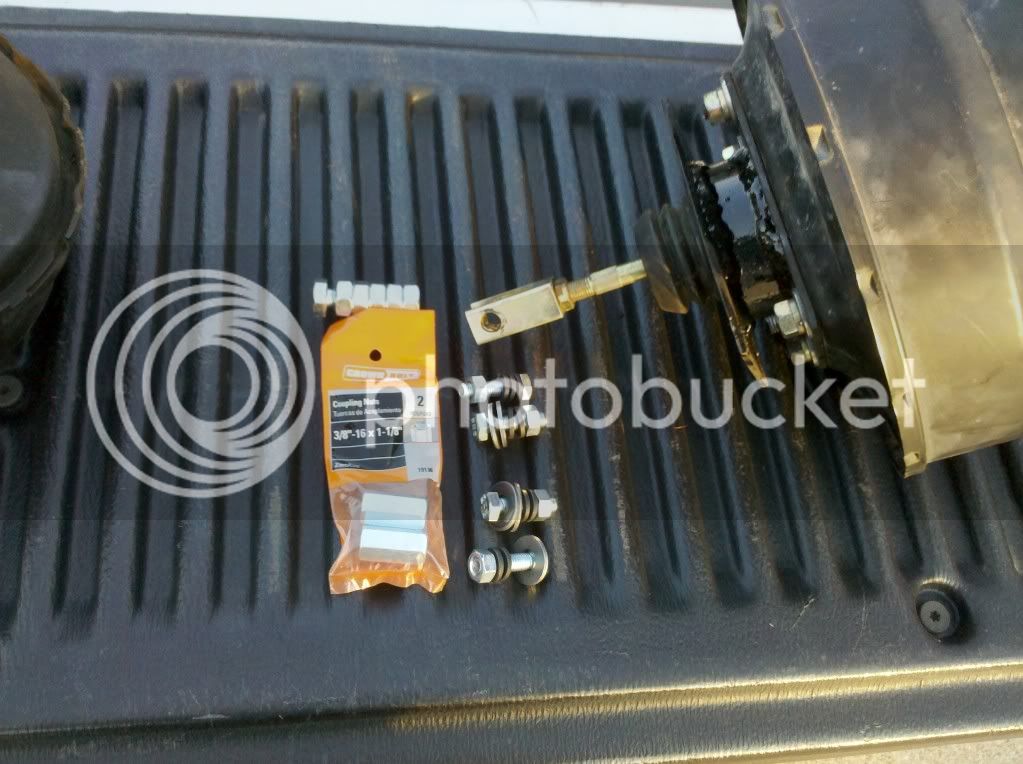
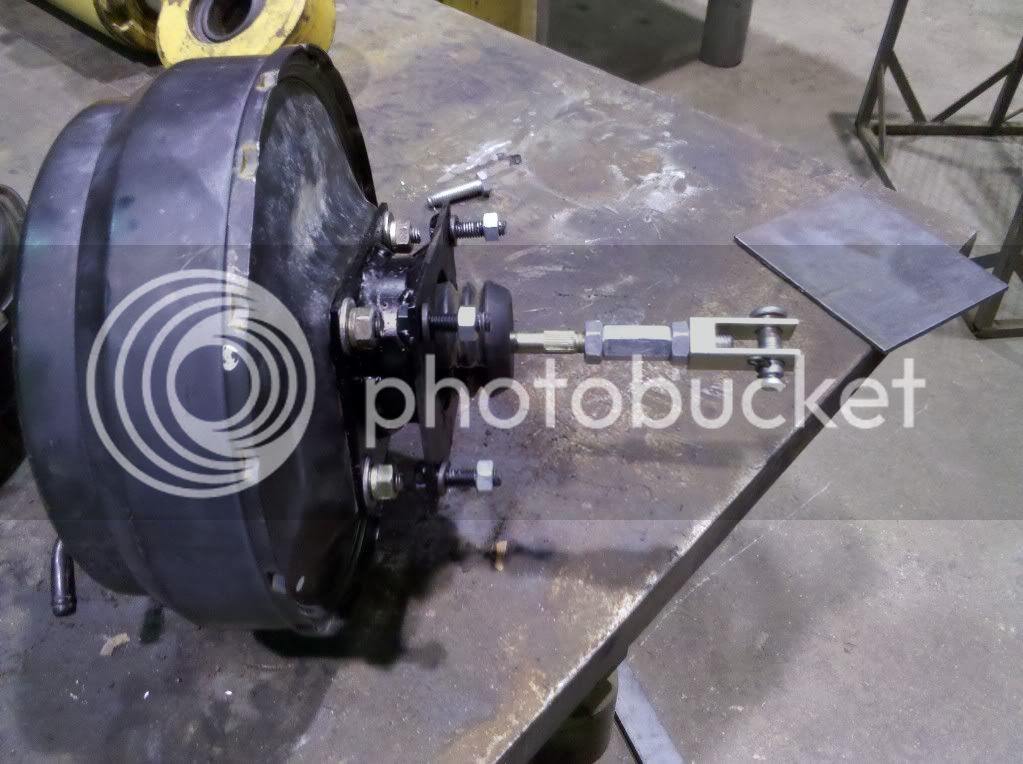
My solution was to weld a couple drilled plates to a piece of pipe for a spacer. The welds looks like bubble gum but, they are burned very hot and they are not coming apart. I could hardly get the gun in the space much less see the puddle. I bought some hardware but finding a 10 X 1.25 coupling nut is impossible, so my next solution is to get a piece of round or square stock then drill and tap it, for a coupling nut. This will be used to extend the push arm to match the original single diaphragm booster. I am working on a '94 Four Runner dual diaphragm booster.
In the pic is some of the hardware I will be using The bolts with washers and nuts will be welded to the firewall side of the spacer and serve as the new studs. The 3/8 coupling nuts will not be used, I thought about drilling them out and tapping them. The bolt above the coupling nuts is a 10 X 1.25 that will be cut into a stud and locked into the coupling nut with one of a couple nuts. I will attach the clevis to that stud.

IMG_20110709_195422.jpg
 
I ended up using the 3/8 coupling nut. I simply drilled it out with a 11/32 drill bit and tapped it with a 10 X 1.25 tap. The threads were not perfect but allowed me to torque the locking bolts plenty tight with out pulling threads. I welded 8 X 1.25 X 40 bolts on the spacer to act as studs to bolt to the firewall. It all worked out great.

IMG_20110710_070207.jpg


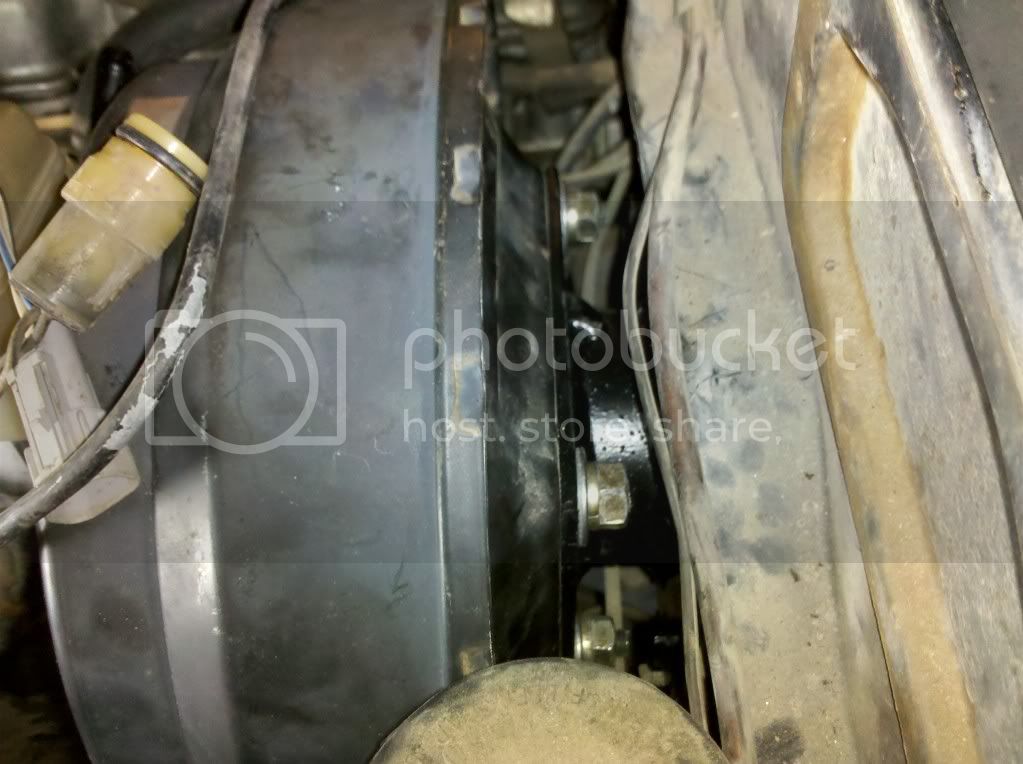
After I mounted it I saw the flange on the booster was just touching the clutch master cylinder but the steering shaft had plenty of clearance.

IMG_20110710_075436.jpg


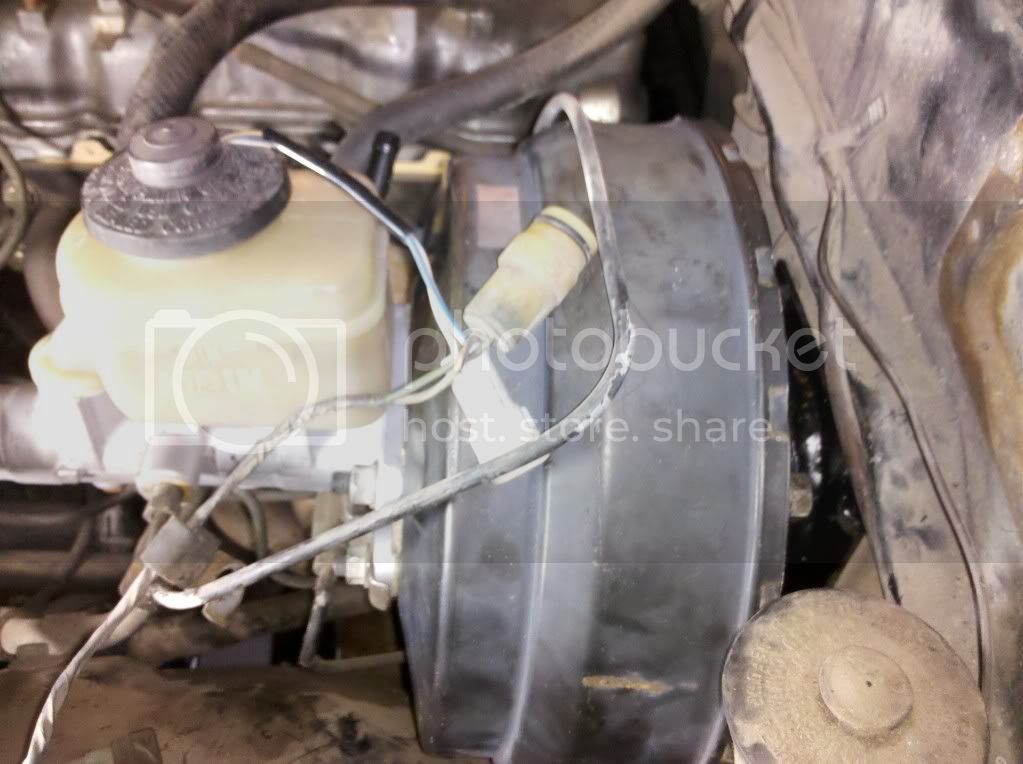
The rust stripe is from a attempt to push it into place and that is from the clutch master cylinder. I still need to cut the connector off of the old master lid and solder it to the new master.
IMG_20110710_075424.jpg
 
not a bad idea....and holy cr@p that almost hits the clutch master!....or is it?
 
It just touches the metal housing there is no pressure. I should have made the spacer about a 1/2 inch longer. It is done and that is how it will stay. I have a new clutch master it may have a different casting.
 
I decided to pull the trans and transfer cases for paint. The transfer cases came off easy the trans is a whole other story. When I attempted to remove the starter the top bolt broke, I can deal with that okay. After I got the bolts out of the bell housing the trans would not move. I pried it away from the motor and it was stuck. Crap went trough my mind as I remembered I did not put any anti-seize on the pilot shaft. I managed to push the trans to the side enough to get to the pressure plate bolts. Two hours later the trans was on the floor and I was covered in sweat and anger. The pilot bearing is stuck on the shaft steering back at me. I loaded it into the back of my other truck because I do not have the tools to remove a stuck pilot bearing at home. Lesson learned use that damn anti-seize.
 
the pilot bearing?...dam Ive never seen those get stuck on the shaft.

I always always cover the shaft where the throw-out bearing and the front where it goes into the pilot with axle grease. My dad told me to use axle grease and hes worked on heavy duty trucks/tractors for 30+yrs so thats what I go with
 
I have worked on heavy equipment since 1982. You dad must be a bit older than I. I knew better than leaving the input shaft bare but, I did. Oh well lesson learned as mentioned earlier.

I have the bearing off and the shaft cleaned up with no damage to the clutch or pressure plate.

I have been working on the front drive shaft.
 
Back
Top Bottom