Build Mitsubishi 4D34-3AT3B diesel swap into 94 FZJ80

This site may earn a commission from merchant affiliate
links, including eBay, Amazon, Skimlinks, and others.

It looks like the your TCM and teh Isuzu TCM have identical connectors but I suspect that the programming and maybe the electronics inside are application-specific.

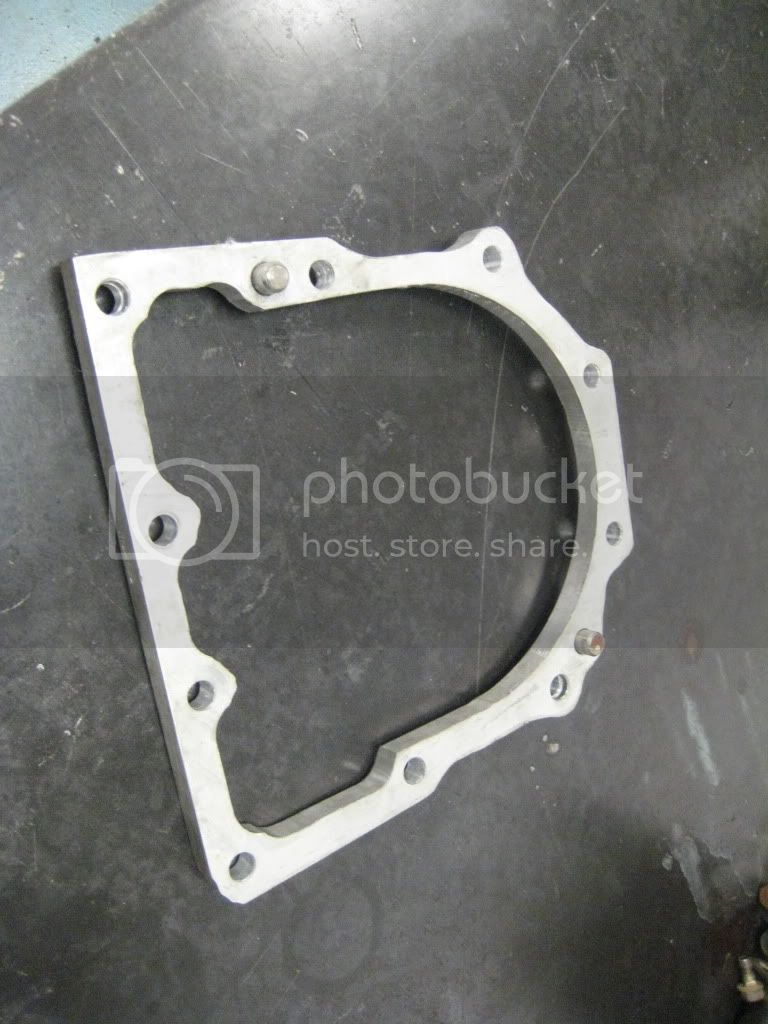
I noticed that the plate that mates the engine to the tranny appears to be just a simple flat plate. This may make it real easy to adapt other transmissions to the engine.
 
It looks like the your TCM and teh Isuzu TCM have identical connectors but I suspect that the programming and maybe the electronics inside are application-specific.

I noticed that the plate that mates the engine to the tranny appears to be just a simple flat plate. This may make it real easy to adapt other transmissions to the engine.

The plate setup is different than anything I have seen before, and is sandwiched between the block and the bellhousing. It serves to locate the starter and the bellhousing but it is not loaded as almost everything bolts through it into the block or the bellhousing. It has an identical setup on the front, between the timing cover and the block.

I will be comparing the pinout on the ECU you have versus mine, but it definitely looks like they are similar.

I got the final torque specs for the rod and main caps so I will be able to button up the engine this evening, which then means I can get started on the transmission. Hoping to have the engine and trans in final redy to run state in the truck this weekend, leaving wiring, cooling, exhaust, more wiring and more hoses for next week(s).
 
I've been working on the transmissions (pic are coming) but I ran into one issue that I was not anticipating. The 450-43LE and the A442F have some major differences in the rearmost planetary housing, gearset, and the output shaft retaining snap ring area. The 450-43LE has a straight cut gearset for the rearmost planet that is considerably thicker than the A442F helical gearset, and the rear portion of the casting of the transmission case differs between applications. Also, the area where the output shaft joins up with the rear planet (number 584 below) is machined differently on the 2wd and 4wd output shafts.

http://www.bulkpart.com/Merchant2/graphics/Catalog-pdf/AW-450-43LE.pdf

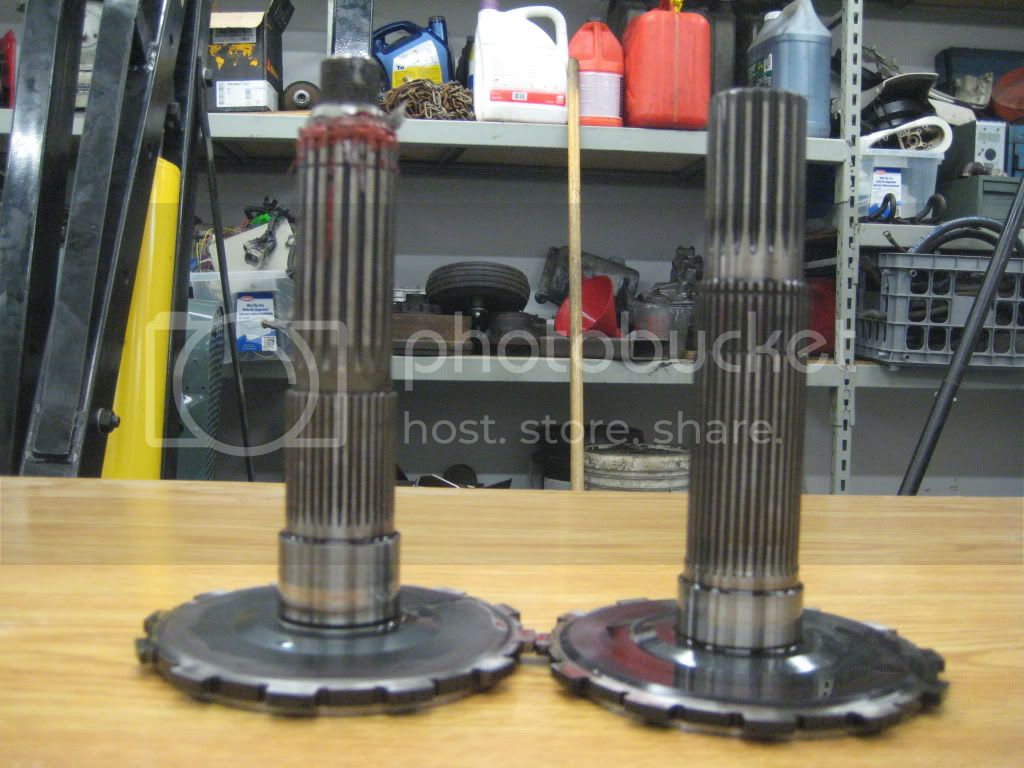
Substituting the A442F output shaft into the 450-43LE rear planet piece allows for some axial play between the output shaft and the planet housing, approximately 50 thou. It would appear that the landing for the torrington bearing and the inner bushing dimensions are machined in a similar manner, and that everything mates up correctly when in compression, but by pulling on the output shaft (not in the trans, but on the bench) there is a slight movement that is not present in the original setups. The best way to describe it is that the interlocking tabs on the 450-43LE are thicker. The A442F shaft has thinner tabs, therefore, it can move up slightly before it contacts the snap ring.

It is difficult for me to anticipate the result of this play will be. I reassembled the transmission in order to see if the endplay would be taken up by the rearmost bearing (supporting the output shaft) and it appears that it has, as I can't move the output shaft in and out at all. Since the shaft is retained by snap rings, I can't see it moving anywhere, and since the loading on these interlocking teeth is rotational (as they are supported by a center shaft), the minimal axial movement should not affect anything. I am curious to see if the same thing was noted during Astr's trans reassembly. My thoughts are that if the output shaft cannot be moved in and out in the trans now that it is assembled, and the needle roller bearing between the output shaft and the planetary outer gear drive plate (number 604) above is loaded and tight, I can see no issue. I can't see that little snap ring performing any type of function other than retaining the parts for assembly.
 
Looking at your transmission assembly breakdown diagram, it appears that the Isuzu and Mitsu versions of the AW450 are different. The Isuzu and A440F output shafts are one piece with the flange that holds them to the rear planet assembly whereas the Mitsu is two pieces (672 & 604). I have a A442F but haven't pulled it apart but IIRC, from the manual, it is similar to the Isuzu & A440F.

But one piece or two-piece shouldn't make any difference. The issue is the excessive clearance. Could you get rid of the excess clearance by using a thicker or double snap ring or just cutting a doughnut out of some appropriate thickness shim stock?
 
The output shaft is definitely one piece, I think you may have looked at the wrong part. 604 is the backing plate for the rear planetary, the output shaft (left side of the screen on the lower row) is 678 and comes in afterwards. It looks identical from your photos.

I could probably take up the slack by adding a washer or machining the groove out slightly and using a thicker snap ring. However I am thinking that it may not do a whole lot. So you did not have the same issue with the A440F output shaft?
 
When rebuilding my r151 I had to get an assortment of different thickness snap ring, after talking to MArlin Crawlers he told me to actually find the thickest that I could get and drive it into place - any play means destruction.
 
The output shaft is definitely one piece, I think you may have looked at the wrong part. 604 is the backing plate for the rear planetary, the output shaft (left side of the screen on the lower row) is 678 and comes in afterwards. It looks identical from your photos.

Sorry - I got confused. They indeed are the same.

I could probably take up the slack by adding a washer or machining the groove out slightly and using a thicker snap ring. However I am thinking that it may not do a whole lot. So you did not have the same issue with the A440F output shaft?

I didn't remember such a problem but it could just be that I overlooked it. I still have an A440F and AW450 torn down so tonight I'll go measure the thicknesses of both flanges.
 
When rebuilding my r151 I had to get an assortment of different thickness snap ring, after talking to MArlin Crawlers he told me to actually find the thickest that I could get and drive it into place - any play means destruction.

On a standard trans, for sure, but the A442F manual I have actually specifies axial endplay for many components in the transmission, and especially since this has straight cut gears, some endplay is not necessarily a bad thing. besides, I am almost certain that the endplay is taken up by the rear bearing. I will double check tonight. As ASTR said, if it's a problem I can easily fix it with a shim.
 
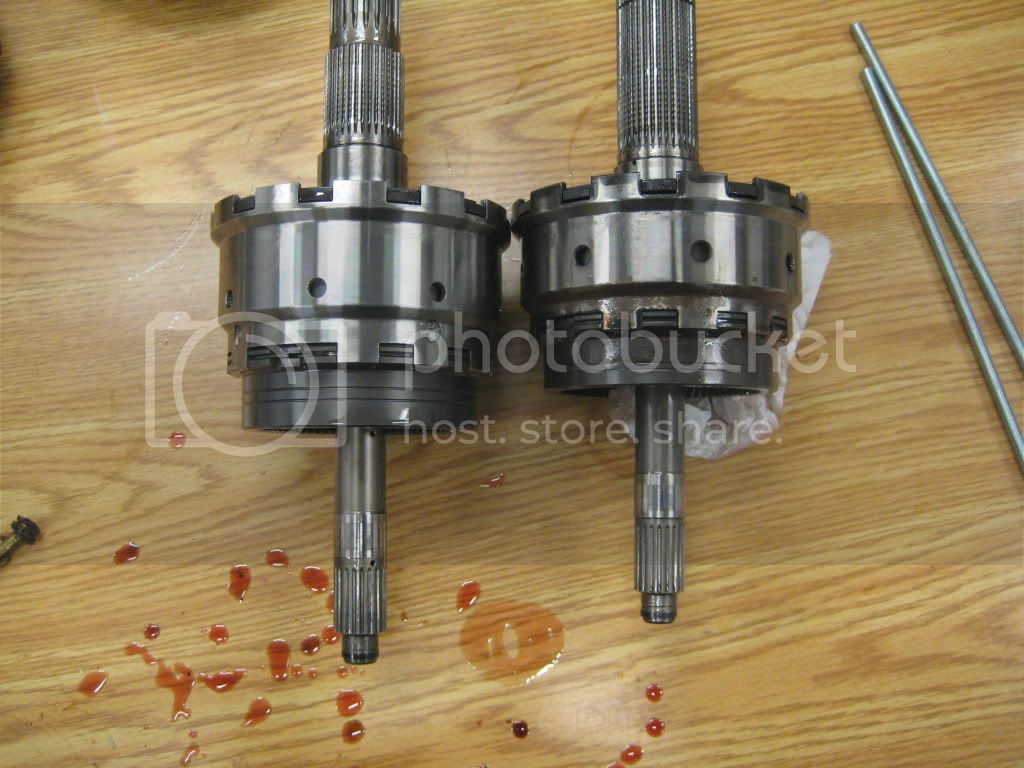
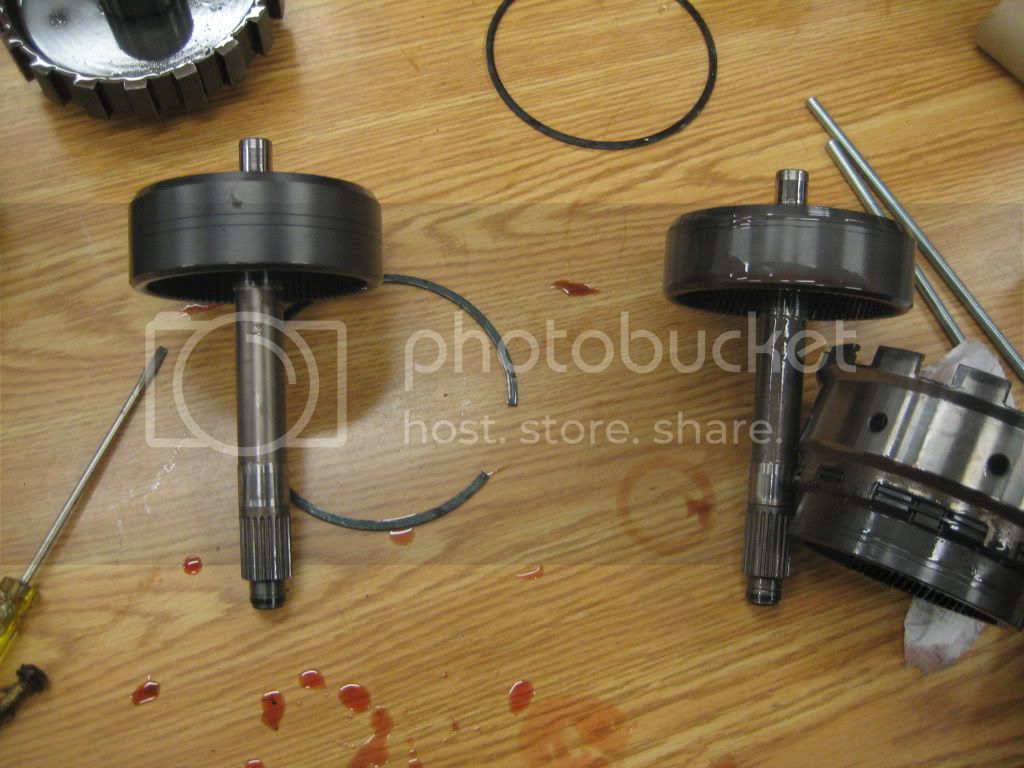
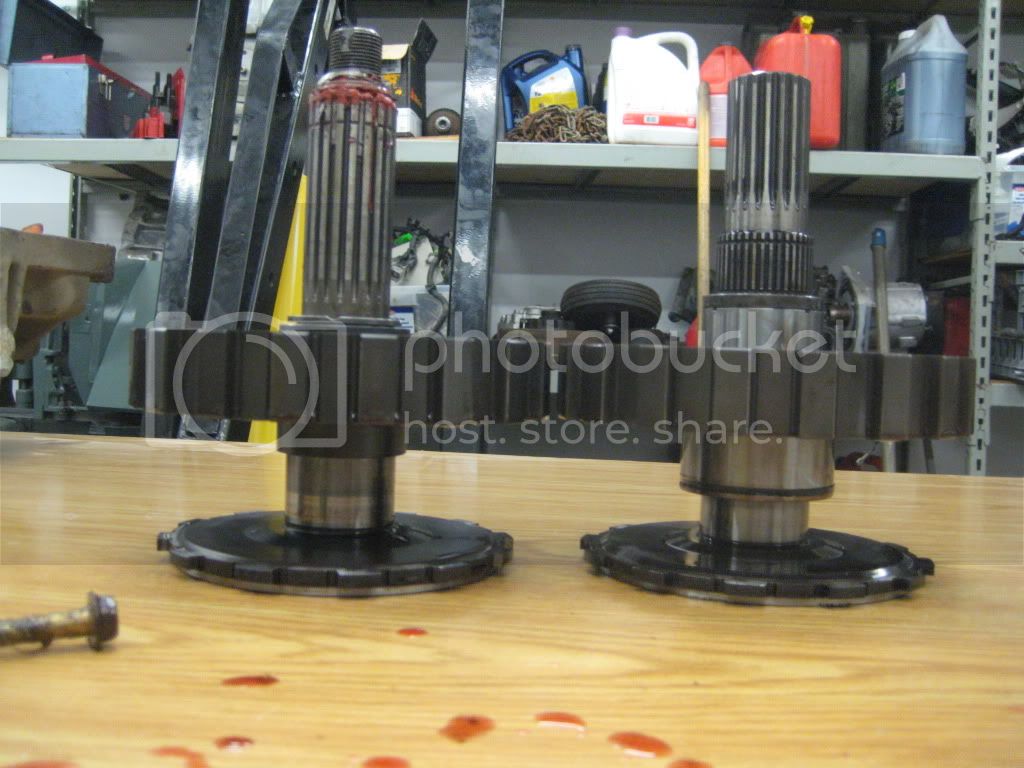
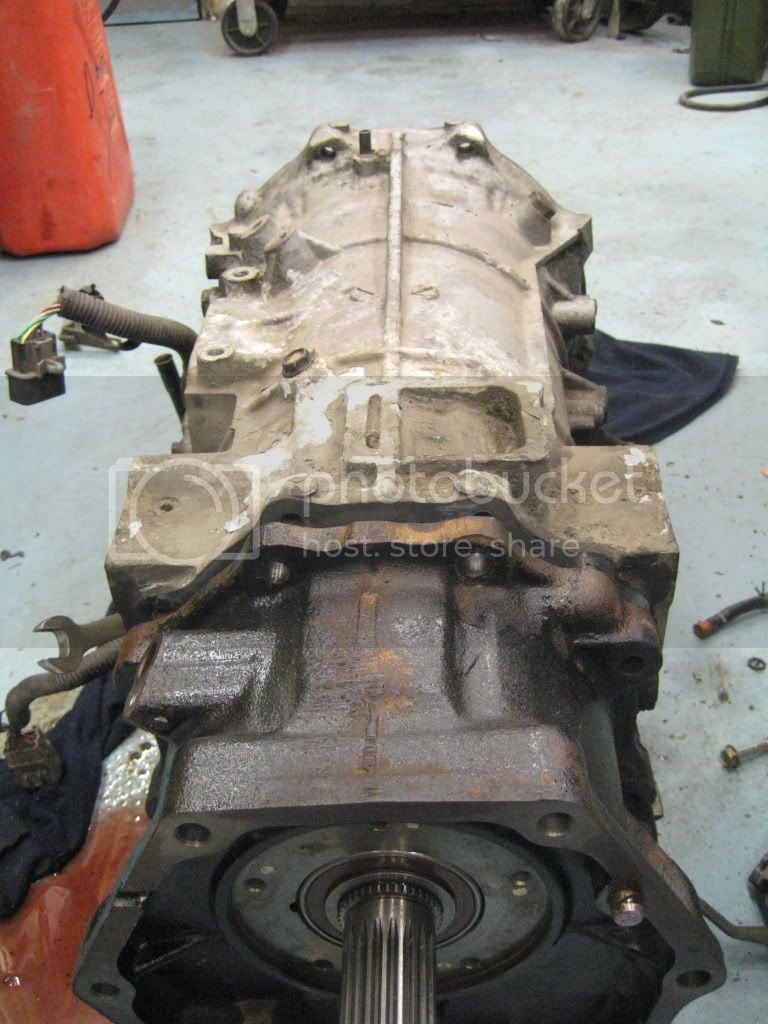
So, I can now conclusively say that the H2AV transfer case and A442F tailhousing does not just bolt up to the 450-43LE transmission. There are some minor differences that make some custom work necessary. First, the rearmost planetary on the 450-43LE is larger:

A442F on right, 450-43LE on left:

IMG_7724.jpg


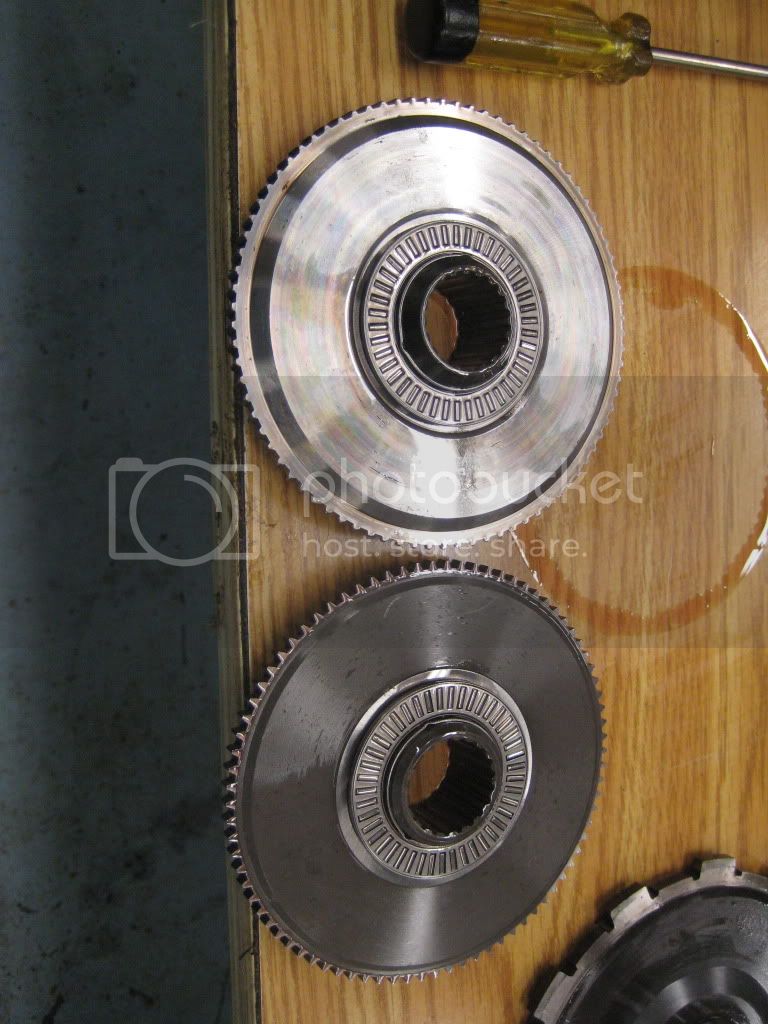
It is also pretty visible looking at the planetary outer gear (not visible is the difference in tooth profile - The 450-43LE has straight cut gears):

IMG_7725.jpg


The outer gear (as above) drive plates are machined differently as well:

IMG_7727.jpg


IMG_7726.jpg


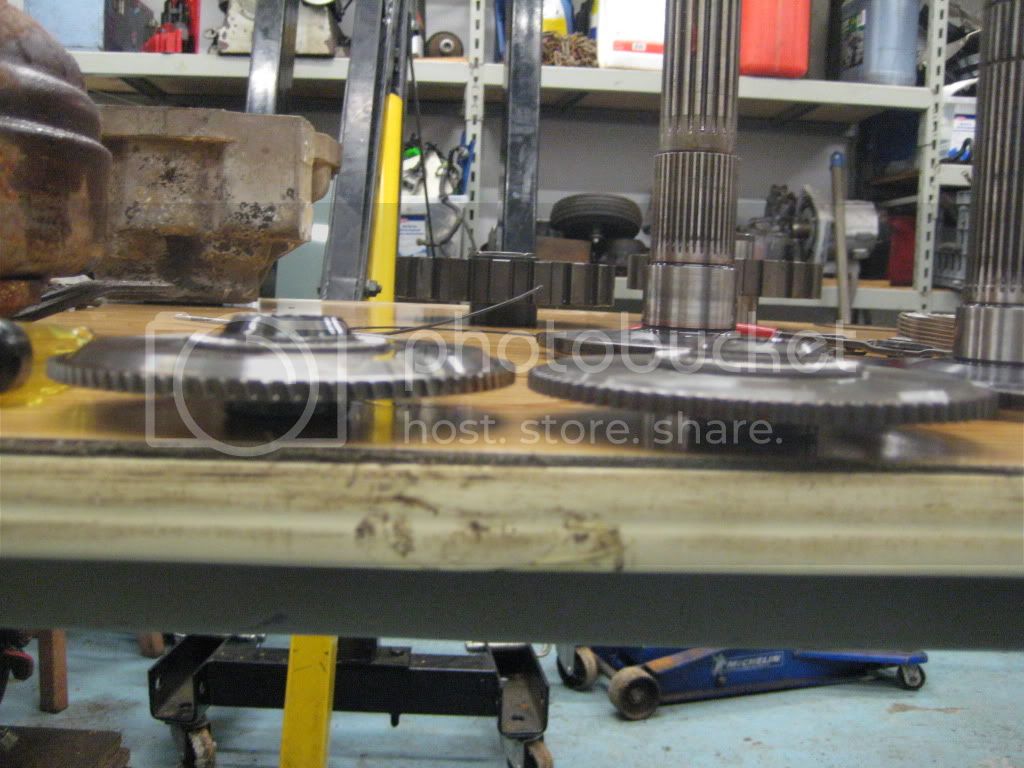
And, finally, the output shaft flanges are slightly different as well, the 450-43LE having a thicker tap where it interlocks with the planetary:

IMG_7723.jpg


IMG_7722.jpg


(you can see the comparison where both output shafts are close at the bottom, one is slightly thicker).

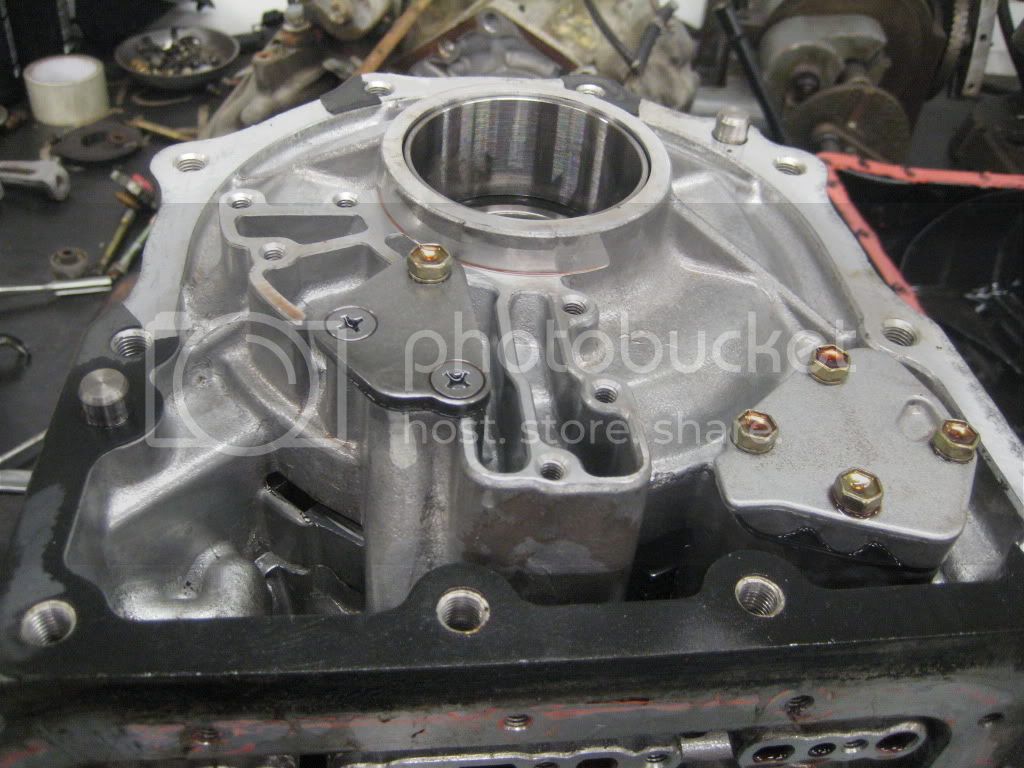
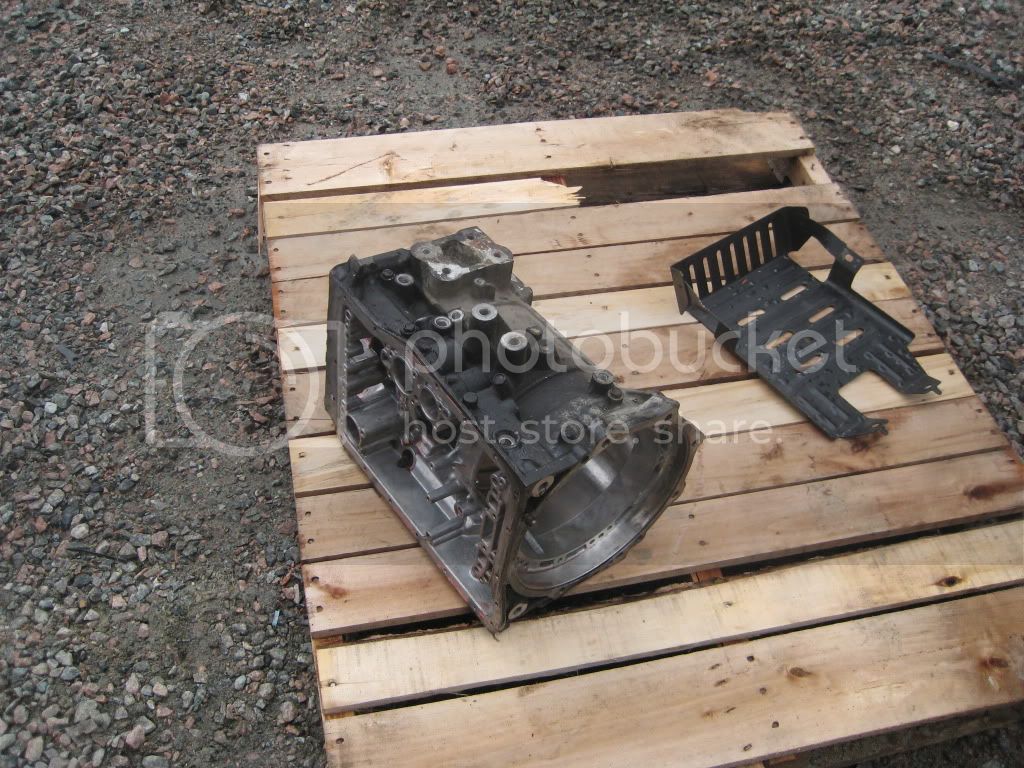
Also, the trans cases are different. The 450-43LE has a larger protrusion on the back, for the wider planetary:

A442F:

IMG_7731.jpg


450-43LE (with A442F output shaft swapped in):

IMG_7732.jpg


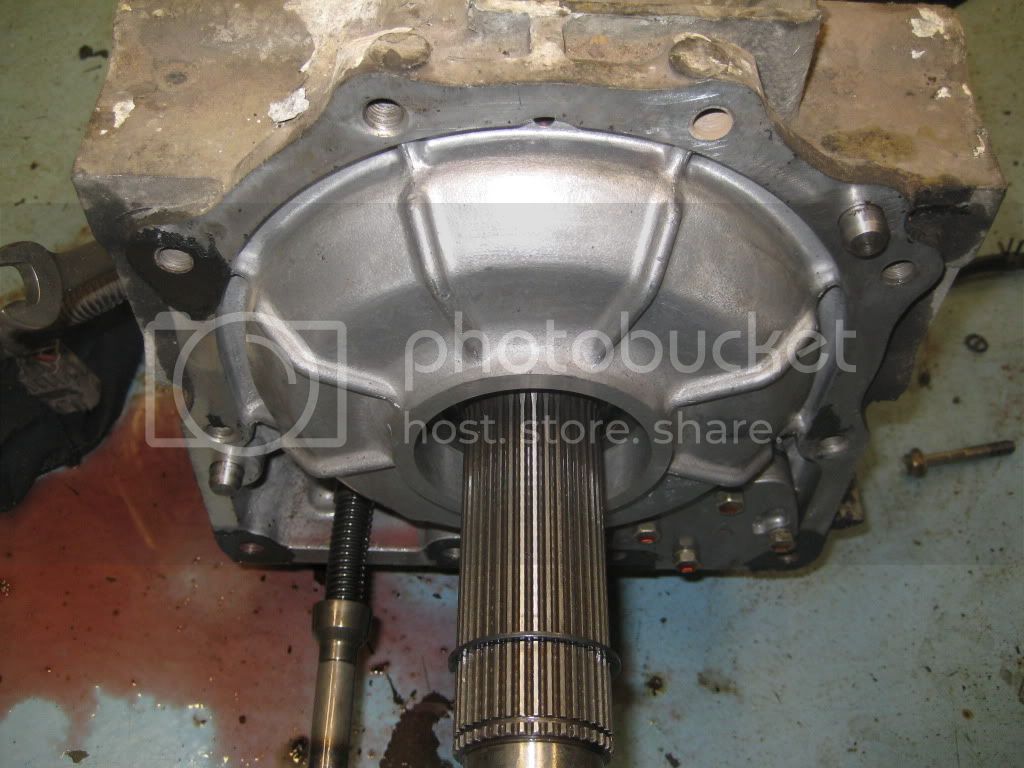
There are two problems created by these changes. The first is, as is detailed in my previous post, the output shaft from the A442F needs to be swapped into the 450-43LE, and because of the different tooth profile, the snap ring does not retain the output shaft as tightly. I don't think this is going to be a problem. I looked over the parts again tonight and am fairly certain that there is axial play in the assembly from the factory, and that the planterary has a significant amount of float built into it. As well, when the output shaft is installed into the transmission case, the endplay is taken up and the assembly does not move (impossible to verify as it's effectively hidden by the case at that point, but the shaft does not move in and out, therefore there is no play.

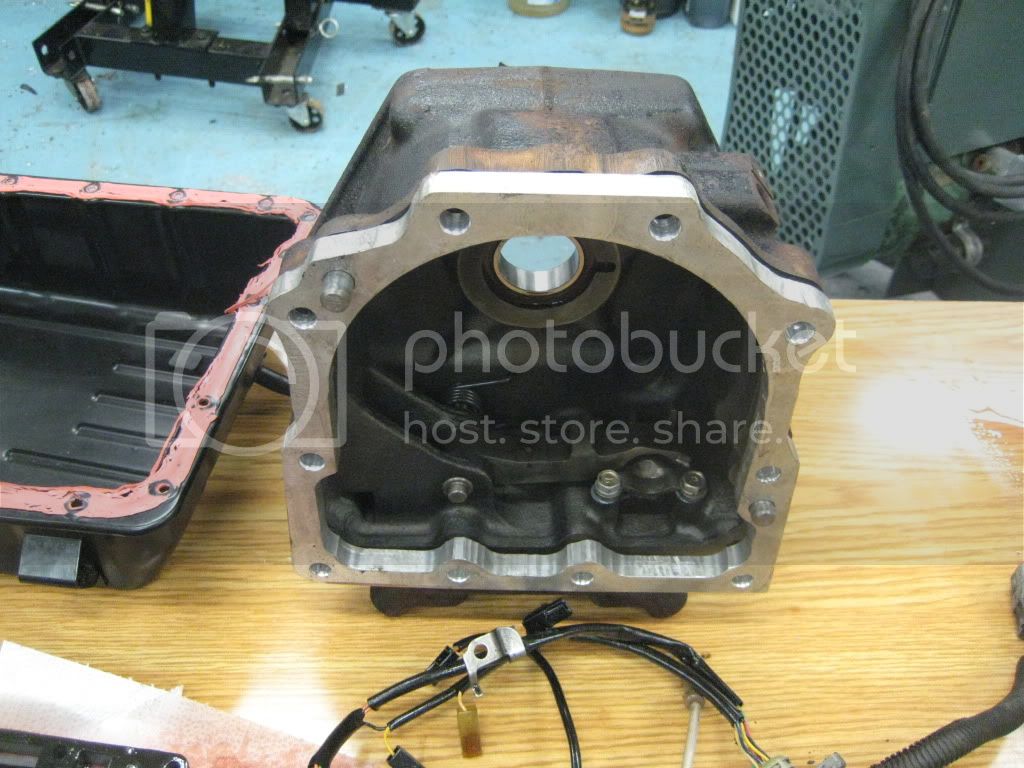
The second issue is due to the larger planetary changing the design of the back of the transmission. Due to the larger components, the output shaft is displaced rearward, and sticks out further than it does in the A442F. Therefore, we run into the same problem as Astr's A440F project - A spacer is needed between the rear housing and the transmission case in order to keep everything oriented properly:

IMG_7730.jpg


I was a little bummed to find this out, however it actually works in my favor, as the spacer will only displace the transmission forward about .575 inches, and this will only improve engine to firewall clearance and exhaust manifold clearance as well. So, the end result is that one of the only downsides to this swap (proximity of engine to firewall and resultant difficulty in removing valve cover) should be solved by a spacer.

So, at this point, I am pretty satisfied that the end play from the snap ring is a non -issue, and the spacer can be solved fairly easily by replicating the design of Astr's spacer (I am sending him a PM in hopes that he still has the .dxf and can send it to me, the thickness is off, but I am sure that can be changed easily) I can get around this problem and actually use it to my advantage.
 
Good progress! I told you that I would check the thickness of the output shaft flange and compare the one from the A440F to the AW450-43LE. Then I realized that the A440F output shaft is installed in the hybrid transmission that I have in the NPR truck so I went back and examined some of the photos that I took and they appear to be the same thickness.

It just occurred to me I do have a torn down A440F minus the output shaft and an AW450 output shaft. If the AW450 output shaft fits the rear planetary assembly of the A440F using the standard snap ring, this would indicate that they are the same thickness. I'll give it a try this weekend and let you know.

You should have the dxf file for the spacer later today. Are to going to have to extend the rod that activated the park pawl to accommodate the spacer?

I also had to add a spacer on the output shaft to position the park gear properly relative to the park pawl. It may have been more because the AW450 park gear did not have the integral governor and therefore was shorter.
 
Great, thanks. I was looking at the photos of the output shafts in your thread and it's too difficult to tell based on the picture.

The main point of concern in my mind is the end stack thickness of the whole thing. The play between the output shaft and rear planetary is a non-issue if it is retained properly. Now that the transmission is back together, I can confidently say that the output shaft cannot move forward or rearward. However, I am concerned that differences in machining might cause some binding inside the transmission. The output shaft supports the rear planetary gear by way of a bushing and limits axial float through a needle bearing. On the other end, the gear is prevented from floating by another needle bearing. My fear is that the distance from the main output shaft
support bearing to the surface of the rearmost needle bearing differs from one outout shaft to the next. I am contemplating dismantling the trans once again to attempt to measure the difference.

The spacer issue for the rear housing is easily solved and has no real downsides, other than having to modify the transmission shift linkage, and it results in more engine clearance, so it's actually beneficial.
 
...It just occurred to me I do have a torn down A440F minus the output shaft and an AW450 output shaft. If the AW450 output shaft fits the rear planetary assembly of the A440F using the standard snap ring, this would indicate that they are the same thickness. I'll give it a try this weekend and let you know...

I measured the snap ring that holds the output shaft flange to the rear planetary assembly and it was 0.070" thick. When I place the AW450 output shaft into the A440F rear planetary assembly, i only have clearance enough for a 0.035" thick snap ring which would suggest that the A440F flange is around 0.035" thinner. Wished I had measured it when I had the transmission all apart.

However, there is about a 0.050"+ gap between the teeth on the flange and the bottom of the slots in the rear planetary assembly that they fit into so it may be that the way that the AW450 flange is machined is not allowing it to drop all the way down into the slots. When the AW450 output shaft is inserted into the AW450 rear planetary assembly, the teeth do bottom out in the mating slots.

I'm not sure if this will be of much value to you as it could be that we are comparing apples and oranges.
 
Update!

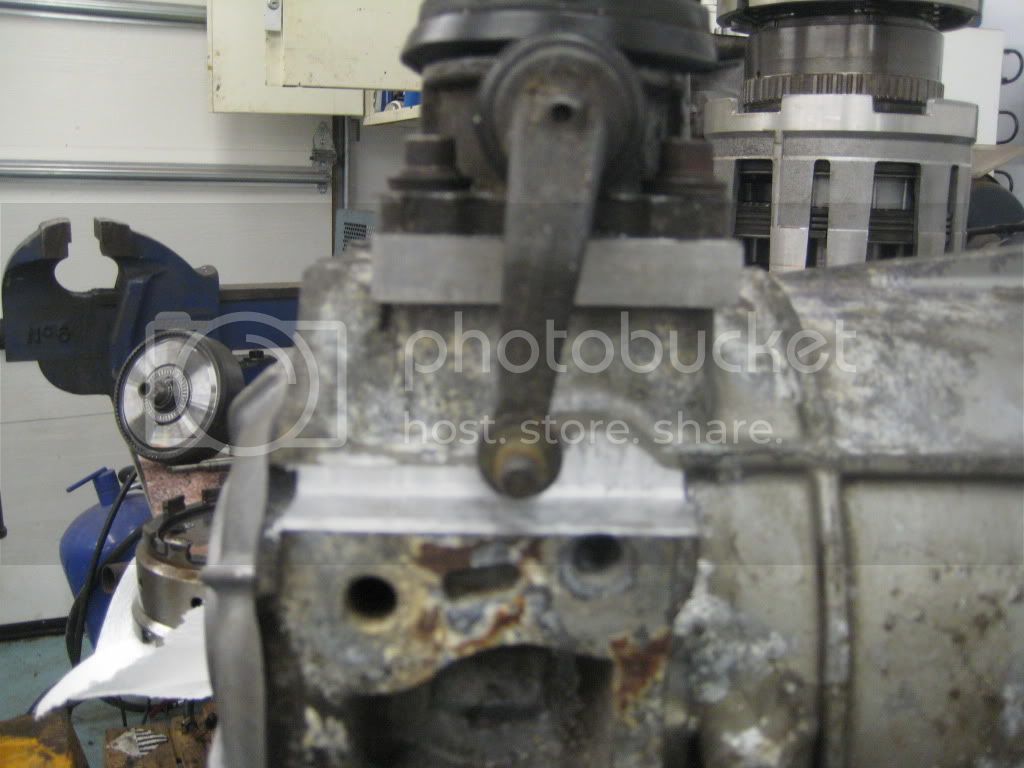
I was able to knock out a spacer plate on my manual mill without too much trouble. The dowels I made from 12mm drill rod that I bought from my metal supplier, and I was able to cut them at exactly the correct length. The end product fits perfectly. The final thickness was .535 (plus gasket thickness).

IMG_7739.jpg


IMG_7753.jpg


Making this plate took an entire day. Halfway through the big round cut, my rotary table started to bind up, which necessitated a complete teardown, cleaning, greasing, and putting back together. The rotary table rebuild took most of the time!

I then turned my attention to the transmission. I wanted to double check the end clearance issue, so I pulled it all apart again, and tried to measure the overall length of the rearmost planetary with the two different output shafts. Unfortunately I am not very well equipped in the metrology department so measuring things accurately is not very easy. I finally removed the rear bearing from the case, placed it on the output shaft, and took a measurement from the rear face of the bearing to the front of the planetary, and repeated with the other output shaft. The difference was within that I can measure accurately, the figure I got was 0.005 shorter for the A442F output.

I also looked at the internal clearance for the needle bearings using a highly scientific method - I stacked the entire geartrain in the torque converter to simulate the gear stack in the case. I then installed each output shaft, but not before putting a dollop of grease on the thrust race. Upon assembly, I rotated everything, then disassembled and observed the grease to see how close the needle bearing comes to the outside race (to see if there was endfloat there, or if everything was tight). In both cases, I got a very large gap between the output shaft and the rear planetary, so it looks like the differences in the output shaft are a non-issue.

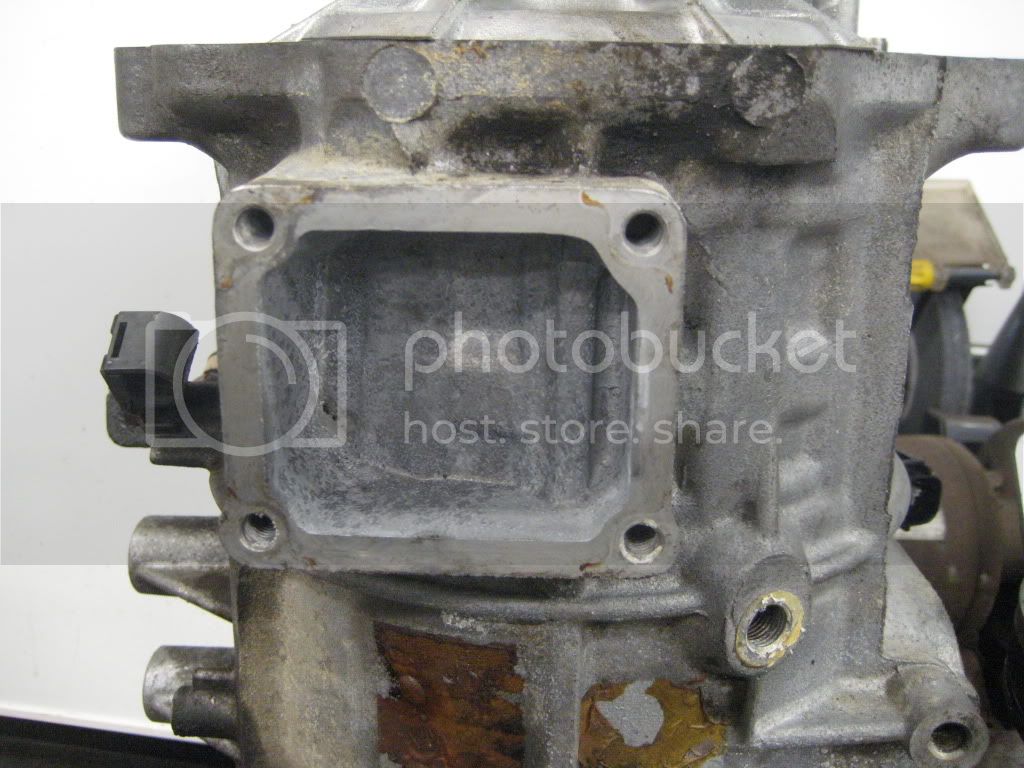
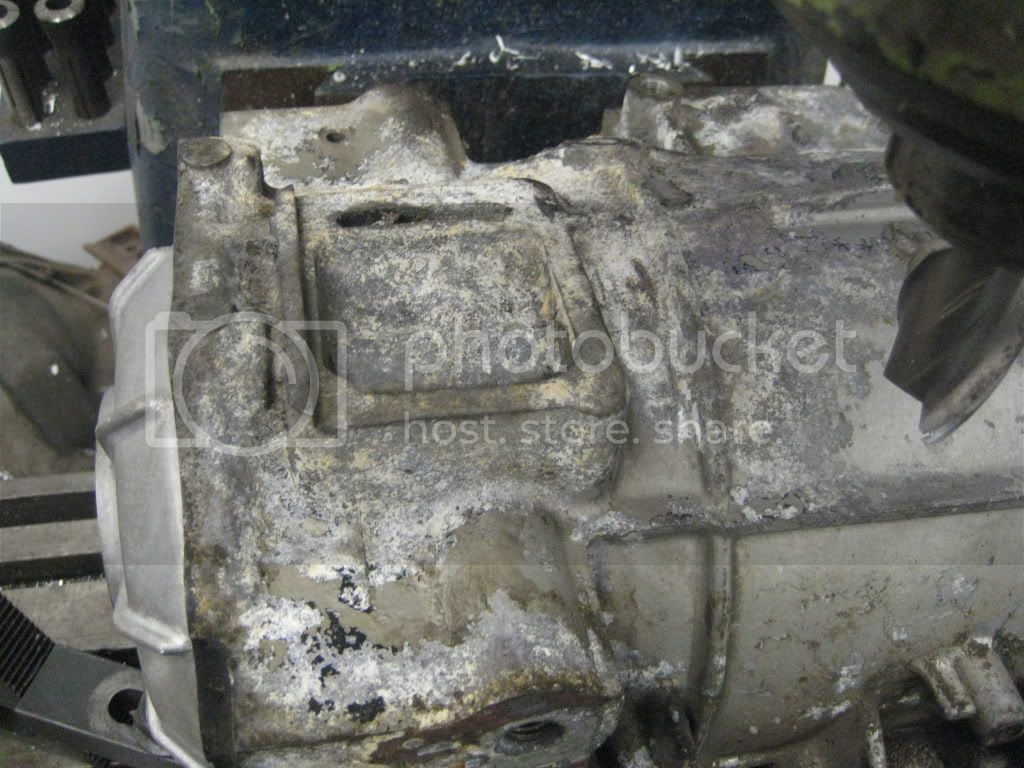
I then tackled the shifter. On the 80 series the hi-low shifter threads into a raised boss on top of the trans case. It looks like this:

IMG_7745.jpg


The 450-43LE has this boss machined off and the holes are not drilled. It looks like this:

IMG_7744.jpg


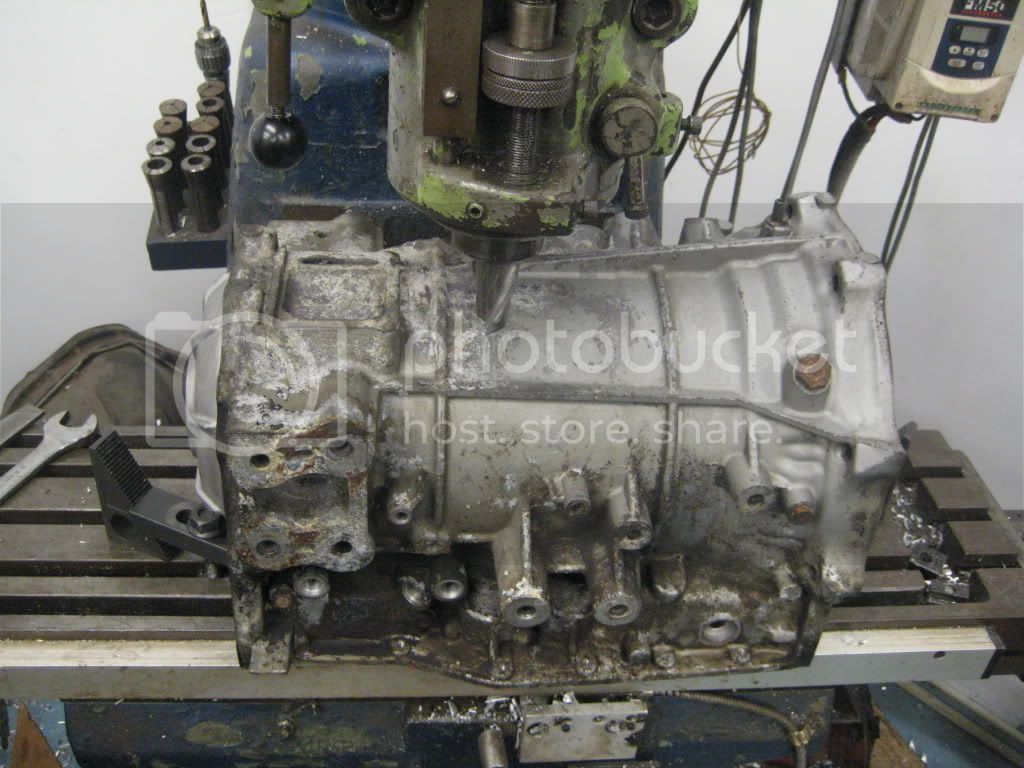
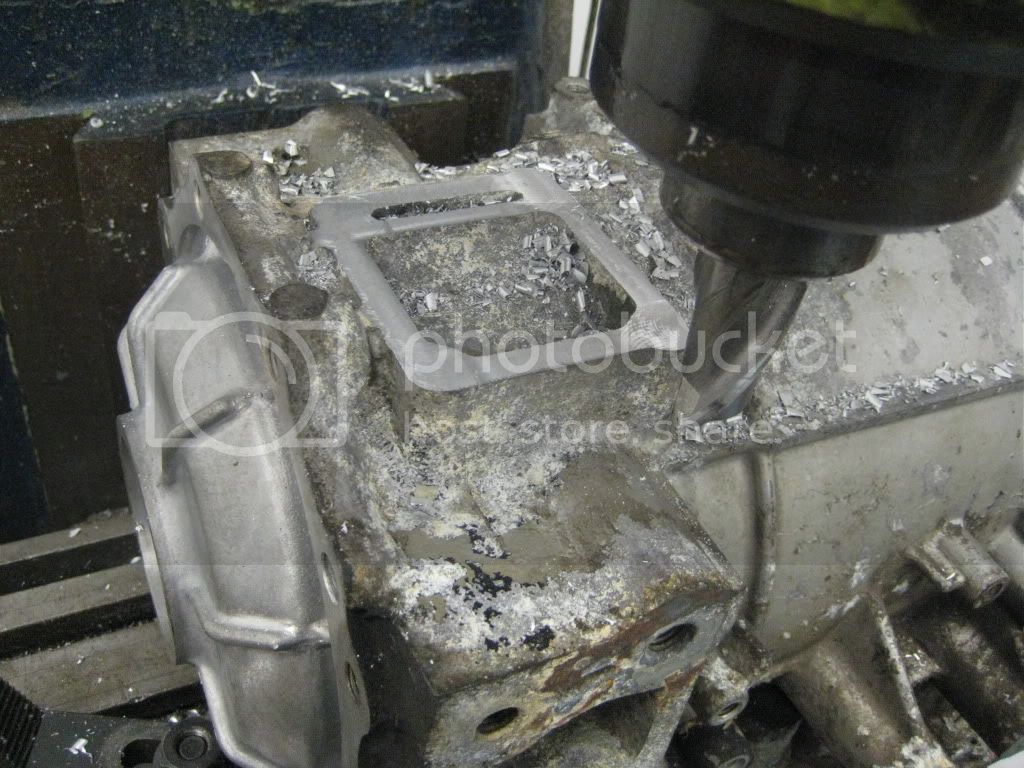
So, I put the entire trans case in the mill, faced off the area:

IMG_7743.jpg


IMG_7746.jpg


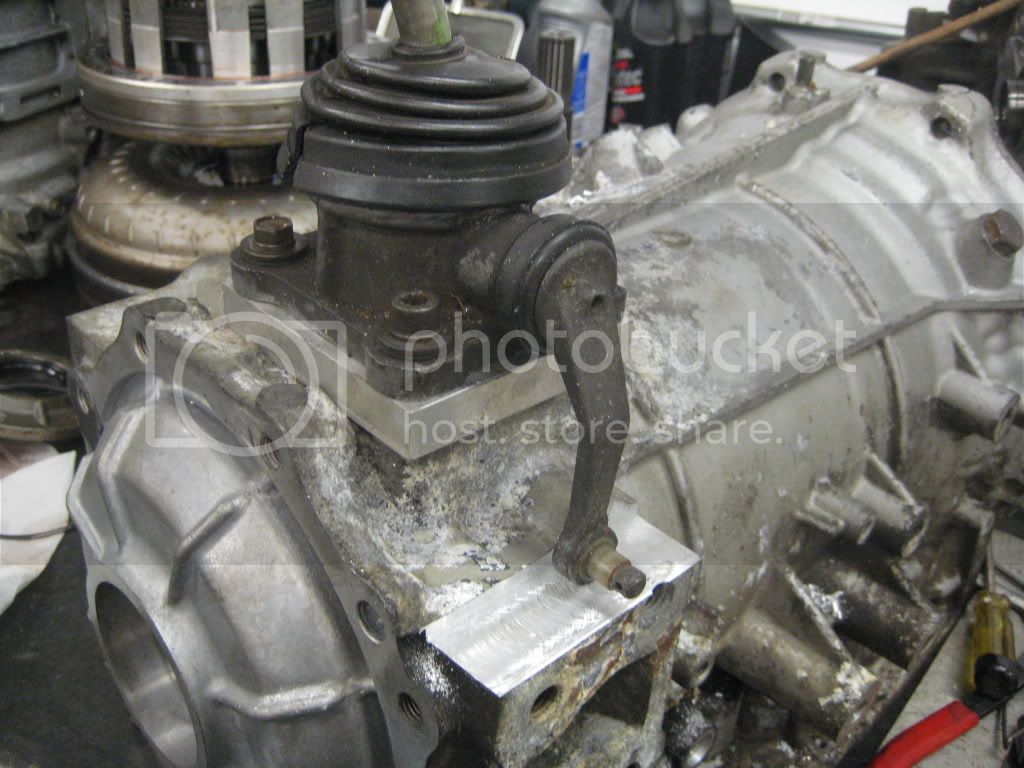
The problem now is that threaded holes can only be bored on the left side of the case ,as the right side only has 3/8 thickness in that spot. Plus, the shifter needs to be spaced up about 5/8 inch to be in the right spot, and the 2wd application mounting boss in the case interferes with the shifter rod and lever. So, I milled away the extra boss to make some room, and build a spacer block.

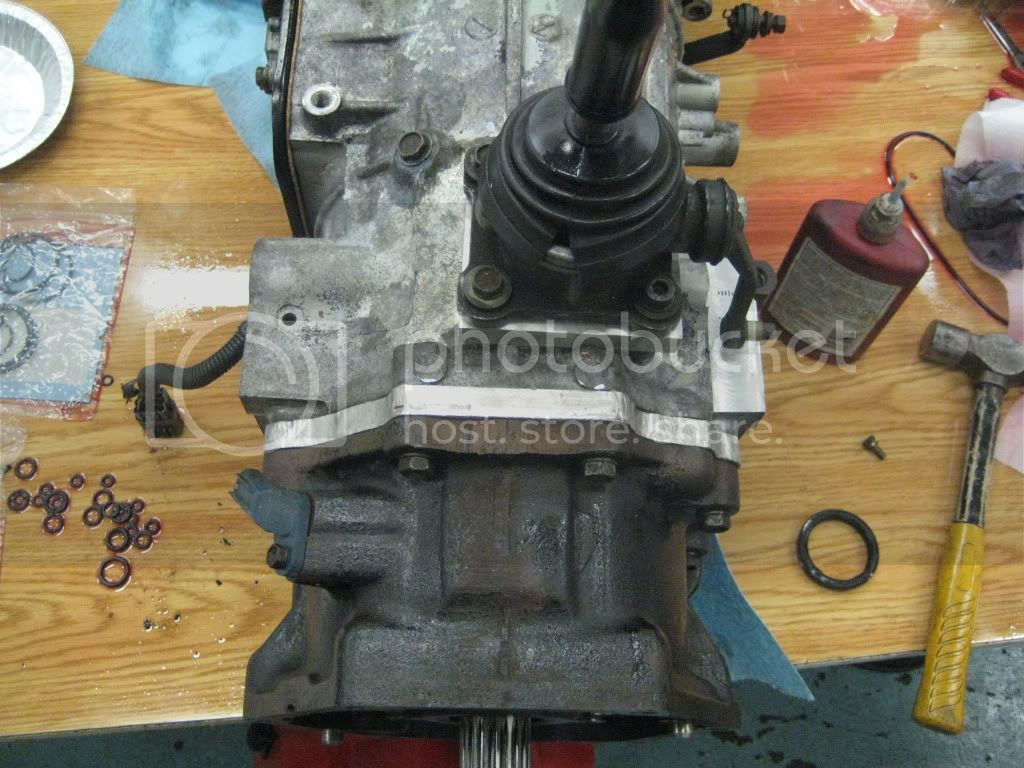
The way the block works is that two bolts bolt through the lever base, the block, and into the trans case, sandwiching the block. The bolts on the right side thread into the spacer block. The setup works quite well.

IMG_7748.jpg


IMG_7749.jpg


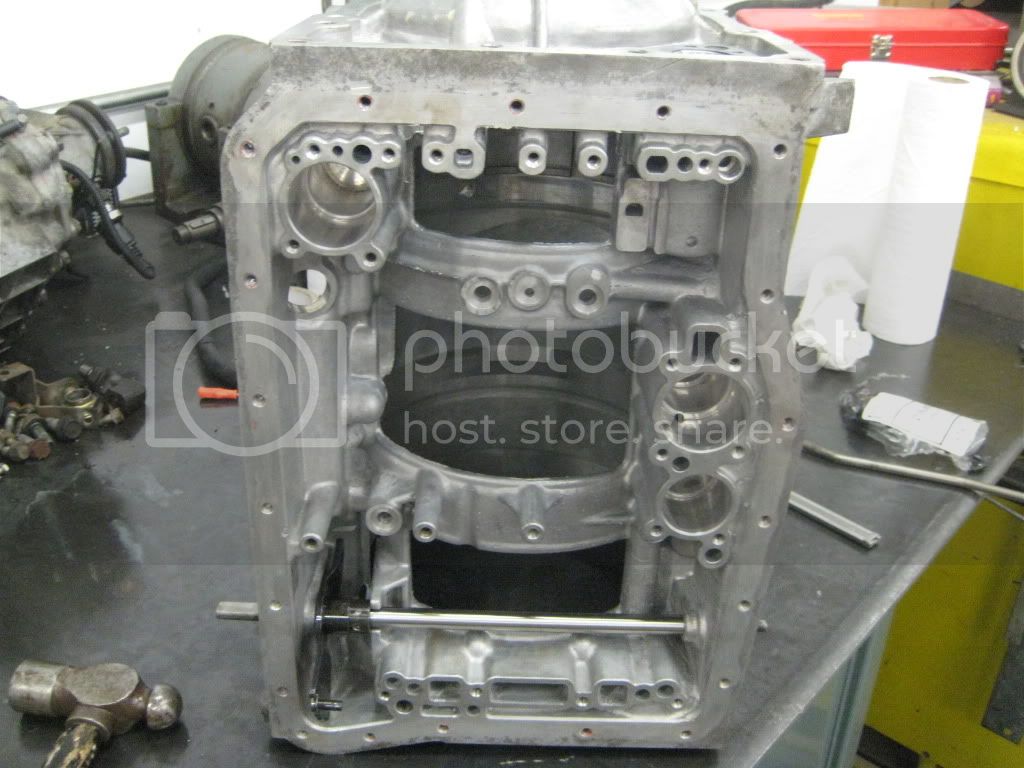
Then, I turned my attention to cleaning the case with the steam cleaner:

IMG_7742.jpg


Mmm clean!

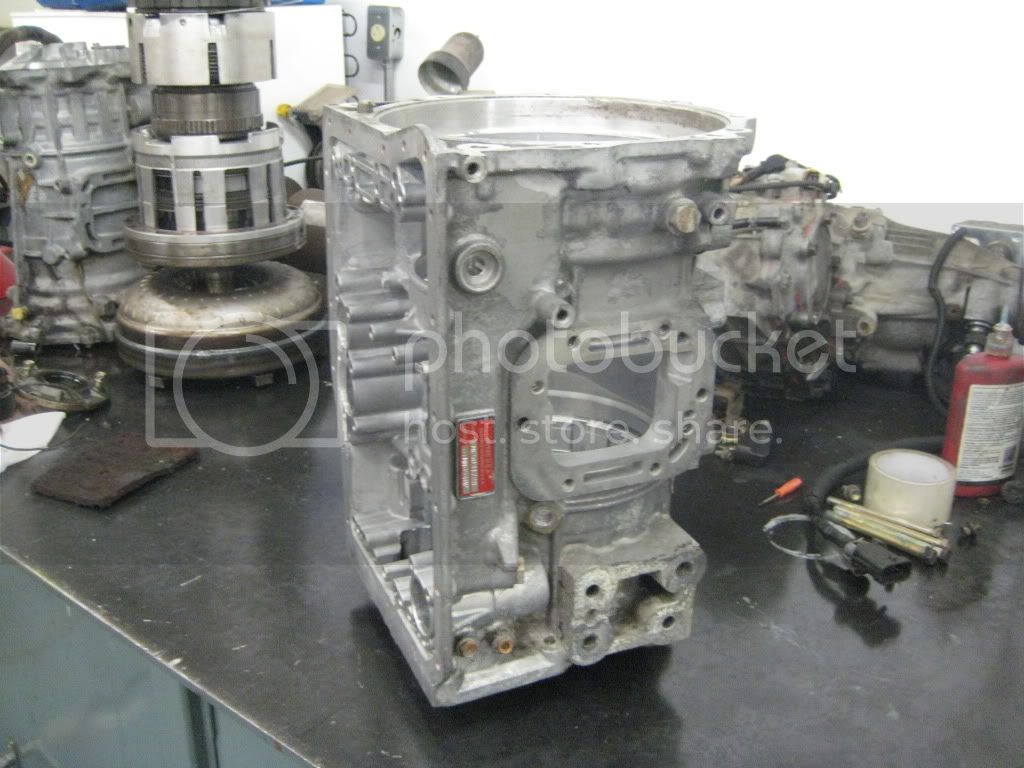
The red tag is actually a rebuilder tag from Awtec. The trans was rebuilt recently, and it shows - There was absolutely nothing even remotely worn in there, all the clutches are new.

IMG_7754.jpg


IMG_7750.jpg


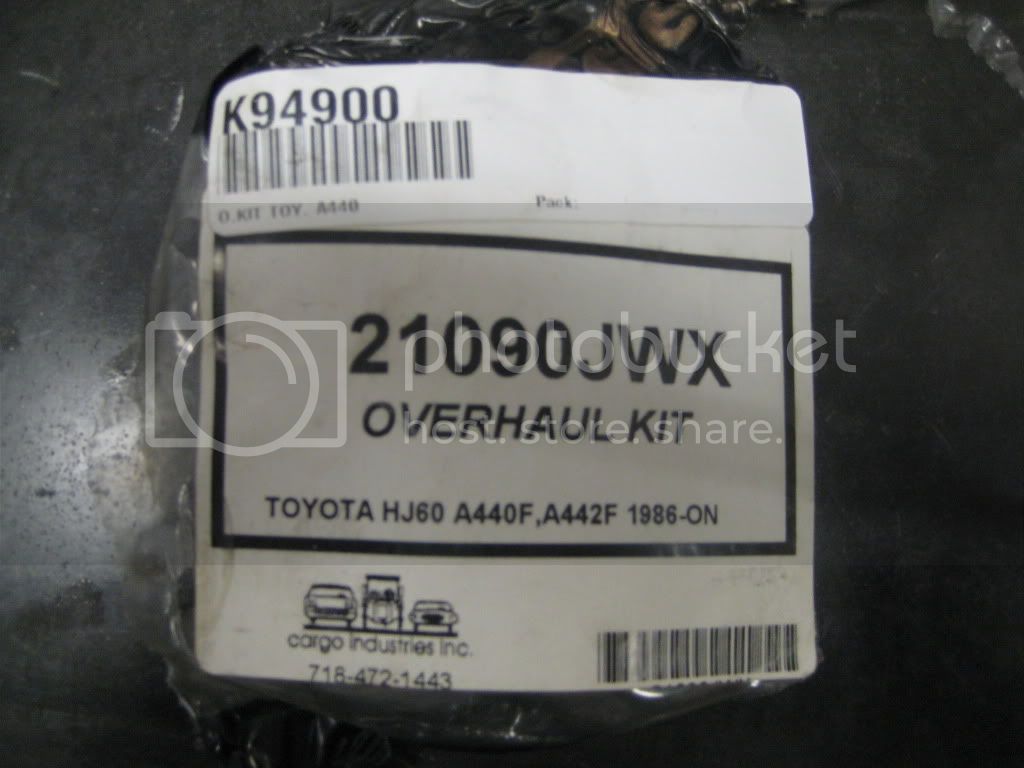
I ran into one problem. The seal kit I bought is for a Land-Cruiser:

IMG_7752.jpg


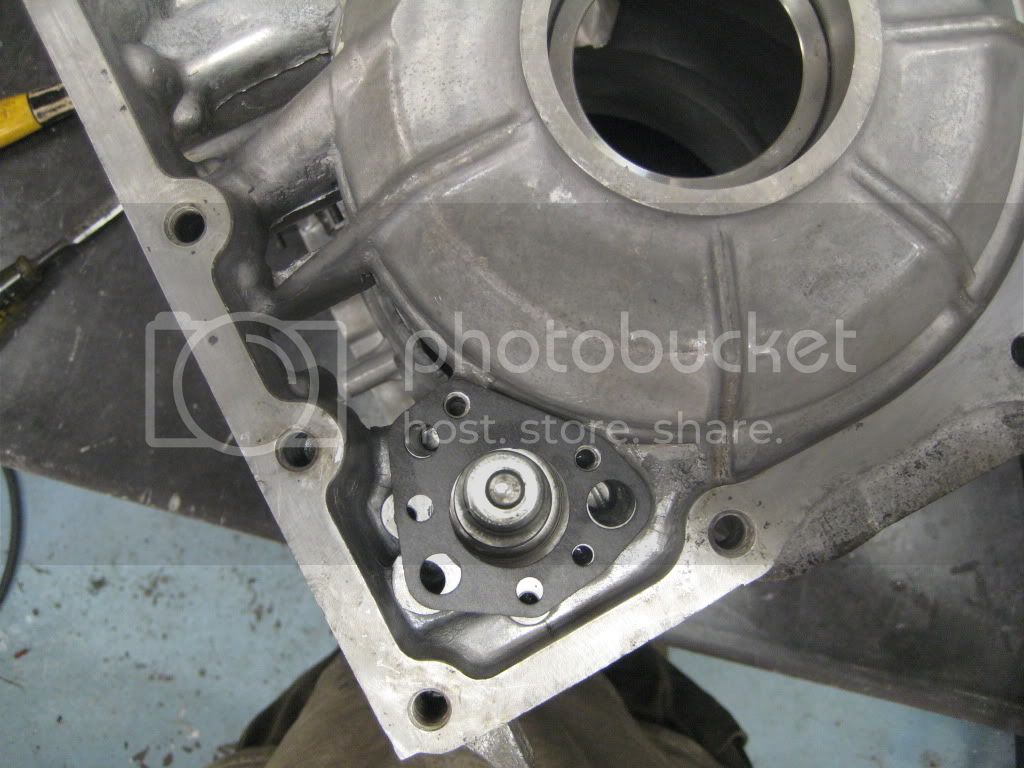
Everything looks to fit perfectly on the AW450-43LE except for this:

IMG_7751.jpg


The gasket is wrong. Since I need another gasket for the spacer plate, I will have to order a seal kit for an AW450-43LE.

I need to make a special tool to compress the rear piston, I was able to get the snap ring out, but it sure is not going back together without the special tool! (astr made one, I will copy it).

So far so good. I was hoping not to have to fully tear down the transmission, but now that it's all in pieces and everything is clean and no longer bleeding ATF, it's actually kind of nice.

 
Update, the seal kit I need is K94900C. Rockauto.com has one listed for 90 bucks. I will see if the local parts houses can get me one, but as of wednesday I am gone for a week and a half, so I doubt much more is going to happen before I leave, other than reinstalling the guts...
 
Update:

I have been in Iceland for the last 10 days, just got back yesterday. The seal kit from RockAuto came in and is correct. I will be starting reassembly tonight if I can get the shift rod lengthened. The project is going to start moving a heck of a lot faster as the jobs I need the truck for are piling up.
 
Update:

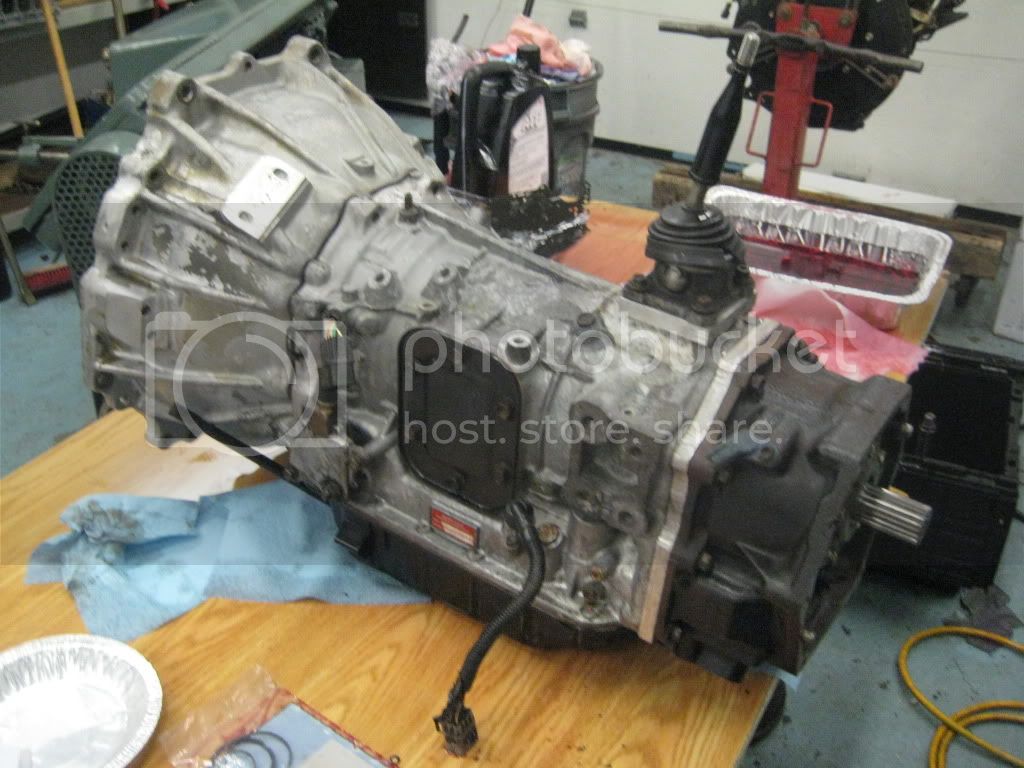
Trans is back together.

As far as I know this is the first hybrid A442F/450-43LE built.

IMG_7756.jpg


A picture of the spacer and the shifter spacer block:

IMG_7757.jpg


Rebuild notes:

- The selector shaft on the 450-43LE is a bit longer than the A442F shaft. I think it would work without interfering with anything. I chose to swap it out for the A442F shaft, but this means pulling the valvebody, which in turn means disassembling the valvebody to change the main gasket. This is not for the faint of heart and requires some patience and you must follow the procedure in the manual. Although the A442F is very different than the 450-43LE when it comes to the valvebody, the basic procedure works (I hope!). In hindsight I would consider leaving the valvebody in, however, removing everything gave me a change to clean the case out.

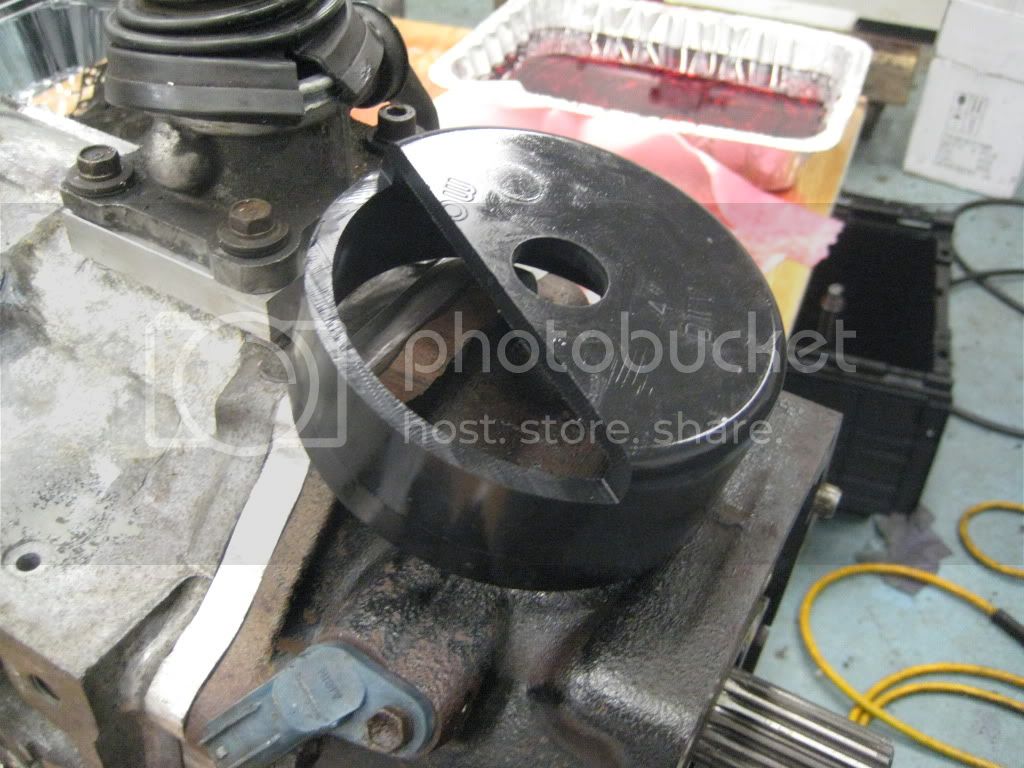
The rear piston compression tool in the manual (and the one built by Astr) is pretty nice, I came up with a simpler and cheaper alternative using a 4 inch PVC cap with a piece milled out:

IMG_7758.jpg


It worked slick, took 3 minutes to make and cost $4. I used a piece of 1/2 threaded rod and some washers.

Unfortunately, both trannies are very close but not identical and there are some differences in the 1st/reverse gearset. The result is a much heavier duty first and reverse gearset which I think is a great upgrade, but I still have some concerns over the output shaft as there is roughly 0.050 of clearance between the output shaft and the snap ring on the rear planetary. I did my best to measure the effect and the end result seems to be that everything is in compression anyways due to the design of the transmission. Not too worried about it, the snap ring is there for assembly only and any end play is taken up.

The next project is to put all the spare A442F parts away safely, then reinstall the trans into the truck. Then, I need to slightly modify the engine mounts to allow for the more forward location due to the spacer, and, then the engine can go in - this time, for good!
 
This thread is very encouraging. There is someone local to me who just posted a 2000 UD 1200 part-out on craigslist. I'm going to shoot him an offer for the engine/trans/electronics and see what I can come up with. If he is reasonable on the price we'll have a AW450-43LE/A442F hybrid using the UD variant as well... it will be interesting comparing all of the differences.

Unfortunately my rig is a 96, meaning I have an A343F and I will need to find a A442F trans to donate an output shaft and tail housing, along with any other odds and ends I may end up needing.


Anyhow, not here to thread-jack, keep up the great work! It's inspirational!
 
JL,

Could i bother you for a measurement?
Next time you're out working on your project, I need a measurement of bell housing depth. Engine mounting face to transmission mounting face. It can be an approx measurement. It doesn't need to be exact.
I've been looking for a manual bell housing for a long time, but it seems the possibility exists to use an auto bell housing (along with an adapter) with an internal slave NV4500.


4D34 fact finding thread I have going at 4BTSWAPS:

Mitsubishi 4D34-1AT3 vs Isuzu 4BD2T
 
So, long overdue update:

We popped the engine and transmission back into the Cruiser a few weeks ago and I've made good progress with the conversion.

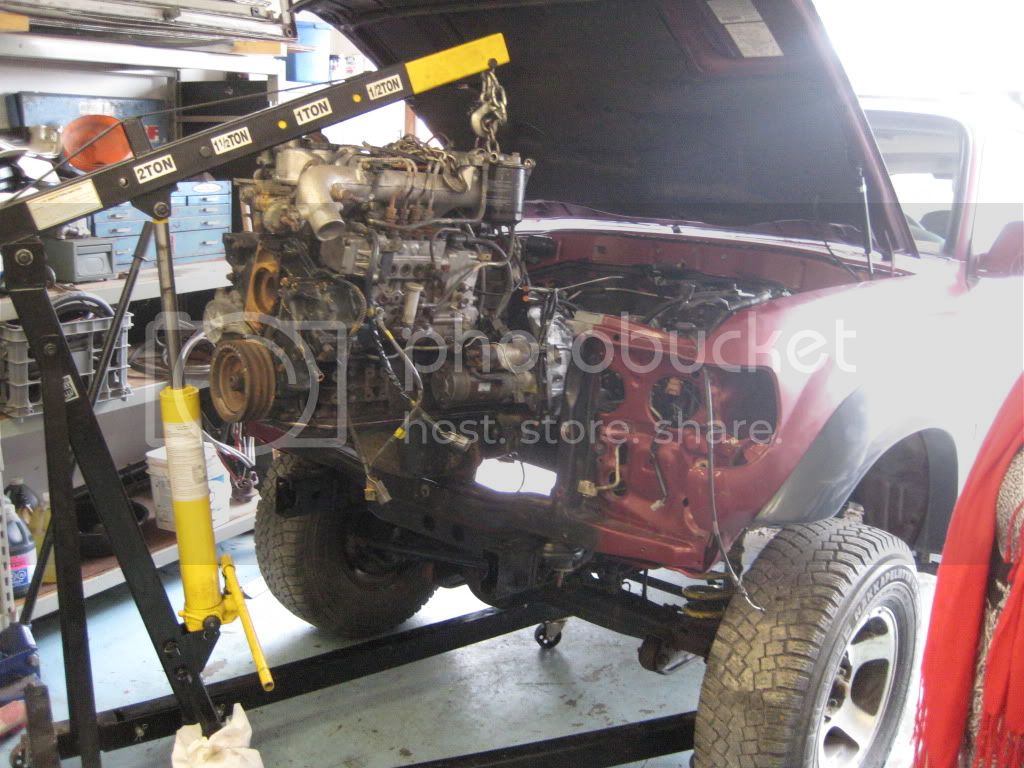
Due to the weight of the trans we reinstalled the engine and trans as one unit. This was a real pain in the butt and had I to do it again, I would have rented a trans jack to reinstall the trans on its own. The trans, t case and engine as one unit is heavy and very long!

The China engine crane was working pretty hard to get it installed:

IMG_7759.jpg


Once the engine was in, I needed to alter my engine mounts a bit, as the spacer plate in the trans had moved the engine .575 forward. I ended up redoing the mounts by filling the old holes and redrilling:

IMG_7766.jpg


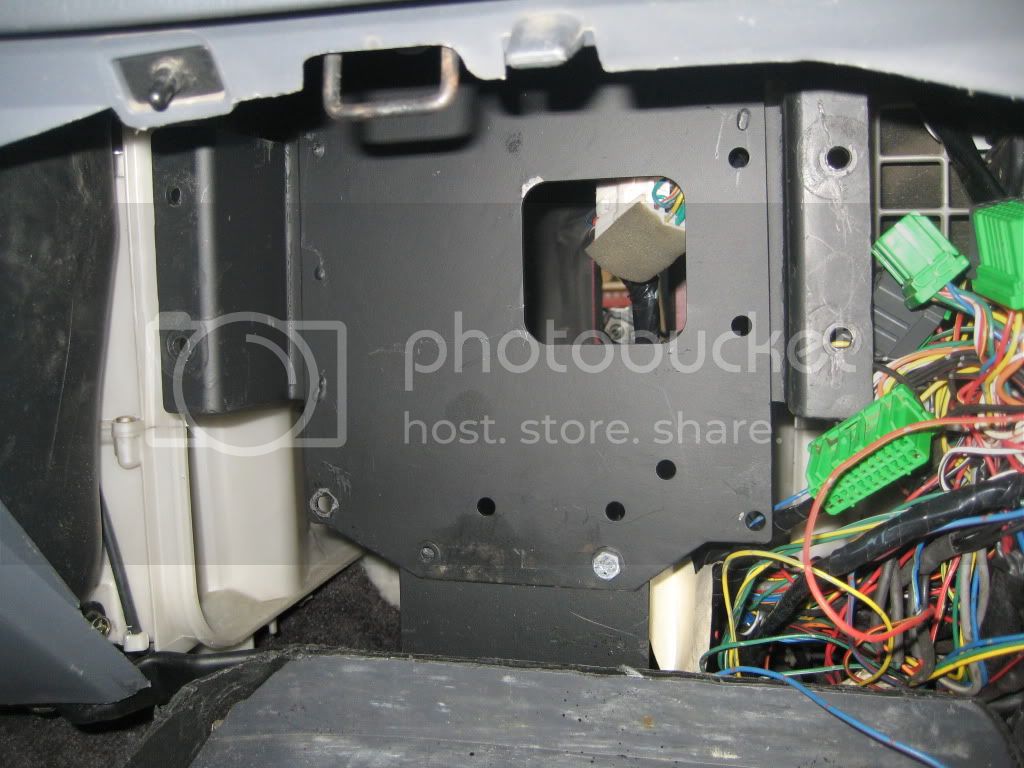
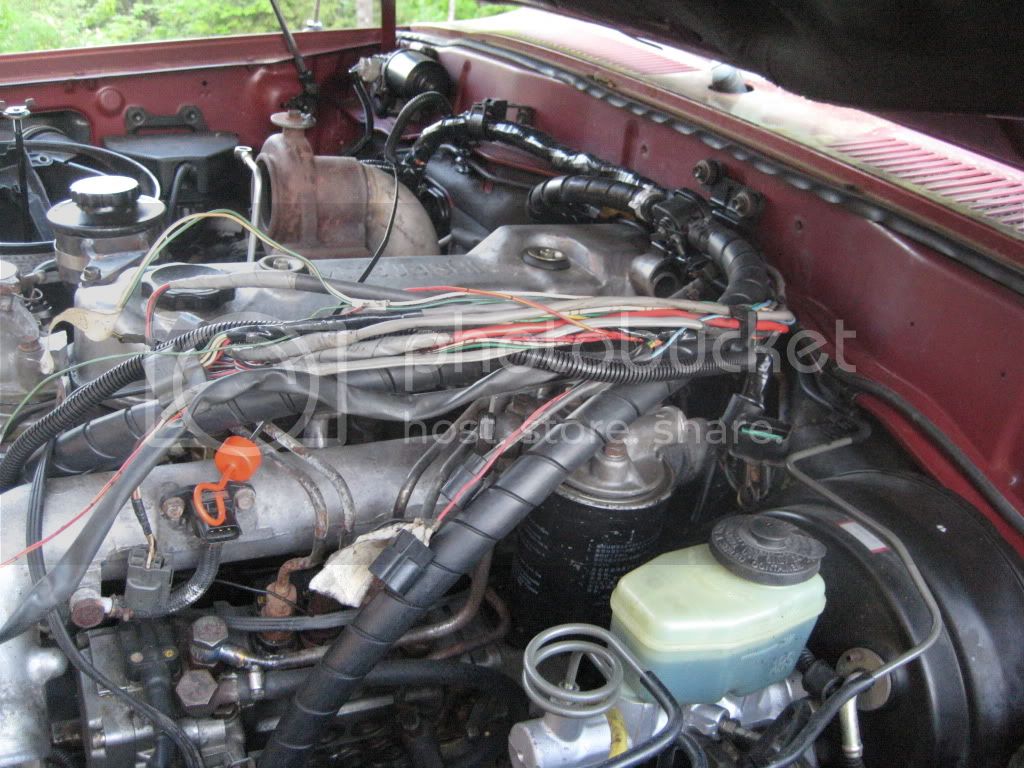
Once the mounts were done, I was able to bolt the engine in permanently and then the wiring began. I cut the Toyota engine and transmission down by tracing all the wires and cutting out all the non-critical stuff. I basically ended up with a very small amount of wires running to the VSS, the T-case, and the coolant and a/c coolant temp senders. I then grafted the Mitsubishi engine and trans harness into the factory harness, shortening the leads so that they would be the correct length. This took an entire weekend of work at a leisurely pace. I ended up running the TCM and the ECU off the main EFI relay and triggered it off one of the ignition leads. No pics of this unfortunately as my camera was out of town. I also built a custom mount for the glove box area, the ECU and TCM are hidden there and the glove box becomes an access door. This is really the only non-bolt in issue with the swap, the only place big enough to locate the computers is the glove box, and the glove box becomes an access hatch, so you lose the storage:
IMG_7776.jpg


Shot of the wiring - All these leads go to the injection pump/governor assembly:

IMG_7777.jpg


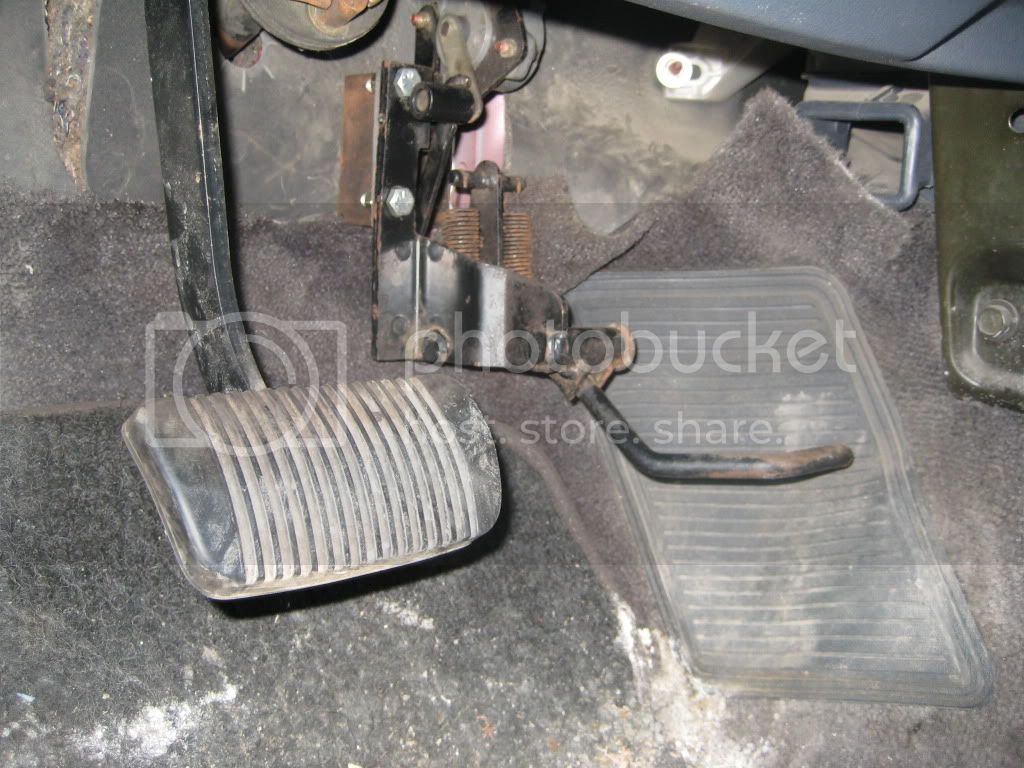
I also got the accelerator pedal mounted somewhat temporarily. The pedal from the Fuso is somewhat crude, but it's a nice setup with a cam style linkage that gives fine control off idle and goes faster and faster to WOT. I want to retain the linkage, so I mounted it to the stock pedal holes by way of a metal bracket. I will see if the location is comfortable and may re-do it if I find it to be not ergonomic.

IMG_7778.jpg


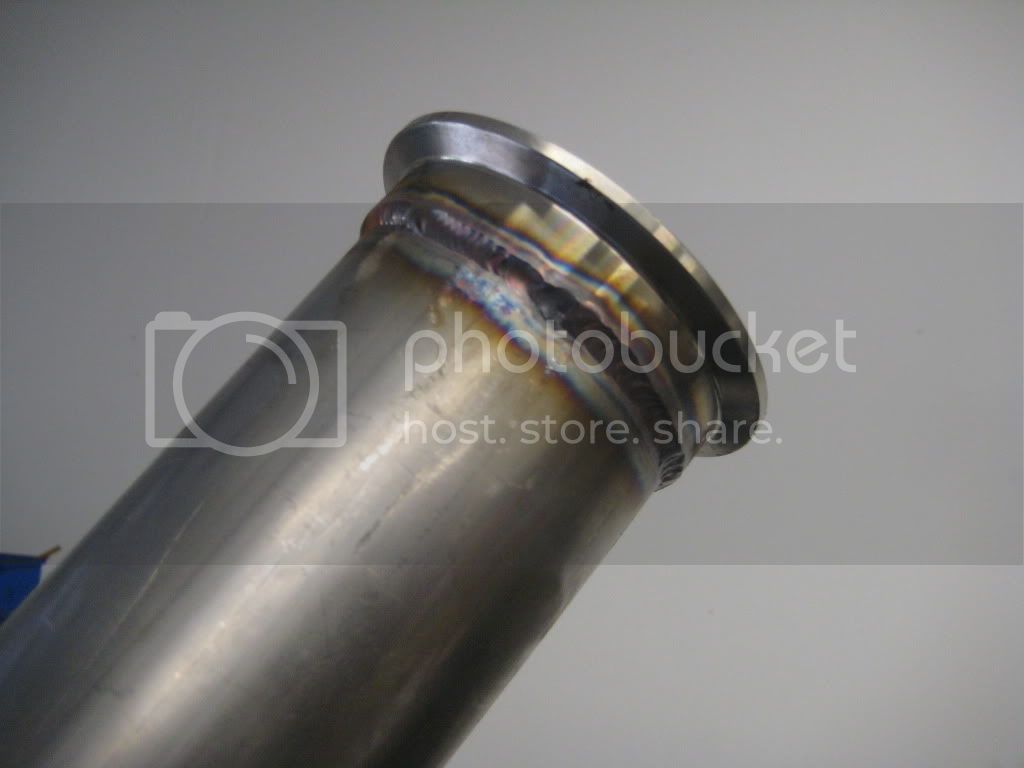
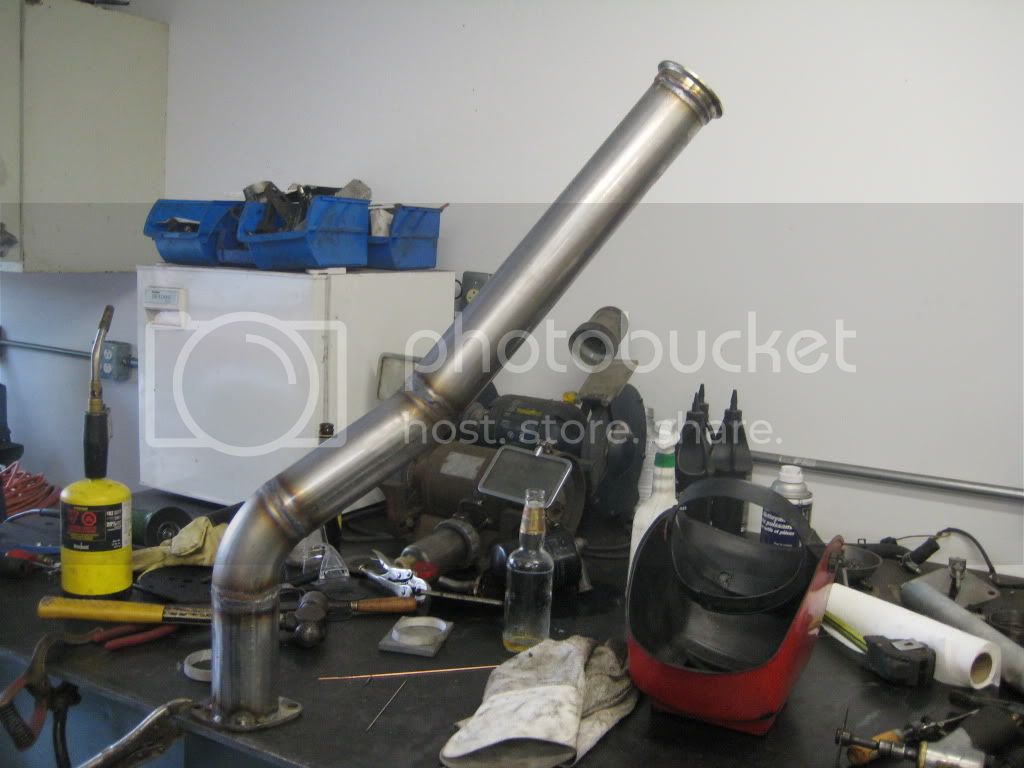
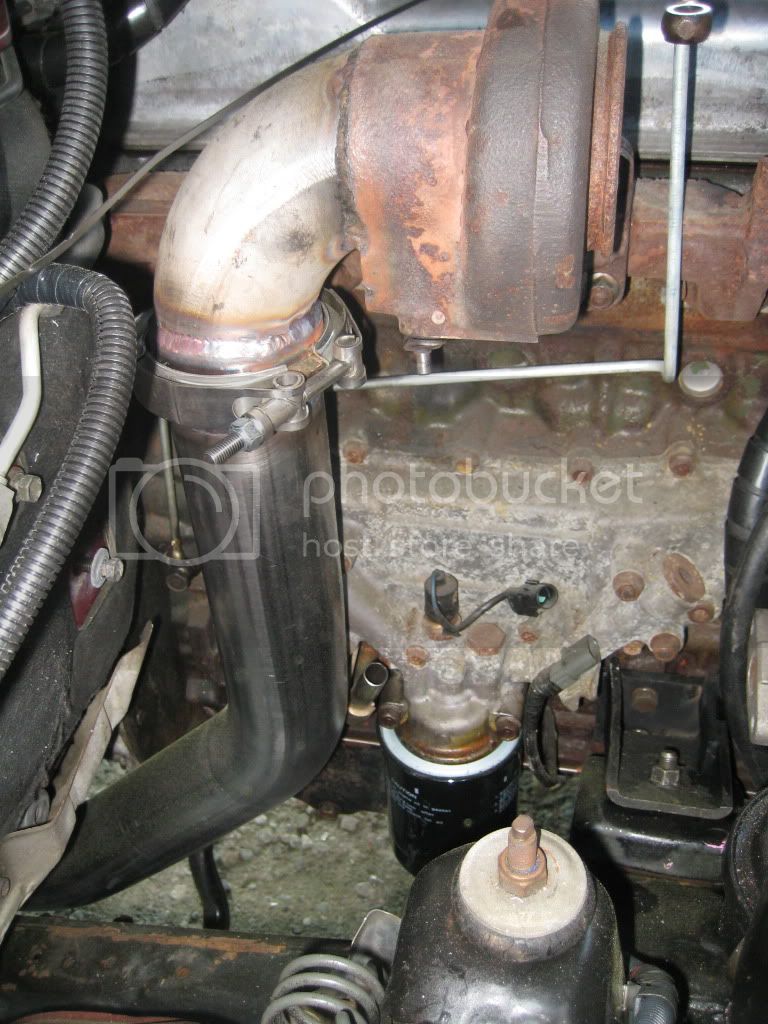
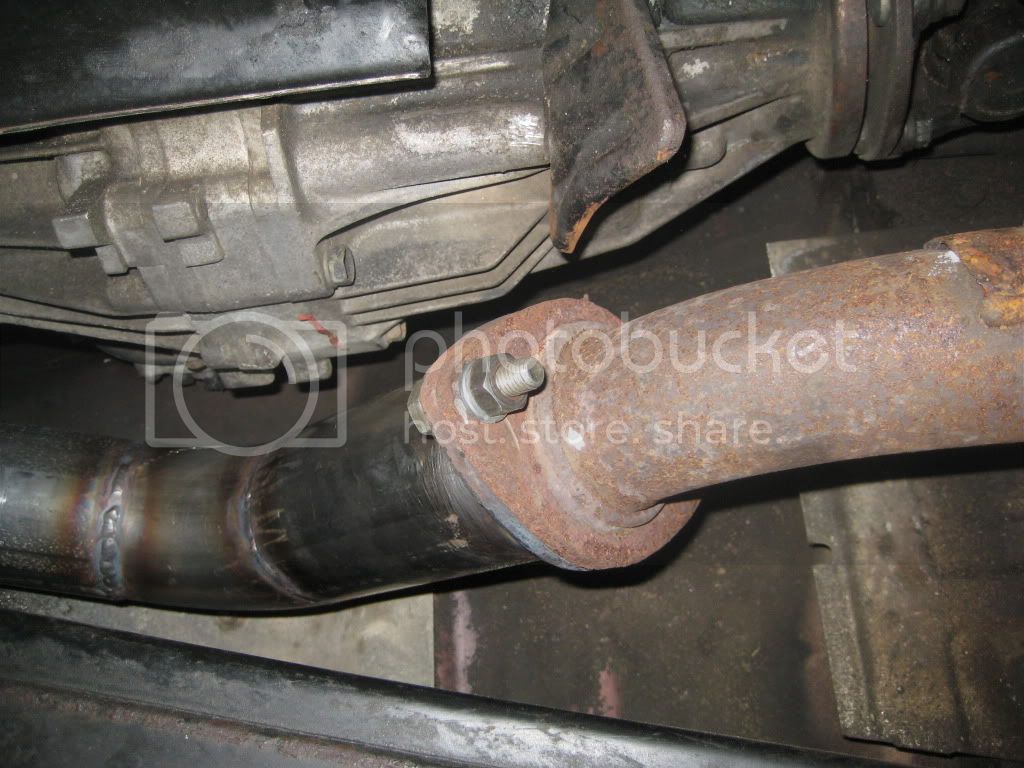
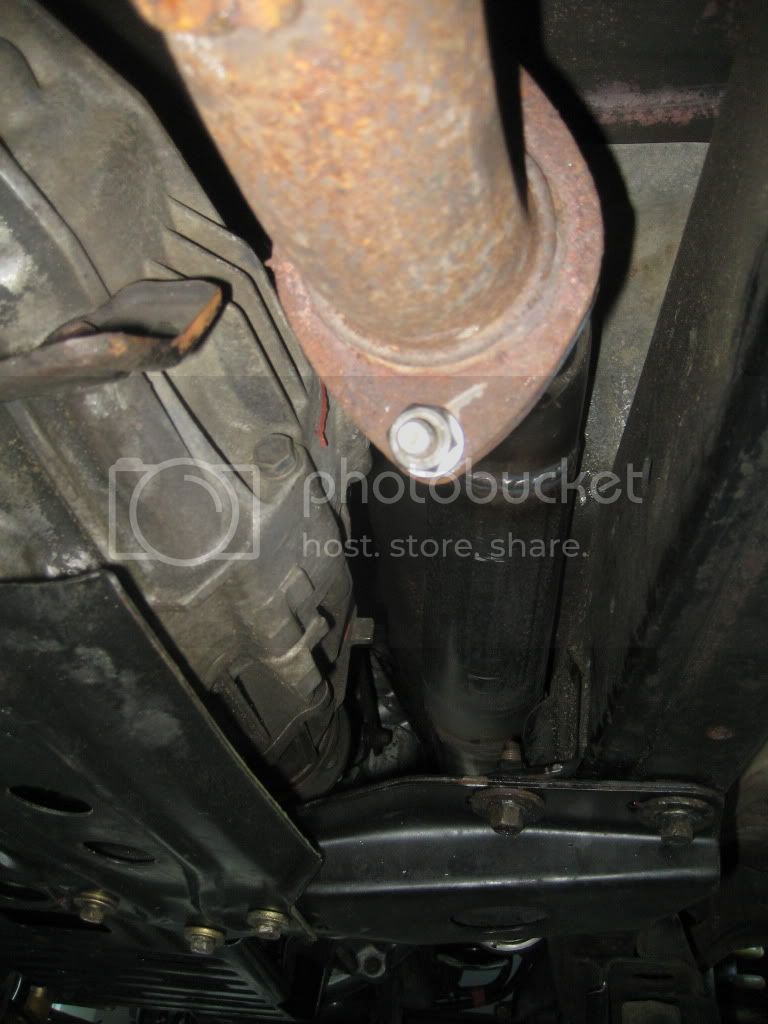
Next, I tackled the exhaust. I built it out of 3" 409 stainless from mandrelbend.com (MBS). I have used these guys for many projects and their stuff is really nice, plus they sell 409 grade stainless tube which is non-bling, cheaper, and specifically designed for exhaust. I used 2 V-band flanges, and also had to weld a 2.5 SCH10 stainless elbow to the turbo in order to keep the downturn away from the firewall (the factory setup had a huge cast elbow that did not work). I tigged all the joints with 309L and it turned out pretty good. The pipe runs inside the frame (I wanted to get rid of the goofy outside the frame routing). I only extended back to the factory muffler flange as I did not feel like spending the bucks and time to go all the way back just yet. I will probably finish it as a weekend project later on.

IMG_7767.jpg


IMG_7768.jpg


IMG_7774.jpg


IMG_7781.jpg


IMG_7782.jpg


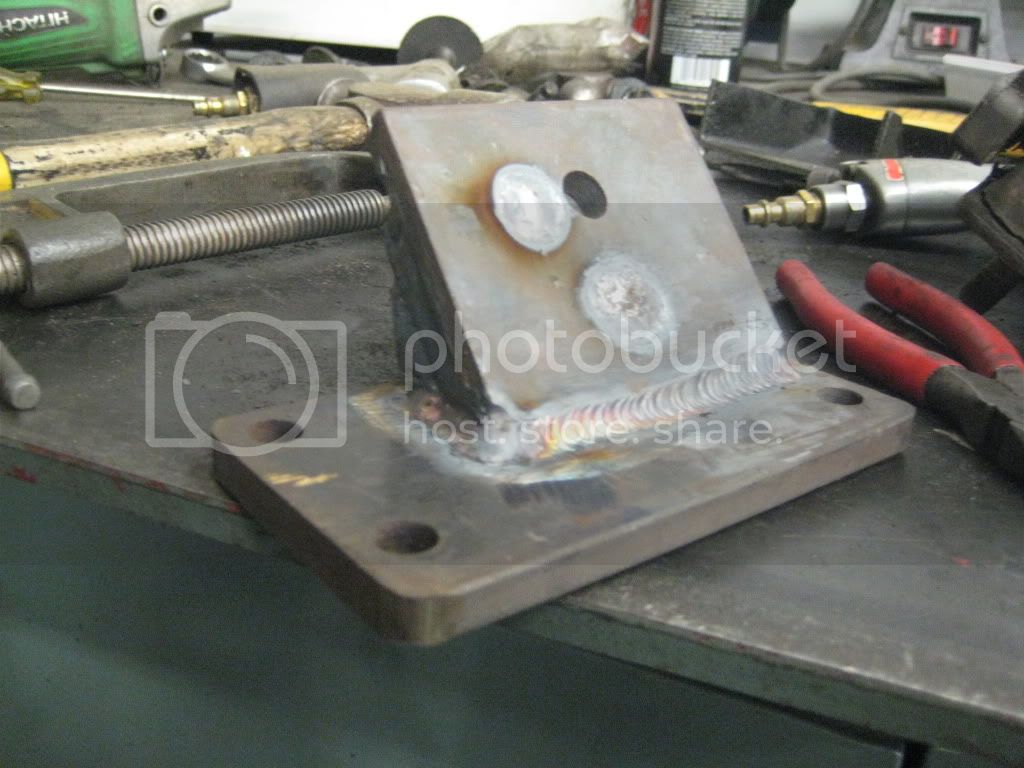
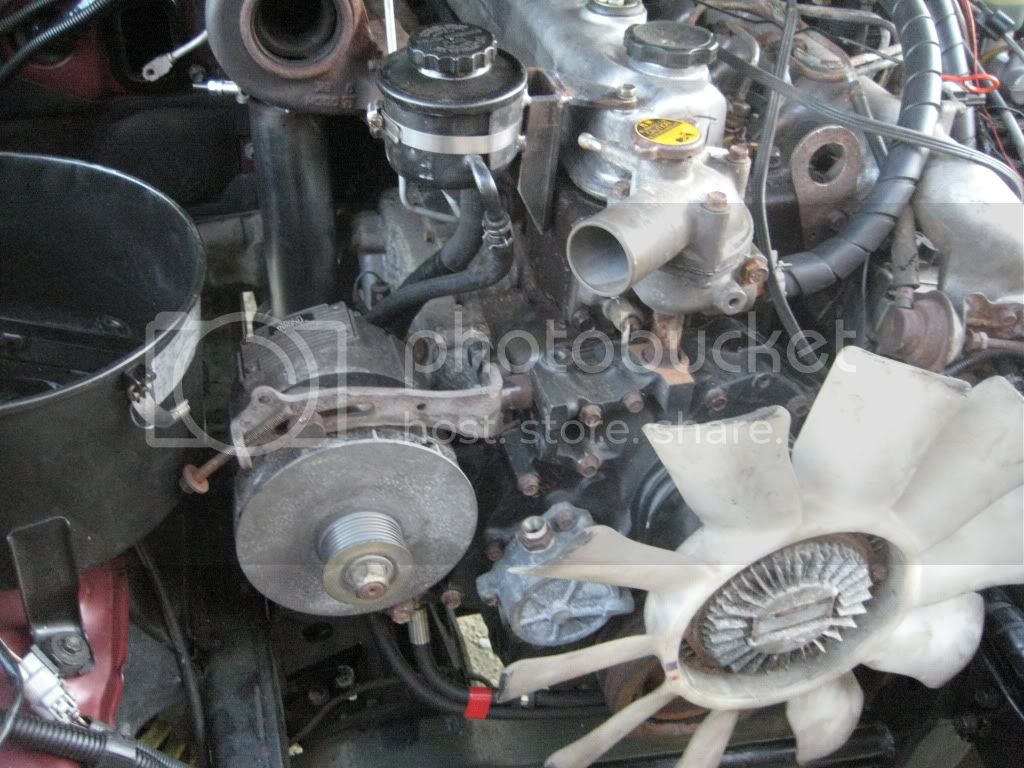
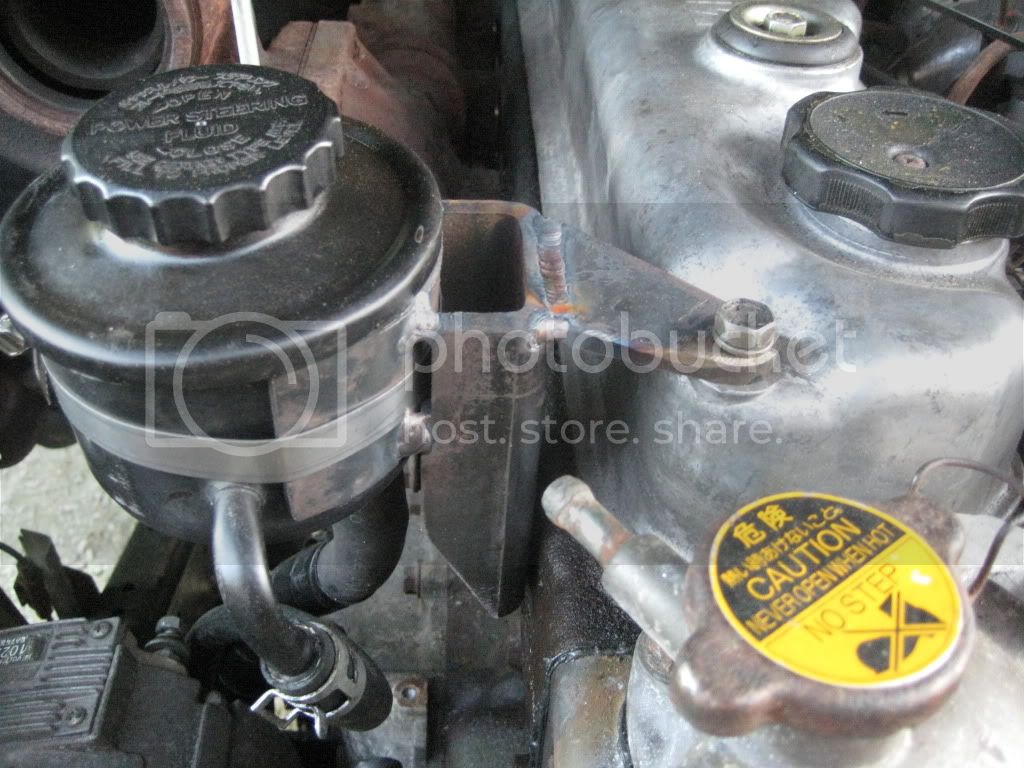
Once the exhaust was in, I started working on the fuel system and cooling hoses. The engine and trans harness is still mostly un-taped, I want to run the engine and double check everything before I finalize the harness (nothing sucks more than un-taping a mile of electrical tape!). I got the heater hoses done, and was able to get the power steering in. The local hydraulics place was able to reuse the old fittings from the Toyota and Mitsu hose, and it looks like a stock black hose (not the racer bling stuff). I reused the stock Toyota reservoir, but I ground the mount bracket off of it, and made this little bracket:

IMG_7773.jpg


IMG_7779.jpg


I also decided to use an alternator I had on the shelf, it's a Leece Neville 200 amp alt from my Land-Rover. It uses a standard SAE mount so I can just replace it with a Delco 22SI once I have the brackets worked out. This puts out more amps than a stock alt, at idle, but I doubt I will need it, so I'll get a 200 dollar 150 amp 22SI Delco (that way, any truck stop has one, anywhere in North America).

I also got the fuel plumbing done, I mounted the stock Fuso water separator under the hood and moved the stock fuel filter as it would have contacted the booster. I used metal lines (I just bent hardline and re-brazed the stock Banjo fittings) where I could and used 3/8 fuel hose for the rest. It turned out pretty good!

And that'w where I'm at. The next thing on the list is the intercooler and radiator mount, some hoses for the tranny cooler, then I have to reassemble the turbo, get a turbo oil drain hose, radiator hoses and I should be getting ready to fire it up... Hopefully by the weekend...

Stay tuned!

JL
 
This thread is very encouraging. There is someone local to me who just posted a 2000 UD 1200 part-out on craigslist. I'm going to shoot him an offer for the engine/trans/electronics and see what I can come up with. If he is reasonable on the price we'll have a AW450-43LE/A442F hybrid using the UD variant as well... it will be interesting comparing all of the differences.

Unfortunately my rig is a 96, meaning I have an A343F and I will need to find a A442F trans to donate an output shaft and tail housing, along with any other odds and ends I may end up needing.

Anyhow, not here to thread-jack, keep up the great work! It's inspirational!

Thanks for your comments! I think it's going to be a great little swap. So far it has not required any alterations to the stock truck other than cutting the glove box, everything bolts right up.
 
Last edited:
Back
Top Bottom