



Greetings, everyone.
I'm here to tell the tale of gas equipment installation.
Here, in australia, petrol prices are around 1.6$ for a litre of 95RON, which is about 1.6 US Dollar, and driving as much as I want with those prices make me think of things like poverty, starvation and bankruptcy.
Since I'm not a big fan of those things, a clever plan was devised: to visit magic dwarfes from the kingdom of LPG (liquified petrol gas) installation and get them to forge an LPG equipment for me.
This job took them one full business day and 3000$ AUD to perform.
The girl in question is 80 series '97 landcruiser, with auto tranny and 180k km on clocks.
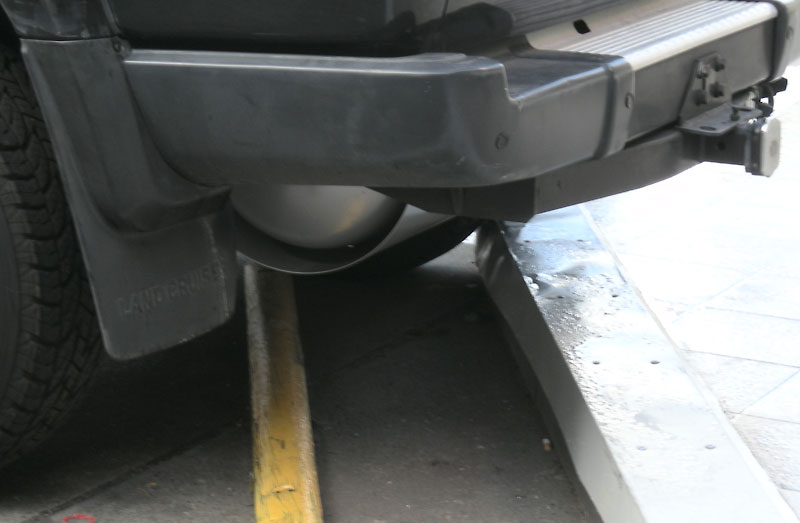
The sub fuel tank was removed, and so was the spare wheel with its assembly, to give place for 115lt gas tank. Since gas tank cannot be filled past 80% (there is an automatic cut-off valve on it), it gave me 92lt of usable LPG fuel.
Fuel Tank
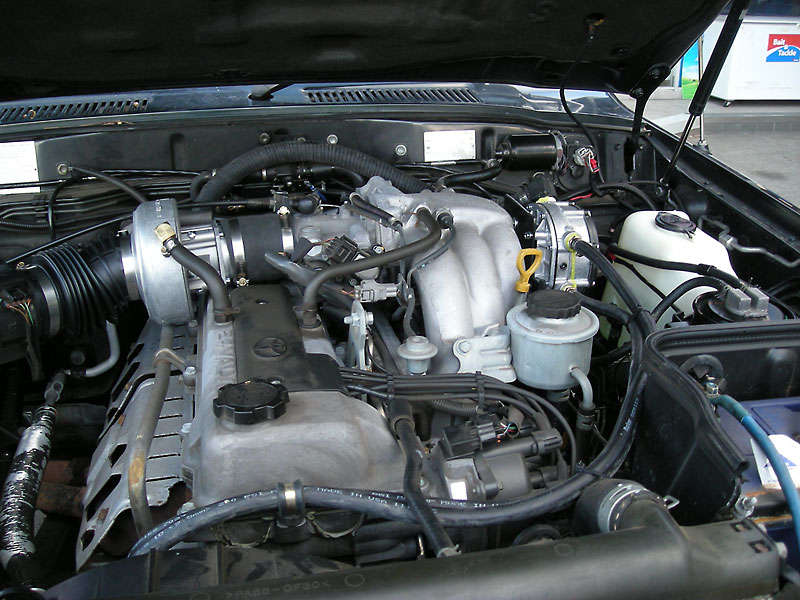
In the engine bay, the evaporator (or whatever the name for that vile device is)
was installed on the LHS, connected with two hoses to cooling system - that thing convert gas from liquid to, well, gas by using engine heat.
Another addition there was a big shiny device put into intake manifold, which mixes air with gas, plus lots of wiring and even some lamps.
Engine Bay
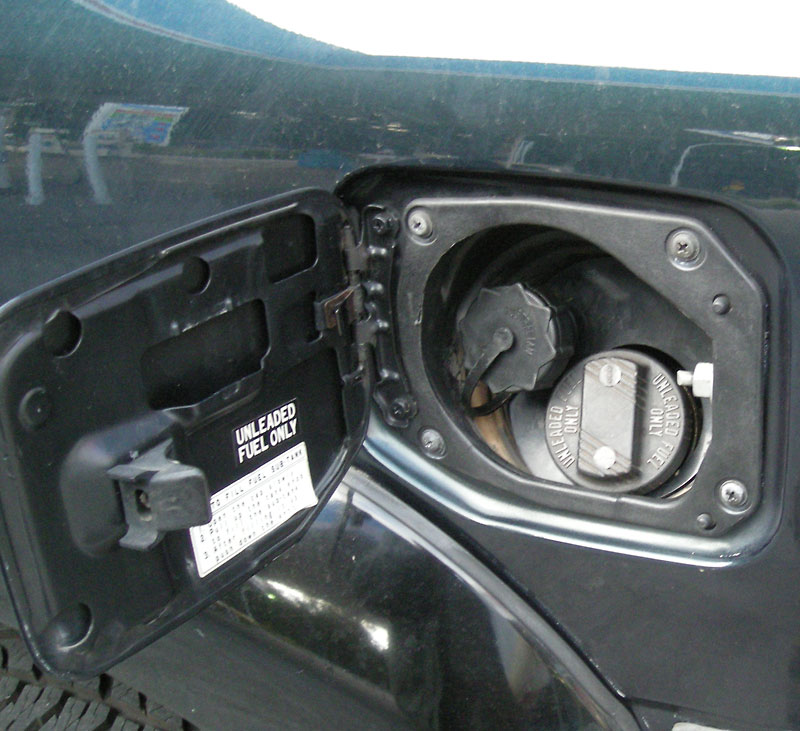
In fuel latch, my precious fuel cap holder was removed, and LPG fuel connector was added.
Inside i've got one extra switch on the lower central dash which selects type of fuel - petrol or LPG. Don't really see why not use existing one for sub-tank, probably will wire it myself later. Also, top console sub-tank meter was connected to LPG tank to show how much fuel is remaining there. Funnily enough, it is pretty accurate.
As I was explained, on cold starts (morning, etc) LPG systems, even when switched to gas, starts on petrol first, then switches to LPG after.
Installation came with 100.000km warranty and free tune-up after 1500km. Which happened in less than a week.
Power after installation was slightly reduced on petrol. Gas one feels about the same in city and flat highway driving, but in mountains dropped noticably on uphills. It turned out on 1500km inspection I was going a bit lean on LPG.
Аfter free service at 1500km it was remedied and the power is now very satisfying both petrol and LPG. Actually pulls a bit harder on LPG on low revs, probably - cannot tell for sure with bloody auto transmission.
The numbers for conversions are following (prices are AUD, which is very close to USD now):
Petrol consumption before install: 15-18 lt per 100km, 13-14 lt on flat highway, all 95RON petrol
Petrol consumption after install: well, same
Petrol prices: 1.4$ - 1.5$ for 92RON (unleaded), 1.5$-1.7$ for 95/98RON (premium).
LPG Gas consumption: 21-24 lt per 100km
Gas Prices: 60c-66c per litre.
Price for 100km on LPG: ~13.5$
Price for 100km on Petrol: ~26.5$
Installation Price: 2950$, 2000$ equipment, 950$ labour+taxes
Installation Price after government rebate: - 950$.
Kilometers to travel to pay installation off: ~7300km
Thats all, folks - happy to ask question or provide more photos
I'm here to tell the tale of gas equipment installation.
Here, in australia, petrol prices are around 1.6$ for a litre of 95RON, which is about 1.6 US Dollar, and driving as much as I want with those prices make me think of things like poverty, starvation and bankruptcy.
Since I'm not a big fan of those things, a clever plan was devised: to visit magic dwarfes from the kingdom of LPG (liquified petrol gas) installation and get them to forge an LPG equipment for me.
This job took them one full business day and 3000$ AUD to perform.
The girl in question is 80 series '97 landcruiser, with auto tranny and 180k km on clocks.
The sub fuel tank was removed, and so was the spare wheel with its assembly, to give place for 115lt gas tank. Since gas tank cannot be filled past 80% (there is an automatic cut-off valve on it), it gave me 92lt of usable LPG fuel.
Fuel Tank
In the engine bay, the evaporator (or whatever the name for that vile device is)
was installed on the LHS, connected with two hoses to cooling system - that thing convert gas from liquid to, well, gas by using engine heat.
Another addition there was a big shiny device put into intake manifold, which mixes air with gas, plus lots of wiring and even some lamps.
Engine Bay
In fuel latch, my precious fuel cap holder was removed, and LPG fuel connector was added.
Inside i've got one extra switch on the lower central dash which selects type of fuel - petrol or LPG. Don't really see why not use existing one for sub-tank, probably will wire it myself later. Also, top console sub-tank meter was connected to LPG tank to show how much fuel is remaining there. Funnily enough, it is pretty accurate.
As I was explained, on cold starts (morning, etc) LPG systems, even when switched to gas, starts on petrol first, then switches to LPG after.
Installation came with 100.000km warranty and free tune-up after 1500km. Which happened in less than a week.
Power after installation was slightly reduced on petrol. Gas one feels about the same in city and flat highway driving, but in mountains dropped noticably on uphills. It turned out on 1500km inspection I was going a bit lean on LPG.
Аfter free service at 1500km it was remedied and the power is now very satisfying both petrol and LPG. Actually pulls a bit harder on LPG on low revs, probably - cannot tell for sure with bloody auto transmission.
The numbers for conversions are following (prices are AUD, which is very close to USD now):
Petrol consumption before install: 15-18 lt per 100km, 13-14 lt on flat highway, all 95RON petrol
Petrol consumption after install: well, same
Petrol prices: 1.4$ - 1.5$ for 92RON (unleaded), 1.5$-1.7$ for 95/98RON (premium).
LPG Gas consumption: 21-24 lt per 100km
Gas Prices: 60c-66c per litre.
Price for 100km on LPG: ~13.5$
Price for 100km on Petrol: ~26.5$
Installation Price: 2950$, 2000$ equipment, 950$ labour+taxes
Installation Price after government rebate: - 950$.
Kilometers to travel to pay installation off: ~7300km
Thats all, folks - happy to ask question or provide more photos


