


Reposted from Rising Sun.
I just got back from CCOT. I broke the handle on my rear hatch the other day, and cast/chromed parts like that are pretty easy to make as good or better than stock. Given that, I figured it was worth checking into their reproduction to see how it compares to the OEM equivalent. Since I had them both in my hands side by side and I was told it was OK, here's a little writeup comparison for the greater good.
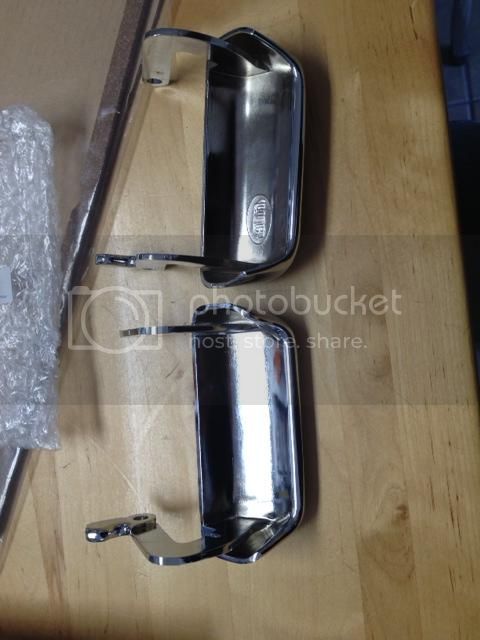
On the surface, the differences are pretty thoroughly negligible. The only readily visible difference I saw was a logo ("AIM") on the inside of the aftermarket piece. It looks to be the same type of chrome, weight was the same, major dimensions are the same, etc. etc. The way these parts are made, that's REALLY easy to do if you have an original piece in your hands. They are made "over seas", which I think can only be assumed to be China. Point OEM.
(aftermarket on bottom)
Closer inspection yielded the following differences:
(aftermarket on left for the rest of the photos)
The surface that makes contact to with the internal mechanism is smoother on the aftermarket piece. This is a positive in the aftermarket pieces favor, as the plating on this friction surface can be quickly and easily worn and invite corrosion. Point aftermarket.
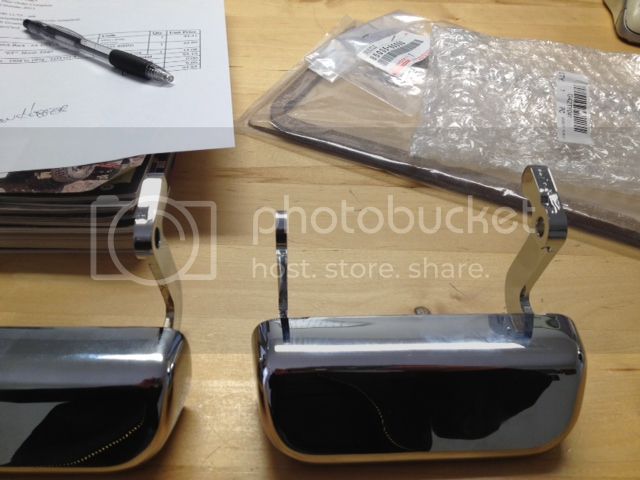
There was a visible spot in the chrome plating where there was not complete coverage. This is more or less standard if you don't have the resources of a huge company (specially made chroming jigs), and does not represent a really negative point unless it's visible. It has the benefit (in my mind) of revealing the chroming process used (triple plating). Cheap chrome is just chrome on the pot metal, which doesn't always adhere very well ond tends to flake off quickly. I suppose you might be able to pull the piece partway through the chrome dip and reposition the attachment point on the piece, but you open the surface up to contamination (not a huge concern), the chrome is thin in two places (not a huge concern), or you could just have one spot without the final plate in a non-visible non-critical place (not a huge concern)... This was not present on the OEM piece. Point OEM
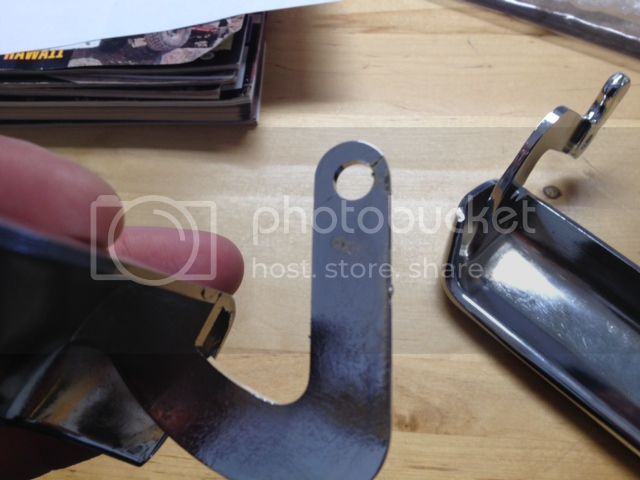
The slot for the lock lever is slightly different between the OEM and the aftermarket piece. The OEM slot is smoother and rounded verses the aftermarket piece having more squared corners and shoulders. This looks to be a difference in manufacturing processes; specifically, the OEM piece looks to have the slot cast and the aftermarket piece was either cut after casting, or the mold itself was cut. The aftermarket slot might also be marginally narrower, but I can't confirm that (hopefully I can be forgiven for not bringing calipers with me). This is of no concern whatsoever as the function of the slot is in no way compromised. In fact, the thinner slot of the aftermarket piece would likely be preferable in comparison since the slot is so much wider than the locking lever and lessens the play in the handle when locked. Again though, this difference is so minimal (maybe half a millimeter) as to not even be worth that amount of consideration. Point aftermarket.
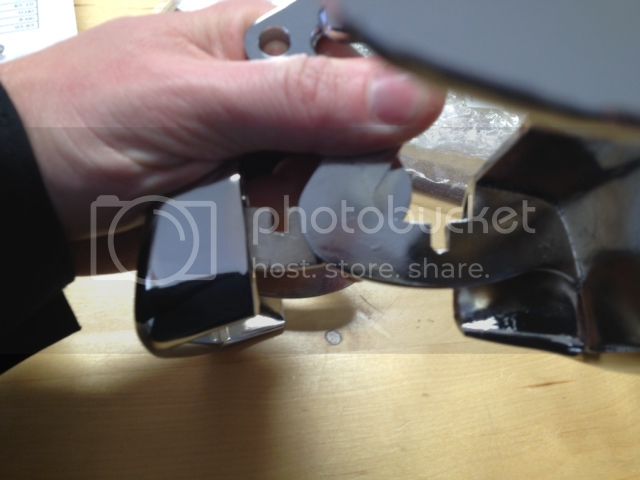
Finally, the aftermarket piece has more prominent casting tails on the backside of the arms. The OEM casting either has a more precise amount of pot metal poured into the molds, or more attention was paid to grinding them smooth. This can easily change from piece to piece, and is thus not really worth much attention. Point OEM
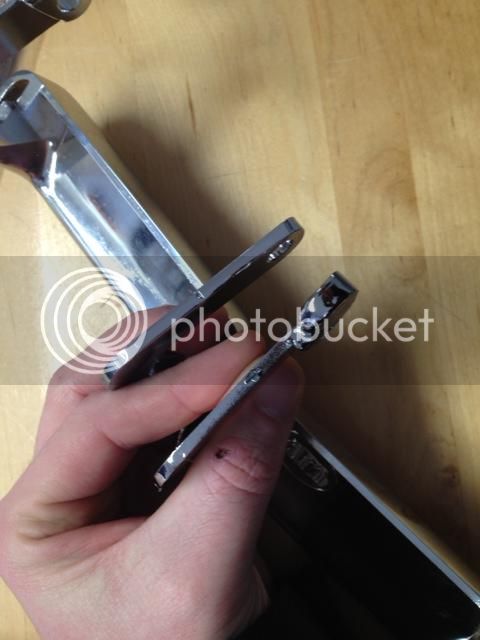
Aside from the differences pictured, there were minor differences in the overall smoothness at the casting level in various places on the non-visible parts between them. Neither was better or worse/more or less than the other in this regard (and were so minor that I couldn't get photos to work out). Draw.
I plan to make various changes to the drivetrain and I'm not doing any sort of concourse restoration, so my OEM loyalty only goes so far as quality and performance are concerned. Additionally, the number of parts of this type sold and the profit earned thereby are not enough to keep Toyota in the game; in fact, I'm given to understand that the supplies of these types of parts are finite and limited to what has been produced and is being held in warehouses somewhere... Maybe, maybe not. Regardless, it makes sense to cast dollar votes to those enterprises willing to produce quality parts for smaller audiences after Toyota has left the game so we can continue to keep our trucks on the road. Point aftermarket (YMMV).
Finally, it's half the price. Not normally a decision maker, but it sure is nice. Point aftermarket.
I just got back from CCOT. I broke the handle on my rear hatch the other day, and cast/chromed parts like that are pretty easy to make as good or better than stock. Given that, I figured it was worth checking into their reproduction to see how it compares to the OEM equivalent. Since I had them both in my hands side by side and I was told it was OK, here's a little writeup comparison for the greater good.
On the surface, the differences are pretty thoroughly negligible. The only readily visible difference I saw was a logo ("AIM") on the inside of the aftermarket piece. It looks to be the same type of chrome, weight was the same, major dimensions are the same, etc. etc. The way these parts are made, that's REALLY easy to do if you have an original piece in your hands. They are made "over seas", which I think can only be assumed to be China. Point OEM.
(aftermarket on bottom)
Closer inspection yielded the following differences:
(aftermarket on left for the rest of the photos)
The surface that makes contact to with the internal mechanism is smoother on the aftermarket piece. This is a positive in the aftermarket pieces favor, as the plating on this friction surface can be quickly and easily worn and invite corrosion. Point aftermarket.
There was a visible spot in the chrome plating where there was not complete coverage. This is more or less standard if you don't have the resources of a huge company (specially made chroming jigs), and does not represent a really negative point unless it's visible. It has the benefit (in my mind) of revealing the chroming process used (triple plating). Cheap chrome is just chrome on the pot metal, which doesn't always adhere very well ond tends to flake off quickly. I suppose you might be able to pull the piece partway through the chrome dip and reposition the attachment point on the piece, but you open the surface up to contamination (not a huge concern), the chrome is thin in two places (not a huge concern), or you could just have one spot without the final plate in a non-visible non-critical place (not a huge concern)... This was not present on the OEM piece. Point OEM
The slot for the lock lever is slightly different between the OEM and the aftermarket piece. The OEM slot is smoother and rounded verses the aftermarket piece having more squared corners and shoulders. This looks to be a difference in manufacturing processes; specifically, the OEM piece looks to have the slot cast and the aftermarket piece was either cut after casting, or the mold itself was cut. The aftermarket slot might also be marginally narrower, but I can't confirm that (hopefully I can be forgiven for not bringing calipers with me). This is of no concern whatsoever as the function of the slot is in no way compromised. In fact, the thinner slot of the aftermarket piece would likely be preferable in comparison since the slot is so much wider than the locking lever and lessens the play in the handle when locked. Again though, this difference is so minimal (maybe half a millimeter) as to not even be worth that amount of consideration. Point aftermarket.
Finally, the aftermarket piece has more prominent casting tails on the backside of the arms. The OEM casting either has a more precise amount of pot metal poured into the molds, or more attention was paid to grinding them smooth. This can easily change from piece to piece, and is thus not really worth much attention. Point OEM
Aside from the differences pictured, there were minor differences in the overall smoothness at the casting level in various places on the non-visible parts between them. Neither was better or worse/more or less than the other in this regard (and were so minor that I couldn't get photos to work out). Draw.
I plan to make various changes to the drivetrain and I'm not doing any sort of concourse restoration, so my OEM loyalty only goes so far as quality and performance are concerned. Additionally, the number of parts of this type sold and the profit earned thereby are not enough to keep Toyota in the game; in fact, I'm given to understand that the supplies of these types of parts are finite and limited to what has been produced and is being held in warehouses somewhere... Maybe, maybe not. Regardless, it makes sense to cast dollar votes to those enterprises willing to produce quality parts for smaller audiences after Toyota has left the game so we can continue to keep our trucks on the road. Point aftermarket (YMMV).
Finally, it's half the price. Not normally a decision maker, but it sure is nice. Point aftermarket.


