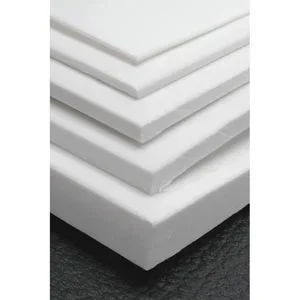
Polypropylene Skid Plates??

This site may earn a commission from merchant affiliate
links, including eBay, Amazon, Skimlinks, and others.

Joined
Nov 1, 2007
Threads
71
Messages
8,924
Location
San Clemente, CA
Has anyone tried or used polypropylene sheet/plate for skid plates yet?
It has incredible impact strength and is very lubricious for sliding up and over obstacles. I've heard, not sure where, that they have been used and work really well. I'm just not sure how thick of a material one would use? 1/2", 3/4", 1" plate? I mean the stuff will take an unbelievable amount of punishment. It is sometimes referred to as a living hinge, because if you try to bend it in order to break, it will just bend, and will continue to bend back and forth and will almost never tear or break. :idea:

It's not too expensive compared to steel sliders. McMaster Carr has a 4' x 4' x 1" plate for $298.71 : McMaster-Carr You also might find it cheaper elsewhere too. McMaster is not the last word in low prices by no means, but they do have just about everything under the sun.

That I think would take care of the whole mid section. Or a 4' x 8' x 1" is $553.17 and you can chop that up to cover just about the entire under carriage.

Now, mind you, 1" may be overkill and you can maybe get by with just 1/2" or 3/4" plate.;)

And I think it might weigh a little less that steel. Not sure though. I'll have to calc that out when I get ready to bolt one on, if I can get a hold of a steel slider to measure and get a mass volume on it or if some one weighs one. :hhmm:
 
this does sound like an interesting idea....may sound a lot better than metal on metal, as well. If you ran a metal frame under it, I think this would work pretty well. The only issue I see is that these trucks are really heavy. They may not "slide" very well.
 
It works. I've seen it in person on a 4runner during CM11. The guy had built skids, sliders and I think a rear bumper out of it. Worked great. His truck was in 4WD Toyota Owner a while back and had some details on the armor.

I don't recall the specs of the material.
 
It is definitely possible but requires a support structure or curvature and careful design to keep from ripping out the mountings. Also consider air flow and cooling as it insulates a lot more than steel. I think the guy from 4wd TO was from the boulder CO area. It looked funny and functional. I still want steel myself but if I was building a rock frame I might design it in.

The major down side in design is that it can't be formed and welded. The Steel plates on the market are not simply flat plate, they are formed and welded and that is where most of their strength comes from. Due to that you have to back up any long runs (I'm thinking anything over 6-12" would need a back up brace) to keep it from deflecting into critical or hot components and ripping mount holes.
 
Last edited:
is this hdpe? There were two or three guys on my fj forum that ran them. They worked pretty well
 
UHMW will soak up a ton of thermal energy (similar to heating water) but will melt around 300F. Also burns a lot better than steel if you get it ignited (unlikely but could ruin your day or truck or forest/home).
 
"lubricious"...:cool::cool::cool:

Definition of. Lubricious. (adj, all) having a smooth or slippery quality.

Sorry, I'm a R&D Medical Device Engineer and work with different kinds of materials for catheters and such for medical devices.
 
Anyone know the heat resistance to melting on this stuff?

Polypropylene comes several ways:
1: Flame-Retardant Polypropylene
  • Color: Sheets, opaque white; film, opaque black;
  • Temperature Range: 0° to 190° F
  • Softening Temperature: 210° to 299° F
  • Tensile Strength: Poor
  • Impact Strength: Sheets, excellent; film, good
  • Sheets, not rated as an electrical insulator; film, excellent
  • Sheets, use indoors; film, use indoors and outdoors
  • Sheets, machine with high-speed steel tooling; cut film with utility knife
  • Hardness: Sheets, Shore D67; film, not rated

2: Easy-to-Machine Chemical-Resistant Polypropylene
  • Color: Translucent white, unless noted
  • Temperature Range: 0° to 180° F, unless noted
  • Softening Temperature: 300° to 350° F, unless noted
  • Tensile Strength: Poor
  • Impact Strength: Good, unless noted
  • Excellent electrical insulator, unless noted
  • Use indoors, unless noted
  • Machine with high-speed steel tooling, unless noted
  • Hardness: Rockwell R79-R115, unless noted
You just need to think about where and how you mount it.
 
I just bought some of this to line the top of my roof rack with it and they have several sizes at better prices than the above mentioned.


image-2204130076.webp

http://www.farmtek.com/farm/supplie...fPartNumber=108392&langId=-1&division=FarmTek

-Daniel

Sent from deep in the mountains of Honduras using only sticks and rocks.
image-2204130076.webp
 
r2m said:
Great tip! Like I said before, McMaster Carr isn't the cheapest, but they do have everything under the sun...

They do indeed!

Another Mudder turned me on to that site...seem to be real nice people on the phone at least.

-Daniel

Sent from deep in the mountains of Honduras using only sticks and rocks.
 
Sent from deep in the mountains of Honduras using only sticks and rocks.

That's soooo cave man...
Come on dude, you could have at least used smoke signals!
 
r2m said:
That's soooo cave man...
Come on dude, you could have at least used smoke signals!

I wonder if they hit sticks together to scare the bears away....I'm due for another round....yeah. Logging off now...lolz.

Edit: I like this idea. Seems lightweight, strong, and effective. If somebody made a kit I'm in
 
^^^ :D

-Daniel

Sent from deep in the mountains of Honduras using only sticks and rocks.
 
Back
Top Bottom