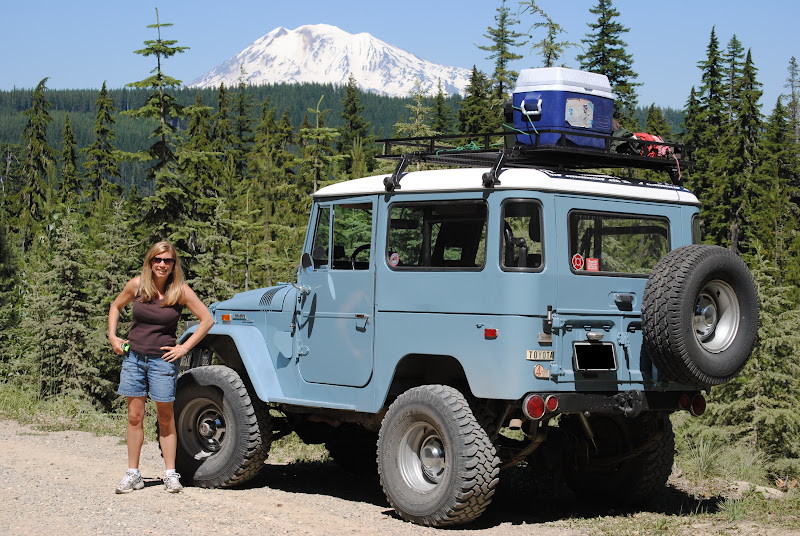
What Color Blue would this be ?

This site may earn a commission from merchant affiliate
links, including eBay, Amazon, Skimlinks, and others.

And typically, the more simple the combo of colors (fewer colors to create a whole, and opposite of busy); and if the resulting combo is still effective, that's where the artistry of the overall (house, car, airplane, whatever) comes into play !! ~Skydog
After reading your post, I remembered this photo from Friday's local paper - it's an air tanker over the Cajete Fire in the Jemez Mountains of north-central New Mexico. I think the photo is a good example of the point you're making.

Cajete Fire - Air Tanker.webp


BTW, that's smoke, not clouds.
 
After reading your post, I remembered this photo from Friday's local paper - it's an air tanker over the Cajete Fire in the Jemez Mountains of north-central New Mexico. I think the photo is a good example of the point you're making.

View attachment 1481972

BTW, that's smoke, not clouds.
Thanks for showing us this pic !! ... That DC-10 is definitely easy to see (especially even if the seen fire smoke was much thicker and even black). Notice the rear, vertical stabilizer is not orange but a golden-yellow, which compliments well & literally ties together the safety-orange belly & white fuselage !!

Speaking of airplanes ... this is a pic of me this from the past Saturday. I'm seen preparing for my first air-to-air photo shoot from this twin-engine Geronimo, that my buddy had recently completely rebuilt & updated. He's a commercial airline pilot by trade, and an extremely good pilot & aircraft mechanic. He & I had been envisioning to utilize this twin, with hope on a regular basis, as a professional photo ship for whatever type subject aircraft. Seen here, we were currently at about 7,200 ft, and I'm checking the hard wind prior to photoing the subject aircraft. I'm trying to determine if the wind will be okay for my camera lens (although my head will be shielding the camera). As a professional, I've done this same type thing many times before over the past number of years. For safety, I'm wearing a full body harness and am securely tethered to the inside of the aircraft. My camera, its lens, and the gyroscopic stabilizer mounted to the lens are then tethered to me :

rvz.webp


An example of an image I had made that day :

msp_MarcStPierre-Copyright2017_DaleLongmire_17-06103sm3.webp


msp_MarcStPierre-Copyright2017_DaleLongmire_17-06102sm3.webp


msp_MarcStPierre-Copyright2017_DaleLongmire_17-06106sm3.webp

Etc, etc..
~Skydog
 
Last edited:
Well, at 7,200 feet you'd be 40 feet below my house :).

Those are some great photos!
LOL !! ... You Got Me there. Now that I think about it, I'm not sure if 7,200 ft was AGL or MSL. About an hour south of Atlanta was where we were at, and I'm thinking that's about 800-ft MSL. I'm actually thinking we would've been at around 7,200 AGL, which would've been 8,000 MSL. - I'll find out !!

But now that you know I'm acclimated at that altitude, I suppose you're willing for your house to serve as a photo platform for airplanes and Land Cruisers... :) :) :)

A couple more (since we've been talking about sky colors :) ):

msp_MarcStPierre-Copyright2017_DaleLongmire_17-06101sm3.webp


msp_MarcStPierre-Copyright2017_DaleLongmire_17-06104sm3.webp


msp_MarcStPierre-Copyright2017_DaleLongmire_17-06105sm3.webp


msp_MarcStPierre-Copyright2017_DaleLongmire_17-06107sm3.webp


~Skydog
 
But now that you know I'm acclimated at that altitude, I suppose you're willing for your house to serve as a photo platform for airplanes and Land Cruisers... :) :) :)
I've used the roof of my house for that in the past:

Las-Conchas-4.webp


Las-Conchas-5.webp


As well as the front porch at my place in southern Nevada:

Thunderbirds-1.webp


Thunderbirds-2.webp


Now that's some blue sky!
 
Last edited:
A few more shades of sky blue, thanks to Mother Nature and the great outdoors of the American West (west to east):

Whitney Portal, looking east, from below the summit of Mt. Whitney in California.
Blue-Sky-Whitney-Portal.webp


Titus Canyon on the way down into Death Valley from Nevada.
Blue-Sky-Titus-Canyon.webp


Paria Canyon - Vermilion Cliffs Wilderness in northern Arizona just south of the Utah border.
Blue-Sky-Paria-Canyon.webp


The summit of Mt. Oxford in the Collegiate Range in central Colorado, with Mt. Columbia in the background. You can see forever from above 14,000 feet.
Blue-Sky-Mt.-Oxford.webp


Guadalupe Mountains in west Texas, just south of the New Mexico border.
Blue-Sky-Guadalupe-Mountains.webp
 
Last edited:
A few more shades of sky blue, thanks to Mother Nature and the great outdoors of the American West (west to east):

Whitney Portal, looking east, from below the summit of Mt. Whitney in California.
View attachment 1482244

Titus Canyon on the way down into Death Valley from Nevada.
View attachment 1482245

Paria Canyon - Vermilion Cliffs Wilderness in northern Arizona just south of the Utah border.
View attachment 1482246

The summit of Mt. Oxford in the Collegiate Range in central Colorado, with Mt. Columbia in the background. You can see forever from above 14,000 feet.
View attachment 1482247

Guadalupe Mountains in west Texas, just south of the New Mexico border.
View attachment 1482248
Super-Awesome !!
 
I suspect the slight color variations (and their names) are driven by marketing folks, trying to stay in competition with other manufacturers. Nebula green, anyone?

It could also be a result of changes in paint formulations, or different paint manufacturers.

Also, if you look at skydog's repost of my test image, above, you see that the BASF test sheet has four different shades of primer, from white to black. Even the primer has some effect on color variation.

I've also noticed some folks here pick a color name and call their blue that color, without any real evidence that it really is original.

Finally, pictures taken by different cameras in different lighting often don't look the same. That's why my test image was taken on the same photo, in daylight, even though there were some high clouds altering the sunlight a little, at least relative to each other you can perceive a difference. Top right, gleam blue, hinge, horizontal blue, lower right "R-M (BASF) color SB015.00 in a single stage urethane.

Now look at the following two pictures:

(splib,Jul 24, 2012 post #13) R-M (BASF) color SB015.00

015-1.jpg


R-M (BASF) color SB015.00 (cell phone pic with flash) (mine, taken a few days ago.)
View attachment 1481738

R-M (BASF) color SB015.00 (cell phone pic with LED daylight shop lights) (mine, taken a few days ago.)
View attachment 1481823

The preceding three pictures have the same exact paint but with two different cameras in three different lighting conditions.

In person, mine looks like the first picture.

Go figure!

I love the color on the first pic.
 
I've researched this more than a little. Based upon yours being a '72 model, I would be fairly certain the original color was T-808, "horizontal blue". A number of us believe 'horizontal' was a translation error from Japanese.

My experience is that given different cameras and lighting conditions, it's impossible to differentiate between these light blue colors on this website

Attached is a picture of the three blues in discussion (horizontal, gleam, and a very close approximation of Capri) that I took all at the same time in sunlight.


Here is another thread that suggests horizontal blue as well:
Btw does anyone know what the number is for the white roof paint that was paired with the horizontal blue? I need touch up for my 1965 FJ45. Was it the Lily White?
 
Back
Top Bottom