

Polishing headlight lenses / grille removal

This site may earn a commission from merchant affiliate
links, including eBay, Amazon, Skimlinks, and others.

I’m sold on 3M kit. Before/during/after on my 4Runner last weekend. Included UV protectant too. Done with a drill and Griots Garage DA polisher.

IMG_8105.jpeg


70879494215__A0E690BA-BB0E-42D1-B111-FB1CC07CF1F0.jpeg


IMG_7772.jpeg


70879493442__894F2734-6982-46DE-8F6D-66D4A6094C25.webp
 
With terrible results from all of the non-clear-coat type protectants I've tried, I have plans to pull the front bumper soon for some fog light mods and full access to the lights to properly polish them, then I'll be trying one of the clearcoat spray-on types.. Pretty sure it'll be a good long term solution. I'll post with results.
 
Just want to add my 2 cents. I did headlight polishing in the past using Sylvania sealant afterwards on my Honda Accord. Initial results were basically like new. However, after one year under the Florida sun yellowing began to reappear. In the end got frustrated with the days’ worth of wasted time and bought headlights lenses of ebay and replaced it using oven to unseal and reseal headlights. My second option would be using 2k UV clearcoat after sanding process (Research says you should stop at 2000 grit sending before coating lenses, otherwise clearcoat may not properly adhere to lens plastic).
 
My second option would be using 2k UV clearcoat after sanding process (Research says you should stop at 2000 grit sending before coating lenses, otherwise clearcoat may not properly adhere to lens plastic).
Interesting.. I had planned to go all the way up to a white buffing pad. Thanks for that
 
Used Cerakote kit, didn’t last 6 months on a vehicle thats rarely driven and garaged….bummed because I heard good things
 

bloc​

Not sure if you did your headlights yet. Just want to share. I recently did mine on 2017 LX570 with 2K clear coat. I had original clear coat peeled off on one of the headlights (damn Florida sun).

I took the front bumper off, did 3 step wet sending with 600, 800 and 1000 grits making sure all the factory coating was sanded off during the first step . Next day preped with IPA and put 3 coats of SprayMax 2K Glamour High Gloss (2 light coats and one last heavy coat) all with 10 minutes gas off intervals and tacking in between coats.

Results are really good. Headlights basically look like brand new with no scratches and 100% transparent. I was unfortunate to have some bugs land on the last coat of one of the headlights. It was sanded off and polished a week later.

If somebody would like to do the same please make sure to cover everything you don't want to be covered in clear coat mist with drop cloth and you will 100% need gas mask with some serous filters. (No, just dust filter will not do).
 
@RangerPepe Nice work! Do you have any "before" shots?
 
@RangerPepe Nice work! Do you have any "before" shots?
No, was not going to do whole write up. But before I started sanding headlights looked good overall. Except couple scratches and bug etching stains and clear coat peeling on the top of the left headlight, everything looked quite nice. I didn't have major discoloration or hazing.
 
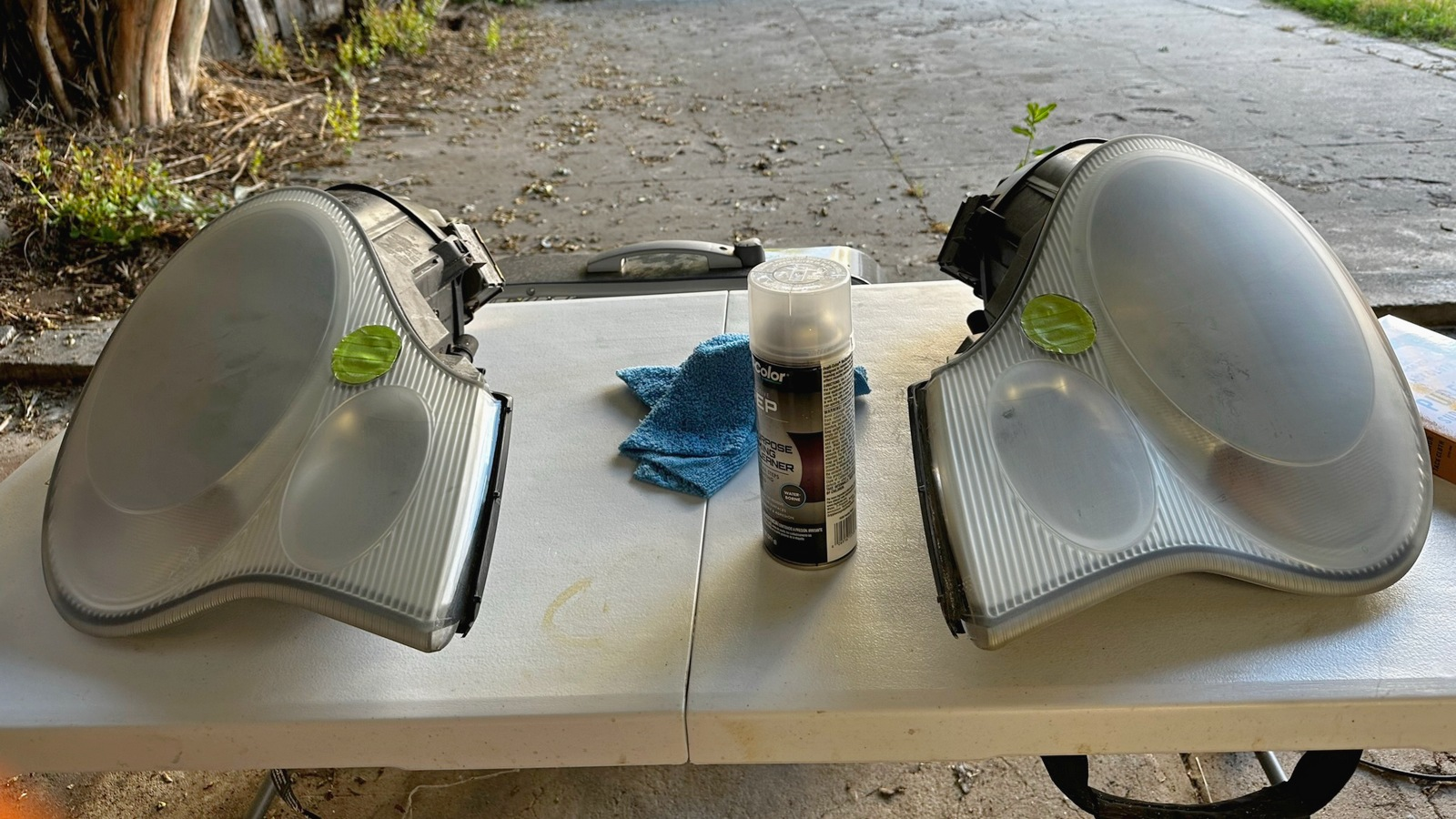
Mine were really beat up, yellowing, and splotchy. After using a 3M kit a couple years ago. And Cerakote late year. They never last more than 8-12 mths. I was ready to buy news ones but wanted to try one more time with real 2k clear.

The process is practically the same as the kits, but the real automotive clear coat will make all the difference.

Critical is to sand away all the damaged OEM UV coat all the way to an even base plastic. Any yellowing, splotching, or patchiness, and its not sanding down far enough.

This article is on point and linked video is on point

Here's my before and after
1763013513087.webp


1763013549689.webp
 
Yeap, I had the similar experience with box kits. It never lasted more then 6-7 month. Another option was to 'bake' the headlight and replace the whole lens. But that is also a very time consuming and difficult process. I wish manufacturers would make a lens as a separate part that was connected to projector with screws or latches and had a rubber gasket for sealing.
 
Back
Top Bottom