Build Mitsubishi 4D34-3AT3B diesel swap into 94 FZJ80

This site may earn a commission from merchant affiliate
links, including eBay, Amazon, Skimlinks, and others.

Right, but wouldn't that cause a lean condition? Or would the programming in the ECU read the additional boost at the MAP sensor and increase fueling to compensate?

Diesels run lean 100% of the time. It's only a problem if they get near rich.

Fromage, My Isuzu had one of those overboost vent valves when I got it. A BSP (G thread) pipe plug fits the hole nicely and is an excellent upgrade. Mine opened a little above 15psi.
 
So tonight I adjusted the wastegate as tight as I could get it and took it for a ride. Instant difference, I can hit 15 PSI easily in 3rd gear (at this point the pop-off opens), and on got it to around 13 PSI at 75 mph indicated, which is closer to 80 actual, in OD. The boost climbs to 10PSI instantly but moves slowly up to 15 in OD. The power is up, it feels strong, has no problem maintaining 65 mph on steep grades in 3rd. Putting it in 4th drops the boost down to 10-11 PSI on hills, and the truck slows noticeably, but it is driving a very high ratio (higher than anything Toyota with the 0.703 4th) and there is a bit of a hole between 3rd and 4th. If I had a bit more fuel I could hold 4th on the hills around here.

I should add that this is still while using a very restrictive exhaust and no doubt the full 3 inch pipe will help with turbo spool up. I may temporarily gut the muffler to see how it does with reduced back pressure.
 
Exhaust update... (pics tomorrow I promise).

I made a section that spans the stock muffler, all the way to the tailpipe connection, just before the major restriction (I thought I had more stainless, I am going to need another 4 ft length to finish). I had a feeling that just replacing the muffler would net me some gains so I went ahead. So, now, 2/3rds of the exhaust is in 3 inch, the rest in 2.25, and the stock tailpipe resonator is on there, as is the "crimp".

HUGE difference. I hit 20 psi in 3rd, and 18 PSI in 4th. This is stock fuel levels, and with the super restrictive tailpipe. Boost reponse is instantaneous and it was instantly noticeable. I could really hear the pop-off valve in the intake opening up and on the highway it seems like my boost levels at cruise were a lot lower, but I can crank it up to 15+ within seconds. This is much more along the lines of what I was expecting with the wastegate being tightened shut.

So, the moral of the story here is that the OEM gasser muffler is SUPER restrictive and don't even dream of using it for a diesel, let alone any gas engine. I can't wait to finish the tailpipe! Although I think I am going to need a muffler... It sure sounds great though.
 
Exhaust update... (pics tomorrow I promise).

I made a section that spans the stock muffler, all the way to the tailpipe connection, just before the major restriction (I thought I had more stainless, I am going to need another 4 ft length to finish). I had a feeling that just replacing the muffler would net me some gains so I went ahead. So, now, 2/3rds of the exhaust is in 3 inch, the rest in 2.25, and the stock tailpipe resonator is on there, as is the "crimp".

HUGE difference. I hit 20 psi in 3rd, and 18 PSI in 4th. This is stock fuel levels, and with the super restrictive tailpipe. Boost reponse is instantaneous and it was instantly noticeable. I could really hear the pop-off valve in the intake opening up and on the highway it seems like my boost levels at cruise were a lot lower, but I can crank it up to 15+ within seconds. This is much more along the lines of what I was expecting with the wastegate being tightened shut.

So, the moral of the story here is that the OEM gasser muffler is SUPER restrictive and don't even dream of using it for a diesel, let alone any gas engine. I can't wait to finish the tailpipe! Although I think I am going to need a muffler... It sure sounds great though.

So where are those pics? :cookie:
 
Nope. As I posted in your thread, my injectors are out by quite a bit, I will have them reset and go from there. There is more power hiding in that thing, just crank the boost and see what the pyro says. I'd bet it goes down a lot. 1" BSP pipe plug is what you need for the pop off valve. With an extra 50 hp the gearing will be a moot point, I think.

Not much progress, currently doing the brakes, swivels, and some random stuff while I have another truck to drive...
 
Nope. As I posted in your thread, my injectors are out by quite a bit, I will have them reset and go from there. There is more power hiding in that thing, just crank the boost and see what the pyro says. I'd bet it goes down a lot. 1" BSP pipe plug is what you need for the pop off valve. With an extra 50 hp the gearing will be a moot point, I think.

Not much progress, currently doing the brakes, swivels, and some random stuff while I have another truck to drive...

I'm betting you're right with the power. The gearing seems great for cruising, extra power will do the trick.

I tightened up the wastegate some tonight and it helped. I'm going to crank it down some more tomorrow and see what happens. Also going to order a BSP plug myself...
 
So, Superhatch and I both have running, driving conversions but we are working out the bugs. One of the big issues I have with the swap is I am trying to find a way to increase power just a bit. Mine seems to be better than SuperHatch's, but I am also getting lacklustre mileage, around 16-18 mpg. I have recently readjusted the timing, and I hope this will make things a lot better.

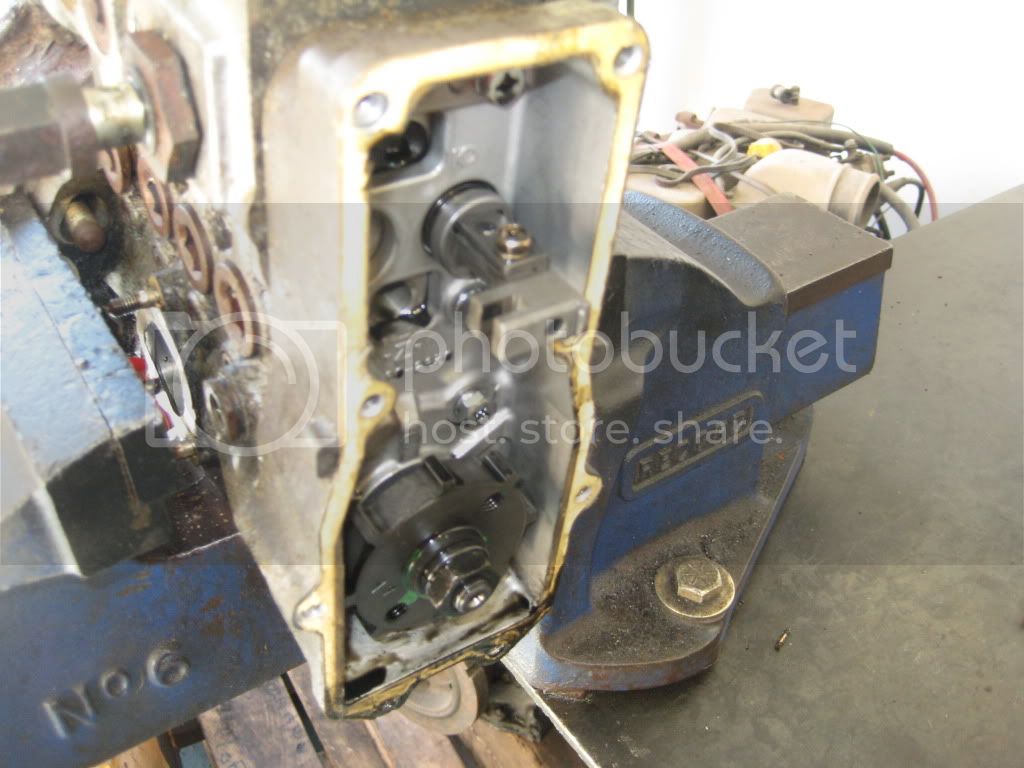
With respect to the fuel rate adjustment, I have a spare injection pump so I took it apart to see what lurks inside. Here is what I found:

So, the rack is what controls the fuel rate. It is a long toothed rack that runs lengthwise along the pump, and it rotates control sleeves around the four pistons.

The fuel rack is seen sticking out on the upper right of the back of the pump:

MiscGregBatchelorParty085.jpg


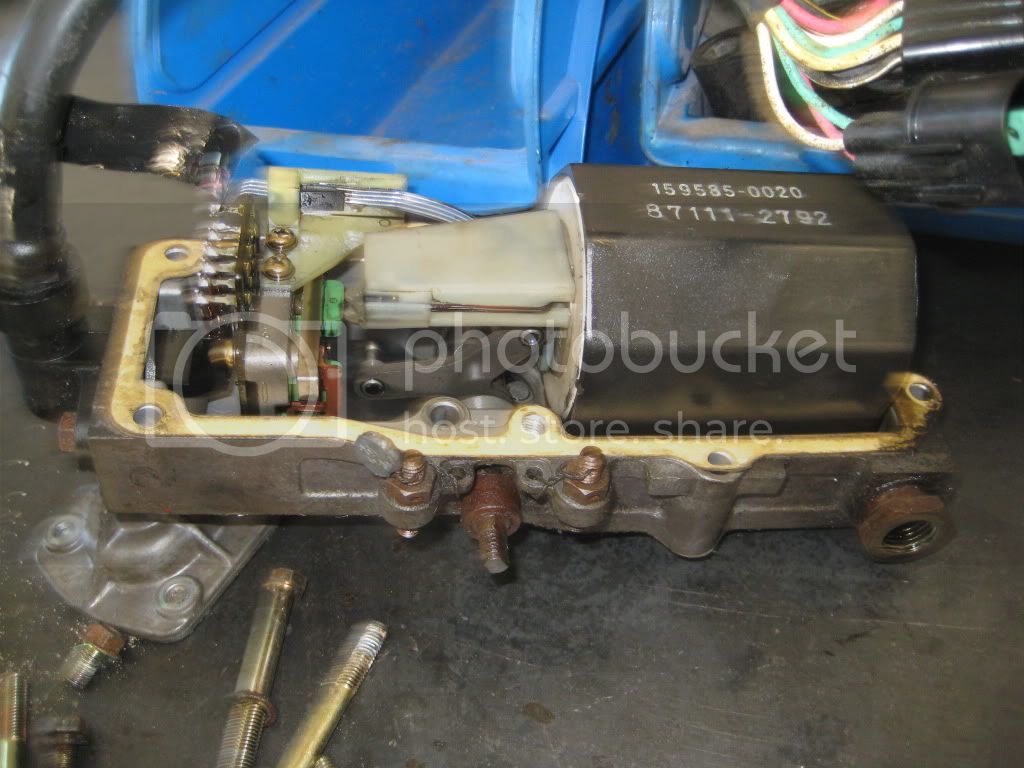
The rack is controlled by an electromagnetic actuator, and there are two sensors that relate its position to the computer - One is inside the rear governor, and one is on the front of the pump.

The governor section at the back of the pump, removed:

MiscGregBatchelorParty090.jpg


The rear section, with position sensor at the top:

MiscGregBatchelorParty089.jpg


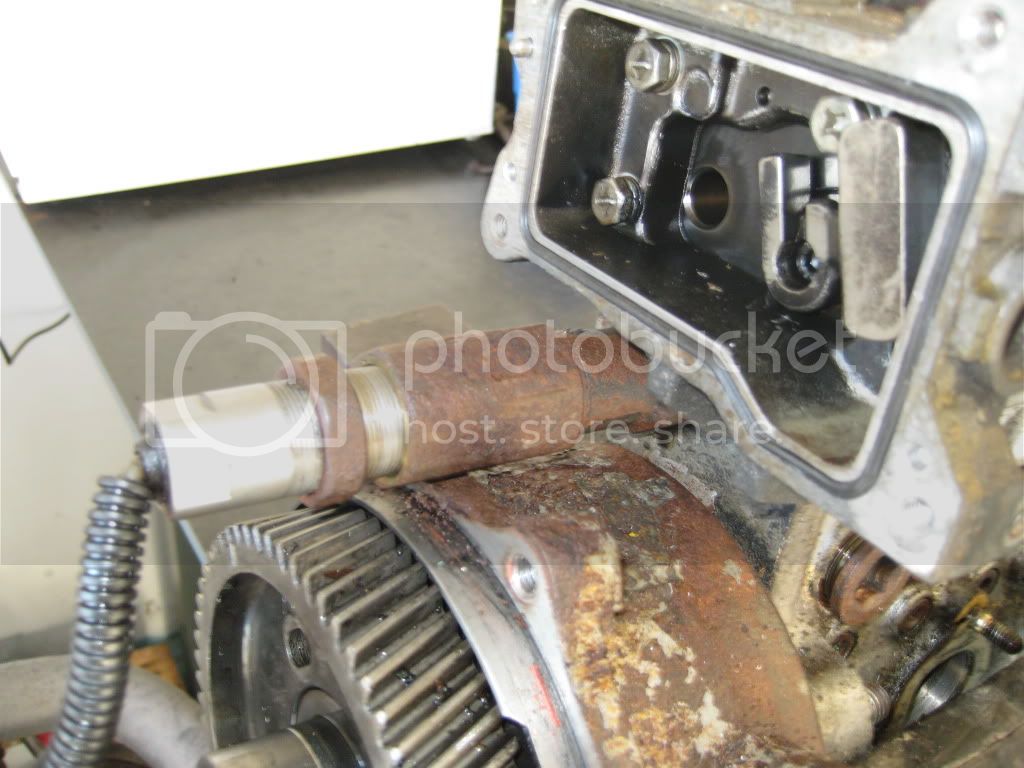
The second rack position sensor, sticking out of the pump forward:

MiscGregBatchelorParty087.jpg


The end of the rack that fits inside the sensor:

MiscGregBatchelorParty086.jpg


I was hoping that by altering the location of this sensor, we could fool the pump into overfueling a bit. Unfortunately, this is not the case as Super Hatch tried it, and did not see any results.

There seems to be no external adjustment for fuel rate that can be made on this pump, and the rate is governed only by the computer. So, the next step will be to either find injector nozzles that will put out more fuel, or to look at remapping the ECU.

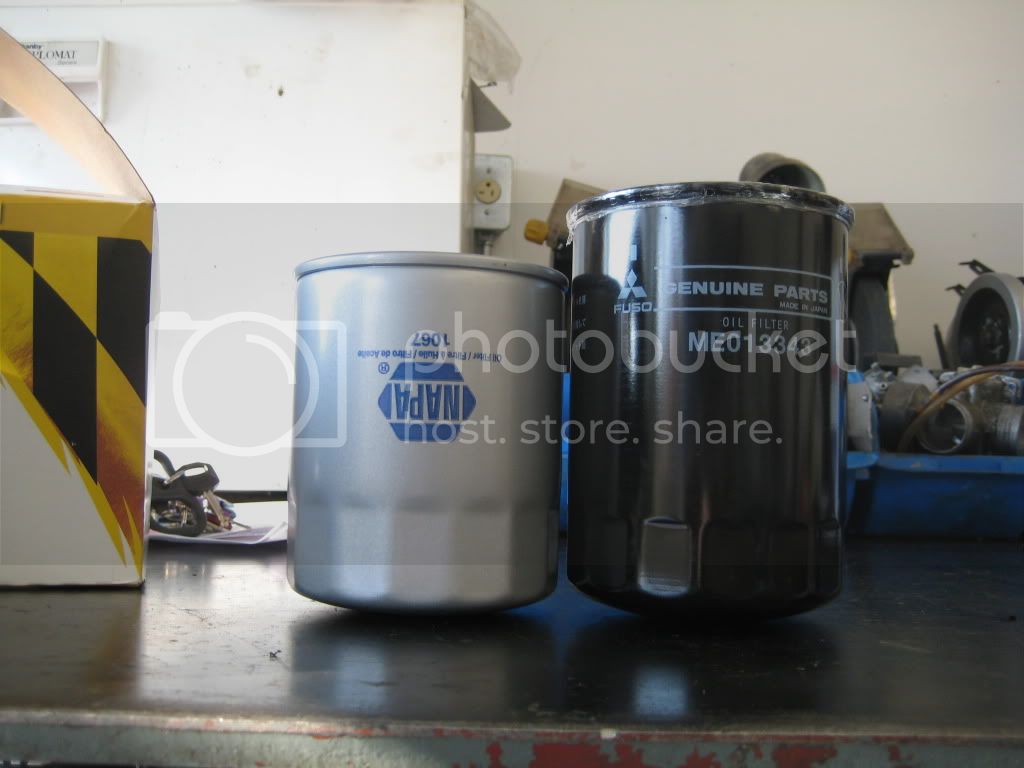
The other issue we had was oil filter clearance. I bought the only other oil filter that has a 26mm thread that was comparable. Here is a size comparison:

MiscGregBatchelorParty091.jpg


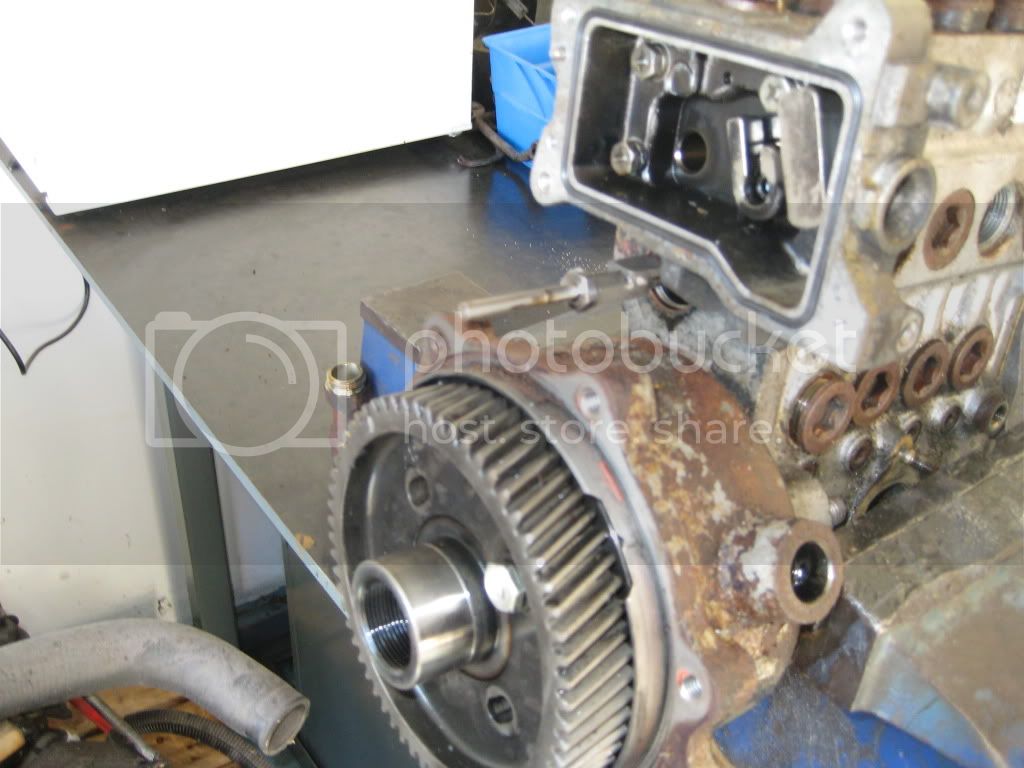
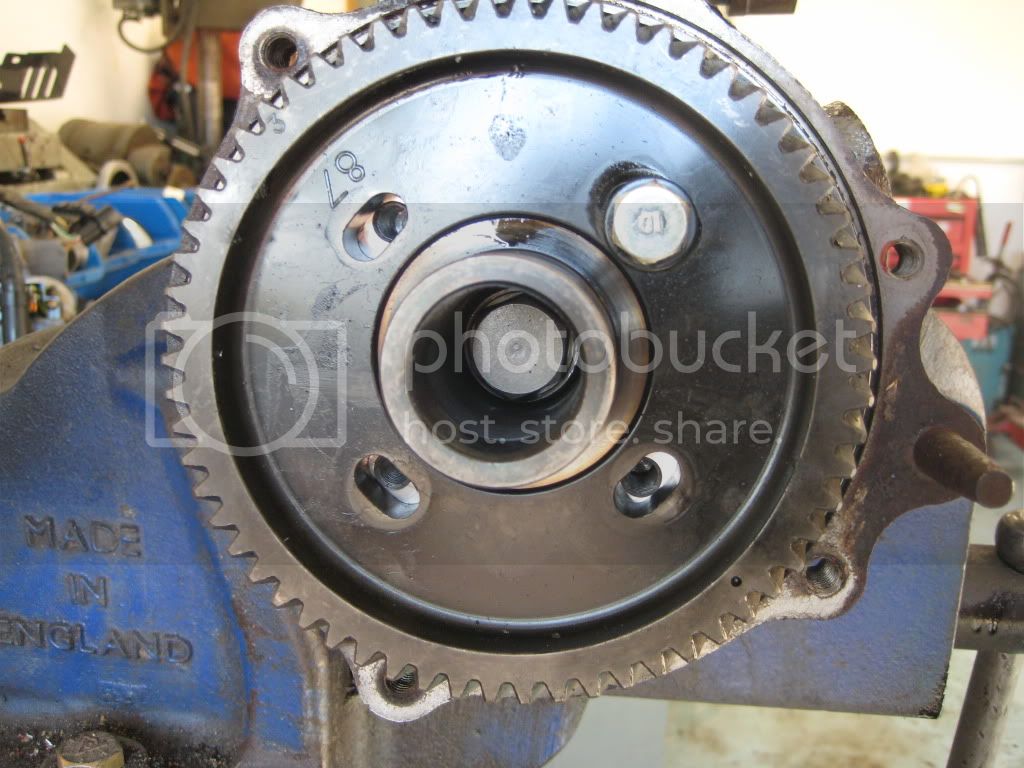
Also, with respect to timing adjustment, the pump drive sprocket also has slotted holes that permit some timing adjustment. I am almost sure that these were set wrong by the shop who rebuilt my pump, and I have had badly retarded timing due to this.

MiscGregBatchelorParty088.jpg


The timing procedure in the Fuso manual is a joke. It gets you close enough to run the truck, but there is still a great deal of variance. I am going to be building a dial indicator support for the delivery valve, so we can measure actual lift, to figure out what the actual timing is, without relying on the lame manual procedure.

Other than the fact that I could stand to have another 20 hp and an extra few mpg, it runs great. I am sure that some tweaking will yield some improvements.

 
Have you been able to check the spill timing?

If not, just keep advancing it until you've got the signs of it being advanced too far (losing power, black smoke, sounds like a tractor). Go another tooth if you need to. Then back it off until the idle noise abates and that's a good starting point.

Injection timing and gearing are the main two things that can seriously hurt diesel fuel economy. Unless you're doing 3000rpm cruise or have lost T/C lockup the gearing probably isn't it.

16-18 USMPG? Around 7.6 km/l?
 
Very interesting. Do Fromage and Superhatch have OBD2 ports? If so what does a scangauge say when plugged in?

I have an OBD2 port that only has one wire going to it, and a standard Mitsu MUT-II diagnostoc port with three wires going to it.

Can an OBD2 port function with only one wire going to it?
 
I don't know if this common across different manufacturers but on my 2002 Isuzu NPR there is what looks like an OBDII port but none of the OBDII signal are present so a scan tool provides no info. It is the port that is used for the Isuzu scan tool.
 
I don't know if this common across different manufacturers but on my 2002 Isuzu NPR there is what looks like an OBDII port but none of the OBDII signal are present so a scan tool provides no info. It is the port that is used for the Isuzu scan tool.

I'm pretty sure thats what it is used for in the Mitsu as well. You plug into both the OBD2 port and the MUT-II port simultaneously to diagnose.
 
Mine is the same. The MUT connector and a one wire going to an OBDII connector.

The MD-TICS ECM has the following inputs from the engine:

MAP
Pump RPM (two sensors, one on either end of the pump, redundancy)
Rack Position (Two sensors, one on either end of the rack, one adjustable, perhaps redundancy)
Coolant temp
Timing control position (The pre-stroke actuator, that can retard timing on the fly)
TCM

Datsit. It's pretty simple.

Here is what we have tried:

- fooling the MAP with a boost valve, no change. It doesn't seem like the engine de-fuels due to the MAP, at all. All the Fuso guys on Expeditionportal were saying it would fall flat on its face after 15 PSI. Stock boost was limited to 13-14 PSI, I am seeing 20 with no signs of defueling, unless it's a very smooth control. But, I still don't have a pyrometer, so I can't really tell what is going on.

- Timing. Because the TICS pump alters timing, it's not clear how to check it, hence why I want a dial indicator, so I can check it with the ignition on (sensors and actuators messing with the timing) and off and compare the difference. I'd like to see what actually happens to the timing as it runs. I have a spare actuator and might plug it in, leave it out of the engine, and take it for a drive, to see what actually happens at different speeds and loads. There is zero info online on these pumps and my local pump place just sends them to Zexel for adjustment/rebuilding, so it's a learning experience.

- Rack position: Superhatch moved the sub-rack sensor and it hasn't done a whole lot. The primary is not adjustable. We could likely shim the linkage to move the rack over farther for the same voltage to the actuator. I actually figured there would be a way to do this, as they would need to calibrate pumps at the factory, hence why the sub rack sensor is adjustable. I might try it and see if I get a different result that Superhatch, my truck seems to run better than his, perhaps he is still fighting multiple issues.

Here is what's next:

Pyro - I need to install one ASAP. I have it, I just need some type of gauge pod.

Once i have the pyro, verify timing. Try and figure out what happens with the timing actuator. The ECM definitely pulls timing at the top end to reduce NOX, perhaps this is the source of the lacklustre performance.

Once I am confident that the timing is good enough, try and fool the MAP again and get a feel for how it influences fuel rate. Then readjust sub rack sensor.

One thing I have noticed this morning - I don't think my lockup torque is locking! I paid a lot of attention to it and could not feel it locking up or unlocking. SuperHatch, how noticeable is the lockup on the highway? Mine downshifts into 3rd, and back into 4th, no noticeable change or perceptible lockup. I always figured it was just imperceptible, but you have noted that you can feel it. That would be a huge efficiency loss. It might be as simple as the incorrect temp plug plugged in...
 
Mine is the same. The MUT connector and a one wire going to an OBDII connector.

The MD-TICS ECM has the following inputs from the engine:

MAP
Pump RPM (two sensors, one on either end of the pump, redundancy)
Rack Position (Two sensors, one on either end of the rack, one adjustable, perhaps redundancy)
Coolant temp
Timing control position (The pre-stroke actuator, that can retard timing on the fly)
TCM

Datsit. It's pretty simple.

Don't forget intake air temp.

Here is what we have tried:

- fooling the MAP with a boost valve, no change. It doesn't seem like the engine de-fuels due to the MAP, at all. All the Fuso guys on Expeditionportal were saying it would fall flat on its face after 15 PSI. Stock boost was limited to 13-14 PSI, I am seeing 20 with no signs of defueling, unless it's a very smooth control. But, I still don't have a pyrometer, so I can't really tell what is going on.

- Timing. Because the TICS pump alters timing, it's not clear how to check it, hence why I want a dial indicator, so I can check it with the ignition on (sensors and actuators messing with the timing) and off and compare the difference. I'd like to see what actually happens to the timing as it runs. I have a spare actuator and might plug it in, leave it out of the engine, and take it for a drive, to see what actually happens at different speeds and loads. There is zero info online on these pumps and my local pump place just sends them to Zexel for adjustment/rebuilding, so it's a learning experience.

- Rack position: Superhatch moved the sub-rack sensor and it hasn't done a whole lot. The primary is not adjustable. We could likely shim the linkage to move the rack over farther for the same voltage to the actuator. I actually figured there would be a way to do this, as they would need to calibrate pumps at the factory, hence why the sub rack sensor is adjustable. I might try it and see if I get a different result that Superhatch, my truck seems to run better than his, perhaps he is still fighting multiple issues.

Here is what's next:

Pyro - I need to install one ASAP. I have it, I just need some type of gauge pod.

Once i have the pyro, verify timing. Try and figure out what happens with the timing actuator. The ECM definitely pulls timing at the top end to reduce NOX, perhaps this is the source of the lacklustre performance.

Once I am confident that the timing is good enough, try and fool the MAP again and get a feel for how it influences fuel rate. Then readjust sub rack sensor.

I think the easiest way to get more fuel into the thing is to fool the IAT sensor to thinking the charge temps are very cold. I'm going to try that myself. Whether by replacing the sensor with a resistor simulating cold temps, or by wiring a resistor in parallel to drop the resistance but still allow it to fluctuate.

One thing I have noticed this morning - I don't think my lockup torque is locking! I paid a lot of attention to it and could not feel it locking up or unlocking. SuperHatch, how noticeable is the lockup on the highway? Mine downshifts into 3rd, and back into 4th, no noticeable change or perceptible lockup. I always figured it was just imperceptible, but you have noted that you can feel it. That would be a huge efficiency loss. It might be as simple as the incorrect temp plug plugged in...

Yes, it absolutely does lock up, noticable in feel, sound, and visible on the tach. Will lock up at 48MPH in OD, low load, and will unlock at 43MPH in OD, low load.
 
Back
Top Bottom