EGR delete but want to keep butterfly, 1kz-te

This site may earn a commission from merchant affiliate
links, including eBay, Amazon, Skimlinks, and others.

Joined
Nov 24, 2017
Threads
38
Messages
280
Location
Canada
Hello Everyone,
I am planning on deleting my EGR on my 1kz-te prado. I have blanking plates. I would like to keep the butterfly valves and was wondering if there is a way to re route the vacuum hoses so it stays wide open, except on shut down to keep smooth shut down operation. I've spent a lot of time on the google and haven't found any detailed instructions yet. Any suggestions? I want to completely remove the EGR as I have blanking plates.

Thanks!

Lomo

1995 KZJ78 prado
 
Could you hook it up to an electronically actuated vacuum switch that allows it to close when the engine shuts down? I thought about this some because I wanted to keep the engine braking afforded by a throttle plate without the loss in low end torque, but I think I am going to just do without.
 
Hello Everyone,
I am planning on deleting my EGR on my 1kz-te prado. I have blanking plates. I would like to keep the butterfly valves and was wondering if there is a way to re route the vacuum hoses so it stays wide open, except on shut down to keep smooth shut down operation. I've spent a lot of time on the google and haven't found any detailed instructions yet. Any suggestions? I want to completely remove the EGR as I have blanking plates.

Thanks!

Lomo

1995 KZJ78 prado

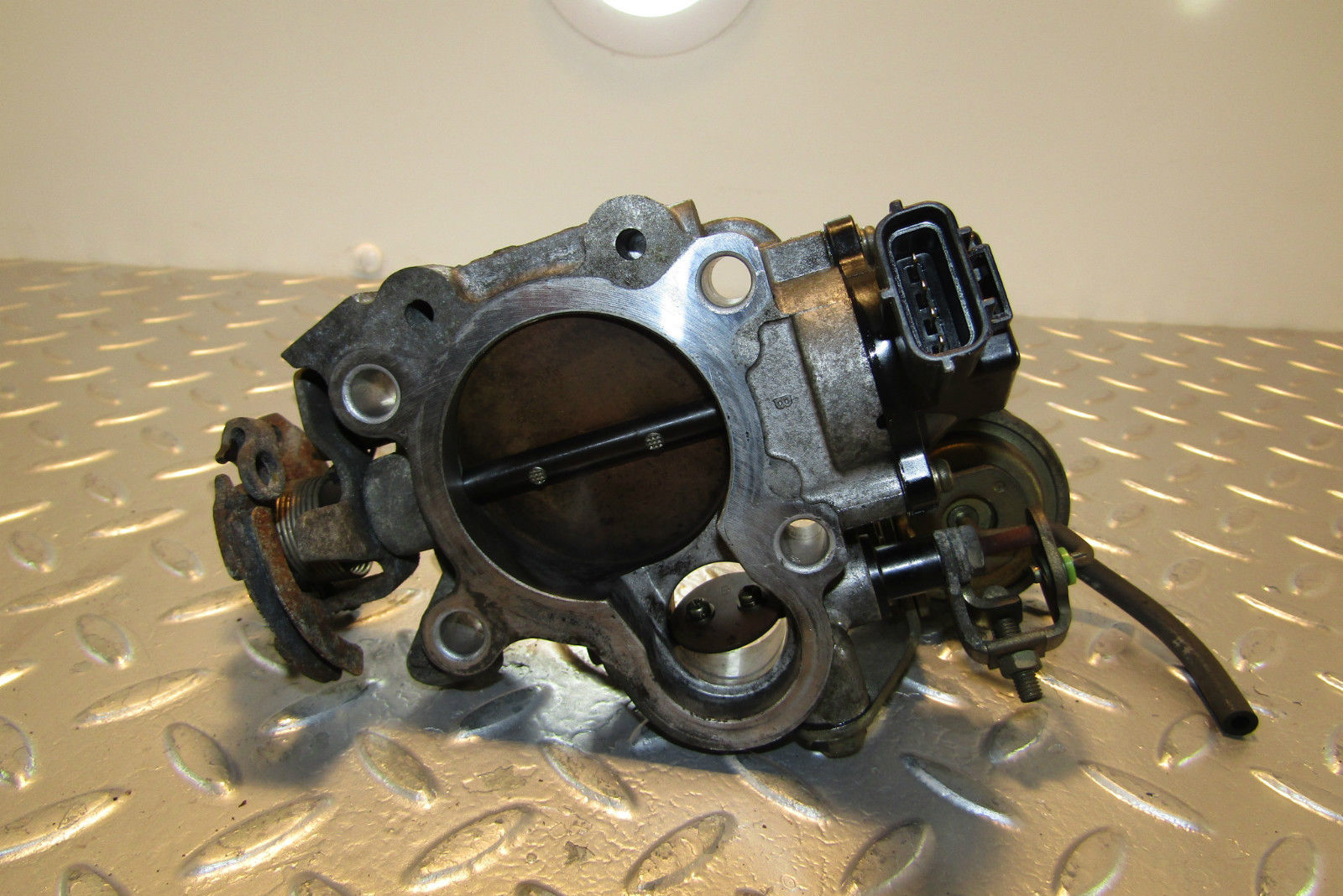
When I first bought my Prado, I did what you are describing you want to do. You're not going to be able to keep the main butterfly open, as it is attached to the throttle position sensor and your throttle cable. Only option there is just to remove the throttle plate. However, you can force the smaller butterfly to stay open. If you look at the throttle body closely you'll see there is a vacuum actuator that controls the small butterfly. This vacuum actuator is controlled by the computer via a VSV (vacuum switching valve). All you need to do is apply vacuum to the actuator all the time instead of letting the computer make the decision. Basically, just bypass the VSV and bring the vacuum straight to the actuator. It's possible that without vacuum it's open by default, I can't remember. You'll have to experiment to figure out if vacuum opens or closes it. If it doesn't need vacuum you can just disconnect and cap off the vacuum line.

Is this what your throttle body looks like?

89452-22090-Throttle-Body-1998-Toyota-Landcruiser-Colorado-30-TD-1KZ-TE-121945635990-4.jpg


Could you hook it up to an electronically actuated vacuum switch that allows it to close when the engine shuts down? I thought about this some because I wanted to keep the engine braking afforded by a throttle plate without the loss in low end torque, but I think I am going to just do without.

@AirheadNut : Wouldn't engine braking be better without the throttle plate? No throttle plate = more air into engine = more energy lost to compression? (It's easy to compress a vacuum) With my transmission in 3rd gear lock up, the compression of my 2LTE can hold back my LJ78 and travel trailer (9000lbs) on a 6-8% downhill grade. Good enough for me...
 
@AirheadNut : Wouldn't engine braking be better without the throttle plate? No throttle plate = more air into engine = more energy lost to compression? (It's easy to compress a vacuum) With my transmission in 3rd gear lock up, the compression of my 2LTE can hold back my LJ78 and travel trailer (9000lbs) on a 6-8% downhill grade. Good enough for me...

In a diesel engine without a throttle plate the engine braking is mostly due to internal friction and viscous losses within the engine and drivetrain, because the air that enters the engine and is compressed is then decompressed before being released through the exhaust. While there is some energy loss there, it is not enough to provide noticeable engine braking. With the addition of a turbo, there is an increase in intake restriction when coasting, providing some manifold vacuum and thus slowing the engine.

A throttle plate vastly increases air flow restriction in the intake, creating a manifold vacuum that the engine has to work against. This is why the throttle plate does such a good job of quickly and smoothly shutting off an engine.
 
In a diesel engine without a throttle plate the engine braking is mostly due to internal friction and viscous losses within the engine and drivetrain, because the air that enters the engine and is compressed is then decompressed before being released through the exhaust. While there is some energy loss there, it is not enough to provide noticeable engine braking. With the addition of a turbo, there is an increase in intake restriction when coasting, providing some manifold vacuum and thus slowing the engine.

A throttle plate vastly increases air flow restriction in the intake, creating a manifold vacuum that the engine has to work against. This is why the throttle plate does such a good job of quickly and smoothly shutting off an engine.

Interesting, I never thought of it that way. I guess drawing a vacuum does take energy. Would be interesting to see or do the math on both scenarios. Now I wish I had no so quickly ripped the throttle plate out of my Surf. As I could have spent some more time comparing engine braking to my Prado....
 
I noticed no difference with engine braking when I removed my throttle butterfly....
The purpose of the big butterfly is to keep induction noises low and also aid in shutdown.
The small one now that the EGR is blocked off has no effect so you can pull the vac lines off and leave it closed.
When I was playing and had my whole unit off, I removed the shaft and small butterfly and replaced it with a long bolt and sealed each end....
The big butterfly was removed . its held in with 2 screws which have had the thread ends that stick out peened over like a rivet so as to stop it falling out and going down the intake. File off the threads and unscrew. Slide out butterfly. From memory I did this on the truck...Shoved a rag down its throat and vacuumed up the swarf before removing rag.
Currently I dont have a throttle body at all.... but that's a different story...
 
I noticed no difference with engine braking when I removed my throttle butterfly....
The purpose of the big butterfly is to keep induction noises low and also aid in shutdown.
The small one now that the EGR is blocked off has no effect so you can pull the vac lines off and leave it closed.
When I was playing and had my whole unit off, I removed the shaft and small butterfly and replaced it with a long bolt and sealed each end....
The big butterfly was removed . its held in with 2 screws which have had the thread ends that stick out peened over like a rivet so as to stop it falling out and going down the intake. File off the threads and unscrew. Slide out butterfly. From memory I did this on the truck...Shoved a rag down its throat and vacuumed up the swarf before removing rag.
Currently I dont have a throttle body at all.... but that's a different story...

So how is your shut down without the throttle plate? How long does it "diesel" for before it shuts off? Any other problems? I'm still on the fence about whether or not to pull the plate. I am going to blank the EGR and remove it. Is it obvious what to do with the vacuum lines? Can I just plug any of the lines that come off the EGR? Cheers!
 
It shuts down fine just a bit lumpy.... Gives a little shake so to speak.... Doesn't run on or anything.
Yes you can plug the vac lines. I have heard that some vehicles with the 1KZTE if you unplug the electrical leads from the vac solenoids the ECU starts throwing error codes. Must look for the solenoids. Mine never had an issue but a friend with a Surf / Hilux did. But it was a newer vehicle than mine.
 
So I've removed my EGR and butterfly. Definitely has better bottom end and I feel the turbo spools a lot easier as well now. But I am having troubles starting my truck. Turns over for a long time before catching. Air in the lines? Runs fine once it's going and has plenty of jam.
Also I'm wondering if by allowing more air due to no restriction have I now made my motor lean? Diesel and lean=bad.

Thanks!
 
Actually that's not an issue. And, also, not likely. The intake of air is exactly the same basic volume with or without the butterfly. It just flows freely now, with less turbulence. Thus the low end power. Running a diesel "lean" won't have any ill effects except at some point it will not have enough fuel to actually run on a long enough curve.
Running a gas engine lean will cause excess heat and hot spots. Excellent way to toast your engine. That isn't really an issue with a diesel engine.

Your hard starting could be an air leak if you have had your intake off. Any air drawn in below the intake will throw you mix off, causing harder starting especially when cold.
 
Very likely your problem is related to something impacted when you did the job removing the throttle. Glow system or fuel system maybe? Check the glow circuit is intact, check all the fuel hoses and hard lines. Look for fuel leaks. Are all your sensors plugged in ok? No ECU error codes?
 
I think it was air in the fuel lines. I pulled the manifold and undid the fuel lines at the injectors. It fired up fine this morning and it was -20c. Have all the electronics and gaskets in place. Should be no air leaks. Can you test for air leaks with brake cleaner like you can with gas motors?
 
I should say I took off the manifold and fuel lines to the injectors when I was blanking the EGR. I wanted to take it off to drill out the butterfly and clean the manifold of it's gunk. I took it for a good run on the highway last night and it fired up just fine this morning. Was plugged in overnight and I have a lower rad hose heater. Feel like it was just air in the lines.
 
I didn't realize you did all that. Yes, definitely air in the lines. Brake cleaner will make a difference if you spray it near an air leak, yes.

Thanks GTSSportCoupe! It's sitting in the parking lot of the ski hill all day, if it fires up without cranking too much I'll consider case closed.

Interesting about the lean vs rich. My land cruiser specialist shop told me the 1kz-te doesn't like to run lean, so that had me a bit worried. A lot more power on the way to work today and I have about 350m of elevation gain over 8km.

Overall very happy with the butterfly removal. Definitely more power at lower rpms.

Cheers

Lomo
 
Glad you got it sorted.
Yes, do a little research on Rich/Lean on a diesel. No such thing really. It's sort of a misnomer that is thrown around. You need fuel to cool the injection pump,injectors and to run the engine. If enough fuel is not present in a diesel, it just won't run. Not sure why a diesel mechanic would tell you that.
 
Hey guys,
I've been driving my Prado for about a thousand KM without the butterfly and EGR and i'm noticing that it feels a lot "rougher" at low RPM. Is this a normal thing you guys have felt after removing the butterfly and EGR system? My economy is slightly better but long term will prove or disprove that and I definitely have more power throughout the band. I will be drilling and putting my EGT sensor into the exhaust side blanking plate.
I also have new injectors and Glow plugs that i'll be fitting tomorrow. Will see if that helps with economy as well. I seem to get around 15L/100km but I live in the mountains and drive up a fairly large hill every day to work.

Cheers!
 
Hey guys,
I've been driving my Prado for about a thousand KM without the butterfly and EGR and i'm noticing that it feels a lot "rougher" at low RPM. Is this a normal thing you guys have felt after removing the butterfly and EGR system? My economy is slightly better but long term will prove or disprove that and I definitely have more power throughout the band. I will be drilling and putting my EGT sensor into the exhaust side blanking plate.
I also have new injectors and Glow plugs that i'll be fitting tomorrow. Will see if that helps with economy as well. I seem to get around 15L/100km but I live in the mountains and drive up a fairly large hill every day to work.

Cheers!

It's compressing more air, so I'd say that it's normal to feel a little rougher. More like a diesel should be.

How long is your drive to work? Does the motor have sufficient time to warm up? Diesels get poor mileage when they run cold.

Same vehicle, but the 2LTE not 1KZTE: I get 15l/100km in heavy city traffic and a relatively short drive to work. I get 12l/100km on the highway with steep hills, heavy traffic and stop lights. I get 10l/100km on long trips with no lights (still with big hills, like highway 3 in BC for example).

Make sure your ECT button is in 'normal' not 'power'. This will enable to torque converter to lockup at a lower speed. This will improve your economy and power a bit. Keep it in 3rd gear lockup going up big hills if you can (or 4th if you can go fast enough).

Also, you probably know this, but make sure to give your turbo time to cool down before you shut your motor off. Especially if you've just gone up that big hill. Otherwise the engine oil can coke up the turbine piston ring seal, and it's just a matter of time before it's worn out and you need a rebuild.
 
It's compressing more air, so I'd say that it's normal to feel a little rougher. More like a diesel should be.

How long is your drive to work? Does the motor have sufficient time to warm up? Diesels get poor mileage when they run cold.

Same vehicle, but the 2LTE not 1KZTE: I get 15l/100km in heavy city traffic and a relatively short drive to work. I get 12l/100km on the highway with steep hills, heavy traffic and stop lights. I get 10l/100km on long trips with no lights (still with big hills, like highway 3 in BC for example).

Make sure your ECT button is in 'normal' not 'power'. This will enable to torque converter to lockup at a lower speed. This will improve your economy and power a bit. Keep it in 3rd gear lockup going up big hills if you can (or 4th if you can go fast enough).

Also, you probably know this, but make sure to give your turbo time to cool down before you shut your motor off. Especially if you've just gone up that big hill. Otherwise the engine oil can coke up the turbine piston ring seal, and it's just a matter of time before it's worn out and you need a rebuild.


Thanks for the reply GTS. That makes sense about compressing more air with the butterfly gone. Definitely runs better all around.
I have a circulating lower rad hose heater that I plug in pretty much every night and I have a short city drove before I hit the highway, it's usually up to operating temps before I hit the highway. So I think it's as warmed up as it can be. I pretty much just leave it in overdrive with the ect in normal. Don't really ever turn off O/D but I'm not sure if that's good or bad. When I get to work, I actually come down a bit of a hill and then drive 30 kmh for about 2 minutes and then let it idle for about a minute before shutting off. I have a turbo timer that I'm going to try to install this weekend as well. The total drive to work is about 20 minutes. I don't ever seem to get better than 14.8 or 15 l/100 though no matter what the driving.
I just cleaned my air filter and re oiled, new fuel filter and was running 5/40 Mobil 1 delvac oil for the winter. New injectors going in tomorrow. When I deleted my EGR I cleaned all the carbon out of the manifold and intake on the block. Not sure what else I can do to help with milage. I'll get my valves adjusted in the spring as well.

Cheers
 
Thanks for the reply GTS. That makes sense about compressing more air with the butterfly gone. Definitely runs better all around.
I have a circulating lower rad hose heater that I plug in pretty much every night and I have a short city drove before I hit the highway, it's usually up to operating temps before I hit the highway. So I think it's as warmed up as it can be. I pretty much just leave it in overdrive with the ect in normal. Don't really ever turn off O/D but I'm not sure if that's good or bad. When I get to work, I actually come down a bit of a hill and then drive 30 kmh for about 2 minutes and then let it idle for about a minute before shutting off. I have a turbo timer that I'm going to try to install this weekend as well. The total drive to work is about 20 minutes. I don't ever seem to get better than 14.8 or 15 l/100 though no matter what the driving.
I just cleaned my air filter and re oiled, new fuel filter and was running 5/40 Mobil 1 delvac oil for the winter. New injectors going in tomorrow. When I deleted my EGR I cleaned all the carbon out of the manifold and intake on the block. Not sure what else I can do to help with milage. I'll get my valves adjusted in the spring as well.

Cheers

I found that raising boost with out raising the fuel improved fuel economy in my case (running a leaner air/fuel ratio). Intercooler and exhaust also improved it quite a bit. Raising boost is done with a manual boost controller (I used one of those cheap Ebay Voodoo ones). Reducing fuel can be done with an adjustable air bleed valve t-ed into the boost sensor vacuum hose. You can also reduce fuel with the spill control valve (out for less fuel, in for more fuel). Install an EGT probe before playing with the engine tuning though....

When you do that hill on the highway, how many rpms are you at? When you get a pyrometer, what you'll notice is that EGT's get really high at low rpms with a high engine load. Dropping down a gear can (4th to 3rd) can drop the EGT's a lot. So you could try doing that big hill in 3rd gear (over drive off) instead for a while. Might improve fuel economy too, hard to say.
 
Back
Top Bottom