Doing panel welding the right way??

This site may earn a commission from merchant affiliate
links, including eBay, Amazon, Skimlinks, and others.

Joined
Dec 14, 2005
Threads
160
Messages
1,461
Location
colorado
I am in the middle of finding a body shop to sublet its space for my truck, and also, my automotive customers. I the mean time, I want to know what is the best method for stitch welding in sheet metal patches for the wheel wells of a fj60? I have a special pair of vise grips that will create a offset in the sheet metal to create a lap weld. I can also just consider but welding the pieces together.

Now, What is the best technique to weld thin 18 gauge sheet metal together? Using tack stitch welding? Or can I run short weld beads, use a wet rag to cool the metal and run another short weld bead? Should I alternator up and down the metal to keep two anointing welds from heating up the metal to much and warping it?
 
I'm an absolute amatuer at this, so I don't have much basis for answering your question, but this link taught me most of what I know (admittedly not much!) about welding in patch panels. Look for the posts by MP&C:

Welding in patch panels - The Garage Journal Board

FWIW, I've been butt-welding rather than lap-welding, using MIG with shielding gas and .028 wire. It's slow going and my welds look like snot, but they're all ground down in the end anyway.
 
Butt weld the body panes on the flat. lap weld where major panels join of high load areas, like floor pans and where the bed joins the rear sopport, that stuff hard to make a lap weld look that great without lot's of filler amd tons of sanding.
 
Total x2 on belaw's GJB link - that is a great thread full of good info - well worth the read!

Some of my limited experienced/close-minded opinions :grinpimp::

1) Get a good MIG machine, read a good welding book or two and practice a lot (or if possible take a class - wish I could take a class).

2) Use a good brand of small dia. MIG wire for sheet steel - ER70S6 - .023"

3) Controlling heat is the number one thing to stress about while welding. Moving around and thinking about what you're doing with the heat and how the steel will react is paramount. Experiment with various backings/heat sinks made from copper, etc. to help control the heat. Don't use a wet rag, compressed air or anything else but time to cool the sheet metal. Took me a while to realize that fast cooling is a mistake, even when torch shrinking "oil-canned" areas with hammer/dolly. Some individuals might tell you you can't hammer/dolly MIG welds (insisting they must be torch/TIG) because they're so hard. Consider the "heat-treating" properties of quenching hot steel with water, etc. A lot of people do it...

4) IMO most of the rust in old cruisers comes from Toyota's factory lap joints. Those spot-welded steel sandwiches everywhere are perfect moisture traps for growing rust. I try to keep my repairs "stock" but never put any lap joints where they didn't already exist. The butt is the way to go. Remember patch "fit" is important in butt joints, better the fit the less trouble you will have. Big gaps mean burn-through and harder areas to fill with weld. And make sure the patch is the same thickness (or a bit on the plus side).

5) Don't think about running a bead on sheet metal, just tack around. Read all the stuff about hammer/dolly, weld shrinkage around the tacks and solutions in that Garage Journal thread link.
 
Last edited:
Thanks for the info.

I have been using my mig for welding. Just not thin sheet metal. I can perhaps test it on two pieces outside of the truck.

After giving the rust/corrosion issue in the wheel well area some thought last night, I came to the conclusion that as the truck or any vehicle that is driving though rain, the tire picks up the water and kicks it up at the rear of the tire onto the wheel wells. This would explain why I have far more corrosion in the rear section vs the front side of the wheel well.

I would also like to trim off the top lip of the outer wheel well, but the quarter panel is covering up the spot welds. Only if I had shop space, I would unzip it off to expose all the damaged areas then mig weld it back on.

But I will have to work around this, and just to what I can. Cost of shop rentals up here just for a single or double stall are 1 grand and over per month. To much for my budget.


I just read that thread from garage journal. Very good info. I love his work and that is what I would love to accomplish.

Also, if you have a large number of old hard drives lying around, inside them is powerful rare earth magnets. Good to hold sheet metal together if its flat, or several around a circumference of curved metal.
 
Last edited:
okay, see if this works.

View attachment 563991 IMG_1283.webp

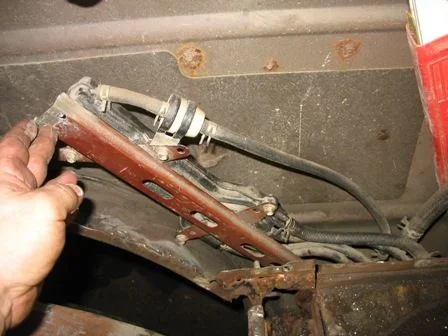
So as you can see, the water is tossed to the back of the wheel well as well as the rocks. corrosion set in, then water ate though the cab support. It filled up with water, and the water ate though the side wall below the floor. Water then dripped into the rear bottom quarter panel and ate a small hole.

I cannot emphasis enough, if you have the start of corrosion on your truck body, and do not want to go though this process, use some Crisco grease and lather up the rust spots until you can treat it with undercoating latter on.

Now, I need to locate a source of metal to replace the corroded outside lip of my outer wheel quarter panel opening as well as the inner lip of the inner wheel well that is spot welded to it.

Any sources much appreciated.
IMG_1283.webp
 
more images

IMG_1282.webp

IMG_1281.webp

IMG_1280.webp

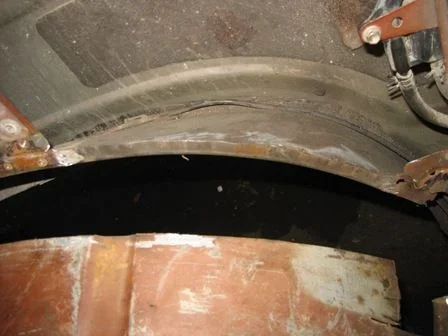
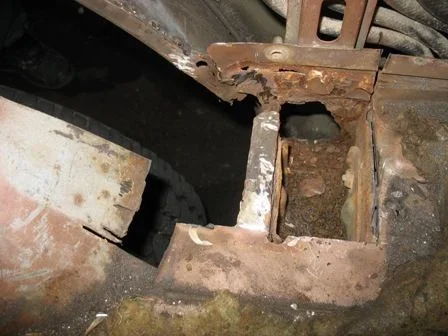
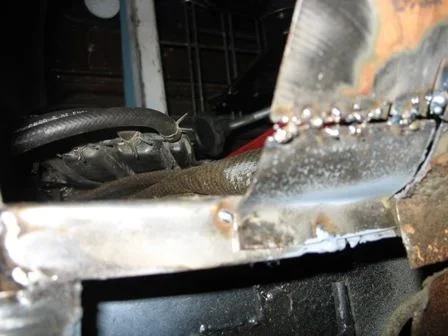
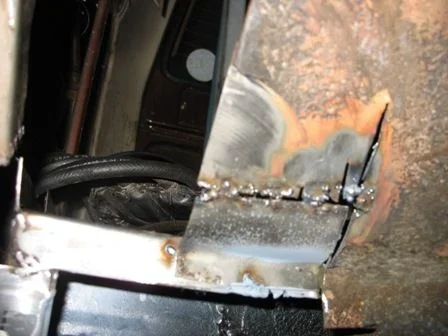
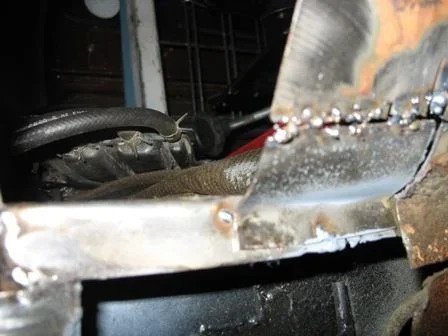
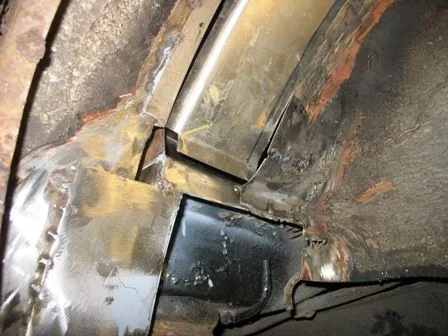
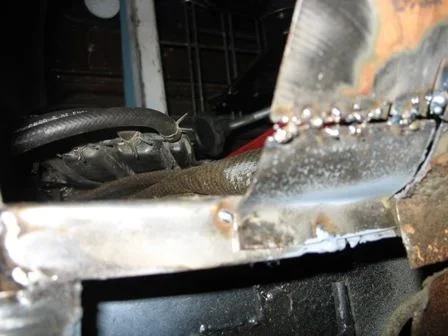
In the last photo, cleaned out the cab support, cut out the last 5 inches of cab support left wall. Built a new piece of metal to the same shape and welded in. Now need to continue outer fender top lip with piece of metal down to bottom of fender. Hopefully I will get the rear part of the wheel well finished, then cut out the other part of the wheel well lip at the 8 o'clock position.

There is one thing I would really like to have in this process, a plasma cutter. There are so many tight locations in this part of the truck to get to, it would make for less work cutting out the metal. As you can see, my angle grinder hat to cut into other metal of the inner fender, just to penetrate deep enough in the truck cab support to cut out the corroded metal.

BTW, does anyone know of a etch compound that will remove rust from the steel, if it is to tight to use a wire wheel?
IMG_1282.webp
IMG_1281.webp
IMG_1280.webp
 
Last edited:
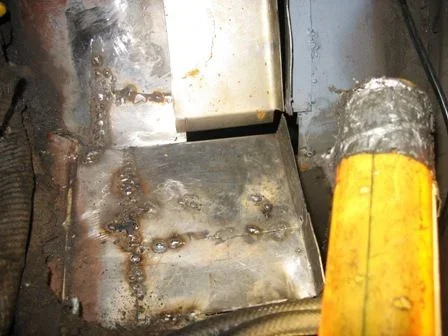
I continued with the work today. Again, in the last picture, I had cleaned up all the support bracket, and welded in a support piece last night. I cut out another piece of metal to match the opening in the floor. I ran out of gas for my welder and tried using flux core mig welding. Bad idea. Started blowing tiny holes in the metal. So left to the parts store to fill up the bottle. It is a 40 sized bottle and cost me 40 dollars?

I should have also take many close up photos before I had cut all the pieces out, so to remember how I should fabricate new pieces. I think I made the floor patch a little to short to be really close to top lip of the inner wheel well. Hopefully, I will get though this tomarro and be done with it.

Will get a picture of where I am on this install.
 
camera on the fritz, but made another patch

Sorry to not have more pictures of my work. My camera is on th fritz.
I used one of the last pre bent stock pieces of sheet metal to make a patch for the end cab support. For those of you do not know what a cab is, it is the entire body of the truck if there is a better name, let me know. The 12 inch ? cab support that is spot welded to the frame is repaired at the end. I did not use the same gauge steel, as it only had 2-3 inches by 2 inches corroded away.

I have now made another patch of sheet metal that is to be lap welded on the outer edge of the frame support bend. It is almost impossible to get into this area without cutting out a section of the quarter panel. So without making more work with me, I have been working at the 9 oclock position of the wheel well "facing the tire" and though a hole I cut out to gain access, which also was a part of the rusted out outer wheel well.

I also found a new way to make very sharp bends in sheet metal without a sheet metal brake. Do not use this method if the sheet metal is to be a structural element unless you use a welder afterwords.

Take a piece of sheet metal, draw a line, then use a angle grinder to cut 1/4 into the sheet metal depth down the length of the line. Use a flange tool, or perhaps two vice grips and bend the sheet metal down the length of the cut line. You will see the bend is sharp, right at the cut line and looks great. If this sheet metal is to be used as a structural member, just spot weld in the cut grove to get back its strength.

Anyway, I think I will be done with the fender repair at the 9 o'clock position. My only complaint with this work, is I should have not wasted my money on a flange vise grips, and instead of purchased this.

Astro Pneumatic Punch and Flange Tools - Pistol Grip Punch/Flange Tools & Straight Punch/Flange Tools


finally got more images


IMG_1295.webp

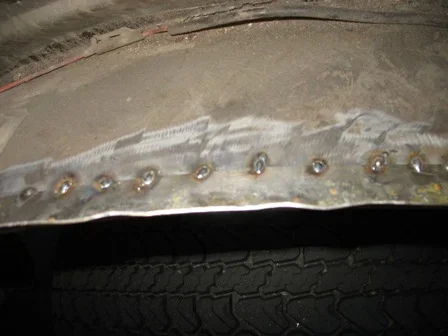
Well, I called it a night. Some times, you would like to go on, but then you will get complaints from the neighbors of the noise that sheet metal work creates. The little tiny patch with the crappy but weld. I need to know how to keep from blowing holes though this but weld. Any ideas anyone?
I have my mig set to the right setting and did multiple tack welds. A welding shop told me to use copper plate to take the heat for but welds and also, not to blow holes though the metal.


IMG_1295.webp
 
Put a piece of copper behind your weld and don't use too much heat. You can get 1/4" x 2" copper flat bar at your metal supplier. Use some clamps to hold the copper behind your joint and take your time when applying those tack welds.

This should help with your burn through. The most important thing is to take your time and allow things too cool off before you go on.

Good luck.
 
Thanks Austin will do

I will do some calling around for some copper sheeting. I was thinking of trying out with 10-15 layers of aluminum foil but wondered if the intense heat would punch holes though it.


Went to the scrap yard and picked up 1/16 inch sheet of copper plate. Bent it unto several layers then wrapped the center with another piece of copper. flared the ends out like a fan to dispate the heat.

Sandwiched the copper to the steel weld joint with a neo-magnet. But wlded the gap. It is alot harder then what people may think. I had to build up the steel gap, then grind down. Eventually tomarro will finish with that part, then buy a tool from harbor freight to create the offset in the wheel well arch. I was going to remove some of the fender lip on the 2-3 oclock position. Hopefully tomarro, I will have finished off the inside wheel well and can drive the truck again. Outer wheel well should be MUCH easier to work with.

By any means, if any of you are going to attempt to do what I just did, It is MUCH easier to find a doner truck and have the owner cut out the not corroded steel and ship it to you. Drill out the spot welds and do as much pre prep as possible before taking your truck down for these repairs. Use a torch or heat gun to scrape off the old undercoating "very fast and easy once it is heated"

I am awaiting more photos of my work.
 
some how repeat of second image. Trying again top side of wheel well

First image in previous reply, showed bottom side of whee well. New wheel well arch with stretched lip is just sitting in place, not welded. Some how second image is a repeat of previous replies.

This image is the top side. I will have to buy another flex disk for my angle grinder as I purchased the wrong one to quickly grind down the welds flush.

IMG_1297.webp


IMG_1297.webp
 
what ever works

Now, getting the tiny low heat tack welds on bit joints set right. That's the key. Cannot wait to get this done. Then it will be drivable with no water splash in. After this, I can work on the outer quarter panel / outer wheel well.

BTW, would a tig work faster with a continuous bead, vs tack welding with a mig on 16-18 Gage tack welds?


Also, I may have to split/cut the 30 inch by 3 inch piece of sheet metal to make it follow the shape of the inner wheel well.

Just picked up a pnumatic flanger/sheet metal punch to do my repair patch for the entire length of the fender. Now I need to use some ones compressor to flange out my patch.

Any locals south of Vancouver have a compressor I can use for 10 min?
 
Last edited:
Back
Top Bottom