

Broken BVSV's 82 fj60

This site may earn a commission from merchant affiliate
links, including eBay, Amazon, Skimlinks, and others.

Joined
Apr 13, 2016
Threads
19
Messages
63
Location
NorCal
Well, I am in the middle of a complete vacuum hose swap today and noticed that both my pink and violet bvsv's were broken. Both nipples on both BVSV's were broke off flush at the base. Wondering where the best place to get replacements. I am not super interested in spending the $54-$75 each for new ones. Also, my 82 fj60 has been really hard to restart once I get it going and then shut it down. Could this be the reason because those sensors affect the opening the vacuum circuit at operating temp? Thanks in advance! I also found 2 vacuum hoses on the passenger side that came from the bottom left of the huge bundle that are not routed to anything. I looked at the vacuum diagram and couldn't quite find their home. I found another 6mm ID vacuum hose that is coming out of the bottom of the HACV that doesn't look like its going any where either. How this thing passed smog just 2 weeks ago before I bought it is shocking. Glad I got it so some one is taking care of this neglected gem.

Here are pictures of the hoses
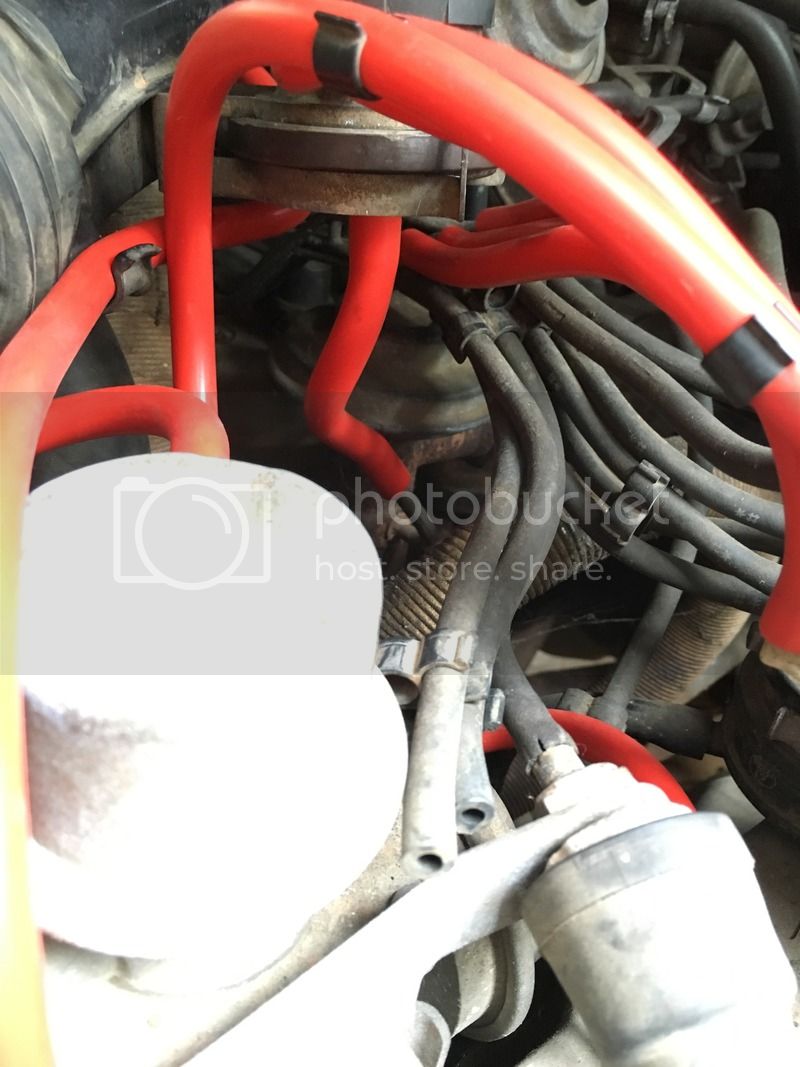


Where the hose starts
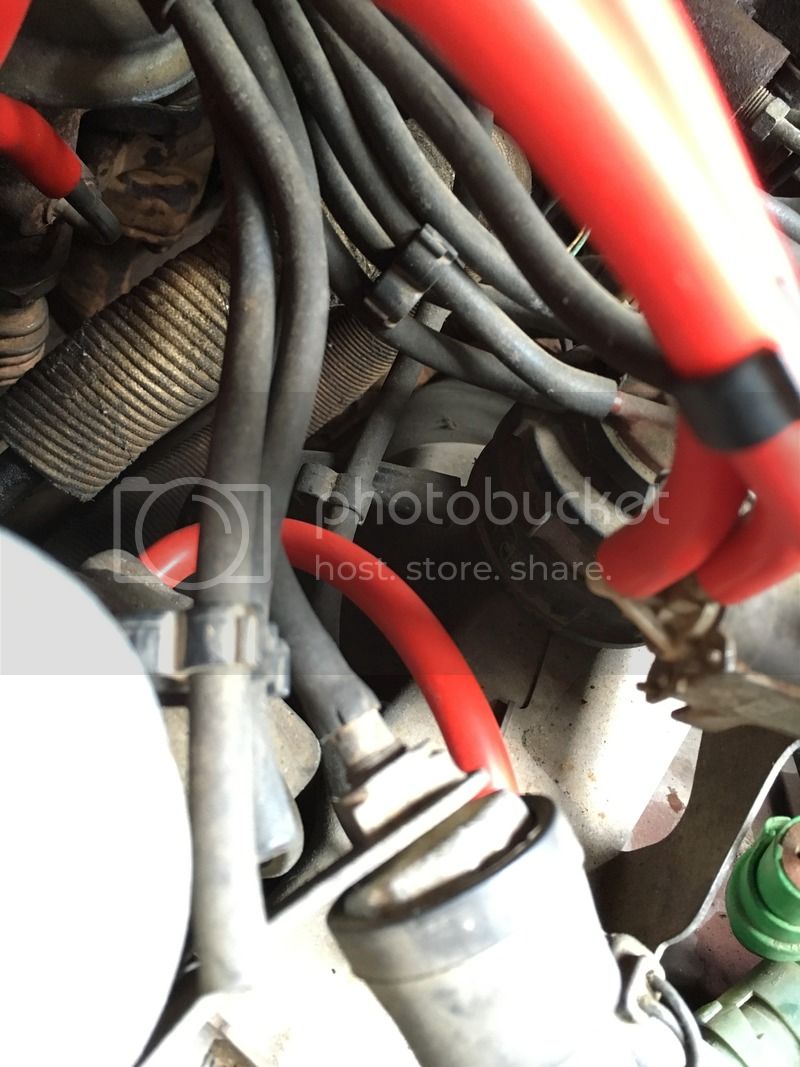

Where it ends
 
Hose from the bottom of the HAC goes to atmosphere.
Try cruiseryard or any of the other vendors on this website to get the bvsv's , used unbroken ones are around.
 
The two BVSVs control when the EGR valve an choke opener become operational.

When the engine is cold, the EGR system is deactivated by its BVSV until the coolant heats up...preventing stumbling on a cold engine.

When the coolant heats up, the other BVSV allows the choke opener to work, preventing a rich (choked) fuel mixture when pulling the choke.

Both of those vacuum hoses leading to those BVSVs will create small vacuum leaks if the BVSV nipples are broken, but not enough to really screw with the engine too much.

Vacuum leaks are most noticeable when starting a cold engine... when the engine requires a richer mixture.

If it starts ok enough when cold, but hard to start when hot, that's not from vacuum leaks. Hard hot starting could be caused by a non working carb/manifold fan. The fan should turn on automatically immediately when the engine is turned off.

Those two loose vacuum hoses in your picture next to the vacuum switch are hard to identify by your picture. Follow where they are connected to. If they lead to the vacuum piping, there is a legend in the emissions FSM that identifies each pipe end. Often, when it comes to identifying where VSV hoses connect, that info can be found in their system section. I.e. EGR details found in the EGR section. Etc.

If a 2F passes a tailpipe test, some smog techs overlook a disconnected vacuum hose since not all of the hoses impact what's getting spewed out the exhaust pipe.
 
I will do some more looking at the vacuum system diagrams but couldn't find where those 2 lines connect, if anywhere. Glad to know that the bigger hose from the bottom of the HAC isn't supposed to go anywhere. I will find some new BSVS's and go from there. The wagon is starting fine on choke when it is cold and once it warms up i can turn the choke off and it will idle fine then if I shut it down, its a little difficult to get started and will only idle on choke at that point. Its like it has to go through the warm up process on choke all over again. It is also stuttering a bit. The first picture is of of the 2 hoses that weren't hooked up and they are the bottom left 2 hose from that whole stack of hoses that sit there on the drivers side that get divided up to the HAC, and 3 VSV's. I found no other places they could be routed too though
 
The stock engine had two VSVs for the air injection, one VSV for EGR, and one VSV for the AC (not shown in the picture). Do you have four VSVs?

They are the little solenoid vacuum switching things that have wires connected to them.

image.webp
image.webp
 
those two hoses probably go to a VSV of sorts...probably no longer there. do you see a vacant plug anywhere around there? EDIT: @Output Shaft beat me to it

Also, if you're interested in repairing your BVSV's, i've done the same thing and had great success with a little backyard trick my dad taught me years ago. Go to checker and buy a couple vacuum hose adapters of the same size, preferably the barbed kind. cut off the nipples at the base, including the little section without barbs. measure the ID of the barbless section, drill a hole of the same size (or maybe a tiny bigger) in the BVSV where the nipples broke off. Try not to get any shavings in there. get some JB weld and put it on the outside of the new nipple, put it in the newly drilled hole and let it dry. Careful not to put it in too far, as that would cut the air flow in the BVSV, but the point of the barb is to only allow you to be able to push it in the correct amount. then make some JB weld gussets at the base of the nipple to add strength.
 
Yes, I have all 4 of those VSV's. I went ahead and took apart the whole 12 hose port so I could make sure everything is good to go and it was not correct before. I went back and read some of the mechanics note from the last few years and there was a "rerouting of vacuum hoses" about 3 years ago. I am guessing this is when everything got mixed up. Now that the 12 hose HAV Slow port is all routed correctly, I had 4 ports with nothing attached and 4 of those I found were AC vacuum ports and I got those hooked up. I did read about Capping the EGR all together and wondering if this is kosher in California.
 
It started and ran wonderfully while it warmed on choke and but as soon at I push the choke in, it dies. This happens even when driving (in gear) and its warmed up. Any thoughts?
 
Idle solenoid on carburetor? Many threads on the topic - a quick search should get you some good information.
 
Since your choke breaker BVSV was not hooked up, that means your choke breaker isn't working. That being the case, that means when you pull the choke while the engine is running, you're really applying choke and making the engine run richer. Not just increasing throttle.

That's telling you that the engine is starved of fuel.

  1. Fuel filter
  2. Fuel pump
  3. Vacuum leaks
  4. Dirty/plugged/malfunctioning Carbuerator
Some vacuum leaks get worse when the engine heats up. Specifically an intake manifold flange leak. Metal can heat up and expand, opening a gap.
Also intake manifold can sometimes crack inside. Only way to know that is to take off the carb and take a look down in it.
 
Not sure what happened between today and yesterday but it is running wonderfully and it running off choke after only about 45secs running choke when its cold. Thanks for all the help on this! Wondering what different I will see once I get those BVSV's replaced. I also tapped the Oil Galley hole this evening and so it will be nice to have it out of the way as well.
 
Back
Top Bottom