Aftermarket gauge wiring/Auto Meter Gauge Install

This site may earn a commission from merchant affiliate
links, including eBay, Amazon, Skimlinks, and others.

Joined
Jan 5, 2003
Threads
319
Messages
2,206
Location
San Antonio TX
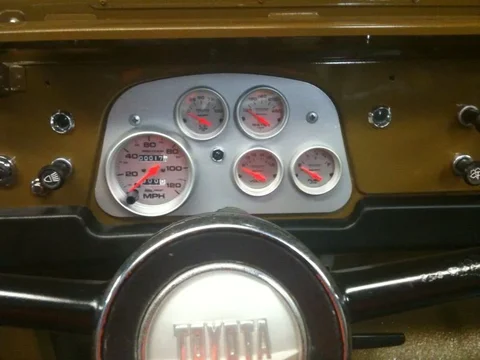
OK, I've posted on here several times about these damned gauges I'm wanting to install. Autometer Phantom. If you've read my previous posts you will know that I picked these up from a buddy slightly used and the price was right so I couldn't pass them up. When I got them he told me they were mechanical gauges. I get to the point to where I'm at in the pic and am totally confused on how to hook these damned things up. I really don't get it. I've read the directions on the autometer site and that clears some things up but, do these just swap wire for wire? What I mean is, there are 2 wire lugs on the back of the stock gauges and 2 on the autometers so is it as simple as removing and replacing? As far as wiring up the lights I'm going to run them in a series, jump black wire to black wire to black wire and leave a tail to connect to the headlight switch and do the same for the white one. Do the LED blinker and high beam swap just that easy too? wire to wire?
Please help an idiot out....

Thx

Kevin

PS
The gauges are speedo, tach on the bottom and fuel, volt and oil pressure on top. if that matters.
gaugecluster004.webp
 
Other than the speedometer, those are all electrical instruments,(other than perhaps small, top right could be mechanical oil pressure) the tachometer green wire simply attaches to the negative side of the coil, the other three will need to use an Auto Meter sending unit/plumbing in order to function properly.


Other than the speedometer, those are all electrical instruments, the tachometer green wire simply attaches to the negative side of the coil, the other three will need to use an Auto Meter sending unit in order to function properly.


Many, if not all of your Auto Meter instrument install instructions are available on line as Adobe PDF documents and are very clear and concise as far as wiring is concerned. All can be easily accessed with a quick search on the Google.


Did you have a custom speedometer cable made to work with your Auto Meter speedometer?
 
The whole mechanical vs electric gauge thing had me confused. The oil pressue gauge has a line and sending unit that came with it and I have the fuel gauge components needed, found that by searching, but nothing for the speedo. I did find the autometer install info but like I said , the whole mech, vs elec thing had me baffled. I guess I shouldn't take my buddy so seriously. Will the speedo attach to the stock cable? is there an adapter for that? Does my idea for wiring the lights, blinker, high beam sound like it will work or am I off track?
 
The whole mechanical vs electric gauge thing had me confused. The oil pressue gauge has a line and sending unit that came with it and I have the fuel gauge components needed, found that by searching, but nothing for the speedo. I did find the autometer install info but like I said , the whole mech, vs elec thing had me baffled. I guess I shouldn't take my buddy so seriously. Will the speedo attach to the stock cable? is there an adapter for that? Does my idea for wiring the lights, blinker, high beam sound like it will work or am I off track?


No, a stock Land Cruiser speedometer cable is not going to attach to the Auto Meter speedometer.

You will need to get a custom cable made. Where are you located? There are many places in larger cities that can make custom speedometer cables. They will likely need your old one to make sure they can get the correct end for your transfer case, and it would also likely be helpful for them to be able to look at the speedometer and figure out what end needs to go on that end as well.


There should not be an oil pressure sender with a mechanical instrument, but rather, a small plastic/nylon tube with brass compression fittings and an adapter, for the engine block side of the mix.


As for the wiring instructions;

Auto Meter makes electrical and mechanical versions of most of their instruments. They also make one set of instructions, and on those instructions, you need to find the ones that are applicable to your instrument.


As long as your gauge panel is grounded properly, you should not have an issue making the blinker and high beam indicators function as you plan, if they ground to the panel. If they have separate ground leads, just remember to tie them into a good ground and you should be good to go.
 
In lieu of starting a new thread.....I have my new autometer gauge panel (Man-a-Fre panel) hooked up and operational, with the following exceptions:

1. I chewed through the $70 custom speedo cable i ordered from the speedo guys i found on mud (they are great to work with by the way, name escapes me at the moment, i want to say they are in Wisconsin?) because it apparently had too much kink coming out of the back of the speedo. After further review and feeling around I can see why. New cable on order, but given the layout of the Man-a-Fre panel i have and the depth of the autometer speedo, I'm thinking i need to drill a hole through the column bracket for it to work? Anyone had similar issues?

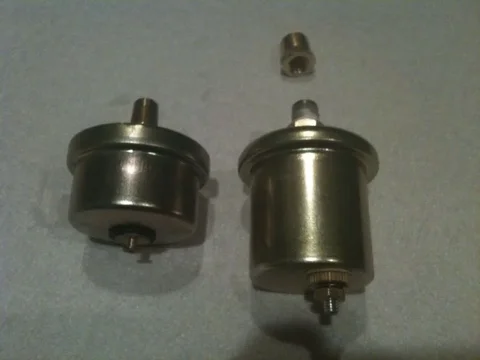
2. The oil sending unit doesn't fit (the water temp fitting did oddly enough?). Anyone know if Autometer sells a metric version of their sending unit that will work or do I need to go on a hunt for a hydraulic fittings type place and see if they can step up / down to make it work?

The gauges are electric.

Thanks.

cluster.webp

sending unit.webp
cluster.webp
sending unit.webp
 
All of the hardware I needed came with my gauges, oil/water. There is alot of info on this site if you search but IIRC autometer sells the parts separately or you can pick up the fittings are your local hardware store... I just don't remember what size they are...
 
New cable on order, but given the layout of the Man-a-Fre panel i have and the depth of the autometer speedo, I'm thinking i need to drill a hole through the column bracket for it to work? Anyone had similar issues?


Yes, you will need to trim part of the dash support so that the speedometer cable does not have any tight angles...


Land Cruiser uses 1/8"- 28 BSP, British Standard Pipe thread for the female oil pressure sending unit threads.

The Autometer sending unit is has male 1/8"- 27 NPTF, National Pipe Thread Fuel threads as that is what most USA vehicles used for the oil pressure sender port threads.


What engine are you running? F/2F/?

Where is your oil pressure sending unit located?
 
Yes, you will need to trim part of the dash support so that the speedometer cable does not have any tight angles...


Land Cruiser uses 1/8"- 28 BSP, British Standard Pipe thread for the female oil pressure sending unit threads.

The Autometer sending unit is has male 1/8"- 27 NPTF, National Pipe Thread Fuel threads as that is what most USA vehicles used for the oil pressure sender port threads.


What engine are you running? F/2F/?

Where is your oil pressure sending unit located?

Thanks for the info. I have a F Motor and then sending unit is located on drivers side of motor towards firewall, just above the oil pan seal to block.

I went by a local hose and fitting shop this morning and they gave me a fitting that they thought would work but it's just a brass 1/8"-27NPTF with a female end for unit to connect to. Sending unit fits great into the brass fitting but still can't get it to thread into the block.

Do you think a fitting exists to go from NPTF to BSP or am I just spinning my wheels?

Thanks.
 
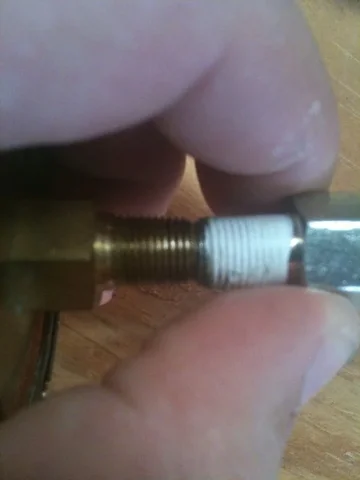
Or maybe not. Home now and can't get the adapter into the block. I compared the threads on stock (which screws right in) to the threads on the adapter and the adapter is visibly larger in diameter. Also, the stock unit has a substantial taper to more narrow diameter at tip, adapter seems to be consistent diameter and larger than stock at tip. Any ideas?

sending unit.webp
sending unit.webp
 
Does not look to be manufactured according to the description in the Autometer catalog.


Does the Toyota sending unit thread into the female end of the Autometer adapter fitting?
 
yes, much more loose fit (if that makes sense, but it will thread in). The way the hose and fittings guys described it to me is that the 27 / 28 is threads per INCH, and i'm dealing with less than a half inch so it's off less than a thread and that the two will in some situations thread themselves in - depending on material (steel vs. copper, etc.). Anyway, the answer is yes, it will thread in with some slight wobble, or maybe free spin is the way to describe it, it spins whereas the autometer gauge requires a slight bit of torque to turn it.

Edit: Note that it does seat once it threads in 3/4 of the way.
 
yes, much more loose fit (if that makes sense, but it will thread in). The way the hose and fittings guys described it to me is that the 27 / 28 is threads per INCH, and i'm dealing with less than a half inch so it's off less than a thread and that the two will in some situations thread themselves in - depending on material (steel vs. copper, etc.). Anyway, the answer is yes, it will thread in with some slight wobble, or maybe free spin is the way to describe it, it spins whereas the autometer gauge requires a slight bit of torque to turn it.

Edit: Note that it does seat once it threads in 3/4 of the way.


Ok, so that tells us that the supposed adapter piece from Autometer was manufactured with 1/8-27 NPTF on the male and female sides....


What “seats”?
 
Ok, so that tells us that the supposed adapter piece from Autometer was manufactured with 1/8-27 NPTF on the male and female sides....


What “seats”?

The stock sending unit will seat (spelling?) - aka it grabs once it threads in 3/4 of the way and tightens up in the auto meter adapter. What i don't understand is the taper in the stock fitting vs. the consistent diameter of the "adapter" by autometer. That is the issue in my mind. If it would ever start threading I'd be in good shape, but the diameter is too big to even come close to threadding in. How can both be "1/8" when one is noticeably larger than the other? I have been told that all pipe threads have a taper, but the rate of taper between these two fittings seems to be dramatically different. They appear to be same diameter at the base of the threads.
 
Last edited:
Just because something is 1/8 inch, does not mean that they are the same; you are figuring this out.

British Standard Pipe is its own animal, just as National Pipe Thread Fuel is its own.

They use two different sized drill bits for the hole and two different sized taps.


Your adapter piece from Autometer was not made correctly....
 
Just because something is 1/8 inch, does not mean that they are the same; you are figuring this out.

British Standard Pipe is its own animal, just as National Pipe Thread Fuel is its own.

They use two different sized drill bits for the hole and two different sized taps.


Your adapter piece from Autometer was not made correctly....

10-4. So then try the McMaster-Carr Option Coolerman suggested - I guess? Hate to roll the dice with another Autometer part.
 
Back
Top Bottom