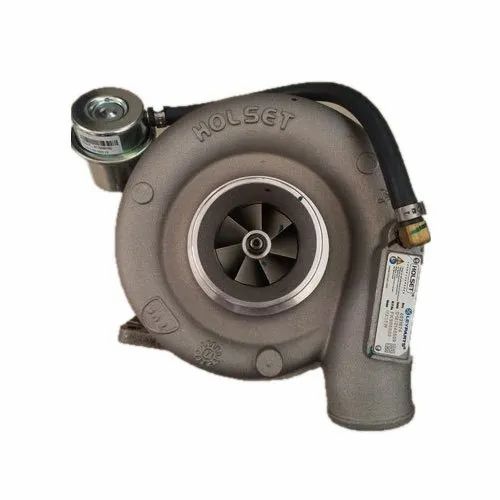
1HD-FT. The Story of an Engine That Wasn't Allowed to Breathe

This site may earn a commission from merchant affiliate
links, including eBay, Amazon, Skimlinks, and others.

For injection pressures and efficiency there's nothing in it. The good mechanical direct injection diesels are within 5% of the best automotive diesels ever. Fancier injection nozzles are to reduce combustion noise and higher injection pressures are to reduce particulate size (required for DPF). Injection pressures are simply set by the nozzle pop open pressure.
Your injection window (crank degrees to inject max fuel) is set by the plunger size in your injection pump.

This is why 30 year old direct injection diesels can get the same or better fuel economy as commonrail diesels. Best point BSFC on all of them is around 200g/kwh. On my Isuzu I went from old worn out nozzles to fully rebuilt nozzles with no difference in power or fuel economy. It did make idle cleaner.

Are you installing higher 5th gear? A mate with the 1HD-FT 80 series found the parts required but I don't know if he's done it yet.


Which model turbo are you using? The WRX IHI is the most common small one I've seen, flange is a complete orphan.
Most of the OM's get turbos bigger than 1HD engines because it's about drifting instead of pulling. The OM's spin a lot higher.
Holset HE250 8CM regular t3 flange they also make a 6cm, 9cm version that appear to have the same compressor. The 11cm version has a larger compressor, as far as I can tell it's fairly recent design 2010ish. Yea I did forget about the Subaru TD04 twinscroll. I think there is also a saab version of it too, also has a weird flange. After the salty weather is over here in Ohio I need to make some pulls with a camera on the gauges, none of the dynos will let you make a quick cupple pulls, they just want you to sign up for 1/2 a day of tuning with them.
 
Holset HE250 8CM regular t3 flange they also make a 6cm, 9cm version that appear to have the same compressor. The 11cm version has a larger compressor, as far as I can tell it's fairly recent design 2010ish. Yea I did forget about the Subaru TD04 twinscroll. I think there is also a saab version of it too, also has a weird flange. After the salty weather is over here in Ohio I need to make some pulls with a camera on the gauges, none of the dynos will let you make a quick cupple pulls, they just want you to sign up for 1/2 a day of tuning with them.

This one?
1765515287665.webp


Looks like that twin scroll is from a location specific QSB5.9 found in India region. The 10cm single entry QSB5.9 are more common.
 
:popcorn: this is ****ing great, love turbo talk, you guys need a podcast to politely argue about turbos in mildly exotic accents, 1.5m+ subscribers
you can just debate listener email questions and tell everyone why they are wrong about forced induction
 
Injection pressures are simply set by the nozzle pop open pressure.
Nope.... it doesn't work this way. Because after nozzle is opened, pressure defined only by plunger efficiency, since the liquid is not compressible.
Your injection window (crank degrees to inject max fuel) is set by the plunger size in your injection pump.
I am talking about exactly the same thing. So plunger head (with 4 pcs) from FTE much more efficient compared to the single 12mm plunger from FT, and it CAN inject the bigger amount of fuel for a shorter time. As a result, on high power output modes and high RPM, it resolve a problem with extensive exhaust, which I received from a long-time injection of a single 12mm FT plunger, since I've increased fueling on my pump. As a secondary result, small turbine outlet 48mm of FTE CT20B becomes a major restriction with 1HD-FT tuned fuel pump. In my case, I started to feel that restriction after 85-90 Mph and 3000-3200 RPM. Factory CT26 turbine from 1HD-FT has 52mm outlet - feel the difference ). However, this factory CT26 wheel is too big and heavy for the low-end rpm response - 68/52. That is why I've decided to go with smaller Celicas CT20B, which has 60/50 turbine wheel and works good at low-end and still at high-end around 3400-3600RPMs.
Are you installing higher 5th gear? A mate with the 1HD-FT 80 series found the parts required but I don't know if he's done it yet.
No, I don't want it, since I have H151F + 3.7 axle ratio (41/11) + 33" tyres. So, in this config, the gearbox has a very good balance power/speed. I have 120km/h (75Mph) at 2600 RPM - about maximum torque, and 140 km/h (87Mph) at 3000 RPM. Pretty convenient and still have a power reserve for overtaking.

 
Nope.... it doesn't work this way. Because after nozzle is opened, pressure defined only by plunger efficiency, since the liquid is not compressible.

I am talking about exactly the same thing. So plunger head (with 4 pcs) from FTE much more efficient compared to the single 12mm plunger from FT, and it CAN inject the bigger amount of fuel for a shorter time. As a result, on high power output modes and high RPM, it resolve a problem with extensive exhaust, which I received from a long-time injection of a single 12mm FT plunger, since I've increased fueling on my pump. As a secondary result, small turbine outlet 48mm of FTE CT20B becomes a major restriction with 1HD-FT tuned fuel pump. In my case, I started to feel that restriction after 85-90 Mph and 3000-3200 RPM. Factory CT26 turbine from 1HD-FT has 52mm outlet - feel the difference ). However, this factory CT26 wheel is too big and heavy for the low-end rpm response - 68/52. That is why I've decided to go with smaller Celicas CT20B, which has 60/50 turbine wheel and works good at low-end and still at high-end around 3400-3600RPMs.

No, I don't want it, since I have H151F + 3.7 axle ratio (41/11) + 33" tyres. So, in this config, the gearbox has a very good balance power/speed. I have 120km/h (75Mph) at 2600 RPM - about maximum torque, and 140 km/h (87Mph) at 3000 RPM. Pretty convenient and still have a power reserve for overtaking.

Injection pressures do work that way. The sprung valve maintains line and injection pressure. The BSFC numbers prove that diesel efficiency hasn't improved with higher injection pressures.

Your 12mm pump is plenty, I don't know why you complain. The 1HD-FTE uses a VP37 right?

To know what your turbine is doing you have to gauge EMP (drive pressure). Have you done this or just guessing? After 85mph your aerodynamic loads outside the vheicle are the bigger problem than anything inside. I am told a stock 1HD-FTE auto 100 series will do well over 180km/h. Why can't you?

The factory CT26 from the FT is a big lazy and inefficient turbo. Smaller and more efficient turbines are more active and produce more boost for the same drive pressure. The Celica turbine is also an old inefficient design. They do not flow well.

Seriously look at the choke points in these paddle wheel turbines:
1765523654780.webp


That's after you've forced the exhaust stream to turn about 45 degrees as sharp as possible.
 
Your 12mm pump is plenty, I don't know why you complain.
I do not complain. I'm trying to explain, why 1HD-FTE CT20B turbo is not very good on max. load after 2800 RPM with 1HD-FT, but it is absolutely fine with its original FTE engine. And I think, that almost the same problem will happen with any other small turbine wheel. The Celica's CT20B twinscroll turbo has 2mm more in diameter of turbine outlet, and also has longer blades. It resolve the problem on high RPMs. I've learned that on my own practice. Even all of these turbos are old fashioned, you can make a certain clues.
The Celica turbine is also an old inefficient design. They do not flow well.
Yes, I agree that design is old and blades are not much efficient. But, the light ceramic wheel beats a lot of modern advantages just with its own low weight. And ceramic wheel will work very good on 1HD-FT in coupe with more efficient and light compressor wheel.
 
This one?
View attachment 4046718


Looks like that twin scroll is from a location specific QSB5.9 found in India region. The 10cm single entry QSB5.9 are more common.
no this one:

I also have a 6mm laying around for the om606 project if that ever happens.

there are so many different versions that are slightly different its crazy.
 
Last edited:
I do not complain. I'm trying to explain, why 1HD-FTE CT20B turbo is not very good on max. load after 2800 RPM with 1HD-FT, but it is absolutely fine with its original FTE engine. And I think, that almost the same problem will happen with any other small turbine wheel. The Celica's CT20B twinscroll turbo has 2mm more in diameter of turbine outlet, and also has longer blades. It resolve the problem on high RPMs. I've learned that on my own practice. Even all of these turbos are old fashioned, you can make a certain clues.

Yes, I agree that design is old and blades are not much efficient. But, the light ceramic wheel beats a lot of modern advantages just with its own low weight. And ceramic wheel will work very good on 1HD-FT in coupe with more efficient and light compressor wheel.
I think you have injection pump problems. The internal timing advance with RPM is likely not working.

Internally those pumps run a vane pump that increases pressure with rpm and uses that pressure to advance the timing. If the vane pump wears out or fuel is starved to it the case pressure can't build and timing doesn't advance. The result is reduced power at higher rpm and higher EGT at higher rpm as still burning diesel comes out the exhaust ports.

This is causing you to seek out bigger turbines as you think it's the turbo causing your engine to drop in power with rpm.
 
The internal timing advance with RPM is likely not working.
I worked out this issue. Advancing piston is working fine. I had a little bit dirty intake net-filter, but I doubt that it can affect so much the internal low-pressure zone. I was even considering to tune up this piston to earlier timing (it is adjustable) for increased amounts of fuel. The most remarkable thing is, that I am not alone. Another two guys, who installed the FTE turbo on FT noticed the same effect. They checked the internal pressure - it was in range.
 
TLC100/Coaster/Dyna Clutch Set is assembled... This one is most capable and strong for our 1HD engines among the factory parts. After all torque and power improvements on 1HD-FT are done, it is much more preferable to use particularly this set. However, my old original set from FT has 275K km (170K miles) on it and still working, but not so good already). Since it needs to be changed, it is better to change it on FTE set. Just be careful - you need to replace all of these parts together:
1. Clutch sub-assy (case) 31210-36320
2. Clutch disk 31250-60391.
3. Clutch bearing 31230-36210
4. Fork 31204-36142
5. Fork ball support 31236-36060
6. Flywheel bearing is the same, as 1HD-FT 90363-15017
7. Optional: you may need to replace rear crankshaft seal if it is sweaty.... 90311-95008

1700829959574_default.webp


1700829959588_default.webp


IMG_20201118_123947.jpg.556c79a41d1aca8c8f93d2a20fdfbe27.webp


toyota-3123036210-1629944038170-big.webp


15-085512a.webp
 
Last edited:
P.S. This 300mm set fits only flywheels for 300mm clutch and H151F gearbox with 14th spline input shaft (late 1HD-T, all 1HD-FT/FTE). If you have old-style flywheel from 1HD-T for 275mm clutch, then you need to upgrade your flywheel, taking that to the turning and milling workshop, or better choice - just replace flywheel on used or new one from FT/FTE. For those, who have a H150F gearbox with 21-spline input shaft (factory 1HZ option), it will be also necessarily to use the Isuzu 300mm clutch disk like Exedy ISD134 or ISD136U, or Aisin DG-321U with 21 spline.
 
I worked out this issue. Advancing piston is working fine. I had a little bit dirty intake net-filter, but I doubt that it can affect so much the internal low-pressure zone. I was even considering to tune up this piston to earlier timing (it is adjustable) for increased amounts of fuel. The most remarkable thing is, that I am not alone. Another two guys, who installed the FTE turbo on FT noticed the same effect. They checked the internal pressure - it was in range.

These pumps are almost 30 years old now. I would think it's worth getting them tested on a flow bench to check delivery and timing.
 
I wanted to say again how strong the negative effect of a fuel system that sucks in air is on engine performance.

My original "80" [filter/lift pump] (the old "frog") developed its first minor leak when pressurizing in freezing weather two years ago. I should have replaced that old crap immediately instead of hoping for a miracle. But I kept putting it off for no good reason, and only this winter did I realize it was time for an urgent replacement — when it started leaking quite noticeably during pressurization.

In short, the effect of air is huge: the automatic advance mechanism in the injection pump hardly works because the low-pressure fuel pump compresses air bubbles instead of acting directly on the advance piston. Air is also harmful to the injection pump and to the injectors' spray pattern.

In the end, after installing the TLC 200 filter, the engine began to purr, revving up very quickly and quietly. It became obvious that EGT had dropped due to the advance mechanism now working properly. Now I will increase the fuel delivery.

When installing the TLC 200 filter, I followed friend's advice and used closed-end stainless steel nuts on the studs that were screwed in from the back side. I did, however, use ordinary anodized bolts for the studs themselves.

The only inconvenience is that the return line fittings on the TLC 200 filter are 8mm, while on the "80" they are 6mm. At first, Dan and I stretched the 6mm hoses over the 8mm fittings, but then it became clear that we would never get them off again… in short, a quick-disconnect setup for switching return hoses between summer and winter was not possible. So I bought clear polyurethane 8mm tubing and 6/8mm adapters. Now I can monitor the return line condition and easily switch the 6mm hoses from winter to summer mode.

IMG_20260404_132239_9.webp


IMG_20260404_132228_4.webp
 
Last edited:
I am battling air in my fuel system today. Confirmed using clear vinyl hoses between the input and output of the fuel filter housing in my 1998 HDJ100. Air is present exiting the filter housing into the injector pump. I believe the air must be getting in through the hand prime diaphragm. I am on my second new Toyota filter housing, same symptoms. I have a Chinese cheap filter housing being deliver today via Amazon.

Looking at this last post and a quick look on Partsouq, has anyone run the VDJ filter assembly on the 1HD-FTE? Mounting looks similar and my hope is that the diaphragm condition may be better since it is a newer part.
 
I am on my second new Toyota filter housing, same symptoms.
Did you check the fuel pipes/hoses between the fuel tank and the filter? The problem might be there. To eliminate the diaphragm, try running the engine from a canister. Place it on a bull bar and connect it with a simple hose to the diaphragm housing. If you want to drive a bit, you will also need to run the return line into the canister. If the air is gone, then the problem is somewhere else.
has anyone run the VDJ filter assembly on the 1HD-FTE?
I don't see any problem using it on the 1HD-FTE. As you can see, I use transparent pipes only for the return line, and I don't have any air inside — not a single bubble. For the main line, the inlet is 12mm, and the outlet to the pump is 10mm.

If you decide to use this setup, keep in mind that there are three types of housings: a plain one, one with an electric heater, and one with return line heating. There are also two types of filter bodies: a short one (the old version) and a long one (for the last facelift and for the new long filter element). Buy the long one, because you can fit any filter inside — both the old ones and the new one.

On one hand, the new filter is better designed. On the other hand, it has a smaller filtration cell size, which is not good for cold weather. That is why I installed the new filter 23390-51030, but also bought an old filter with the largest filtration cell size — about 30 microns. If I have problems with the new filter next winter, I will install the old filter with the black plastic body 23390-17540. There are about 4-5 types of old filters. This one has the least resistance.

filter.webp


IMG_20260412_075604_3.webp
 
Vadus, thank you for the additional information. Can you confirm that the housing fit on your HDJ80’s filter mount in the engine bay? I have checked for leaks from the tank. No air present going into the filter assembly/housing. Awaiting on the “test” filter housing to be delivered. I do appreciate your follow on reply. I think in the end that may be the route I go based on the last 2 filter assemblies.

IMG_0066.webp
 
Can you confirm that the housing fit on your HDJ80’s filter mount in the engine bay?
Unfortunately, no. The TLC200 mounting studs are located a little bit wider — about half an inch wider. So you need to either modify your original mount or make an adapter for the new housing.
 
Now I can see - the problem is most likely inside the handy-pump. Also check the bottom plastic water-sensor assy and the filter mating surface.
 
Last edited:
Because the return line heats the fuel that enters the pump. This is good in winter but bad in summer, when cool fuel is preferred for the VE pump and plunger.

The housing has an orifice with an OD of 3mm. The hot fuel from the return line passes through it, mixes with the fuel inside the filter body, and then returns to the pump through the filter.
 
Back
Top Bottom