These tanks have been around for several years now, and obviously there have been some fitment issues from day 1 with them. This thread is not to direct blame at anyone, but make others aware of issues that may be going on unnoticed, which could lead to some pretty bad and unexpected failures. It would be nice to see some type of update or modification to current design or install instructions, which would not take much at all to eliminate a majority of the issues people are having.
I've had the 12.5g LRA aux tank for 3 years now and did the original install myself. It has more or less been trouble free, up until now. I did do the "high loop" air filter mod, which I think helps quite a bit with charcoal canister issues. I have not been as diligent in maintaining the vent air filter as I should have been which resulted in 1-2 charcoal canister saturations and the resulting codes. These have cleared themselves with time. This filter needs to be cleaned/serviced with every oil change.
All was fine until recently when I noticed a few "drips" under the rear of the truck. Quick swipe with a paper towel and it was obvious this was coolant, and coming from above the aux tank. There are 2 hard lines above the tank going into the rear heater core (inlet and outlet) and one of these was compromised. I could get a hand under this area and feel the lines touching the tank. Not knowing which to order, I got both since they were not expensive.
PNs: 87248-60760, 87248-60750
This was my first project on a newly installed Rotary SPO 12 Wide lift and I will say that having a lift is such a game changer when working on vehicles. If you have room in your shop/garage for one and have been on the fence, get one. Installing the aux tank was a miserable multi day process on a creeper on my back in a cold garage. Removal, repair of issues, and reinstall was a few hour job, standing upright, with a heated floor. Having help from @lelandEOD and @reklund5 also made this a lot faster and much more enjoyable. This went from a chore to a fun Saturday project hanging out with friends.
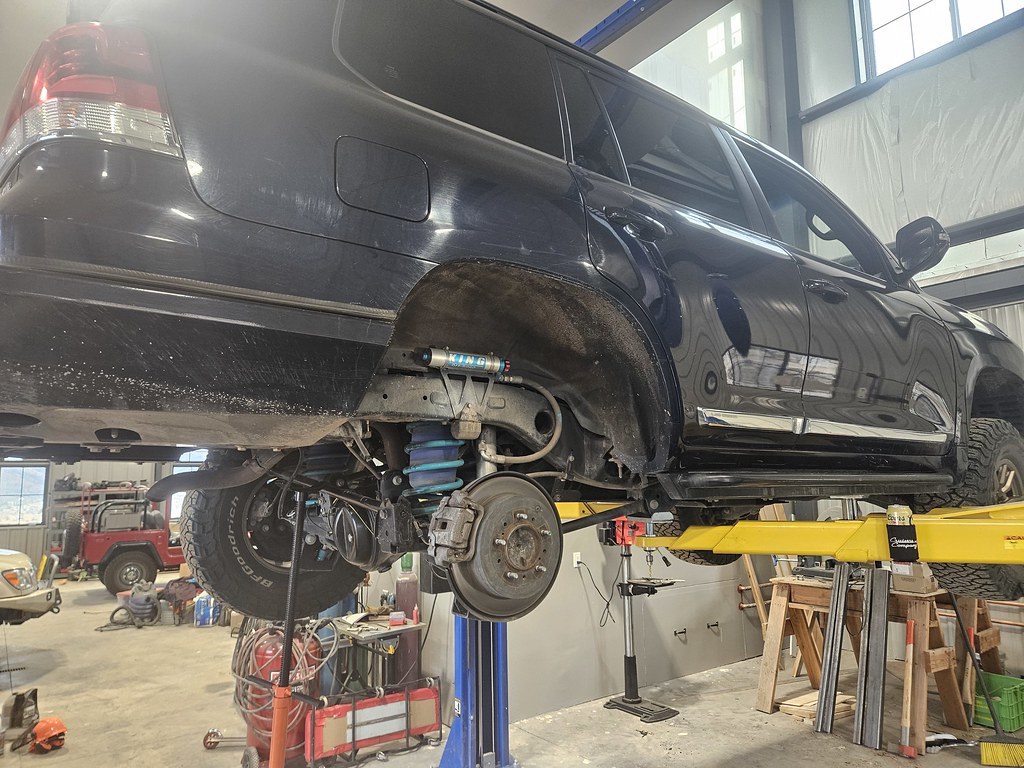
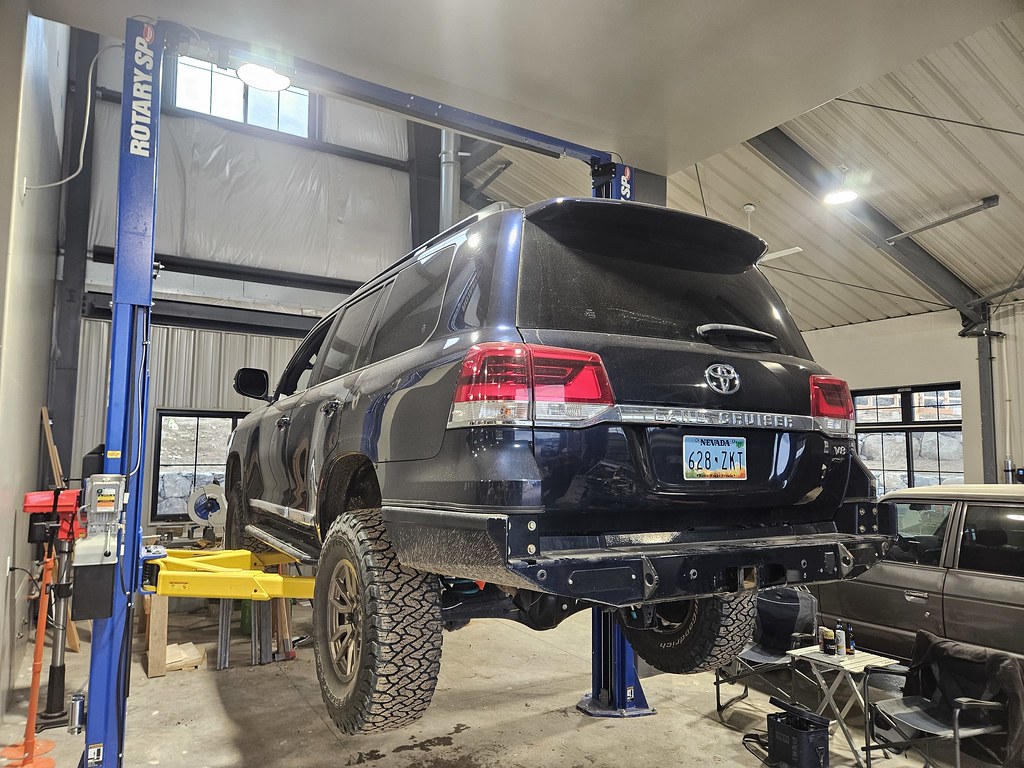
After getting the 200 on the lift and pulling the passenger rear tire, it was pretty easy to disconnect lines, pull the spare carrier (which was not going back on due to going to 34" tires), and loosen tank fittings. I ran the tank dry and did several pumps when going downhill, but there was still at least 1 gallon of fuel when I pulled the drain plug on the aux tank. More than expected. Good to know if you ever were in a pinch and completely out of fuel. With extra sets of hands, and some T post jack stands, getting the tank down was easy too. The worst part was lowering it just enough to disconnect the float wires, without stretching them. An Anderson connection here wouldn't be a bad idea if you ever had to remove it again.
With the tank down, it was pretty apparent where the issue was. Good thing I ordered both lines. The AC line also had some rub marks on it, but not bad enough to worry me. However, long term, this would have absolutely compromised the AC line and been very difficult to diagnose since refrigerant rarely drips. I'm also lucky that the coolant leak was a slow trickle. Had it been more of a burst, this could have absolutely lead to overheating and head gasket issues or worse.
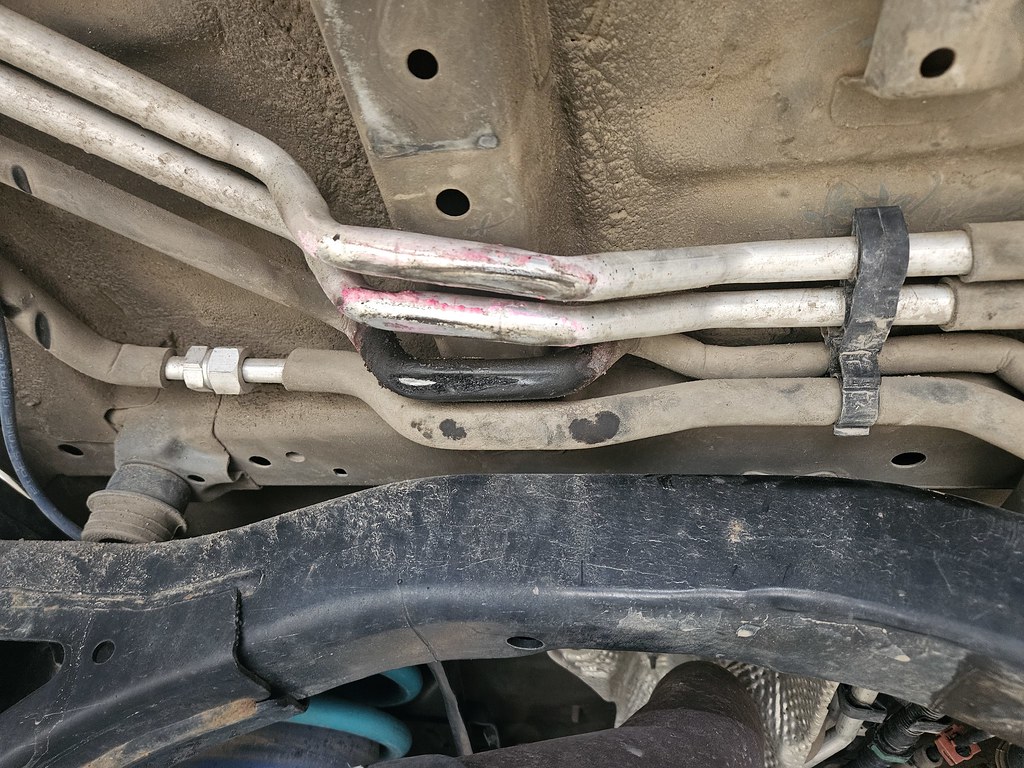
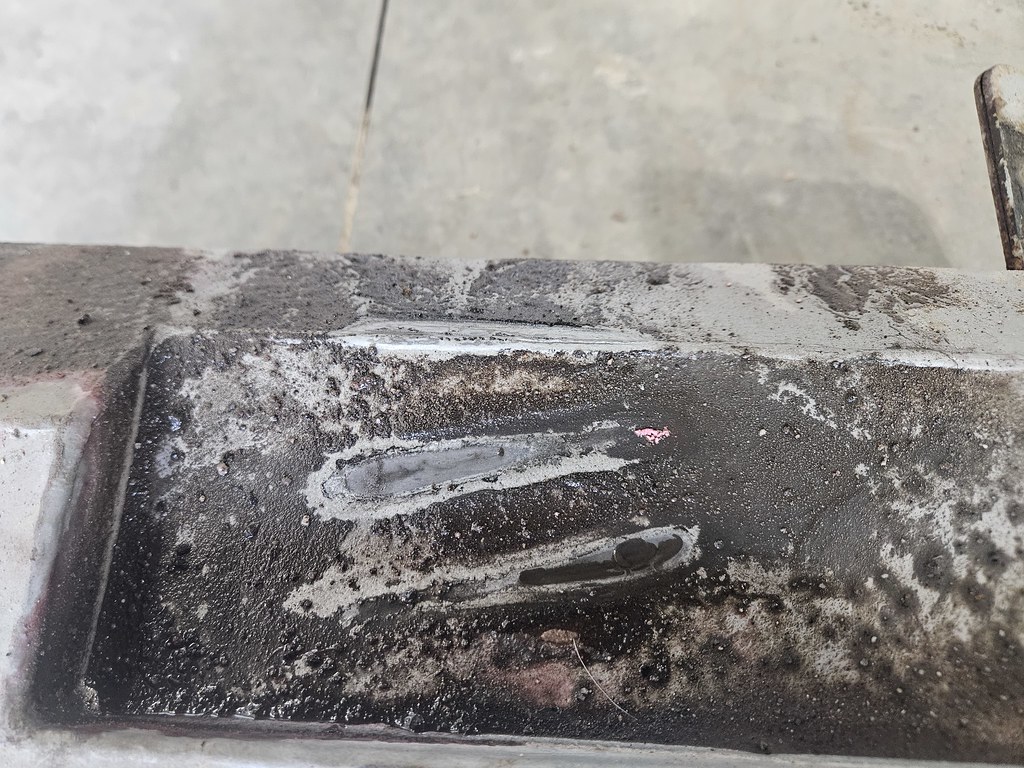
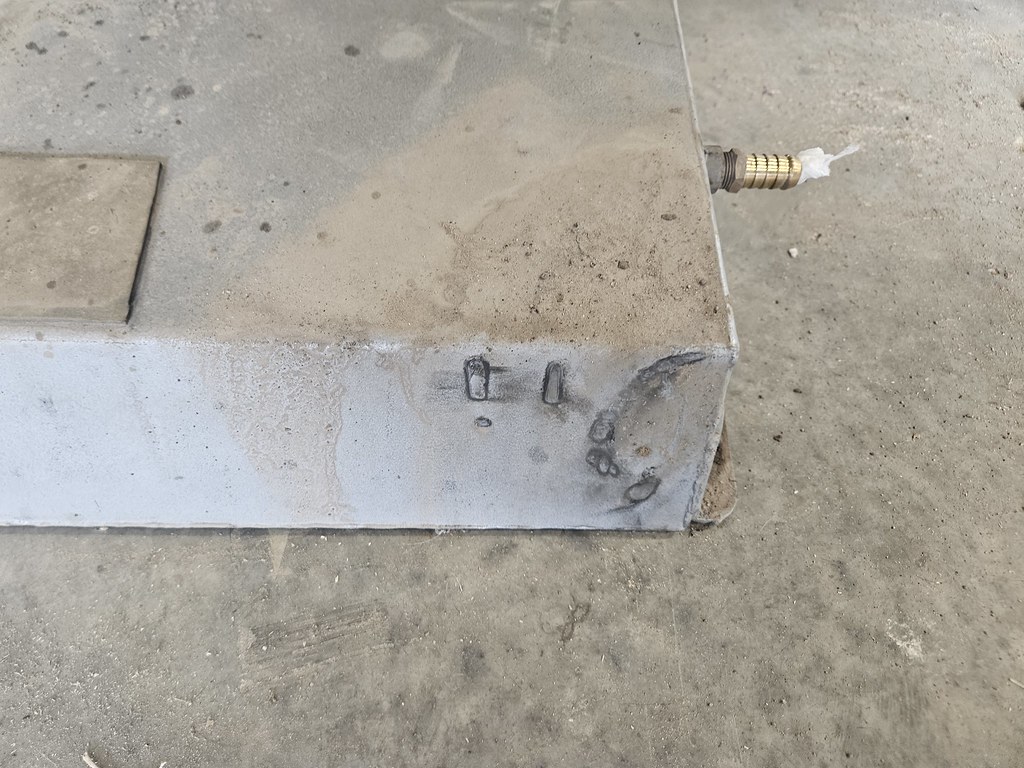
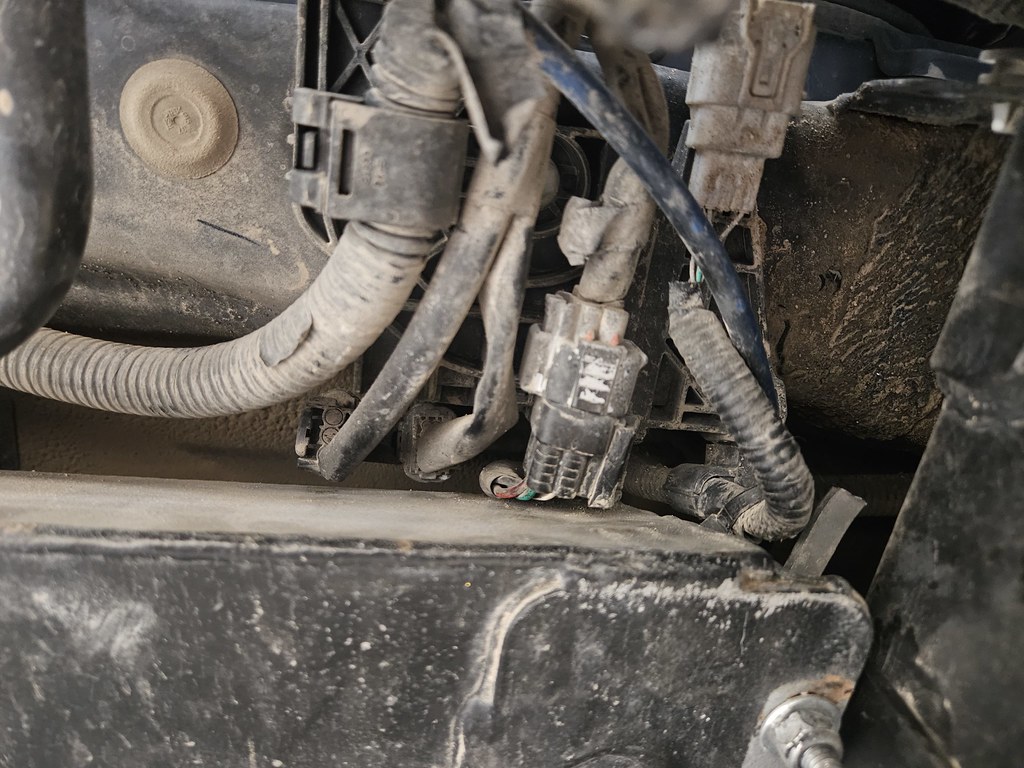
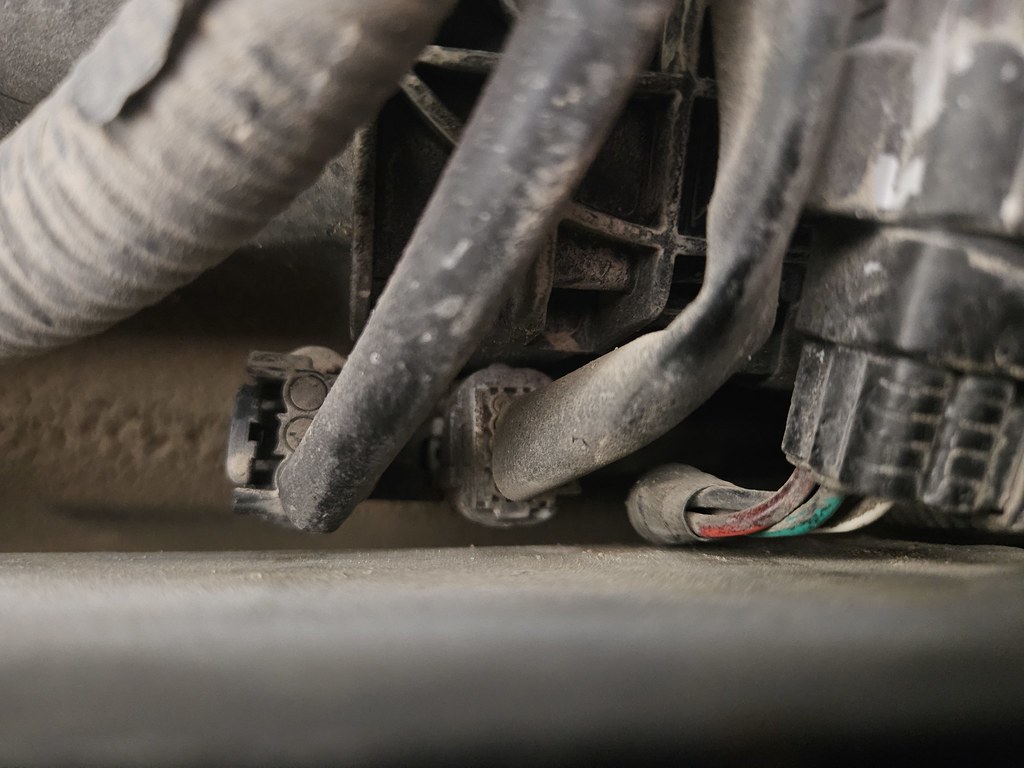
With the tank on the ground, you could clearly see that it was rubbing in multiple spots. This is not an install issue, but a design and clearance issue. I would have gladly sacrificed a gallon of fuel, or a 1/2 inch of clearance to avoid all of this from the beginning. If it wasn't the coolant lines, it would have been the AC line, or some of the rear light/tow hitch wires that would have eventually been taken out. Or even a hole in the subtank itself.
Removing the coolant lines was a bit tricky. There are some plastic retainers that can be removed, and 1 that cannot. One of these requires loosening the 3 nuts holding the muffler heat shield and sliding it just enough out of the way to get the retainer. For the one that cannot be removed, you have to do your best to push out the lines without breaking the plastic tabs. The charcoal canister needs to be removed too.
After that, the old lines can be removed, and the new lines "persuaded" to go in. Line clamps on the rubber lines before the hard lines make this less messy.
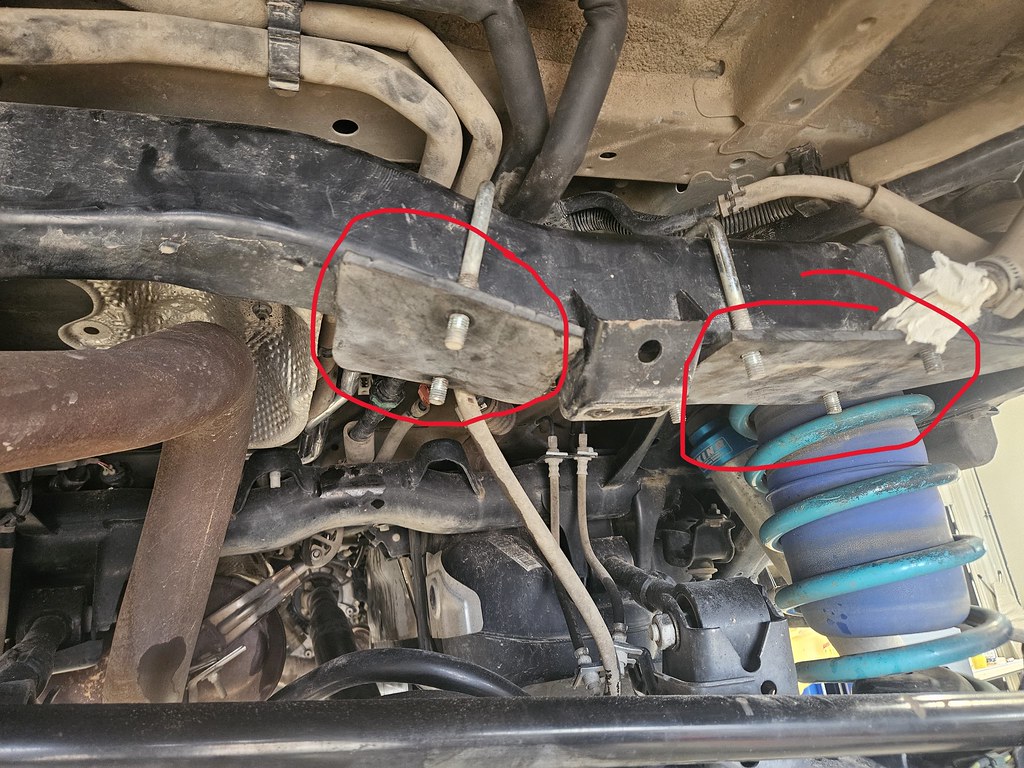
With new lines in, it's pretty much reverse of the removal. However, we had to address some fundamental fitment issues, otherwise I would be doing this again in another 2-3 years. All we needed was another 1/2" or less of additional clearance. After a bit of thinking, and trying to determine what was the easiest way to get the needed clearance with the least amount of effort, @lelandEOD and @reklund5 came up with a great idea of adding a heavy rubber mat at the front (under the U bolts) and mounting the tank under (instead of over) the rear mounting brackets, and adding a rubber spacer there too. This required just minimal cutting with an angle grinder. The rubber mat used was really dense and at least 1/4" thick, if not more.
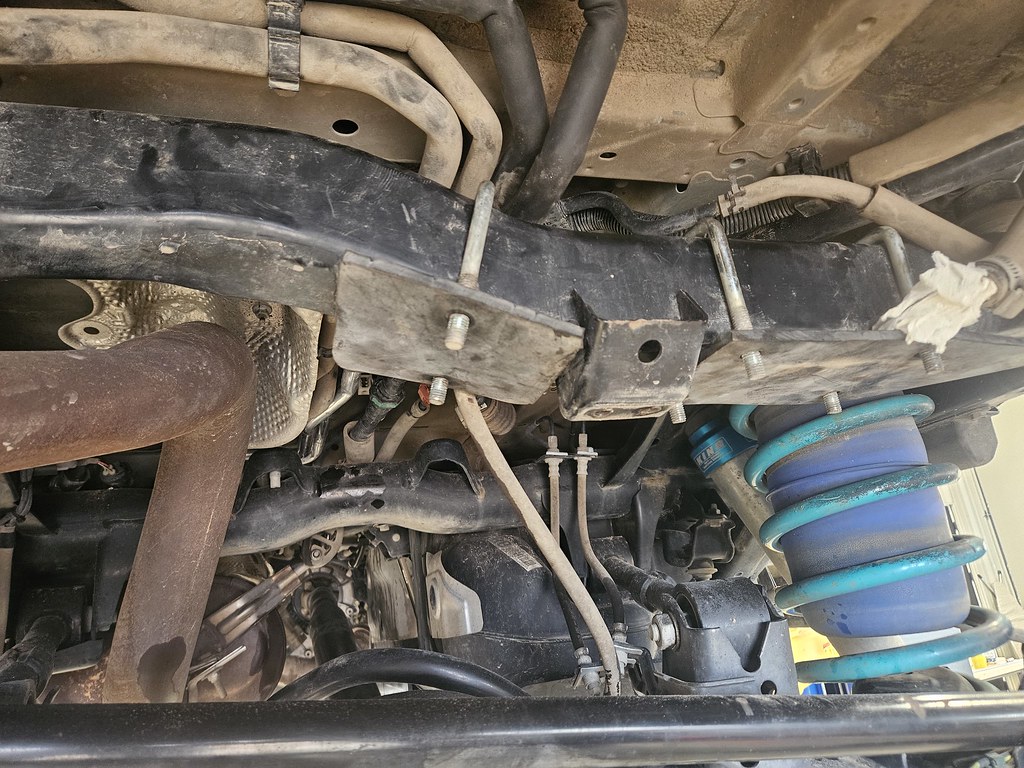
After install, it was apparent that we had at least 1/2" of additional clearance. The AC and coolant lines were well out of harm's way, and the rear wiring connectors, while tight, were no longer touching the tank. We all felt pretty good about this working much better long term. As mentioned earlier, these are not major changes or tweaks and could easily be accomplished without having to redesign the tank. A few additional or modified brackets/parts and a change to instructions is all it takes. With a new tank costing above $3k now, this should have already been done.
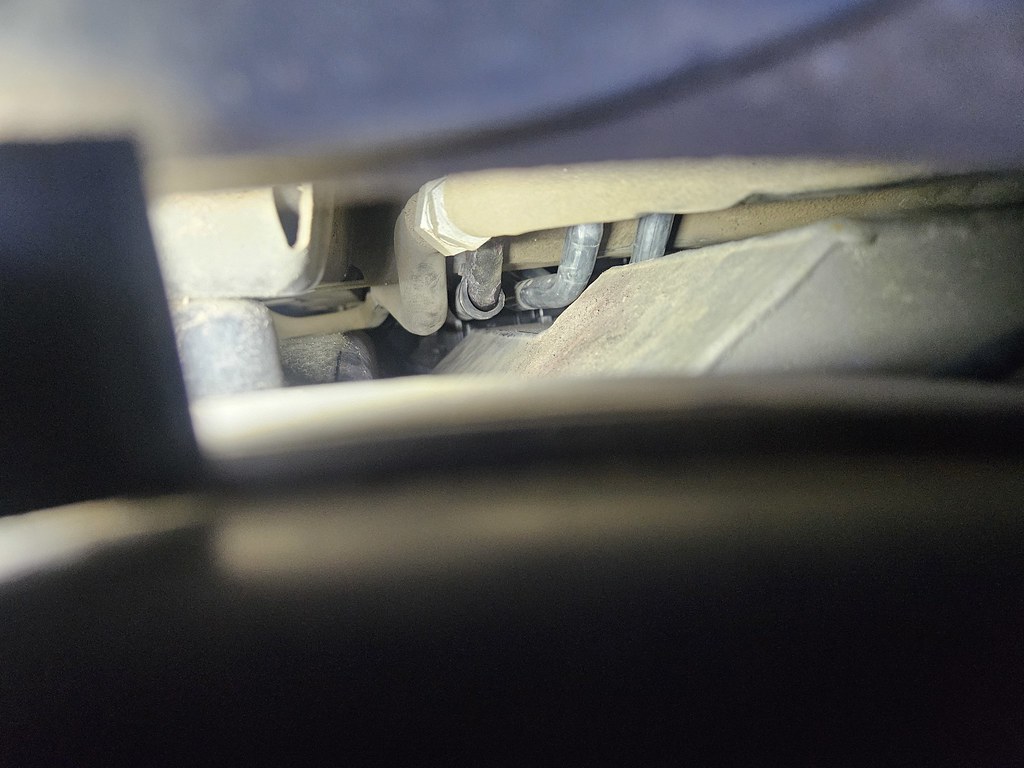
I don't know if this is an issue with the 24g tank too, but I'm guessing the top of both tanks is more or less the same. From the driver rear wheel well, you can see the hard lines, and a bore scope or other camera could probably give you a good idea on how much clearance you have. It would be worthwhile to check this if you have either tank.
I've had the 12.5g LRA aux tank for 3 years now and did the original install myself. It has more or less been trouble free, up until now. I did do the "high loop" air filter mod, which I think helps quite a bit with charcoal canister issues. I have not been as diligent in maintaining the vent air filter as I should have been which resulted in 1-2 charcoal canister saturations and the resulting codes. These have cleared themselves with time. This filter needs to be cleaned/serviced with every oil change.
All was fine until recently when I noticed a few "drips" under the rear of the truck. Quick swipe with a paper towel and it was obvious this was coolant, and coming from above the aux tank. There are 2 hard lines above the tank going into the rear heater core (inlet and outlet) and one of these was compromised. I could get a hand under this area and feel the lines touching the tank. Not knowing which to order, I got both since they were not expensive.
PNs: 87248-60760, 87248-60750
This was my first project on a newly installed Rotary SPO 12 Wide lift and I will say that having a lift is such a game changer when working on vehicles. If you have room in your shop/garage for one and have been on the fence, get one. Installing the aux tank was a miserable multi day process on a creeper on my back in a cold garage. Removal, repair of issues, and reinstall was a few hour job, standing upright, with a heated floor. Having help from @lelandEOD and @reklund5 also made this a lot faster and much more enjoyable. This went from a chore to a fun Saturday project hanging out with friends.
After getting the 200 on the lift and pulling the passenger rear tire, it was pretty easy to disconnect lines, pull the spare carrier (which was not going back on due to going to 34" tires), and loosen tank fittings. I ran the tank dry and did several pumps when going downhill, but there was still at least 1 gallon of fuel when I pulled the drain plug on the aux tank. More than expected. Good to know if you ever were in a pinch and completely out of fuel. With extra sets of hands, and some T post jack stands, getting the tank down was easy too. The worst part was lowering it just enough to disconnect the float wires, without stretching them. An Anderson connection here wouldn't be a bad idea if you ever had to remove it again.
With the tank down, it was pretty apparent where the issue was. Good thing I ordered both lines. The AC line also had some rub marks on it, but not bad enough to worry me. However, long term, this would have absolutely compromised the AC line and been very difficult to diagnose since refrigerant rarely drips. I'm also lucky that the coolant leak was a slow trickle. Had it been more of a burst, this could have absolutely lead to overheating and head gasket issues or worse.
With the tank on the ground, you could clearly see that it was rubbing in multiple spots. This is not an install issue, but a design and clearance issue. I would have gladly sacrificed a gallon of fuel, or a 1/2 inch of clearance to avoid all of this from the beginning. If it wasn't the coolant lines, it would have been the AC line, or some of the rear light/tow hitch wires that would have eventually been taken out. Or even a hole in the subtank itself.
Removing the coolant lines was a bit tricky. There are some plastic retainers that can be removed, and 1 that cannot. One of these requires loosening the 3 nuts holding the muffler heat shield and sliding it just enough out of the way to get the retainer. For the one that cannot be removed, you have to do your best to push out the lines without breaking the plastic tabs. The charcoal canister needs to be removed too.
After that, the old lines can be removed, and the new lines "persuaded" to go in. Line clamps on the rubber lines before the hard lines make this less messy.
With new lines in, it's pretty much reverse of the removal. However, we had to address some fundamental fitment issues, otherwise I would be doing this again in another 2-3 years. All we needed was another 1/2" or less of additional clearance. After a bit of thinking, and trying to determine what was the easiest way to get the needed clearance with the least amount of effort, @lelandEOD and @reklund5 came up with a great idea of adding a heavy rubber mat at the front (under the U bolts) and mounting the tank under (instead of over) the rear mounting brackets, and adding a rubber spacer there too. This required just minimal cutting with an angle grinder. The rubber mat used was really dense and at least 1/4" thick, if not more.
After install, it was apparent that we had at least 1/2" of additional clearance. The AC and coolant lines were well out of harm's way, and the rear wiring connectors, while tight, were no longer touching the tank. We all felt pretty good about this working much better long term. As mentioned earlier, these are not major changes or tweaks and could easily be accomplished without having to redesign the tank. A few additional or modified brackets/parts and a change to instructions is all it takes. With a new tank costing above $3k now, this should have already been done.
I don't know if this is an issue with the 24g tank too, but I'm guessing the top of both tanks is more or less the same. From the driver rear wheel well, you can see the hard lines, and a bore scope or other camera could probably give you a good idea on how much clearance you have. It would be worthwhile to check this if you have either tank.
Last edited: