There are some other threads out there that address this concept, most notably:
https://forum.ih8mud.com/79-95-toyota-truck-tech/213396-power-window-homebrew-fix.html
But I didn't see anything specific to the 80 series so thought I'd include my experience.
I've had problems with slow windows since I bought the 1991 rig in 2007. I've tried breaking down all the switches and cleaning them out (there is a writeup around here somewhere).
Cleaning the contacts seems to have helped, but shortly afterwards I was back to glacial window movement (or none at all).
So when my passenger side window failed in the rain, I had finally had enough and decided to install some relays in an attempt to make it work better.
I'm happy with the results! I think that it could be done even better. When I redo the back windows I'll go the extra mile (see below) but for now, there is improvement.
I'll try to do a sketch for the wiring as well, but in words--- here it goes.
parts:
2 bosch relays
some wire
butt and spade terminals
heat shrink
zip ties
diagonal cut plier
crimping pliers
wire strippers
The wiring is pretty simple:
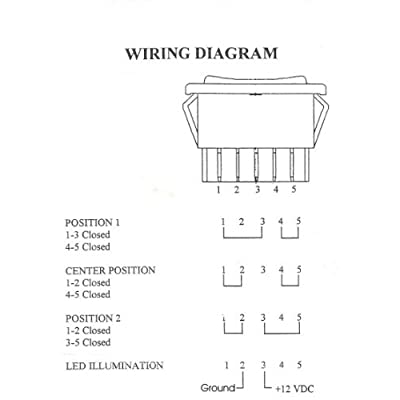
In stock form, the current arrives through a blue/black wire to the switch. there are 4 wires that leave the switch-- 1 black, 1 red, and two others. The others I left alone.
I cut the black and the red and the blue/black each about an inch away from the switch. I ran a jumper from the blue/black (+12v) to the blue black wire on the switch.
I also ran a 12ga wire from a bolt on the dash (ground) through the door grommet, to the relays.
I then wired up the two relays as follows:
Relay 1:
30: Connects to the black wire that goes to window motor
87a (nc): To Ground wire
87 (no): +12 v from black/blue wire
86: to ground wire
85: black wire that goes to switch
Relay 2:
30: connects to red wire that goes to window motor
87a (nc): To ground wire
87 (no): +12 v from black/blue wire
86: to ground wire
85: to red wire that goes to switch
it's that simple. I did use jumpers to connect the wires to the relays so that things weren't so very tight in there.
Now, when the switch is activated, it trips the relay and current flows through the motor and to ground through the new, shorter, fatter ground wire.
When the master switch is activated, it completes a ground circuit which also activates the relay(s) to move the window. The primary difference is that now the current that flows through the motor has a short distance in big wire to go to ground, whereas it used to go all the way to the driver's door and pass through the switch there, which causes arcing and pitting and eventually failure.
The only current traveling through the master switch is the current to switch the relay(s)- a very small amount.
Here's my super-uber-wow its bad Paint version:

the important details are that you connect pole 30 to the motor wires, and pole 87 to the +12v. Don't do it the other way around or you'll have a short.
A *better* way to do this would be to pull a 'new' wire with +12v from a fuse on the battery. That would give a lot more juice to the window motor, and would allow you to leave the blue/black wire untouched. I did notice that the blue/black wire has a voltage drop of about 0.2 volts (battery shows 12.5, wire to battery shows 12.3 ) it isn't a big drop, but it could make a small difference.
The relays fit in the arm rest, pretty easily. I used 4" pigtails to make connections, if I had used 8" of wire instead, it would have been a little easier to cram stuff in. Better still would be to use relay sockets, but I didn't have 'em handy. I'll use them in the back seat controls if I get around to fixing those any time soon.
This was really easy- took maybe 2 hours, including the time I wasted "inventing" the circuit and testing it out. I could probably do it again in less than an hour.
Final thought: you could leave the stock wiring harness completely intact if you were to pull a new +12v wire, and then just tap into the QD at the window motor. I started out with that idea in mind, but wasn't sure how to wire it such that the door skin could still be removed relatively easily.
Good luck!
https://forum.ih8mud.com/79-95-toyota-truck-tech/213396-power-window-homebrew-fix.html
But I didn't see anything specific to the 80 series so thought I'd include my experience.
I've had problems with slow windows since I bought the 1991 rig in 2007. I've tried breaking down all the switches and cleaning them out (there is a writeup around here somewhere).
Cleaning the contacts seems to have helped, but shortly afterwards I was back to glacial window movement (or none at all).
So when my passenger side window failed in the rain, I had finally had enough and decided to install some relays in an attempt to make it work better.
I'm happy with the results! I think that it could be done even better. When I redo the back windows I'll go the extra mile (see below) but for now, there is improvement.
I'll try to do a sketch for the wiring as well, but in words--- here it goes.
parts:
2 bosch relays
some wire
butt and spade terminals
heat shrink
zip ties
diagonal cut plier
crimping pliers
wire strippers
The wiring is pretty simple:
In stock form, the current arrives through a blue/black wire to the switch. there are 4 wires that leave the switch-- 1 black, 1 red, and two others. The others I left alone.
I cut the black and the red and the blue/black each about an inch away from the switch. I ran a jumper from the blue/black (+12v) to the blue black wire on the switch.
I also ran a 12ga wire from a bolt on the dash (ground) through the door grommet, to the relays.
I then wired up the two relays as follows:
Relay 1:
30: Connects to the black wire that goes to window motor
87a (nc): To Ground wire
87 (no): +12 v from black/blue wire
86: to ground wire
85: black wire that goes to switch
Relay 2:
30: connects to red wire that goes to window motor
87a (nc): To ground wire
87 (no): +12 v from black/blue wire
86: to ground wire
85: to red wire that goes to switch
it's that simple. I did use jumpers to connect the wires to the relays so that things weren't so very tight in there.
Now, when the switch is activated, it trips the relay and current flows through the motor and to ground through the new, shorter, fatter ground wire.
When the master switch is activated, it completes a ground circuit which also activates the relay(s) to move the window. The primary difference is that now the current that flows through the motor has a short distance in big wire to go to ground, whereas it used to go all the way to the driver's door and pass through the switch there, which causes arcing and pitting and eventually failure.
The only current traveling through the master switch is the current to switch the relay(s)- a very small amount.
Here's my super-uber-wow its bad Paint version:
the important details are that you connect pole 30 to the motor wires, and pole 87 to the +12v. Don't do it the other way around or you'll have a short.
A *better* way to do this would be to pull a 'new' wire with +12v from a fuse on the battery. That would give a lot more juice to the window motor, and would allow you to leave the blue/black wire untouched. I did notice that the blue/black wire has a voltage drop of about 0.2 volts (battery shows 12.5, wire to battery shows 12.3 ) it isn't a big drop, but it could make a small difference.
The relays fit in the arm rest, pretty easily. I used 4" pigtails to make connections, if I had used 8" of wire instead, it would have been a little easier to cram stuff in. Better still would be to use relay sockets, but I didn't have 'em handy. I'll use them in the back seat controls if I get around to fixing those any time soon.
This was really easy- took maybe 2 hours, including the time I wasted "inventing" the circuit and testing it out. I could probably do it again in less than an hour.
Final thought: you could leave the stock wiring harness completely intact if you were to pull a new +12v wire, and then just tap into the QD at the window motor. I started out with that idea in mind, but wasn't sure how to wire it such that the door skin could still be removed relatively easily.
Good luck!