

Navigation
Install the app
How to install the app on iOS
Follow along with the video below to see how to install our site as a web app on your home screen.
Note: This feature may not be available in some browsers.
More options
Style variation
You are using an out of date browser. It may not display this or other websites correctly.
You should upgrade or use an alternative browser.
You should upgrade or use an alternative browser.
So, you're curious about Seafoam?
- Thread starter TheFuzz
- Start date
This site may earn a commission from merchant affiliate
links, including eBay, Amazon, Skimlinks, and others.


- Thread starter
- #42
I just did this a couple days ago, and I have a work vehicle that I drive during the week so I haven't driven the hundy much yet. I'll try to put some miles on it over my days off and report back but I'm not sure what our weekend plans are yet.

FWIW:
I used Seafoam in the intake (ended up pulling and cleaning anyway), the gas (no noticeable mileage) and in the oil on my 80. With the crankcase, I am sure it cleaned something, because everything that were "little" leaks became "big" leaks.
DW
I used Seafoam in the intake (ended up pulling and cleaning anyway), the gas (no noticeable mileage) and in the oil on my 80. With the crankcase, I am sure it cleaned something, because everything that were "little" leaks became "big" leaks.
DW
- Thread starter
- #44
Well, I did see some minor improvement. I went from 13.9 to 14.3mpg, but that wasn't a "true" test, so to speak. I only filled up a half a tank. I'll run it down a little further next time and see if the results are the same.
- Thread starter
- #46
The stuff I use is actually called "SeaFoam". They also make a sprayable version of Seafoam, as well as a product called "Deep Creep" which is a penetrator spray.
You want the white can with the white twist-off plastic cap. It's not pressurized.
You want the white can with the white twist-off plastic cap. It's not pressurized.
You want the white can with the white twist-off plastic cap. It's not pressurized.
-thanks, just what i was looking for. think ill give er' a whirl.




Seafoamed the 100 this afternoon after changing the oil [and switching back to the -20004 filter]. Lotta smoke. Also took the opportunity to clean the MAF.
Seafoamed the 100 this afternoon after changing the oil [and switching back to the -20004 filter]. Lotta smoke. Also took the opportunity to clean the MAF.
If I am using seafoam, i use it prior to a scheduled oil change. Don't know if it makes any difference, I just feel better about it.
- Thread starter
- #51


ok so i added about 1/2 a can and the engine almost stalled....let it get some revs back and put in the finnal bit (2/3's total).
-finny thing though, the engine diesled and wouldnt die it just kinda kept sputtering and smoking. letting it sit for a bit and ill go fire it up again...pretty sure the smoke sceen is gonna be massive if it runs!
-time for a new muffler aswell! great for locating exhaust leaks.
-has anyone experinced the dieseling before? im a bit worried.
edit: couldnt get myself to wait more than 1/2hr. started, ran, good amount of smoke but a bit windy otherwise id have taken a pic. spirited drive went good. no noticable improvements but will be checking mpg.
-hundys at 134k btw. will also be switching to M1 synth ATF tomorrow (full exchange) so results may be skewed?
-i also officially have leaks @ the headers
-finny thing though, the engine diesled and wouldnt die it just kinda kept sputtering and smoking. letting it sit for a bit and ill go fire it up again...pretty sure the smoke sceen is gonna be massive if it runs!
-time for a new muffler aswell! great for locating exhaust leaks.
-has anyone experinced the dieseling before? im a bit worried.
edit: couldnt get myself to wait more than 1/2hr. started, ran, good amount of smoke but a bit windy otherwise id have taken a pic. spirited drive went good. no noticable improvements but will be checking mpg.
-hundys at 134k btw. will also be switching to M1 synth ATF tomorrow (full exchange) so results may be skewed?
-i also officially have leaks @ the headers
Last edited:

-has anyone experinced the dieseling before? im a bit worried.
That's called you almost hydrolocked your engine. Ouch.

-has anyone experinced the dieseling before? im a bit worried.
You are poring a petroleum product with components heavier than diesel fuel into your intake without any metering.

But most likely there will be no damage.
Some one here needs to take before and after pics of the parts that need cleaned. I don't even know what you guys are trying to get to.
yeah im not sure if im into it.
-$9 buck can o stuff, lots of smoke, possible near miss with mechanicals..........
-i have an extra intake for my race car thats off and well coated with carbon build up. may try a spot test......ive applied oven cleaner 3 times and cant get it clean with that. this will be a good test for the seafoam.
-a bit curious as how that would hydrolock the engine? i was assuming as it looks much lighter than diesel, that the plug may have continued to fire the fumes/extra seafoam just from the residual heat on the plug...maybe im not fully understanding. it took me about 1.5min to pour in about 1/2 a pint with the motor running so i cant imagine id have filled a cyl...?
-$9 buck can o stuff, lots of smoke, possible near miss with mechanicals..........
-i have an extra intake for my race car thats off and well coated with carbon build up. may try a spot test......ive applied oven cleaner 3 times and cant get it clean with that. this will be a good test for the seafoam.
-a bit curious as how that would hydrolock the engine? i was assuming as it looks much lighter than diesel, that the plug may have continued to fire the fumes/extra seafoam just from the residual heat on the plug...maybe im not fully understanding. it took me about 1.5min to pour in about 1/2 a pint with the motor running so i cant imagine id have filled a cyl...?
Last edited:

You are poring a petroleum product with components heavier than diesel fuel into your intake without any metering.
But most likely there will be no damage.
Some one here needs to take before and after pics of the parts that need cleaned. I don't even know what you guys are trying to get to.
Seems like the company behind Sea Foam would want to post before and after pics of the valves and other parts purportedly cleaned by a Sea Foam treatment, as a selling aid, if it really cleans significantly as claimed. Don't see any on their website though.
In the old days, we used to "blow the carbons out" by warming up the engine and then doing full-throttle runs to high speed. Especially effective (and fun) up steep hills.
 But in those days, carbon buildup on intake valves etc. was a much bigger problem because of carburetors, especially in the cold start/warmup phase cycles over repeated short trips, and also I think piston ring blowby was generally worse back then which added additional oil vapor to the intake stream to worsen deposit buildup during those cold running conditions.
Nowadays, I expect the problems with intake/fuel system deposits are mostly in areas like MAF sensor (if you use an oil/cotton air filter like K&N), or fuel injectors (related to fuel quality). Just a guess, I am not rebuilding engines anymore, for years (decades), but I do know the valves and plugs looked pretty darn clean on my 99 LX when I replaced starter contacts and plugs at around 90k miles. The intake manifold had some expected sooty deposit, but it was a very minimal coating and not harming anything by itself.
But then again: I drive VERY gently during warmup phase (5-10 minutes), so the amount of extra-rich cold air/fuel mixture that runs through my intake/engine/exhaust system is probably very minimal compared to 99% of US drivers in a vehicle like this, with the likely result that my engine probably has less intake deposits than most. (Yet another reason to take it easy on the vehicle during the warmup phase. There are other reasons, too.)

Fuzz, I notice you used and recommend the PCV port on the Throttle Body. I was wondering if anyone knows off hand the purpose of the smaller hose that is right behind that one on the intake?(evap I guess?) I ask because while replacing the TB last week I was left thinking to myself that I would seafoam via the smaller line... reason being is that the smaller line feeds a tube that dumps right into the center of the air flow immediatly behind the throttle plate while the PCV port is in front of the throttle plate.
Generally I was surprised at how clean the intake was behind the TB (~175kmi), basically spotless like it ... had....just .....been....clea...F___ maybe thats why I got a great deal on this cruiser and needed to dump in a new TB and Timing set? So maybe thats why the PO traded in for an LX... live and learn.
My thinking was to avoid contaminating the TB seals,gears and pivots with an aggressive HC based product. I was also thinking this would be an even distribution to all cylinders (but probably not significantly better than the PCV).
Any other thoughts on this anyone (the cleaning, not mine specifically)?
Generally I was surprised at how clean the intake was behind the TB (~175kmi), basically spotless like it ... had....just .....been....clea...F___ maybe thats why I got a great deal on this cruiser and needed to dump in a new TB and Timing set? So maybe thats why the PO traded in for an LX... live and learn.
My thinking was to avoid contaminating the TB seals,gears and pivots with an aggressive HC based product. I was also thinking this would be an even distribution to all cylinders (but probably not significantly better than the PCV).
Any other thoughts on this anyone (the cleaning, not mine specifically)?
Last edited:

we would do this with a group of guys in our Subarus... once we had about 15 of them do it then all take off onto the highway.. that was a sight...
I have this little kit that allows you to suck it in as a spray/mist or as a liquid... spray is better as less chance of the hydrolock but its also good to get large doses in there... the main thing is to get the seafoam into the intake in a fairly central location so it gets down all runner... on the Subarus most would use the brake booster line but that fed one side of the intake runners, where as my kit would allow you to go right in the center, thus feeding it down both sides of the intake into both sides of the engine...
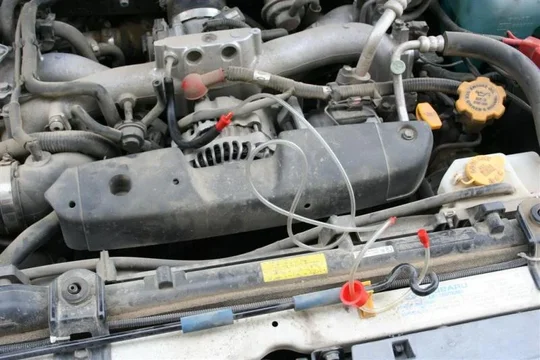
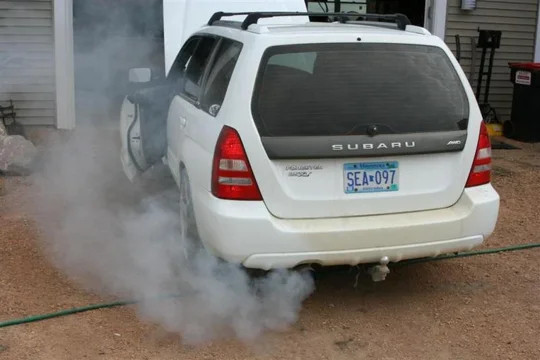


I have this little kit that allows you to suck it in as a spray/mist or as a liquid... spray is better as less chance of the hydrolock but its also good to get large doses in there... the main thing is to get the seafoam into the intake in a fairly central location so it gets down all runner... on the Subarus most would use the brake booster line but that fed one side of the intake runners, where as my kit would allow you to go right in the center, thus feeding it down both sides of the intake into both sides of the engine...
just noticed how ironic the number plate is 
- Thread starter
- #60
Aim, I've used Seafoam on several vehicles, and for most I've found that the PCV line is the easiest way to feed all cylinders. It's not ideal on the LC becasue it's behind the throttle plate like you mentioned, but it worked for me. I wasn't sure of the purpose of the other line or what it fed into, so I didn't want to risk anything. However, if you're confirming that it dumps right out BEHIND the throttle plate in the manifold, then I'd be willing to give it a try. The clearer the path, the better.
Also, I know that there are many naysayers out there, but the Yukon I just sold failed emissions for the first time ever (after I sold it and bought the cruiser, of course). I thought that I was in a bit of a pickle, because according to CO law, the seller is required to fix any emissions related problems, or buy the car back. Scary. I found out that the reason for the failure was that Colorado just started testing for NOx (oxides of nitrogen) for the first time in 2010. For whatever reason, they had never tested for this before, but the Yukon just barely failed so I thought it would be a simple fix.
NOx is cause by high combustion temps, and through my research I found that the most likely cause is a bad EGR valve, a partially clogged injector, or carbon deposits built up in the combustion chamber that soak up fuel and cause the engine to run slightly lean.
I did the following to try and remedy the situation:
1. Cleaned the existing EGR valve with electronic-safe cleaner (due the the sensors built into it), and replaced the gasket. Whoops, it didn't like that. Dicked the thing up and made the NOx score increase.
2. Replaced the whole EGR valve and gasket. Back to where it was before I screwed the old one up. No appreciable improvement - it still failed.
3. Out of desperation, I ran some seafoam through the PCV valve, and put the rest of it in the gas tank. Told the new owner to drive it around for a couple of days to let it work a little, and guess what? IT PASSED.
I wouldn't have spent $130 on an EGR valve if I had even fathomed a $9 can of seafoam would have done the trick. I guess starting cheap is always the best way to go.
Sure, it could have been a coincidence. Say what you want, but I will continue to use the stuff every now and then.
Also, I know that there are many naysayers out there, but the Yukon I just sold failed emissions for the first time ever (after I sold it and bought the cruiser, of course). I thought that I was in a bit of a pickle, because according to CO law, the seller is required to fix any emissions related problems, or buy the car back. Scary. I found out that the reason for the failure was that Colorado just started testing for NOx (oxides of nitrogen) for the first time in 2010. For whatever reason, they had never tested for this before, but the Yukon just barely failed so I thought it would be a simple fix.
NOx is cause by high combustion temps, and through my research I found that the most likely cause is a bad EGR valve, a partially clogged injector, or carbon deposits built up in the combustion chamber that soak up fuel and cause the engine to run slightly lean.
I did the following to try and remedy the situation:
1. Cleaned the existing EGR valve with electronic-safe cleaner (due the the sensors built into it), and replaced the gasket. Whoops, it didn't like that. Dicked the thing up and made the NOx score increase.
2. Replaced the whole EGR valve and gasket. Back to where it was before I screwed the old one up. No appreciable improvement - it still failed.
3. Out of desperation, I ran some seafoam through the PCV valve, and put the rest of it in the gas tank. Told the new owner to drive it around for a couple of days to let it work a little, and guess what? IT PASSED.
I wouldn't have spent $130 on an EGR valve if I had even fathomed a $9 can of seafoam would have done the trick. I guess starting cheap is always the best way to go.
Sure, it could have been a coincidence. Say what you want, but I will continue to use the stuff every now and then.