



Ok so recently there have been a lot of people curious about plasti dip and I figured since I was about to do another small project I'd just document the whole thing and make a short little tutorial for those who are completely new to the whole process. The skill level required in this is almost so little it's crazy, you just need to have a steady hand and an eye for imperfections.
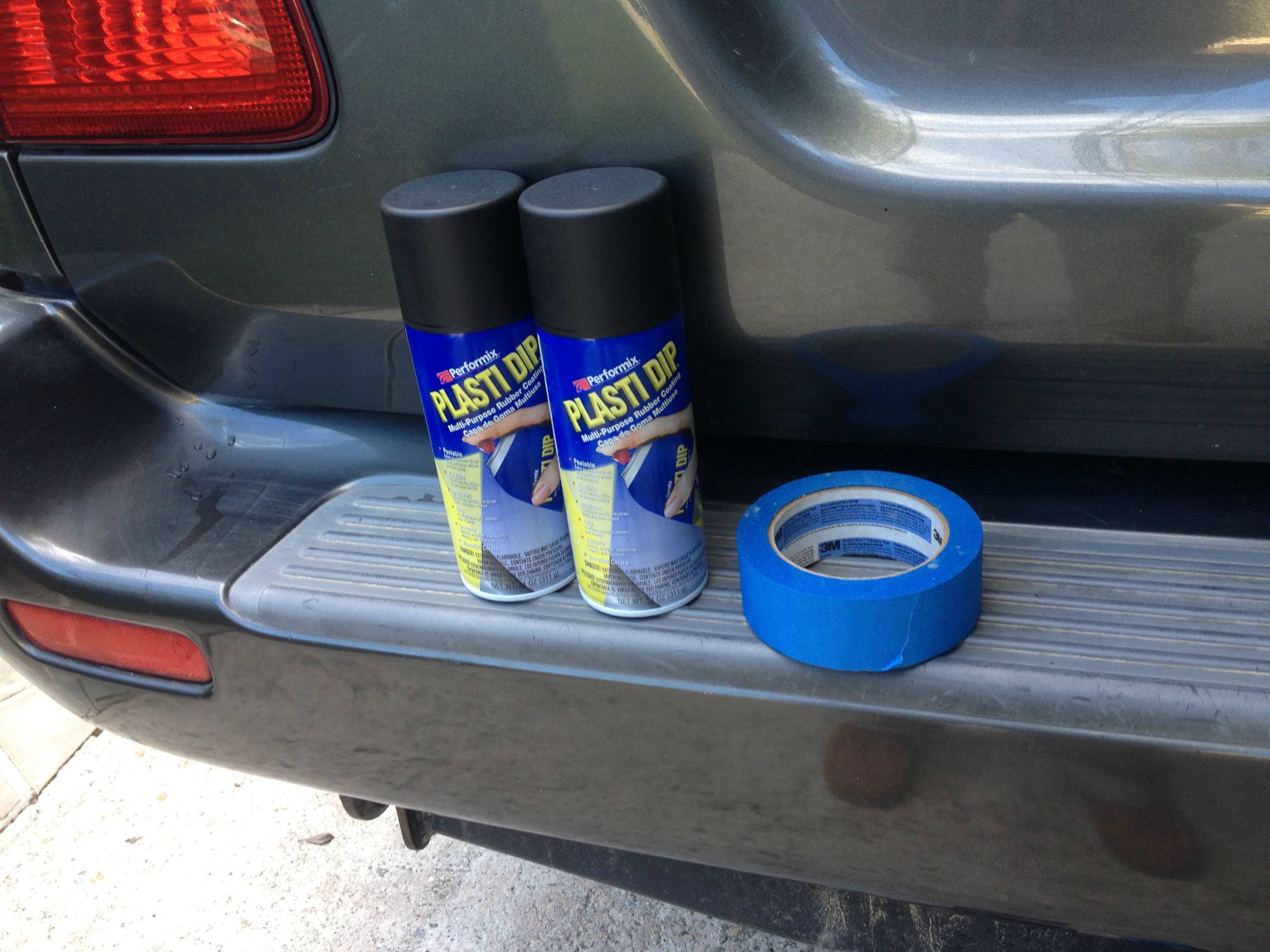
If you are working in a smaller area I would suggest masking off just surrounding what you intend to dip since you will have cleaner lines by peeling off the dip rather than trying to use masking tape for lines (it doesn't work well as you will see later). Since I was just painting the louvers I masked the surrounding area with painters tape to avoid excessive overspray (I got some anyways, but that's cause I didn't really care to put up newspaper or other masking materials).
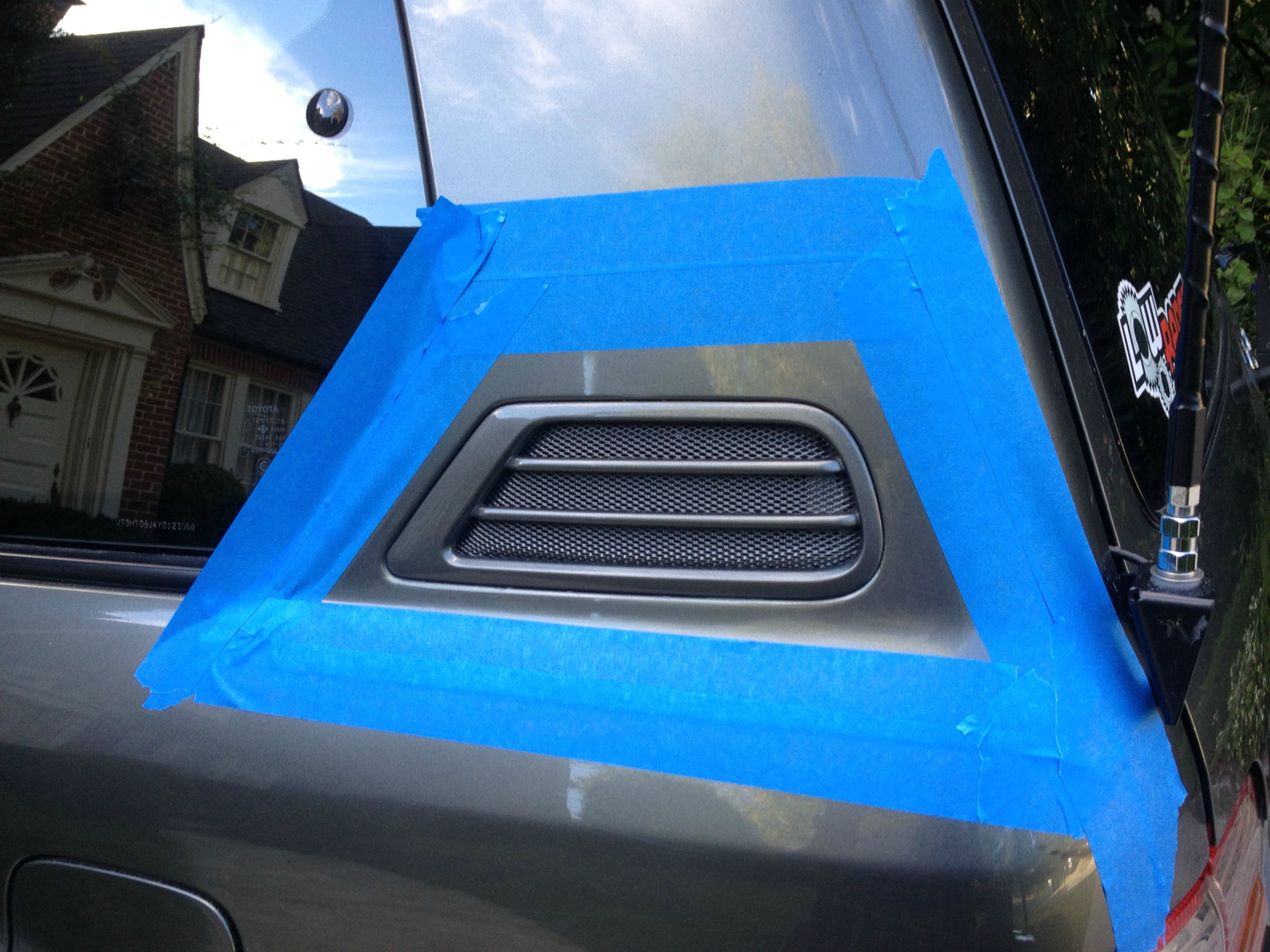
First off you will need to properly prepare the area you will be dipping, in this case I washed my entire car since it was so dirty, and then I took a microfiber towel and thoroughly cleaned the surfaces which I planned on dipping. You want to be absolutely sure there is no dust or moisture on the surface you plan to dip.
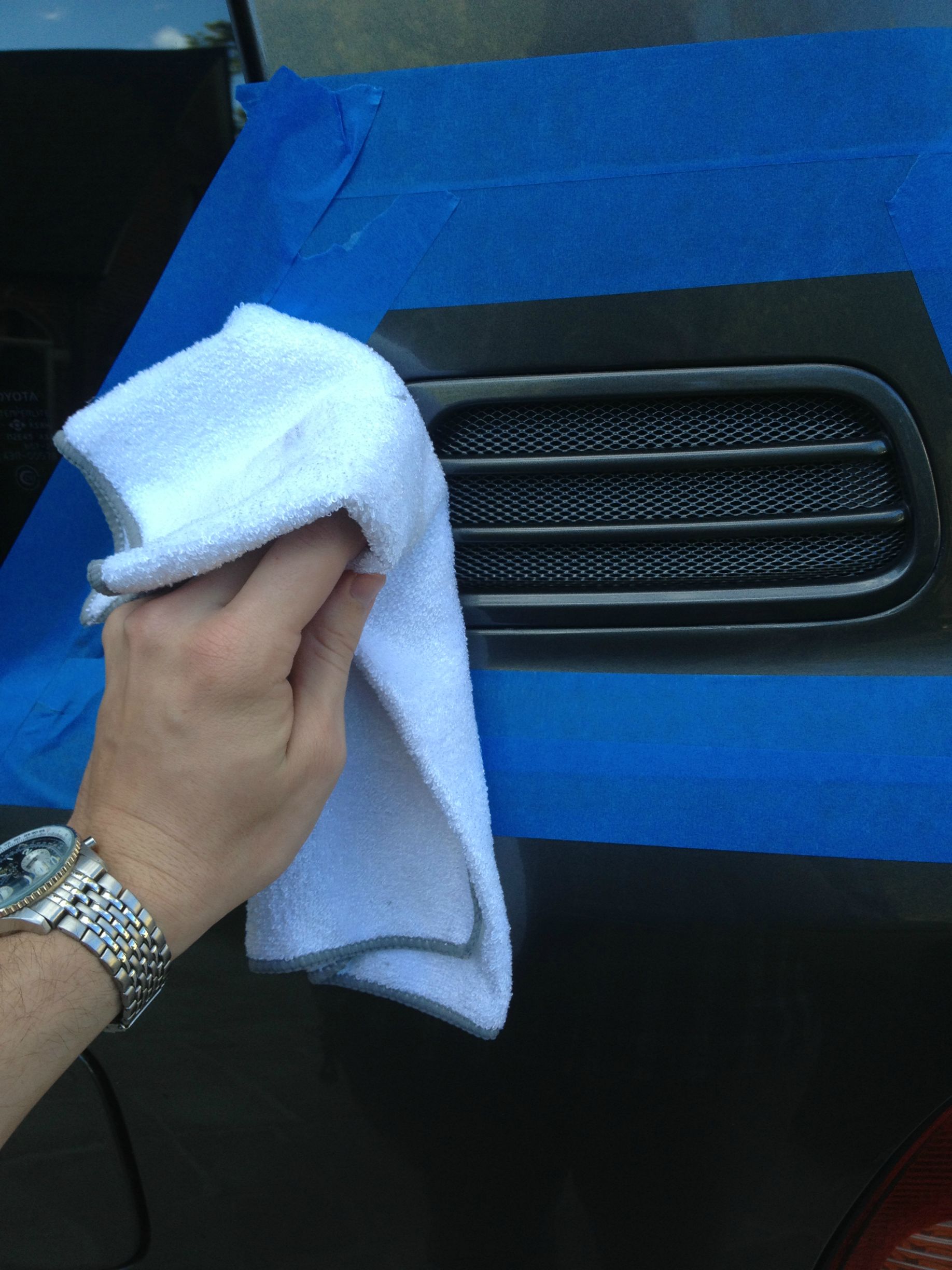
After you have masked your area (not always necessary) and properly cleaned the surface you are ready to begin spraying. I used black dip for my application just for accenting, and because I had two kind of empty cans left over from various other projects. For something of this size you will want about one full can just in case.
Your first coat is the most important. You want a nice, even layer of dip getting full coverage of the area and you want it to be about 75% opaque. This means you need to have a fairly heavy first coat but absolutely no drips. The dip will have a nice glossy shine while it is wet if you have applied it thick enough.
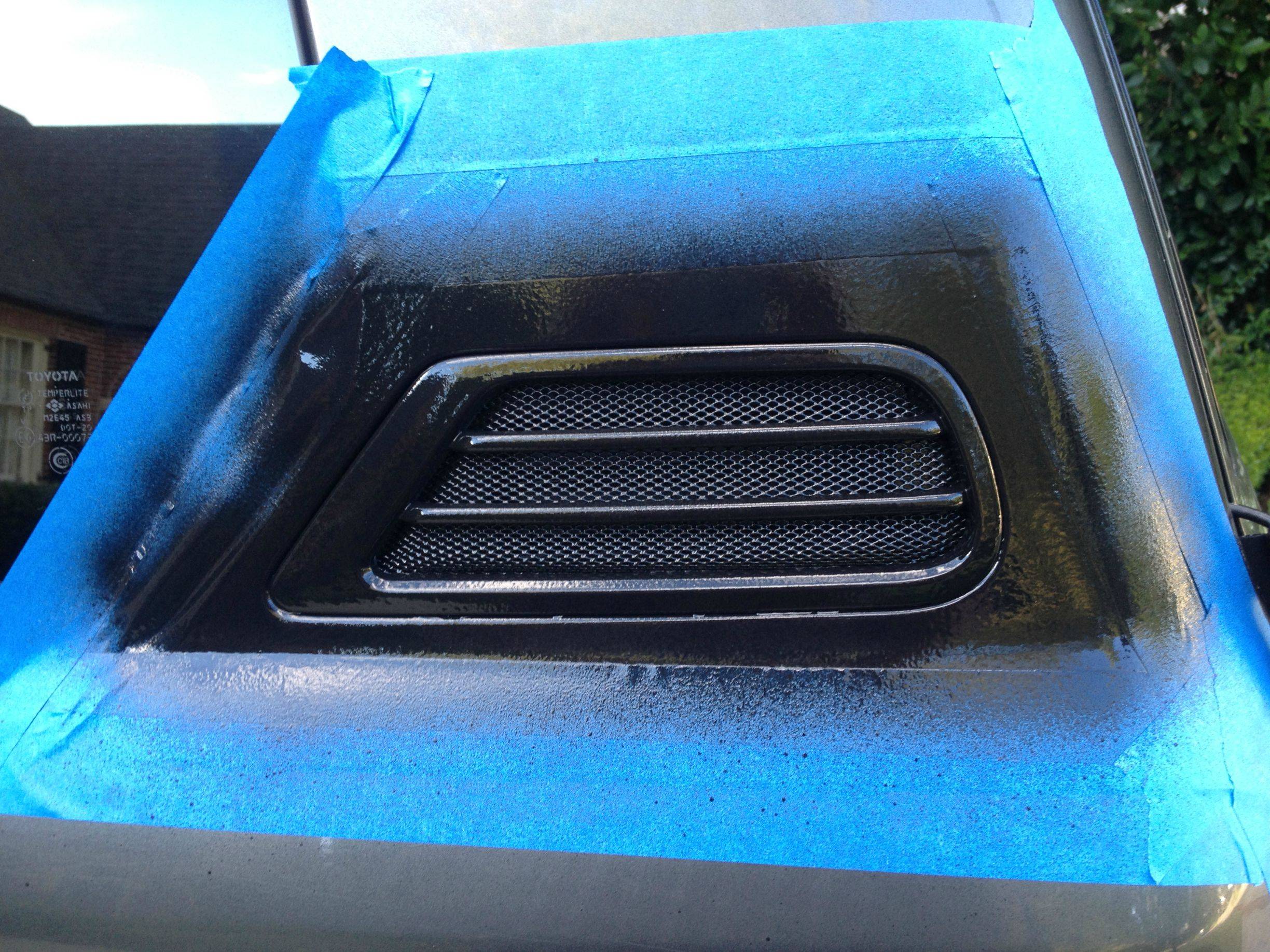
You might be wondering how many coats is appropriate for a job like this. If you want to be able to easily peel it off, like in the videos, you must have properly prepared the surface and lay down a thick base coat with at LEAST 2-3 additional coats allowing 20-30 minutes between coats. In this case I applied 3 additional coats to give a total of 4 even coats, however I am incredibly impatient so I only waited 15 minutes between each coat. I didn't take any progress pictures while I laid additional coats because they essentially look like the previous picture, so it would be monotonous. That being said, make sure you hit your surface from ALL angles if it is a curvy surface, ensuring the dip gets within all the cracks as this makes things easier for you later.
As I mentioned earlier I masked everything off but still managed to get overspray, cause I don't care like that
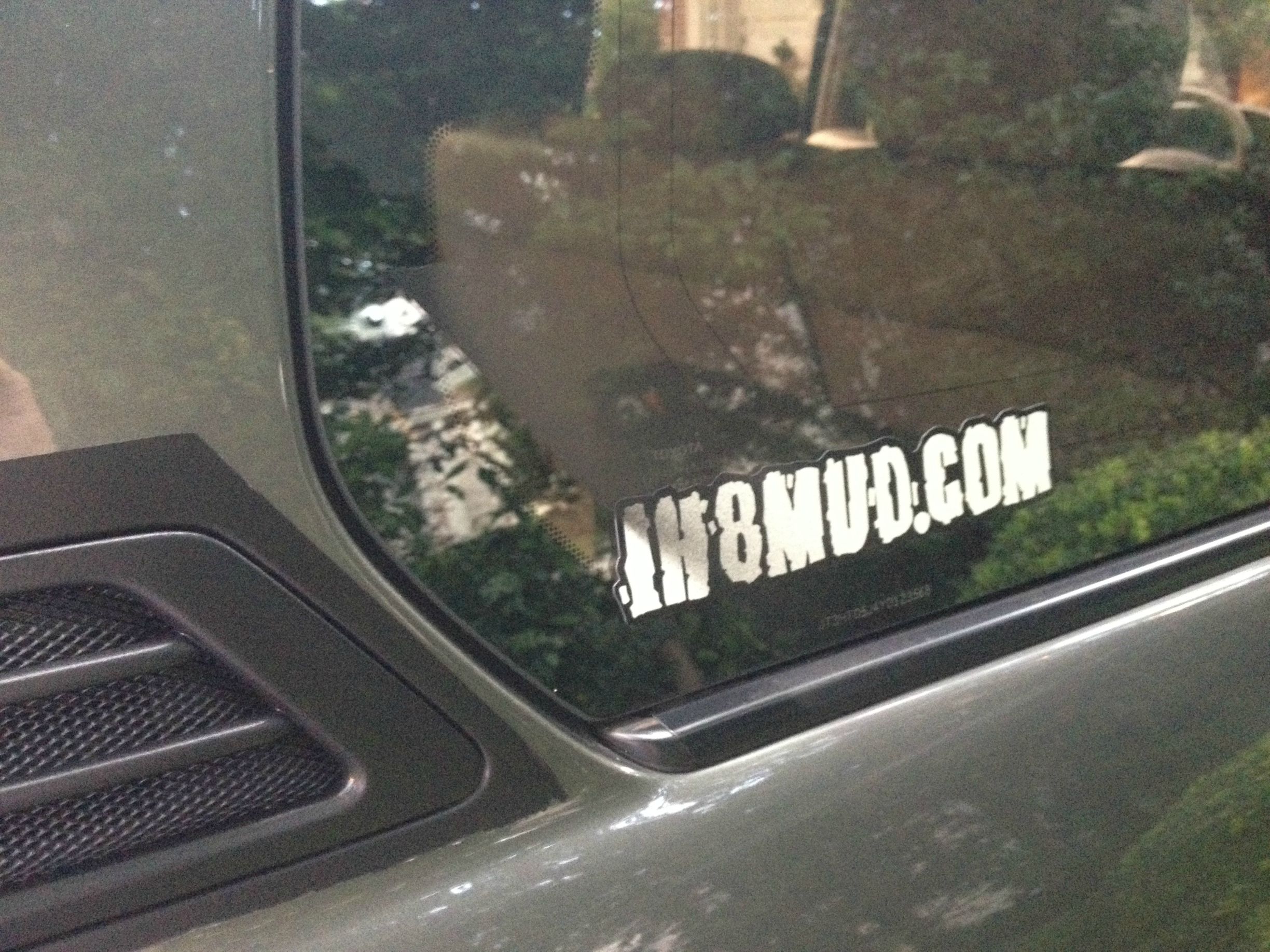
To get all the overspray off you just need a microfiber towel and a little elbow grease and it'll come right off.
Finally, after applying all four of my coats I peeled the masking tape off to prepare to peel the excess dip off. This is what it looks like, and as you can tell the lines are NOT crisp. If you want crisp lines and you are using masking tape all you need to do is apply a very thick final coat, similar to your first coat, and peel the masking tape off while everything is still wet. Essentially apply your final thick coat and immediately peel the tape off. Anyway, this is what my lines looked like since I was going to peel the outside off regardless.
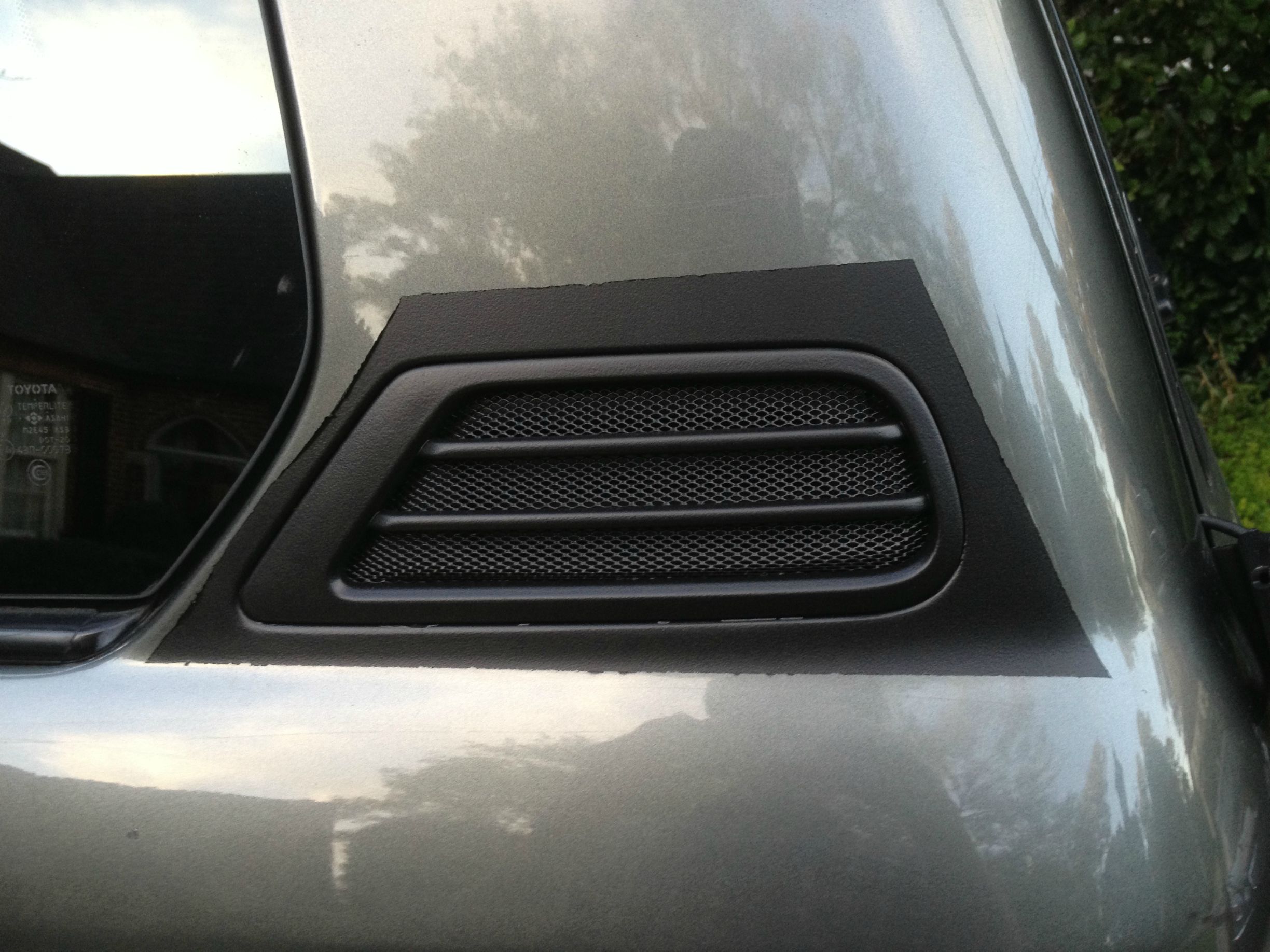
Then the final step for a project like this one (you use the same steps for rear badges) you just need to carefully peel the dip off. The edges around the louvers will cut the dip so you shouldn't have to worry about it pulling the dip off the louvers. I say you should be careful because the dip may not have fully gotten into all the cracks so at those points you will need to make sure the dip is cut. If you have painted the rear badges and are wondering how to get the dip out from between the lettering just use a toothpick to start peeling back a corner and once it has started coming off you can simply peel it the rest of the way.
Here is a short video I took of how easily the dip peels off. I stopped it so short because I noticed some of the dip wasn't breaking and this was simply because I didn't hit the louvers from all angles and then didn't realize it wasn't fully cut around the edges. Everything came out perfectly great though!
http://www.youtube.com/watch?v=0J2R2zslkgg&feature=youtu.be
This is what the completed louvers look like.
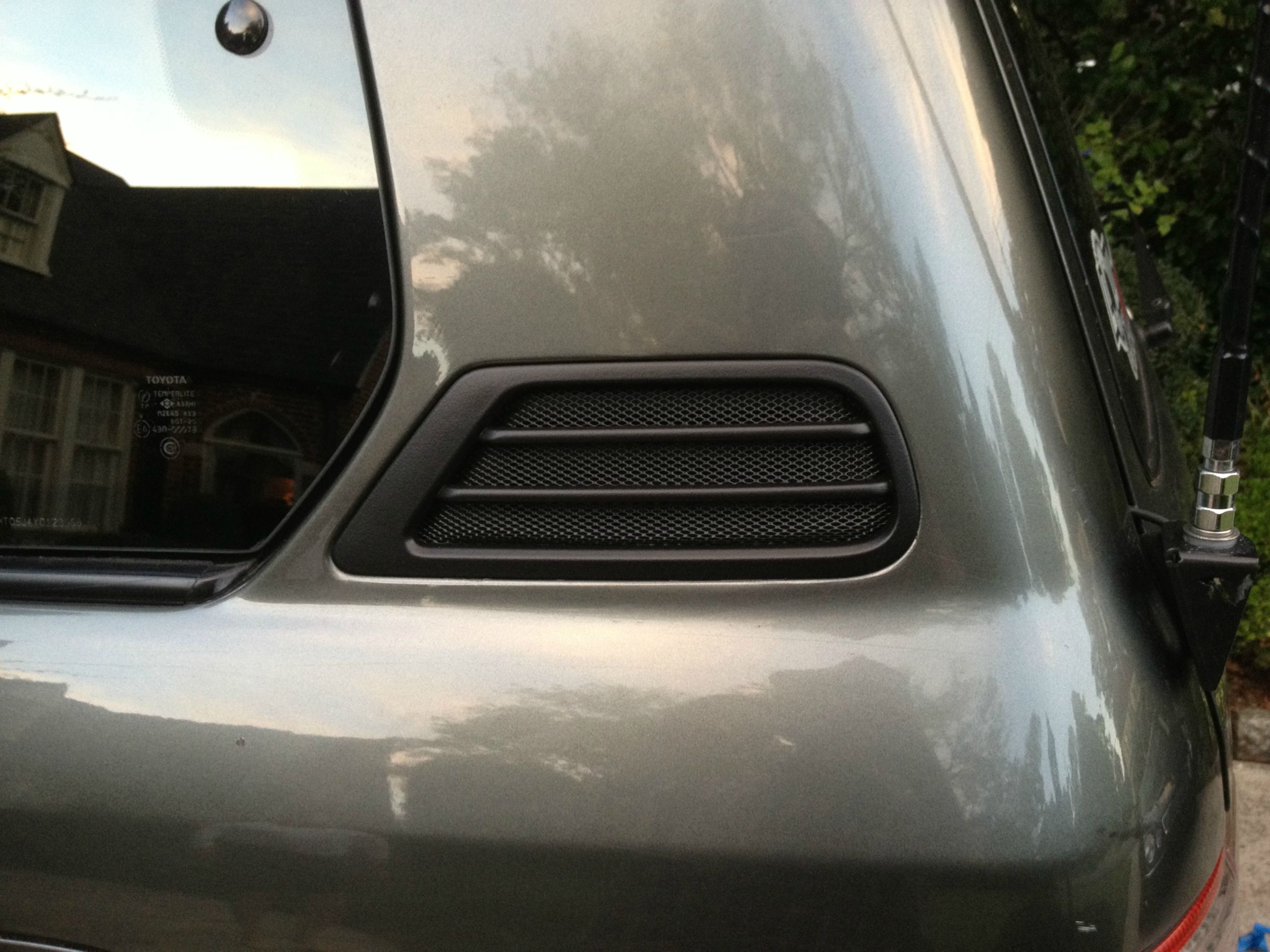
As a final note: you want to be sure you don't apply from too close or too far. Too close could cause drips or streaks and too far will cause texture. I've found about 6" creates the best finished look.
Here is the imgur album if you want to see any of the pictures at full resolution:
http://imgur.com/a/0AtFi
Thanks for reading and feel free to leave feedback or your own pictures or stories. I will update when I dip (temporarily) my wheels.
If you are working in a smaller area I would suggest masking off just surrounding what you intend to dip since you will have cleaner lines by peeling off the dip rather than trying to use masking tape for lines (it doesn't work well as you will see later). Since I was just painting the louvers I masked the surrounding area with painters tape to avoid excessive overspray (I got some anyways, but that's cause I didn't really care to put up newspaper or other masking materials).
First off you will need to properly prepare the area you will be dipping, in this case I washed my entire car since it was so dirty, and then I took a microfiber towel and thoroughly cleaned the surfaces which I planned on dipping. You want to be absolutely sure there is no dust or moisture on the surface you plan to dip.
After you have masked your area (not always necessary) and properly cleaned the surface you are ready to begin spraying. I used black dip for my application just for accenting, and because I had two kind of empty cans left over from various other projects. For something of this size you will want about one full can just in case.
Your first coat is the most important. You want a nice, even layer of dip getting full coverage of the area and you want it to be about 75% opaque. This means you need to have a fairly heavy first coat but absolutely no drips. The dip will have a nice glossy shine while it is wet if you have applied it thick enough.
You might be wondering how many coats is appropriate for a job like this. If you want to be able to easily peel it off, like in the videos, you must have properly prepared the surface and lay down a thick base coat with at LEAST 2-3 additional coats allowing 20-30 minutes between coats. In this case I applied 3 additional coats to give a total of 4 even coats, however I am incredibly impatient so I only waited 15 minutes between each coat. I didn't take any progress pictures while I laid additional coats because they essentially look like the previous picture, so it would be monotonous. That being said, make sure you hit your surface from ALL angles if it is a curvy surface, ensuring the dip gets within all the cracks as this makes things easier for you later.
As I mentioned earlier I masked everything off but still managed to get overspray, cause I don't care like that
To get all the overspray off you just need a microfiber towel and a little elbow grease and it'll come right off.
Finally, after applying all four of my coats I peeled the masking tape off to prepare to peel the excess dip off. This is what it looks like, and as you can tell the lines are NOT crisp. If you want crisp lines and you are using masking tape all you need to do is apply a very thick final coat, similar to your first coat, and peel the masking tape off while everything is still wet. Essentially apply your final thick coat and immediately peel the tape off. Anyway, this is what my lines looked like since I was going to peel the outside off regardless.
Then the final step for a project like this one (you use the same steps for rear badges) you just need to carefully peel the dip off. The edges around the louvers will cut the dip so you shouldn't have to worry about it pulling the dip off the louvers. I say you should be careful because the dip may not have fully gotten into all the cracks so at those points you will need to make sure the dip is cut. If you have painted the rear badges and are wondering how to get the dip out from between the lettering just use a toothpick to start peeling back a corner and once it has started coming off you can simply peel it the rest of the way.
Here is a short video I took of how easily the dip peels off. I stopped it so short because I noticed some of the dip wasn't breaking and this was simply because I didn't hit the louvers from all angles and then didn't realize it wasn't fully cut around the edges. Everything came out perfectly great though!
http://www.youtube.com/watch?v=0J2R2zslkgg&feature=youtu.be
This is what the completed louvers look like.
As a final note: you want to be sure you don't apply from too close or too far. Too close could cause drips or streaks and too far will cause texture. I've found about 6" creates the best finished look.
Here is the imgur album if you want to see any of the pictures at full resolution:
http://imgur.com/a/0AtFi
Thanks for reading and feel free to leave feedback or your own pictures or stories. I will update when I dip (temporarily) my wheels.
Last edited:


