Heater Blower Motor and Housing Differences

This site may earn a commission from merchant affiliate
links, including eBay, Amazon, Skimlinks, and others.

The new OEM blower motor i have does not have a Toyota number on top, but it does have a Denso number, FWIW. The box had the Toyota number on it.

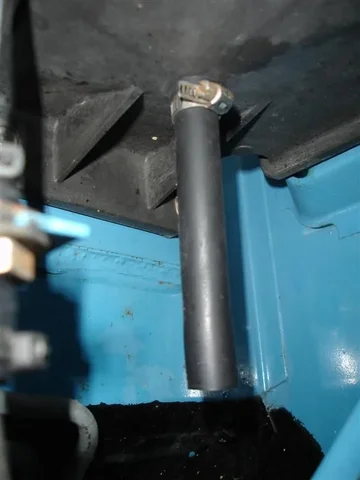
I'm starting to conclude that the blower and motor assemblies with the rubber hose connection were for vehicles that have the side defrost nozzles, but if that is true I'm unclear as to what the purpose is. How does that hose, and the opening on the bottom of the fan housing relate to the side defrost hoses? The only thing I can think of is that it makes it slightly more powerful somehow?
DSC08206-small.webp
 
I found my old blower housing had a bit too much damage, so I looked for a replacement. I found a 1978 unit, no hose, in unmolested good condition. I've stripped it apart and am looking for something effective with which to clean the plastic. soap and water only got me so far.

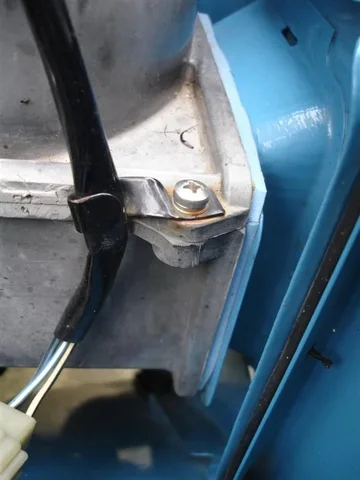
One difference I noticed: the resistor is incorporated into the motor wiring harness, whereas on the new type (the OEM replacement I bought) the resistor is a plug-in harness and the top of the motor has a terminal. Also, the resistor can be attached to the motor with a larger spanning bracket, or it can be held on, like my newer one, with a pair of 'L' clips.
DSC08207-small.webp
DSC08208-small.webp
 
Last edited:
Getting back to something Tom mentioned on page 1,
"The nuts are added to act as locknuts (on top of the original "captive nuts") and they thereby eliminate the need for stainless split washers. Since there is a soft foam gasket in place here ... I think it's superior engineering practice to do it this way (because you can have the fasteners securely locked without having to over-compress the gasket)..."

This isn't really making sense to me. The foam on the exit side of the housing sits in a rebated or recessed portion of the plastic. The places where the bolts fit to fasten the housing onto the firewall sit proud of that surface by, oh, 1mm or so. It seems to me that one would want to gauge the thickness of the gasketing foam so that it is slightly proud of the bottom of the bolt-location flanges (when new), and that when the housing was fully bolted down, the gasket would be partially compressed. There is after all no way to over-compress the gasket as that portion of the plastic housing cannot be fully squished down at the point where the housing is completely bolted tight to the wall. Am I missing something here? With your method wouldn't the blower be riding slightly on the gasket, like it was a mattress, not fully tightened to the wall?
 
Getting back to something Tom mentioned on page 1,


This isn't really making sense to me. The foam on the exit side of the housing sits in a rebated or recessed portion of the plastic. The places where the bolts fit to fasten the housing onto the firewall sit proud of that surface by, oh, 1mm or so. It seems to me that one would want to gauge the thickness of the gasketing foam so that it is slightly proud of the bottom of the bolt-location flanges (when new), and that when the housing was fully bolted down, the gasket would be partially compressed. There is after all no way to over-compress the gasket as that portion of the plastic housing cannot be fully squished down at the point where the housing is completely bolted tight to the wall. Am I missing something here? With your method wouldn't the blower be riding slightly on the gasket, like it was a mattress, not fully tightened to the wall?

Hi Chris.

I found the gasket on the side that mates with the louvred-sideapron-bodypanel had to be pretty thick in order to avoid having gaps (that would cause the blower to draw in air from the engine bay rather than drawing in fresh outside air).

And I wanted to use the same thick blue gasket material in both places. (ie. Where the assembly bolts to the firewall and where the assembly mates to the sideapron.

I didn't see squashing such a THICK material so completely (that the plastic blower body meets the firewall) as a desirable option.

Hope that clarifys what I did better.

:beer:
 
I see, it was because of your choice in gasket material that you did that. Makes sense.

Another question: what happened to the drain hose on yours?

I note that the original black foam material (present on the '78 blower I just bought) used for the gasket seems relatively thin.

I'm going with some psa-backed household weatherstripping for sealing the blower, with one thickness (7/16", about 11mm) for the intake and another (1/4", 6.35mm) for the exhaust side. It has a low durometer rating so it should squish down without problem, though I will have to trim 1/8" (3mm) off for width I think:
DSC08214-small.webp
 
Last edited:
....Another question: what happened to the drain hose on yours?.....

Nothing happened to it.

Still there:
Blower8.webp

By the way, I think the hose diameter is reduced to restrict air flow through the hose while still maintaining its ability to drain water.

And since I was there taking a pic of the hose, this shot shows the trouble I had with alignment (and sealing) to the side-panel:
Blower7.webp

:beer:
Blower7.webp
Blower8.webp
 
I think the side panel is where you need some thick-ish foam. I'm going to try the 7/16", but if it isn't enough I might laminate an additional 1/4" to it. I think the foam you are using is way too thin frankly. Not up to usual Tom-atronic practice perhaps :hhmm:

I'm seeing some creeping rust on that plastic coated harness tie. You may as well give yourself 20 lashes. Can't believe you would show that - are you okay? :p

And how did I not spot that hose before? :doh:

I must have a blind spot for those things, as when i bought the '78 housing last week I didn't think it came with the hose, and then was pleasantly surprised when I opened the box this morning.
 
Just went round the south coast yesterday to show my niece (here briefly from Norway) the views:
12Feb2014 017 (Large).webp
12Feb2014 021 (Large).webp
12Feb2014 024 (Large).webp

And cleaning the vehicle afterwards (which is a job I haven't done in about 6 months) showed lots more rust than that!

And ploughing through that deep shingle, foot to the floor in low-ratio, has burnt off half the silver paint on my lovely exhaust system!

:mad:
12Feb2014 024 (Large).webp
12Feb2014 017 (Large).webp
12Feb2014 021 (Large).webp
 
Last edited:
Miserable post apocalyptic scenery you have there Tom. Must be tough driving when you're sitting in the passenger seat huh? :hillbilly:

I have fond memories of the beauty of New Zealand from when I was there.

The rust thing drives me nuts. Go to take a part off and the bolt snaps. I'm replacing everything with stainless, where possibly, and am considering doing the same with the exhaust system.

Before i painted with rattle can, now I'm having everything power coated. Learn as you go, learn as you go :steer:
 
Well, I've got the heater blower done. New motor and resistor, new gaskets and stainless fasteners throughout, with the exception of the bolt which mounts the resistor to the bracket. That I had media blasted and powder coated. The clip for the resistor harness was also dipped in latex. The clip inside to hold the end of the 'fresh pull' cable was also media blasted and powder coated.

Not wanting to dig through the snow right now, so I'll hold off putting it back in the truck for a week or two.
DSC08256-small.webp
DSC08257-small.webp
DSC08258-small.webp
DSC08259-small.webp
DSC08260-small.webp
 
Beautiful job Chris.

Looks almost as good as mine :D
 
A bit late to this party, but I'm wondering if you guys can help me. My original heater had nice black fiber tape sealing all the joints on the blower housing. Couple questions:

How did you seal these back up? Did you use any tape material at all?
What do you recommend for lubrication on the bushings at either end of the motor innards?
1573665148900.png
 
Back
Top Bottom