Excessive Blowby PCV Build

This site may earn a commission from merchant affiliate
links, including eBay, Amazon, Skimlinks, and others.

Joined
Mar 13, 2003
Threads
834
Messages
5,790
Location
North Front Range, CO
Starting this post to deal with my excessive blowby on the 1FZ-FE. Motor is strong and reliable, no plans on replacing or rebuilding motor, condition of the rest of the FZJ80 is not worth investing $$$$ into it. Its a daily driver of about 500 mi a week and I drive several thousand + mile trips a year.

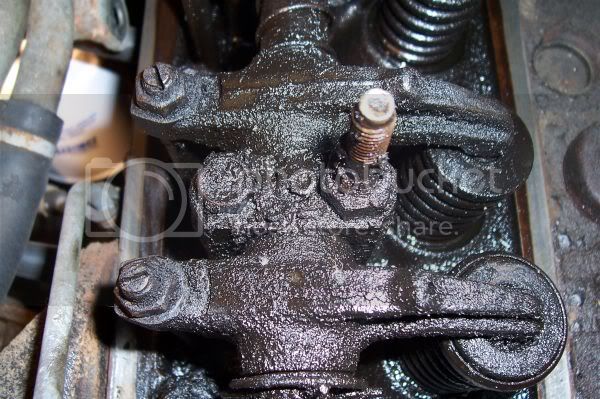
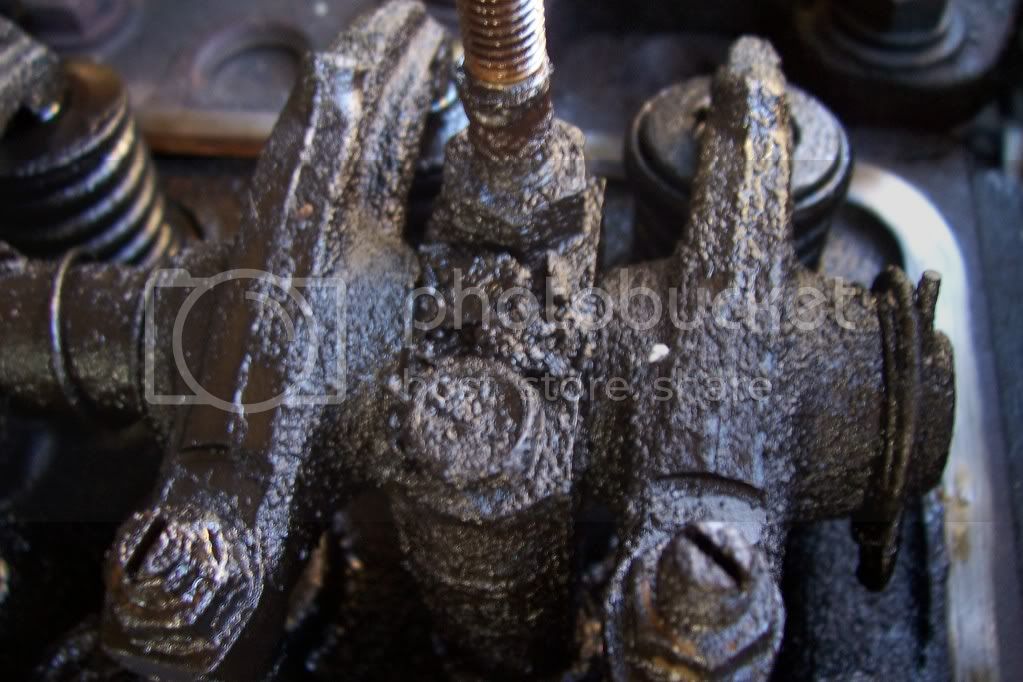
I believe that excessive blowby is a problem on my motor. The oil is getting degraded/thinned, as a result, oil consumption is increased as the oil gets older. ex: Consumption starts at 1 qt 1st 1800 mi, 2nd qt at 1100 mi, 3rd qt at 900 mi, 4th at 700. I am getting oil seepage from pcv grommet, pcv vent hose, oil fill cap and many of the seals on the block. None are leaking, its just minor seeping of oil. I am getting oil spray in the intake from the vent/fresh air port of the PCV system too. This is why I believe that the PCV is not keeping up with the blowby.

My idea for this project came from reading about Krank Vent Gift Certificate FAQ : ET-Performance & Racing Products. where you use a special valve to cause vacuum in the crankcase for improved performance. You close off the vent side of the PCV while the check valve sucks out the crankcase.

To start with I will try using the OEM PCV valve to evacuate the crankcase after closing off the PCV vent to the valve cover. I will use a vacuum relief valve on the vent post of the valve cover so that I don't get too much vacuum in the crankcase. I found a vacuum relief valve from Moroso that can limit vacuum from 10" to 16" of vacuum. I would like to find an inline vacuum relief valve so I can vent from the factory intake manifold port so that I don't mess up the MAF ratio. I will install a catch can to keep oil out of the intake.

If the OEM PCV valve doesn't keep up with the blowby I will try a larger PCV valve and hose. If that doesn't work I will try a Krank Vent.


Questions I have:
Is 10" of vacuum going to be okay for a stock motor? I dont want to suck the seals back into the motor? Do I want more or less vacuum than 10" of vacuum?

I want to use an inline vacuum relief valve. I found some for racing but they are over $100. Any ideas on a lower priced vacuum relief valve?

I have though of venting to the exhaust but from what I have found is you cant have a muffler with such a system, its for straight pipe exhaust only. I have been venting to atmosphere but it stink real bad and cant be healthy to breath it in.
 
You do a compression check?

Blowby is easy to identify. If it's your rings, then the motor is not overly healthy to begin with..
 
303288_195684200499774_1415775813_n.jpg


Compression Results 436,000 mi


Dry - Wet
#1 135 - 145
#2 145 - 160
#3 140 - 160
#4 145 - 150
#5 150 - 170
#6 155 - 170

Per FSM
New 171 psi or better
Min 128 psi
Max between cylinders 14 psi or less

From a test on 6/2006 292,000 Dry- Wet
#1 155 - 165
#2 155 - 165
#3 155 - 165
#4 155 - 170
#5 160 - 180
#6 165 - 180

Loss of PSI in 144,000 miles of driving from 292,000mi to 436,000 mi Dry- Wet
#1 20 - 20
#2 10 - 5
#3 15 - 5
#4 10 - 10
#5 10 - 10
#6 10 - 10

315032_195684143833113_925400251_n.jpg

314008_195684000499794_1709911816_n.jpg
 
Last edited:
Oil weeping from all the seams as you described is from a pressurized crankcase.

Since it's pretty clear that the stock PCV can't keep up with the blowby of your worn engine, just remove the PCV and let the crankcase vent to atmosphere.
No more pressure.

The PCV isn't a piece of performance equipment. It's a piece of emissions equipment.
 
Have been venting to atmosphere but the stink is more than I can handle. First I vented under hood, stinks when driving. Next I vented via the old rear heater pipe that goes to where the cats are, stinks when I stop.
I need to burn off the fumes. I dont want to be the "pig pen" of Land Cruiser.
 
I would love to have those numbers on my old 2F..
 
Thinking, if the OEM PCV valve didn't work when the system had a vent on it, I assume that it wouldn't suck any more with the vent plugged.

Are there larger inside diameter PCV valves that the OEM pcv valve on the 80?
 
The excessive blow by is a symptom of a more serious problem.

It's the messenger.

We all know what is accomplished when we try to deal with a problem by killing the messenger.
 
The excessive blow by is a symptom of a more serious problem.

It's the messenger.

We all know what is accomplished when we try to deal with a problem by killing the messenger.

The over pressure blowby had been an issue for at least the last year or longer, I just never thought it was a problem till now. That was at least 30,000+ miles ago. Missed that message that time.

Guess I should of took the 80 to the crusher when it had 360,000 mi. Thats when my oil consumption really started to get excessive and I started to use oil additives to deal with it. Messenger got passed again.

At 436,000 mi, all I have to do is deal with the excessive blowby and that "should" help with oil thinning and that 'should' reduce consumption.

I had no plans to keep the 80 past 300,000 mi. Every time I buy tires, I say "this is the last set of tires I will have to by for this 80". Three new sets of tires (65,000mi per set) and its still runs. I just plan on running it to the ground. It still gets 12 to 14 mpg and can run 80 mph all day long.
Sorry for the rant but I get tired of people saying "bla bla bla, its wore out, time for a new... Heck, it even passed emission test last year and it still has original cats on it. I see nothing wrong with milking out every last ounce of blood from it.

If I missed the messenger on the 80, then I must of ran over the messenger when I bought the FJ62.
Pic from FJ62. Drove that all over the West after buying it about 11 years ago. Its my hobby to nurse a vehicle well past its prime.
3feoilcrud.jpg

100_0360.jpg
 
Landtoy you seem to know what's up and that's a breath of fresh air around here.
I just come across so many threads where guys are asking questions that have such obvious answers, that I guess I've learned to present some of the most obvious solutions first.
Some guys asking questions on Mud are clueless (in which you are not) and don't even know where the dipstick is or that the AC compressor actually doesn't charge the battery.

It's hard to know who is who around here. :)

436,000 miles is amazing. Gives us all hope. Mine's ready to roll over to 300k soon. (2F).
 
I am not much of a trained mechanic but I use my OCD to find my why through problems.
I use to buy Chevy trucks for the 80's that were rusted and wore out. Give them some lovin and they come back to life.
My first LC a FJ60 has sooooo much power loss, I had to slip the clutch to just get it over a crack in the concrete at a stop light. After some mods and brainstorming, I could take off in second gear and take 90 degree corners 25 mph corners in third gear.

Many of my "ideas" are a waist of time but some of them work out. You should of seen all the vacuum hoses that I ran from the carb of a Checy 350 to the dash so I could turn on and off the vacuum assist choke. It worked, after a while I figured out how hook up the hoses so it worked like is suppose to.
 
Pennzoil? whatever oil you're using is pretty crap with that kind of buildup... to be honest, I'll never understand why people use cheap oil - it's a false economy and probably the cause of your issues now...

What weight oil are you running? are you certain the oil is going out the exhaust? when the motor's running, is there smoke coming out the breather?

Vents, vacuum assist.
PCV valves are, generally, pretty small and once a motor starts to wear-in tend not to be large enough to simply cope with the blow by. As a racer, we use vacuum to increase power - after all, if you take the air out, the piston isn't pushing against it in the crankcase. It nets may 2-3 hp, but in match racing - that's huge. We don't use vacuum to reduce oil consumption for a couple reasons, but the one most important to you is this - if you pull vacuum on the case, you pull oil/air mix from the case and start a new way of losing oil. Oil catch cans can help, but you still need to drain the oil from it and put it back in the motor.

You were talking about a crankcase evacuation kit - that might work for you but again, you will lose oil and it might actually increase the loss. For those who don't know what it is - a bung is welded at an angle to the exhaust (generally at the collector), there is a anti-reversion valve that prevents exhaust from running backwards into the motor at idle. As your rpms increase, vacuum overcomes the AR valve and creates a vacuum in much the same way a straw creates a vacuum in a soda. It pulls air and oil and whatever else out of the crankcase. Again, as your problem seems viscosity related, the oil would mist more as it gets older and would only increase your oil consumption.

Vents - up until the early 60s the crankcase vents simply were a tube that ran from the valve cover to under the vehicle. The idea was it would get the smell out of the cabin by putting it under it. Running the oil-laden air through the motor first via PCV valve was an emissions idea, but the point of the pcv valve is to get the fuel/air mixture out of the crankcase (engines are 90-99% effective at sealing, thus some air/fuel seeps by on every compression stroke).... not the oil because the oil will eventually kill the cat.

change the oil more often.... as you said, it's at least $100 for a evac system, how much oil is that? likely more then what it will take to simply buy oil to get to 300k
 
So, why didn't you ask this in the 80 series section? Hardcore is not really the best place for this IMHO.
 
Also, you can easily use a manometer hooked up to the PCV line to identify the pressures built up in the crankcase. That would definitely be a smoking gun.

After that, I'd be more inclined to pull the head and replace some rings. It'd let you see what's going on.

there are lots of threads out there on Marvel Mystery oil, seafoam or even ATF to free stuck rings. Likely won't help the problem but can't hurt to try. What do your plugs look like?

Smoke all the time or?
 
This post is to improve crank case ventilation. I believe that I have a ventilation problem. What happens when you have a ventilation problem, you get condensation. I believe that the lack of ventilation is causing the unburnt fuel to thin my oil. Thus the oil will burn faster when its thinned. Sounds like I have two problems but I believe I have just one, the ventilation issue.

I did a used oil analysis many years back and there was fuel in the oil. I was told that it might be that I didn't run the motor long enough to burn off the gas in the oil. I drove 75 mi to work back then so I am sure the motor was hot enough to burn off the gas. A couple years ago I removed the injectors and tested them and they were not leaking.

This motor has always has always burned oil in a progressive manner, that is, 1 qt at 3000 mi them 2000 mi, then 1000 mi ect.
I have used Rotella T or T6 for the last 200,000 miles with 9000 +/- oil change interval. The problem has grown worse and I have pressure in the crank case, so I am now going to deal with the pressure and see what happens to my oil consumption. Going to a different oil and a shorter oil change interval will not fix the problem of blowby, it will still be there.

I have zero interest tearing into the motor, its no an option. The rest of the 80 is not worth $$$ to fix it up. I will only be doing minor fixes to keep it alive like replacing driveshaft, spindles, headlights, brakes and maybe fill in the rust holes with old license plates. If I have a good year and make lots of money, I will buy a case of rattle can spray paint and paint it.

The sludge motor was bought that way. I no longer had the Land Sludge anymore. Bought it $1000 , drove the heck out of it for a year and traded it off for a $1000.
 
To be honest then, I'd not spend the money on a vac setup. I'd just vent the engine (potentially multiple vents) to something akin to the EMPI engine breather and run the discharge hoses to the rear of the vehicle. ~$30 and you're done. Then just take the 80 to the junkyard when it finally dies. If the hoses can't keep up with the volume, then simply increase the diameter of the hoses and go from there.


Breather.JPG


As to
Questions I have:
Is 10" of vacuum going to be okay for a stock motor? I dont want to suck the seals back into the motor? Do I want more or less vacuum than 10" of vacuum?

I want to use an inline vacuum relief valve. I found some for racing but they are over $100. Any ideas on a lower priced vacuum relief valve?

I have though of venting to the exhaust but from what I have found is you cant have a muffler with such a system, its for straight pipe exhaust only. I have been venting to atmosphere but it stink real bad and cant be healthy to breath it in.

You have an old, tired motor with hard seals. 10" of vac may indeed be a bit much for the stock motor. But I doubt it. Does the motor leak oil currently?

No clue on a cheaper vacuum relief valve unless something like this would work Cdi Control Devices Valve, Relief, 1/4 In VR25-100 | Zoro.com

Just route it back past the muffler if that's a concern.
 
9000 miles with conventional oil? Rotella is decent oil, but 9000 is way too much. You're outrunning the additive package - the buildup and the failure after to prevent loss at ~ 4000 miles . At best, conventional oil will last 5000 miles. The only other way to fix that, and this is direct contradiction to what Amsoil and Franz oil filters say - is to replace your filter ever 3000 miles and add a new quart in to replace what you lost at the filter change (they say that you can last 10,000 miles or more)....

anyway, that's all I've got - good luck.
 
Rotella T6 is a synthetic oil. My used oil annalists said oil was still good for more miles.

I dont like the stink of the blowby vapor and no longer want to vent it to atmosphere.

I have 2 options I am thinkin of:
1)Remove the pcv valve and use a larger hose to vent the crankcase.
2)Vent the crankcase directly to the air cleaner housing.

Assuming that venting to atmosphere is doing enough to evacuate the crankcase of blowby, venting to the air cleaner housing then might work to keep from smelling the fumes. I would need to use a catch can to to keep the oil out of the air cleaner.
 
Back
Top Bottom