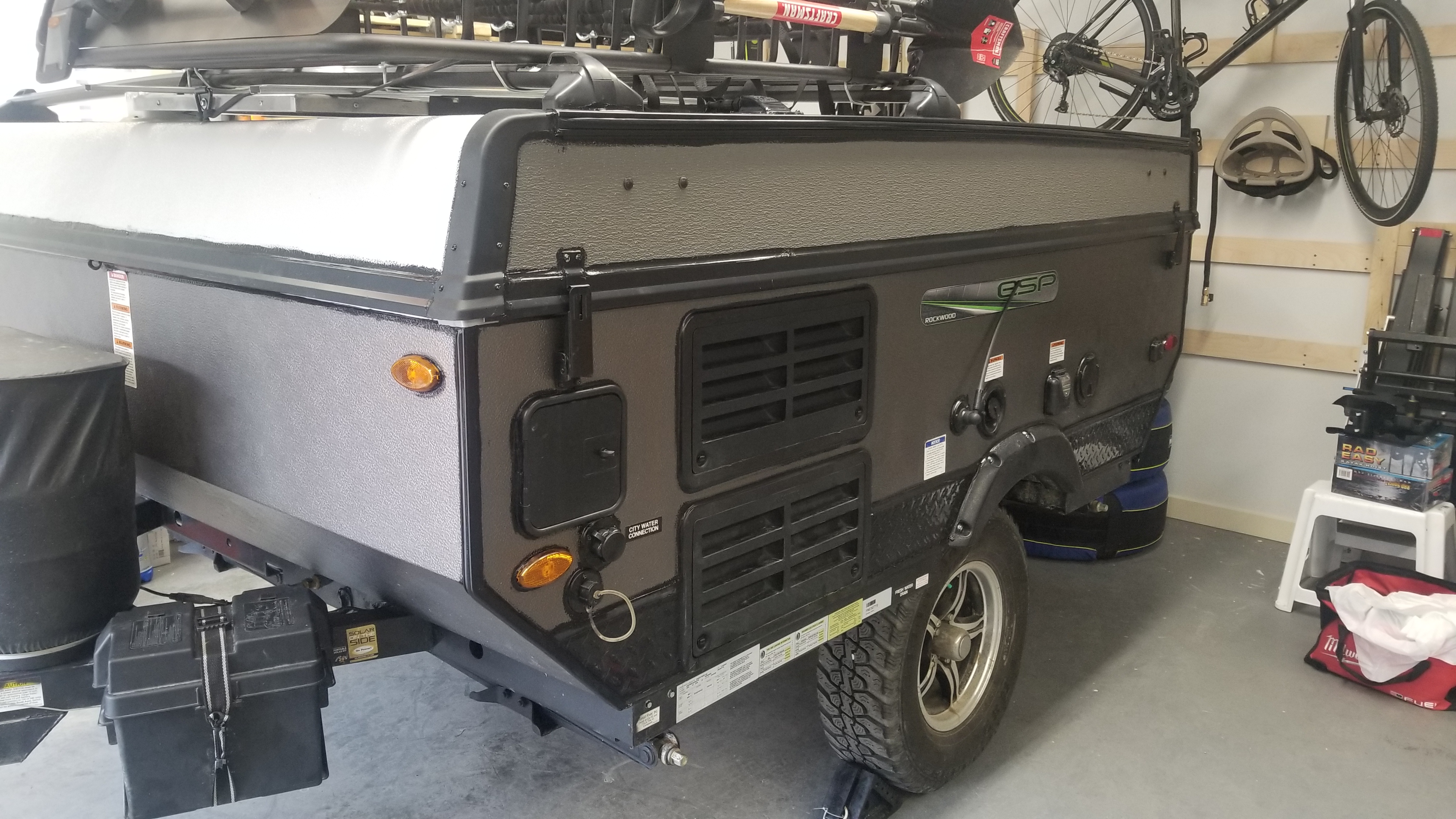
eatSleepWoof's Rockwood 1640ESP

This site may earn a commission from merchant affiliate
links, including eBay, Amazon, Skimlinks, and others.

Both valid points of view, and both are inline with my previous experiences. At this point I will absolutely not transport a separate, portable solar and deal with unpacking & setup. If do decide to go solar, I'll likely just add 300W flat on the roof and call it a day.

But before I consider that I'll have to set up the new 12v fridge (see my LX build) in the trailer... somehow. Without the fridge being there, there's largely no point in adding solar, as the current appliances draw an insignificant amount of current.
 
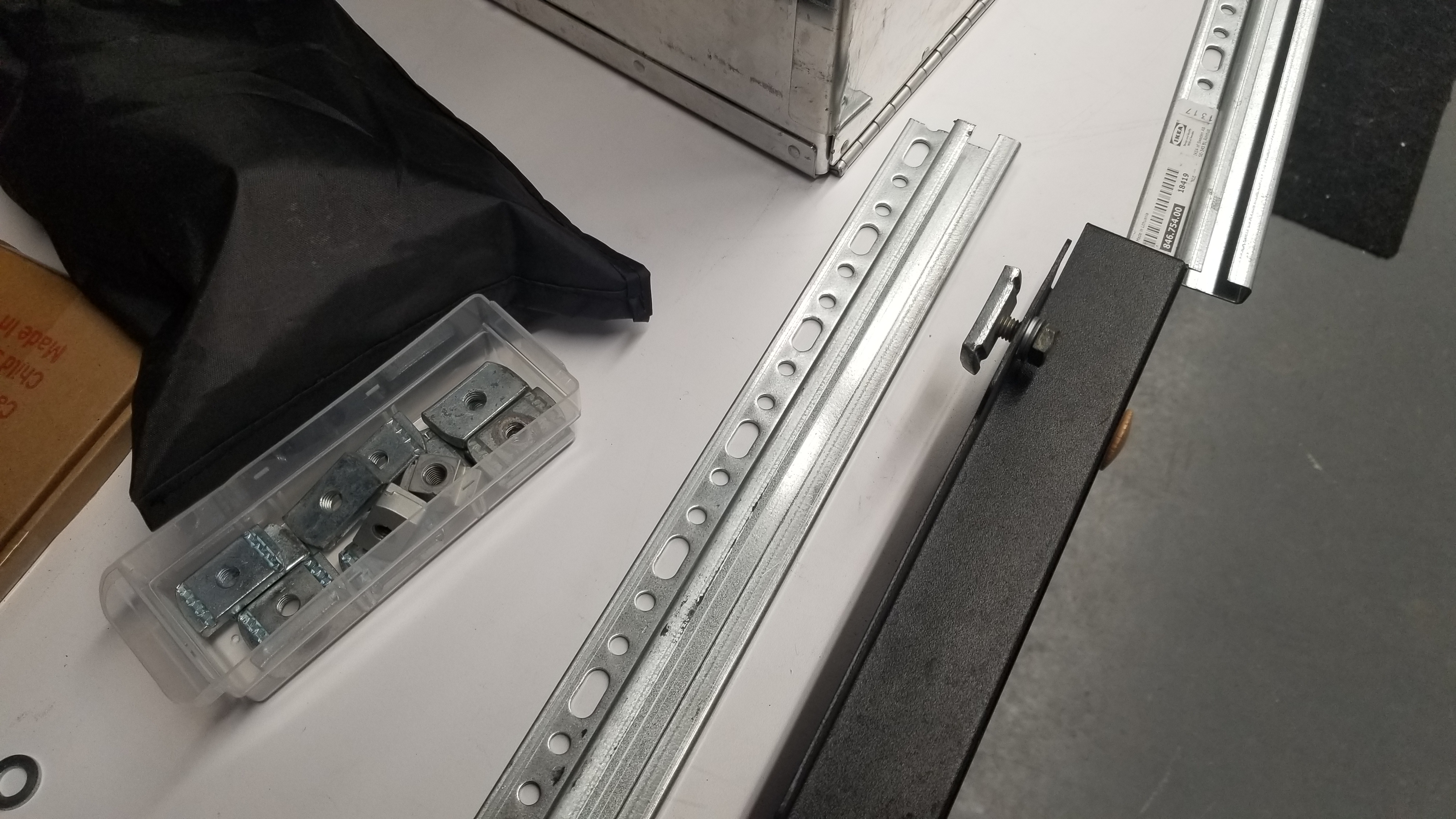
Figured out a way to get the table mounted.

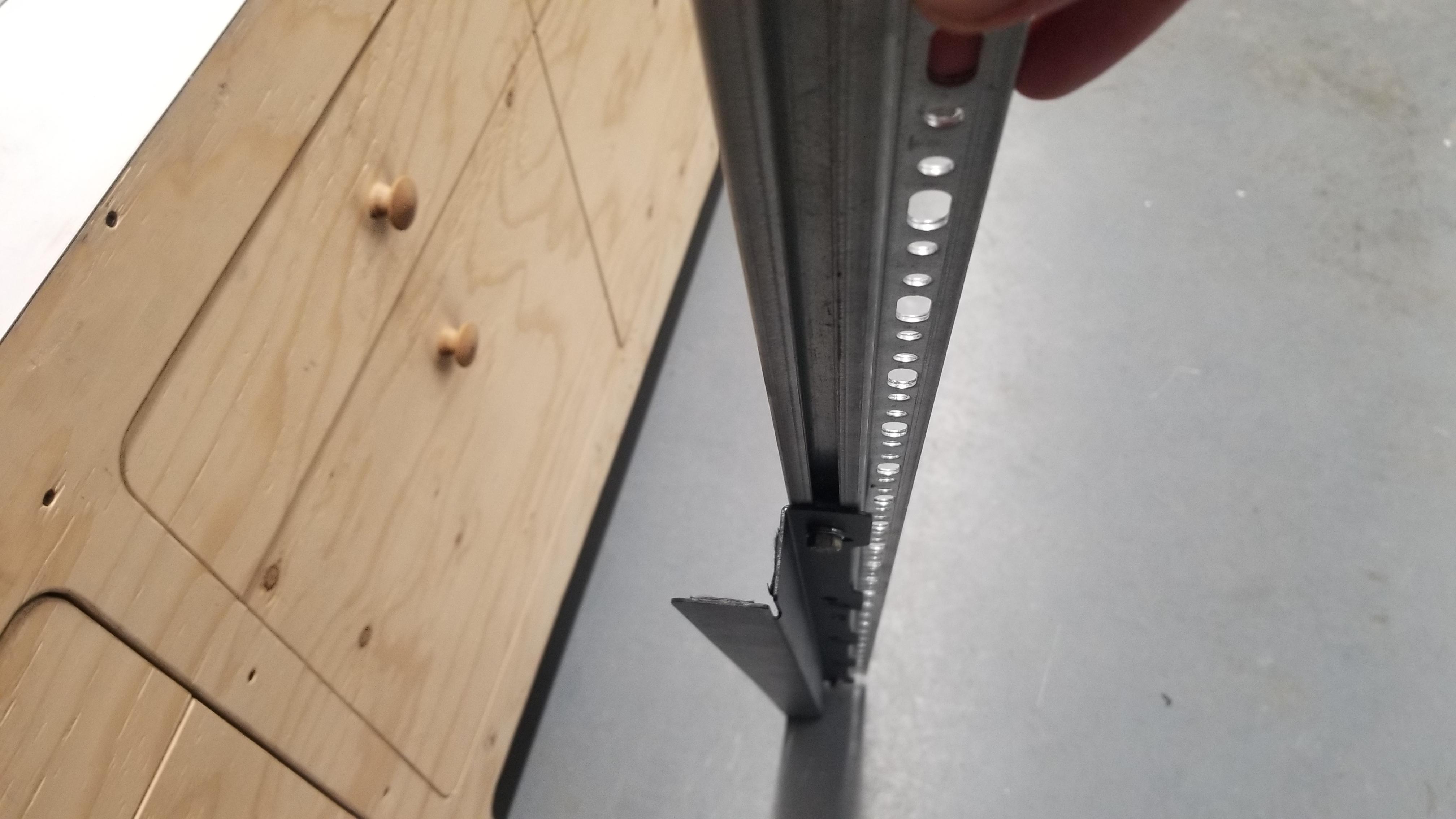
I had a few pieces of this metal track from some Ikea furniture that I had years ago. The track accepted FrontRunner track nuts very easily, and so I bolted my old FrontRunner table mounts to the track.

1TwvGnM.jpg


JA6I00K.jpg


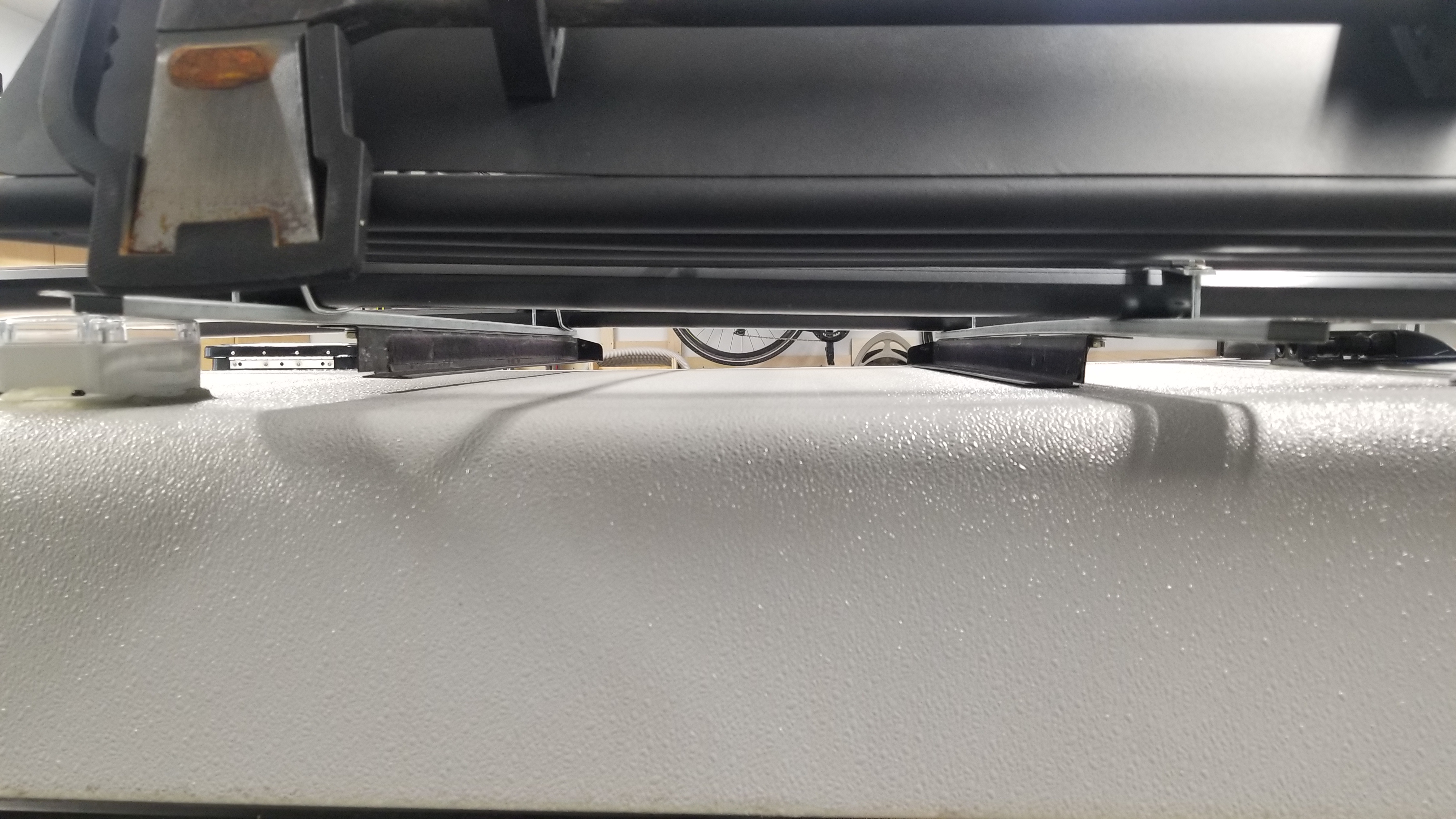
I then used the pre-drilled holes in the track to mount it underneath the roof rack cross bars using u-bolts I had laying around.

Since the cross bars are curved, the right mount is lower, and sits on the fibreglass roof. After taking this photo I slid a strip of 3mm rubber between the mount and the roof to prevent any roof damage from vibrations.

OJMOKmR.jpg


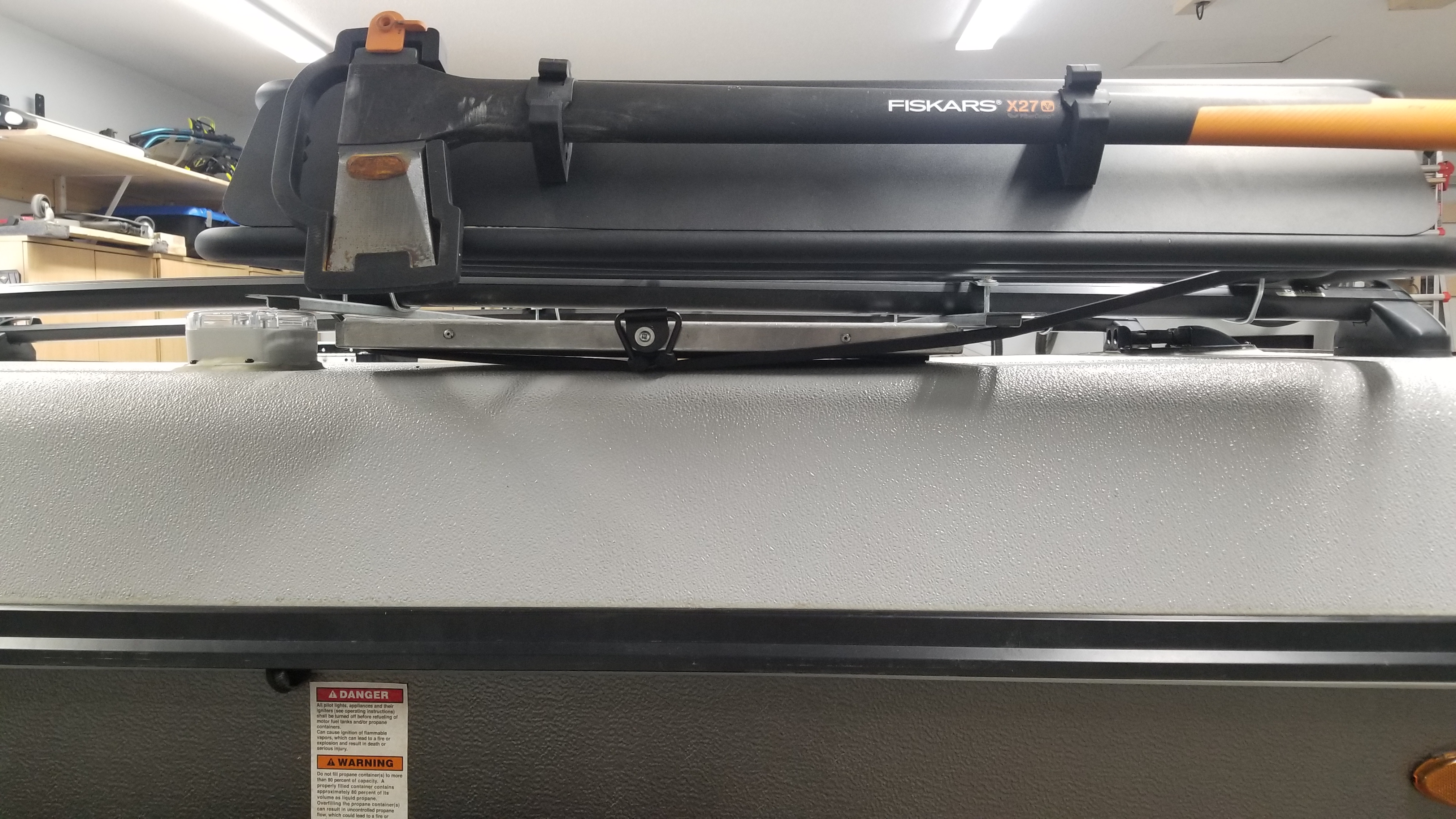
Table slides right in, and a bungee cord secures it in place.

oa9OYfw.jpg
 
Cool little camper and nice improvements.

I think it's safe to say the world would be better off without the person that did this work.

They are all made in a few factories in northern Indiana by pretty low wage employees. And they all look like that underneath. Can't fault the employee they are doing what they're told with the materials supplied. For what can be a pretty pricey item they are built to the lowest cost (getting lower every year - the manufacturer would call it their "ultralight" strategy). In my mind essentially disposable. Best thing you can do for it is what are doing and of course storing it under cover when not in use. Otherwise the alternative is an Airstream or other hi end camper....at 4 times the cost.

Please keep the updates coming.
 
I went to town with Sitkaflex 291.

I sealed every single seam on the roof and all four sides, every light, every fixture, and a ton of panels that join together. Most of these spots had little or no sealing at all. Also sealed what I could underneath (gaps between the frame and plywood floor). Made a royal mess and it's really not pretty, but it'll be waterproof and won't be rotting, so... function over form, I guess. In hindsight, I could have used painters tape to mask things off, seal, and then peel back the tape to reveal clean lines. And I could have used a clear sealant instead of a black one. I've no idea why I was so set on getting a black one. Oh well, live and learn.

nqyJRAA.jpg


Stocked the trailer with a lot of essentials that will live there permanently. Toiletries, paper towels, TP, other basics. Great to have a dedicated spot for all that stuff.

I've got my new fridge setup in the LX, but it won't work when the vehicle is off, and I'm thinking I may just connect it to the trailer's battery in camp. If that's what I'll be doing, I may install solar sooner than planned. The trailer did come with a 98ah deep cycle battery, which was a pleasant surprise, and should handle a few days of fridge use without charging.

Heading out for 3 nights of camping later tonight!
 
Camping this past weekend:

EnAsZAB.jpg


dQv0hTq.jpg


XCBUtoZ.jpg


Have to say that at 18 PSI (hot), the trailer is very compliant over bumpy FSRs, to the point that I don't think I'll be changing the suspension/tires any time soon.

Definitely need to extend the tongue and add a MaxCoupler, though.
 
Camping this past weekend:

EnAsZAB.jpg


dQv0hTq.jpg


XCBUtoZ.jpg


Have to say that at 18 PSI (hot), the trailer is very compliant over bumpy FSRs, to the point that I don't think I'll be changing the suspension/tires any time soon.

Definitely need to extend the tongue and add a MaxCoupler, though.

Looks awesome! We need to join forces and do some camping together!
 
Awesome shots of your rig and the campsite.... very jealous. Appreciate the writeup on the fixes too. Glad I read your post as I am in the market for a Rockwood 1910ESP. Now I know what to look for before I make my purchase.
Considering all the work you had to put into your new camper, any regrets? Or would you go a different direction?
 
Awesome shots of your rig and the campsite.... very jealous. Appreciate the writeup on the fixes too. Glad I read your post as I am in the market for a Rockwood 1910ESP. Now I know what to look for before I make my purchase.
Considering all the work you had to put into your new camper, any regrets? Or would you go a different direction?

We're still in the honeymoon phase, so no regrets just yet. I have a ton of work to do yet.

I do wish the trailer setup quicker. If I were in the states, I'd very seriously consider getting an Opus trailer. That said, the setup is not a deal breaker and we've got the process down pretty well by now.

The 1910 is a great choice. The extra interior space, storage, porta potty, and front storage box will be useful. I do wish we had more storage on the 1640.
 
I agree, spectacular scenery! Curious, I was looking back at your weights of trailer and rig, 800kg and 3360kg respectfully. IIRC the trailer was wet, but not much if any gear, since you had just bought it. Do you know what it's weight is when your loaded up for camping? The reason I'm asking is I was looking at the stance of the trailer and rig in the pic where you mentioned the weights and with your rig loaded and new trailer connected, there's no sag visable. Are you using air bags or upgraded suspension? I've had to resort to air bags to eliminate sag with my 80 and that's with an upgraded suspension. I was curious to why it didn't sag so much before, with my utility trailer. I'm guessing it was the addition of the aux fuel tank and obviously heavier tongue weight.
 
The overpressurized tires on new vehicles and trailers are so common because it's easier for dealers to store them (no flatspotting if it sits a long time). I just assume a new vehicle/trailer will have the wrong pressures in it now.
 
We're getting a little OT - but since we're talking weight I got a smoking deal on a 15' hard side trailer. I was shocked that with only a tank of water the rig is right at the max rating for the tires at max PSI (50.) To reiterate what I said above they are simply made as cheaply as thy can be made. I'll upgrade to 15" tires sooner than later.
 
I agree, spectacular scenery! Curious, I was looking back at your weights of trailer and rig, 800kg and 3360kg respectfully. IIRC the trailer was wet, but not much if any gear, since you had just bought it. Do you know what it's weight is when your loaded up for camping? The reason I'm asking is I was looking at the stance of the trailer and rig in the pic where you mentioned the weights and with your rig loaded and new trailer connected, there's no sag visable. Are you using air bags or upgraded suspension? I've had to resort to air bags to eliminate sag with my 80 and that's with an upgraded suspension. I was curious to why it didn't sag so much before, with my utility trailer. I'm guessing it was the addition of the aux fuel tank and obviously heavier tongue weight.

No idea on the specific weights, but the reason it looks so level is because of the AHC suspension in the LX. It is constantly auto levelling the vehicle. Weight on the tongue, sloped driveways, even sloped pavement at stop lights, the LX is constantly levelling itself. So long as you don't make the mistake of letting the dealer touch & subsequently mess up the AHC suspension, it's a really amazing & highly reliable piece of tech. Comfortable ride on the street, instant "lift" of up to ~3" on the trail, self-lowering (if enabled via cabin button) when turning the vehicle off, ability to lower to the same height for tight parking garages, etc. Absolutely the best of all worlds for a daily driver that also occasionally sees trails.

// edit - Also consider that while mounted on the hitch, a part of the trailer's weight is resting on the hitch and being attributed to the vehicle's weight, so individually, the trailer is heavier, and the LX is lighter.

This trailer is advertised with an unloaded weight of 1722lbs. Figure they put around 16lbs of propane into each of the two tanks, so that's 32lbs. I did ask them to fill the 20gallon water tank, so if they did, that's another 169lbs. We did not have anything else in the trailer at the time. With a normal camping load (two chairs, single case of clothing, toiletries, a few 2x4s for stabilizers, wheel chocks, etc., we're probably looking at another 100-150lbs. So I'd guesstimate that fully loaded and filled, the trailer + camping gear is at around 2073lbs.

The basket + firewood on top will add a significant chunk of weight, if one chooses to have those things.
 
Last edited:
The overpressurized tires on new vehicles and trailers are so common because it's easier for dealers to store them (no flatspotting if it sits a long time). I just assume a new vehicle/trailer will have the wrong pressures in it now.

Makes sense. Although the dealer made a stink about them doing a "5 hour pre-delivery-inspection," so you'd think they would at least set the correct tire pressure. I'd bet they didn't spend more than 5 minutes on the whole thing.
 
We're getting a little OT - but since we're talking weight I got a smoking deal on a 15' hard side trailer. I was shocked that with only a tank of water the rig is right at the max rating for the tires at max PSI (50.) To reiterate what I said above they are simply made as cheaply as thy can be made. I'll upgrade to 15" tires sooner than later.

Did you get an a-frame type trailer, or something with permanent, fixed walls? I seriously considered/wanted an a-frame, but couldn't find one for a reasonable price. Also recently saw a YouTube video of a guy bending the front part of the frame on his 15' A-liner expedition. Apparently a very common failure point for those trailers; bummer.
 
WOW. Sorry you had to deal with this mess.
We're looking for either a travel trailer or a camper trailer and this write-up just blew my mind.
I hope the manufacturer sees this.
Forest River is off our list.
 
WOW. Sorry you had to deal with this mess.
We're looking for either a travel trailer or a camper trailer and this write-up just blew my mind.
I hope the manufacturer sees this.
Forest River is off our list.

Honestly, the vast majority of trailers are built exactly like this. You'll have exceptions like Oliver, Escape, Airstream, BigFoot, and a few others, but everything else is the same type of junk. And keep in mind that Forest River owns something like 7 or 8 of the popular brand names - they're all just rebranded copies of each other, and all are junk quality.

If you want the good stuff, you'll have to pay 3x-5x as much.
 
Honestly, the vast majority of trailers are built exactly like this. You'll have exceptions like Oliver, Escape, Airstream, BigFoot, and a few others, but everything else is the same type of junk. And keep in mind that Forest River owns something like 7 or 8 of the popular brand names - they're all just rebranded copies of each other, and all are junk quality.

If you want the good stuff, you'll have to pay 3x-5x as much.
It's the story of my life: you get what you pay for, maybe.
We had a Keystone 33F RV which came with many of the same issues you mentioned.
The EPDM rubber roof totally went after 15 years - that's probably normal.
We sold it to someone for $2K 2 years ago and I couldn't have been more thrilled.
 
It's the story of my life: you get what you pay for, maybe.
We had a Keystone 33F RV which came with many of the same issues you mentioned.
The EPDM rubber roof totally went after 15 years - that's probably normal.
We sold it to someone for $2K 2 years ago and I couldn't have been more thrilled.

It's tough to find a quality product even when paying a premium; I've stepped on that rake many times.

As far as trailers go, I have a theory that you have to look at the cultural norm for trailers in the area they are manufactured, because that norm sets the consumers expectations, and therefore the quality of the manufacturer's products.

In North America, off-roading with a trailer has never been the standard, but rather the very rare exception, so trailers are built for the pavement. Furthermore, the economic policies and social norms of "don't fix, replace" (ie. consumerism) encourage buying the latest & greatest every few years. And sure enough, this results in manufacturers making the cheapest crap they can sell, because they know that you'll never keep it long enough to really use it or run into serious issues. If people around here really cared about quality, they'd stop buying this junk, but that doesn't work when you're "trying to keep up with the Joneses."

In Australia, off-roading with a trailer has been the norm for decades, and while I have never visited, I get the impression (from meeting and working with Aussies) that folks there are a lot more old school, down to earth, and less likely to accept bullsh*t. Their trailers get properly used, so they have a lot more manufacturers building real quality units. I'm sure you can still find the same crap RV trailers in Australia, but you'll also have plenty of quality choices.

This is why I suggested the Opus as an option to someone earlier in this thread. That trailer is built solid, and there are plenty of videos on YouTube to prove it. The trailer doesn't have "off road" in its name, but it sure as hell is 100x more off-road oriented than just about every single "off-road" labelled trailer in North America. Of course, there are many more Aussie examples like the Opus.

 
Back
Top Bottom