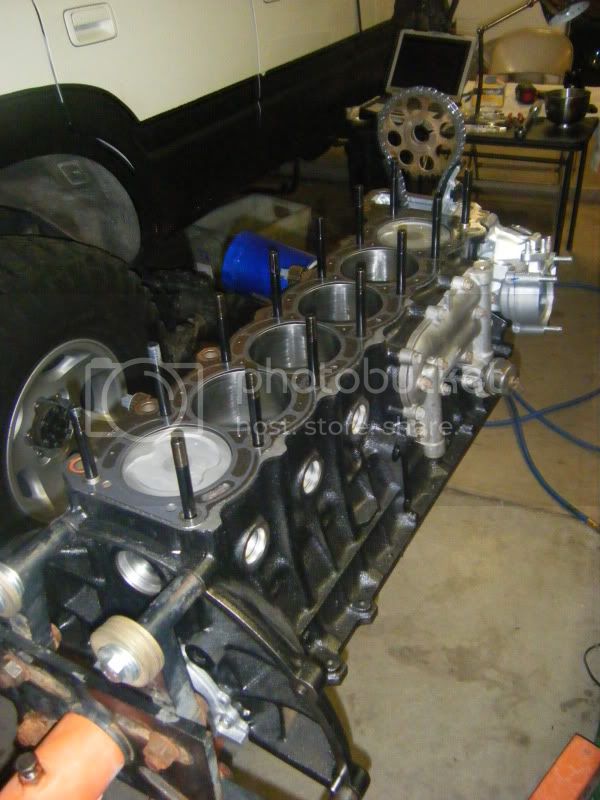
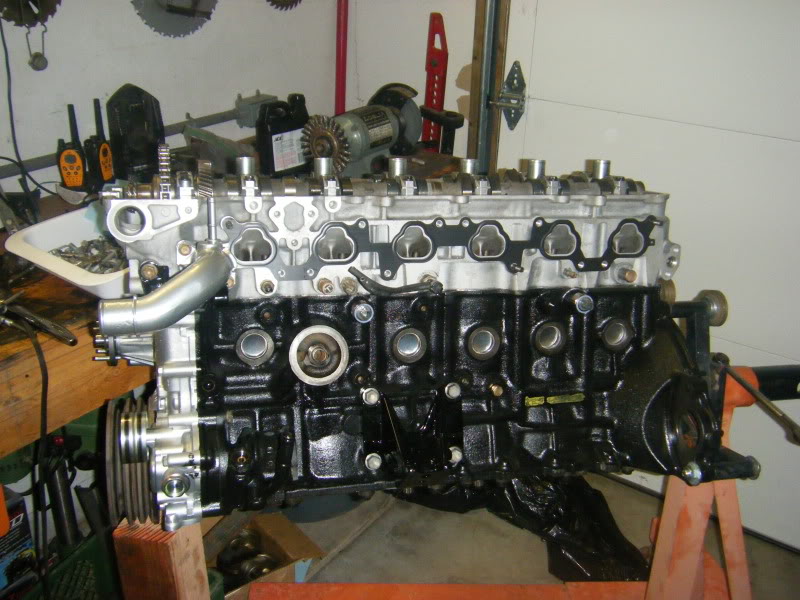
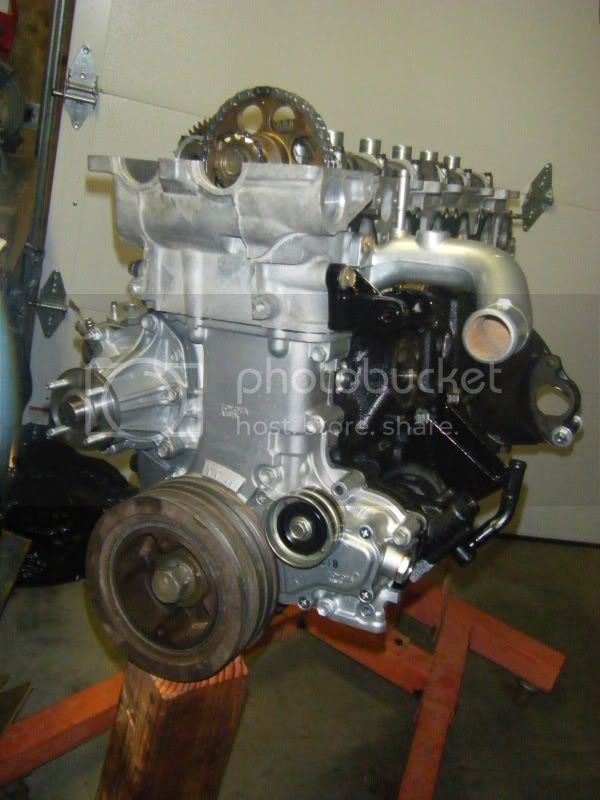
I mentioned before the condition of the crank. The #4 & #5 main bearings were toast and consequently the cranks corresponding journals were a little rough. The machine shop I used has one of the only machines in Arizona that can not only straighten cranks, but can also build them up and regrind them. They use a process called pulse arc welding to build up the journals. This process is pretty slick as it sprays molten weld on to the crank as it is turning. Once it is build up, the crank journals are ground back down to the need diameter.
Once the crank was done, it was time to balance the reciprocating assembly. First the pistons were weighed to determine which of the six was the lightest. Then the other 5 were weighed and had material removed with a ball mill. When done, all 6 pistons were within .01 grams of each other. The same process was repeated for the rods. Fast forwarding a few days, the engine was palletized and ready for me to pick up and begin assembly.
During the time the engine had been at the machine shop, I started to clean everything that had come off the engine during removal. Two products I found to be invaluable were Lime Away and Purple Power degreaser. What ever was greasy went into a vat of Purple Power and came out spot less. Anything that had scale or rust on it sat in Lime Away and came out looking brand new. I did this not only for the parts (at least the ones I didn’t powder coat!) but also for all the fasteners. Nothing like putting something back together with clean fasteners!
Not all the parts and fasteners were reused though. Anything that looked questionable was replaced. As you can see in the picture below, my laptop was never far away. Whenever I need something, I only had to log into my Toyota Wholesale Parts account and get it ordered…talk about convenient!
I sent the injectors out to Arizona TPI to be cleaned and balanced. I have used them for several years and am always impressed by the extra mile they go for me. They did it this time by not only cleaning and balancing the injectors, they also modified them to flow an additional 4lbs/hr.
Once the block was assembled, it was time to place the head. I knew early on I wanted to use ARP studs, but knew the set designed for Supras was too short (Landtank mentions this above in #14). I called ARP and told them what I was looking for. They didn’t have an exact set, but they asked me to send them one of my head bolts and they would see what they could do. A week later, I received a set of studs that are a little longer and cured the problem Rick mentioned in his post. Best of all, ARP never charged me for them. Instead they asked me to let them know if they worked out OK.