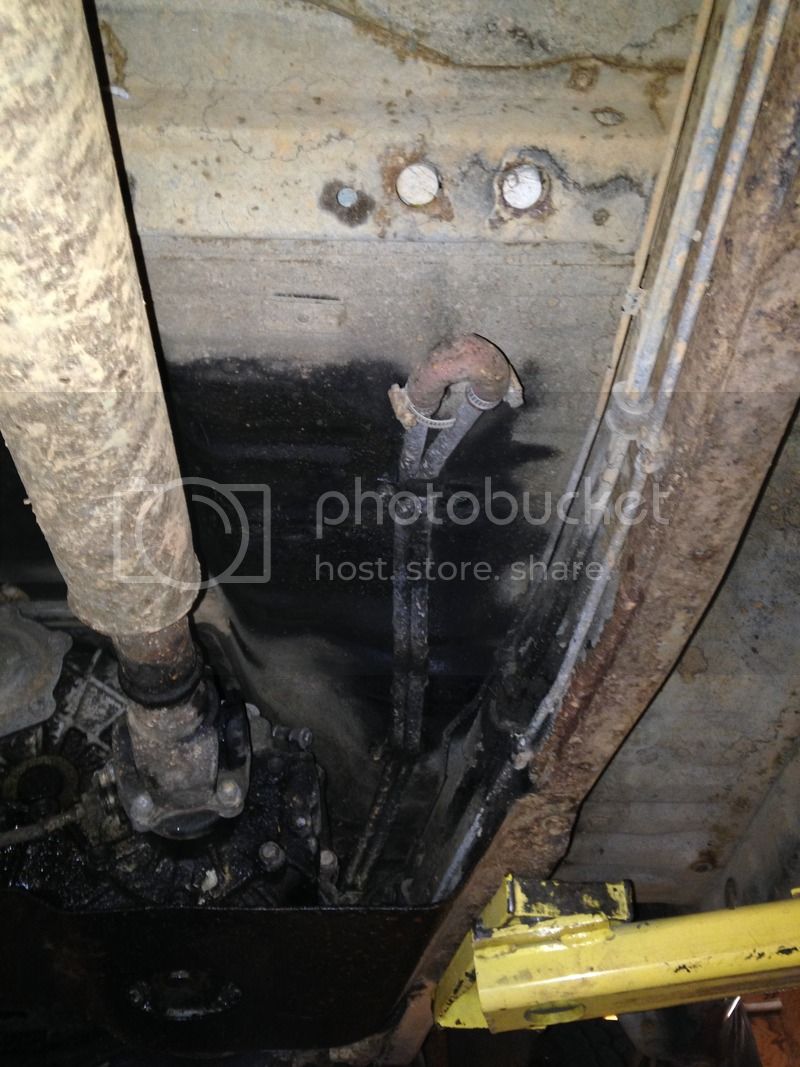
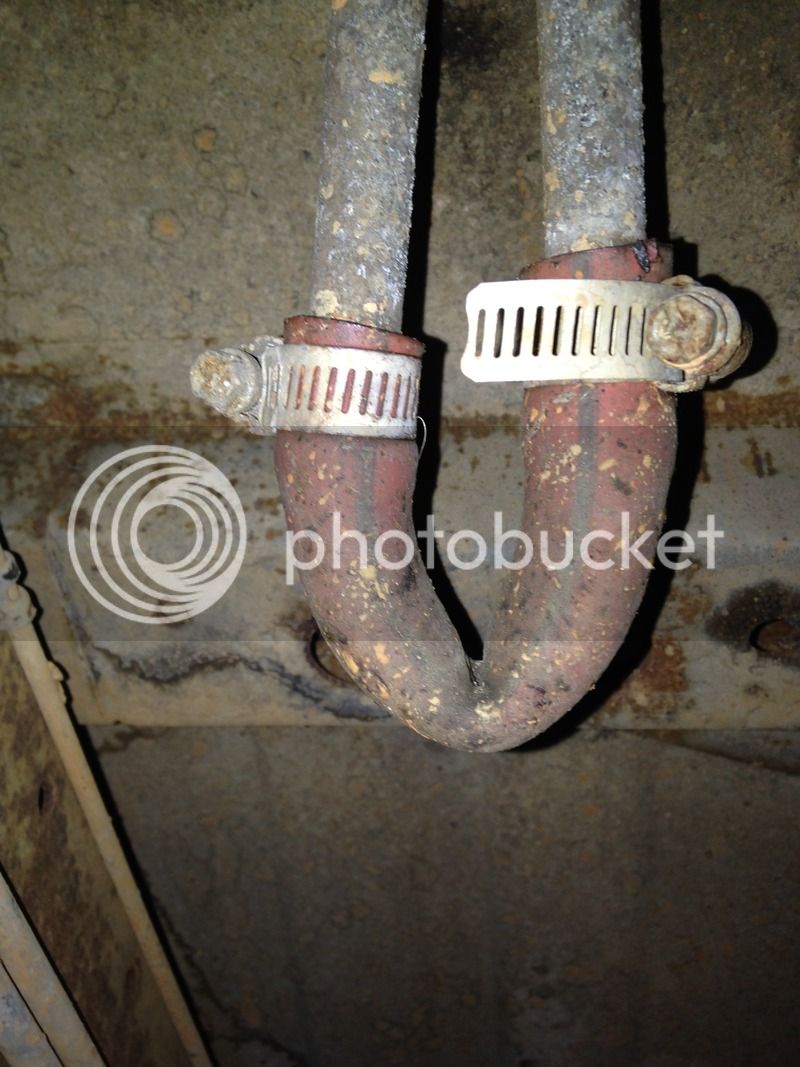
As mentioned, those two pipes normally have two small hose pieces connected to them which would have connected up to the rear heater. That was the PO's method of removing the rear heater plumbing.
Those two metal tubes (and kinked hose) are pressurized with coolant to 14 psi when the engine is running. If that kinked hose blew while driving, you'd lose all your coolant.
The kink is actually better than a free flowing loop because it is blocking the flow of coolant through those metal tubes. You don't want coolant always flowing through the rear circuit. The rear heater circuit alters the way the coolant flows through the back of the head; increasing flow out of the back of the head while reducing flow from the back of the head towards the front.
The rear (and front) heaters degrade the optimum flow of coolant through the head by increasing the flow out the back of the head while reducing the flow from the back towards the front. It's a trade off in practicality.
Since you no longer have a rear heater, the ideal solution is to get rid of ALL the rear heater plumbing, including those metal tubes. They're not doing anything there but rusting away... setting you up for leaks in the future.
But if you want to do a quick and dirty fix, remove that kinked loop and replace it with new hose. BUT MAKE SURE THE NEW HOSE IS KINKED TOO.
You don't want coolant flowing through those metal tubes ever.
Below show pictures how to completely remove the rear heater. The bypass hose can be purchased at SOR. The stainless steel plug in the heater riser fitting off the head can be purchased at McMaster Carr.