


Hey Guys!
This thread might get vilified by some, but for others it might be a godsend, but I wanted to do a quick and simple write-up on how to completely bypass the dreaded rear window relay on the Surfs.
-WARNING, WHEN WORKING WITH ELECTRICAL COMPONENTS, DISCONNECT YOUR BATTERIES TO KEEP FROM FRYING SOMETHING IMPORTANT-
So, awhile back, the rear window on my Surf stopped working altogether, so I popped the inner door cover off, and checked the voltage going into my motor. Nada with the switch either way. Then, I smelled the distinct smell of very hot electronics, and pulled my rear interior out to look at the relay box to find it charred and bubbled, the silicone board itself wrecked beyond repair. I can only assume I got an unlucky manufacturers error in the silicone, or it was hit by something, causing a fault in the board somewhere, but alas my entire relay was trashed.
My conundrum came from my location, actually, because I currently live in Japan. The primary issue here is that Surfs do not get wrecked or junked here, and if they do, they are not available to be stripped for parts, because they are being wholesaled to Australia or the UK for parts, usually. Now, buying a new relay for me was going to be an issue, I didn't have a spare US $350 - $500 lying around to spend on one, and frankly, I didn't trust them anymore after the myriad of safety features, designed for those lacking common sense, had also caused my window to fail previously.
This little project completely eliminates the safety features that keep you from moving the window while the tailgate's down, or not locked, etc, but has the advantage of eliminating the finnicky relay system, and also costing less than $20 to do. This is basically a write-up on how make a reversable-polarity switch to power your motor straight from the battery, while keeping the switch in the factory location.
What you need to get your hands on:
- A Double-Pole, Double-Throw Switch with ON-OFF-ON positions. This switch will have 6 pins, Two inputs, and 4 outputs.
- Wire Cutter/Stripper
- About 6m-8m of wire, 8ga-10ga preferable
- Basic Wiring connections, 6 for blade-type connectors, and 4 male-female wire mating connectors. (Yes, these are optional, but it's always nice to keep your wiring clean.)
The simple way that I did it was to basically extend the two power wires for the window motor all the way up to the center console, by where the switch was located.
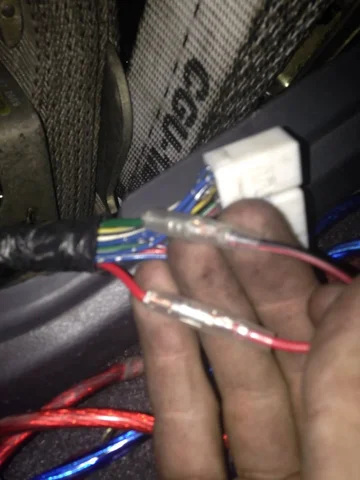
The large red/green wires are your inputs to the motor. When Positive is on one, Ground on the other, the motor moves one way. When the + and - are switched, the motor moves the other way.
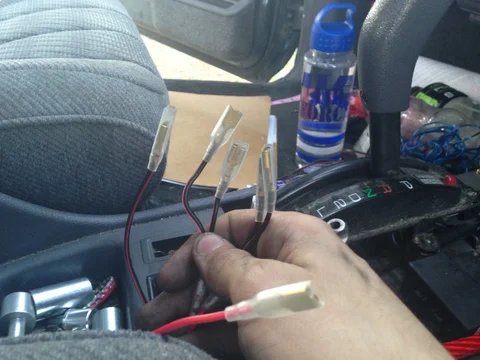
Here are all my connectors before mating to the switch. The four on the right side that I'm holding are coming off of the two motor wires that I extended up to the center console. You'll need to "split" both wires into four separate connectors, two for each wire. The other two are a +12V coming straight from the battery (I ran it alongside my Amplifier power wire), and a ground to the chassis (Red +, Black -).
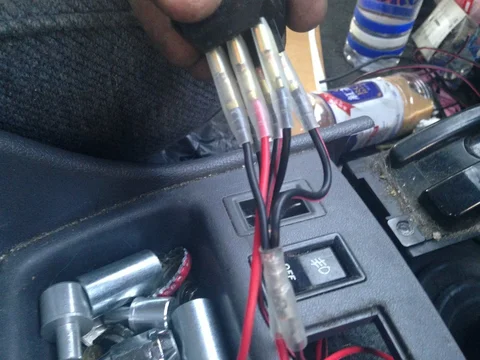
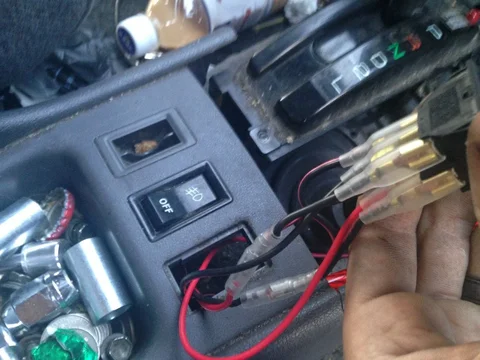 View attachment 1075220
Here's what your DPDT Switch will look like with all the wires connected. My particular switch had the inputs in the center blades, with the outputs being the 4 outer blades. Now, how a DPDT switch works is that when a side of the switch is closed, BOTH center pins and BOTH of ONE SIDE are then connected, like this:
https://cdn.sparkfun.com/assets/6/e/d/9/0/517edbabce395fd51d000000.png
(Disclaimer, Switch pictured WILL NOT WORK as it doesn't have an "OFF" setting)
When the switch is moved to the other closed location, the Other two pins get connected to the center. Now, as you can see on my switch, there are 3 pins on one side, and 3 pins on the other, so each pin on the side with the +12V input will get +12V when the switch is moved to it, and same for the other side. How you wire it to power your motor is simply take two of your four connections and attach them to either side of the switch, one on + and one on -, on the SAME SIDE of the switch . Then, take the remaining connector for each wire, and put it on the OPPOSITE pin (+ or -) of the OTHER side of the switch.
The result is when the switch is pressed one way, 12V go to one wire, and the other is grounded, but when switched the opposite way, 12V goes to the OTHER wire, and visa versa for the ground, giving you the ability to apply alternating polarity with a single switch to your rear window motor, and breaking all connections when not in use.
Finally, simply pop your switch of choice into the hole where your window switch used to be, orient it to match the up/down of your window (or however you like), and reassemble your center console.
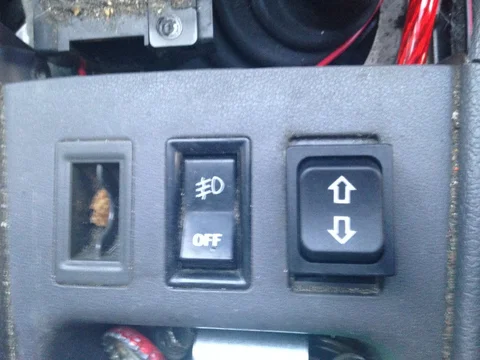
Enjoy your simple, no-unneccessary-relays window action!
This thread might get vilified by some, but for others it might be a godsend, but I wanted to do a quick and simple write-up on how to completely bypass the dreaded rear window relay on the Surfs.
-WARNING, WHEN WORKING WITH ELECTRICAL COMPONENTS, DISCONNECT YOUR BATTERIES TO KEEP FROM FRYING SOMETHING IMPORTANT-
So, awhile back, the rear window on my Surf stopped working altogether, so I popped the inner door cover off, and checked the voltage going into my motor. Nada with the switch either way. Then, I smelled the distinct smell of very hot electronics, and pulled my rear interior out to look at the relay box to find it charred and bubbled, the silicone board itself wrecked beyond repair. I can only assume I got an unlucky manufacturers error in the silicone, or it was hit by something, causing a fault in the board somewhere, but alas my entire relay was trashed.
My conundrum came from my location, actually, because I currently live in Japan. The primary issue here is that Surfs do not get wrecked or junked here, and if they do, they are not available to be stripped for parts, because they are being wholesaled to Australia or the UK for parts, usually. Now, buying a new relay for me was going to be an issue, I didn't have a spare US $350 - $500 lying around to spend on one, and frankly, I didn't trust them anymore after the myriad of safety features, designed for those lacking common sense, had also caused my window to fail previously.
This little project completely eliminates the safety features that keep you from moving the window while the tailgate's down, or not locked, etc, but has the advantage of eliminating the finnicky relay system, and also costing less than $20 to do. This is basically a write-up on how make a reversable-polarity switch to power your motor straight from the battery, while keeping the switch in the factory location.
What you need to get your hands on:
- A Double-Pole, Double-Throw Switch with ON-OFF-ON positions. This switch will have 6 pins, Two inputs, and 4 outputs.
- Wire Cutter/Stripper
- About 6m-8m of wire, 8ga-10ga preferable
- Basic Wiring connections, 6 for blade-type connectors, and 4 male-female wire mating connectors. (Yes, these are optional, but it's always nice to keep your wiring clean.)
The simple way that I did it was to basically extend the two power wires for the window motor all the way up to the center console, by where the switch was located.
The large red/green wires are your inputs to the motor. When Positive is on one, Ground on the other, the motor moves one way. When the + and - are switched, the motor moves the other way.
Here are all my connectors before mating to the switch. The four on the right side that I'm holding are coming off of the two motor wires that I extended up to the center console. You'll need to "split" both wires into four separate connectors, two for each wire. The other two are a +12V coming straight from the battery (I ran it alongside my Amplifier power wire), and a ground to the chassis (Red +, Black -).
View attachment 1075220Here's what your DPDT Switch will look like with all the wires connected. My particular switch had the inputs in the center blades, with the outputs being the 4 outer blades. Now, how a DPDT switch works is that when a side of the switch is closed, BOTH center pins and BOTH of ONE SIDE are then connected, like this:
https://cdn.sparkfun.com/assets/6/e/d/9/0/517edbabce395fd51d000000.png
(Disclaimer, Switch pictured WILL NOT WORK as it doesn't have an "OFF" setting)
When the switch is moved to the other closed location, the Other two pins get connected to the center. Now, as you can see on my switch, there are 3 pins on one side, and 3 pins on the other, so each pin on the side with the +12V input will get +12V when the switch is moved to it, and same for the other side. How you wire it to power your motor is simply take two of your four connections and attach them to either side of the switch, one on + and one on -, on the SAME SIDE of the switch . Then, take the remaining connector for each wire, and put it on the OPPOSITE pin (+ or -) of the OTHER side of the switch.
The result is when the switch is pressed one way, 12V go to one wire, and the other is grounded, but when switched the opposite way, 12V goes to the OTHER wire, and visa versa for the ground, giving you the ability to apply alternating polarity with a single switch to your rear window motor, and breaking all connections when not in use.
Finally, simply pop your switch of choice into the hole where your window switch used to be, orient it to match the up/down of your window (or however you like), and reassemble your center console.
Enjoy your simple, no-unneccessary-relays window action!