



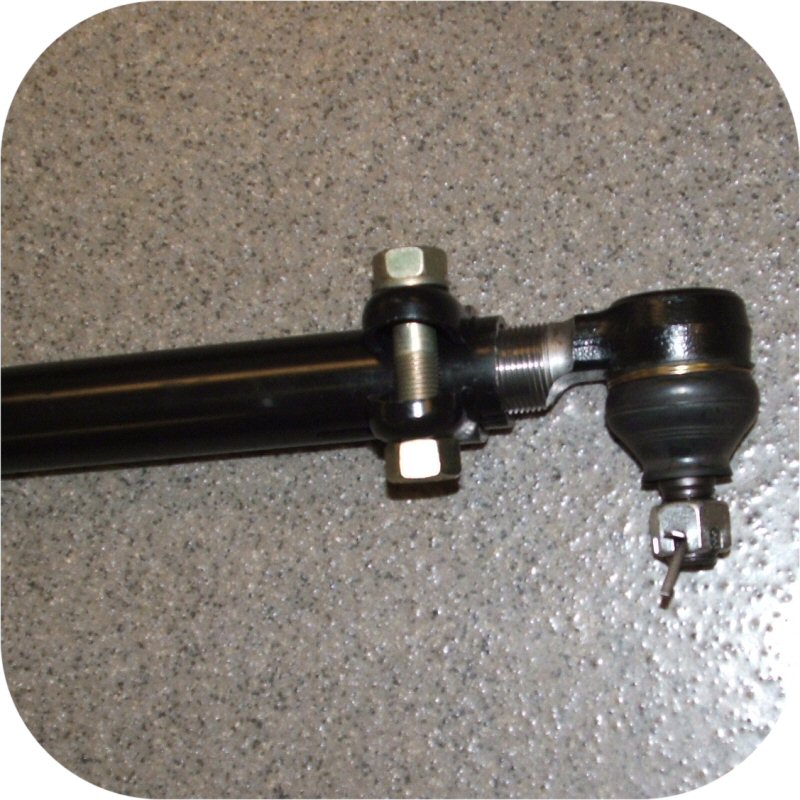
I bought a new tie rod assembly from JT outfitters that I found on ebay. They claimed it to be OEM quality or better and upon receipt I would concur with there claim, at least from an appearance standpoint. The parts were made in Japan which I find encouraging.
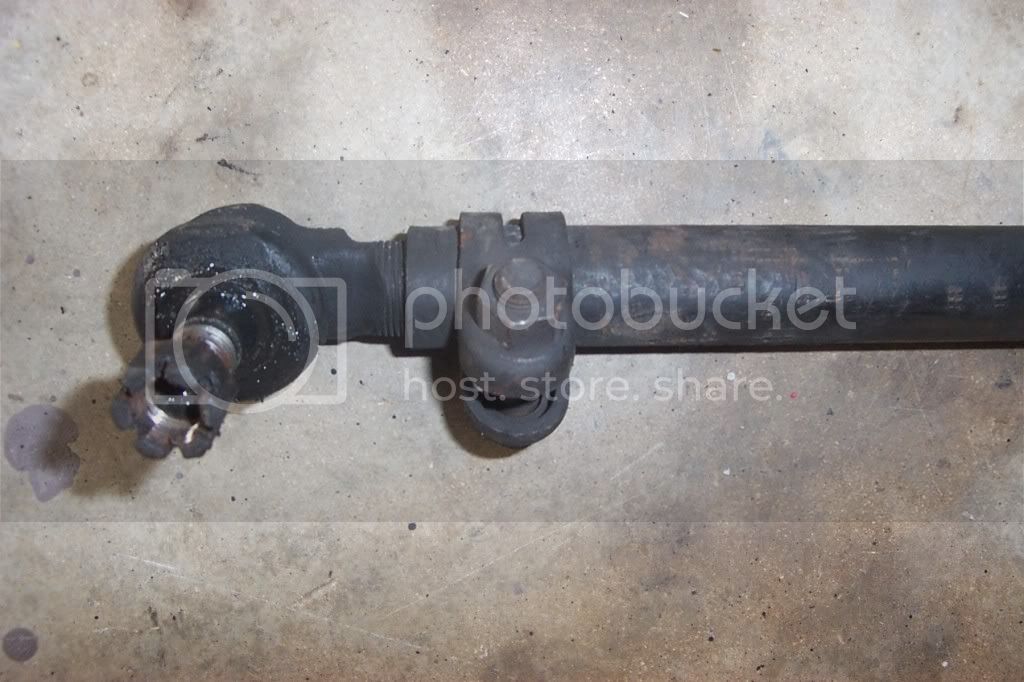
Old tie rod end.
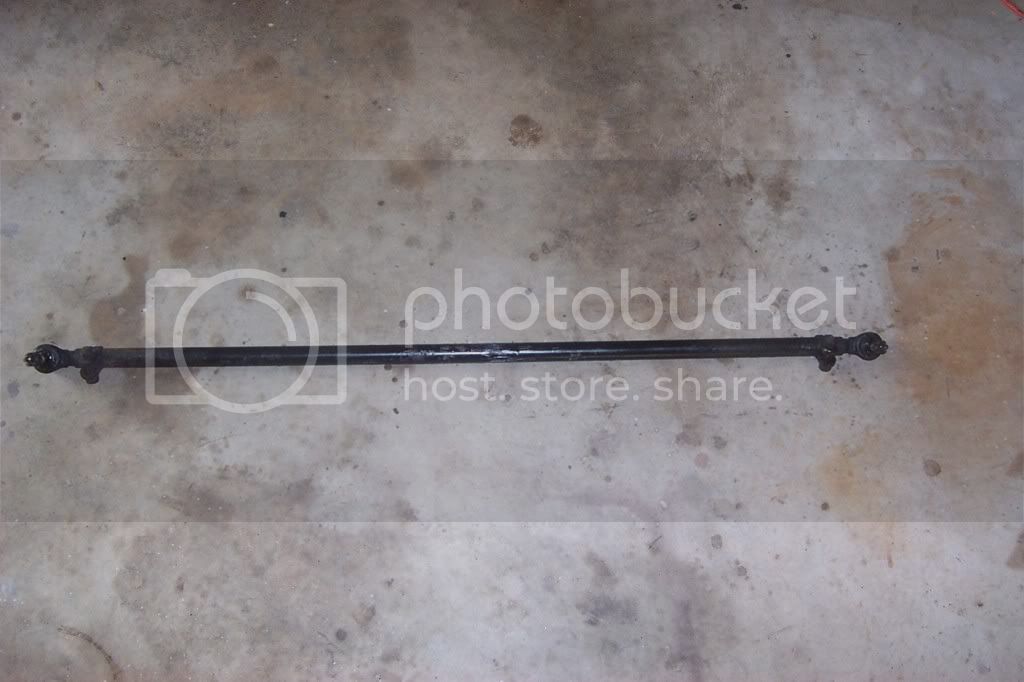
Old assembly.

This is my alignment tool.

I took off the old assembly (I knew that toe was too far out) and then lined up the new assembly so it matched length. I then applied anti-seize to the threads. I did this in order to avoid the problem that was the watershed cause for necessitating this repair in the first place (the tie rod was frozen, limiting adjustment. Then trying to force and heating caused play in one of the tired tie rod ends).
Next, I put the new assembly on the cleaned steering arms.
The alignment tool was a piece of quarter round I had sitting in the garage. I measured the distance from the inside of fronts of both wheels and then cut the quarter round to be a slightly longer. I used a wood rasp to fine tune the length so it sat perfectly between the fronts of the two rims.
Now I moved the tool to the rear of the front wheels. It was more difficult to get it into position here because the tie rod and panhard rod were in the way. But the quarter round is flexible which made it easy to squeeze it into where it needed to be.
Once the piece of wood was between the inside rear of both rims I could see that it was about the same distance. I adjusted the tie rod so that I had about 1/8" toe in measured at the rim and went for a cruise. Better, but I knew it has felt much better so I gave it another 1/8". Excellent with 1/4" total.
I never had a good alignment after I started running 35's (my tie rod was frozen). It makes a big difference when you don't have enough toe. I also adjusted the drag link so that my wheel is straight and adjusted the LSPV. The truck feels better then when I was on 33's.
I learned during the process that larger tires require more toe. If it seems like you lost straight line stability when you put on bigger tires you may want to give more toe a try.
Old tie rod end.
Old assembly.
This is my alignment tool.
I took off the old assembly (I knew that toe was too far out) and then lined up the new assembly so it matched length. I then applied anti-seize to the threads. I did this in order to avoid the problem that was the watershed cause for necessitating this repair in the first place (the tie rod was frozen, limiting adjustment. Then trying to force and heating caused play in one of the tired tie rod ends).
Next, I put the new assembly on the cleaned steering arms.
The alignment tool was a piece of quarter round I had sitting in the garage. I measured the distance from the inside of fronts of both wheels and then cut the quarter round to be a slightly longer. I used a wood rasp to fine tune the length so it sat perfectly between the fronts of the two rims.
Now I moved the tool to the rear of the front wheels. It was more difficult to get it into position here because the tie rod and panhard rod were in the way. But the quarter round is flexible which made it easy to squeeze it into where it needed to be.
Once the piece of wood was between the inside rear of both rims I could see that it was about the same distance. I adjusted the tie rod so that I had about 1/8" toe in measured at the rim and went for a cruise. Better, but I knew it has felt much better so I gave it another 1/8". Excellent with 1/4" total.
I never had a good alignment after I started running 35's (my tie rod was frozen). It makes a big difference when you don't have enough toe. I also adjusted the drag link so that my wheel is straight and adjusted the LSPV. The truck feels better then when I was on 33's.
I learned during the process that larger tires require more toe. If it seems like you lost straight line stability when you put on bigger tires you may want to give more toe a try.


