I could really use some in person guidance before I cut any more. I want to do this correctly, do it myself for the experience, and have it turn out right. Doing my frame off and this is one of the biggest parts for me. Would like to have my 40 up and running so I can join the club.
It's pretty straight forward - I've done it a half dozen times. The question is not hard it is, but to set what your expectations are. Do you want to make it functional again or do you want it to look stock - and in that case do you want it to look like it was never repaired. Doing that could be very hard. Depending on how rusty your trucks is. You would also need to buy a replacement panel vs just using a square piece of steel.
In my case, I have never restored a truck - I would say I am into renovating vs restoring. I just want it to be solid and functional so I used a piece of 2x2 tube. Cheap and easy.
Use the MIG process - ideally .023/.025 wire with shielding gas. You could use .030 but it's a little harder.
You need to brace up the body before you cut it apart. This is critical. You should also do the work with the tires sitting on the ground, not with the frame on jack stands.
Thanks for the replies. My 40 is in pretty good shape, from Arizona, as far as rust goes, the rear sill is really the only bad spot. I've started, see pics and I made sure I braced it before I started cutting. I have a good mig welder but have limited welding experience. Just want to make sure I'm doing each step correctly. I have the truck on tires but I have to keep re-inflating them. I'm trying to do a good restoration, want it to look as close to stock as possible, and Santa brought me a new replacement sill and cover from CCOT. I planned to get some quarter patch panels after I got the new sill in place.
like others have said, depends on how "original" you want your rig but one suggestion is to consider using 2" box steel for the sill. Worked out well for me. I just used a sawzaw to cut out holes for the body mounts and drilled a couple holes on the bottom for water drain. Install was fairly easy.
Here is a tip - set your welder setting on some scrap to get that frying bacon sound. The metal has to be very clean, tight shiny and bright. No paint, grease, rust, dirt, etc.
When welding sheet metal don't run a bead, instead - lay down a series of tack welds.
Ron Covell makes great videos - I learned a lot from watching them.
The series of tack welds trick works extremely well. Use a regular welding helmet (not auto-darkening) and lay a tack. Once that weld goes dark in your mask, lay another good tack. Your wait time will grow as you progress due to heat soaking into the work piece.
Produces an awesome weld in sheetmetal. Thanks to @kulangot for teaching me that one
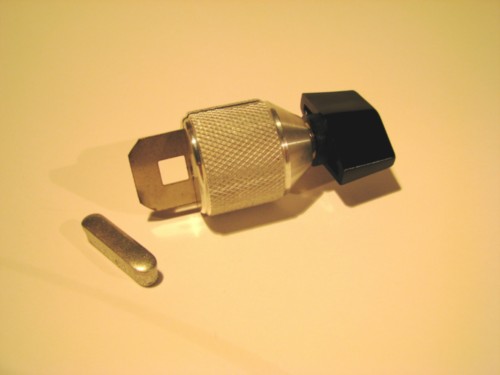
If you are planning on doing a good amount of sheet metal work INVEST in a set of these clamps, they are the shiznit!
The thin blade maintains a perfect space between panels being welded and it acts as a heat sink while holding panels flush. Slide the blade between panels, slide in the little keeper piece under the clamp and tighten.
The series of tack welds trick works extremely well. Use a regular welding helmet (not auto-darkening) and lay a tack. Once that weld goes dark in your mask, lay another good tack. Your wait time will grow as you progress due to heat soaking into the work piece.
Produces an awesome weld in sheetmetal. Thanks to @kulangot for teaching me that one
I forgot to mention that, works like a charm! I like to put down a red hot candy sized tack weld to keep the heat affected zone down to a minimum.
Also, do not cool the weld with air or water (unless you are trying to get rid of an oil can dent) or it will warp and crack.
Cleanliness is KEY.
I prefer the panel to fit with zero gap vs using those clamps. I like to use as little weld as possible to minimize the heat. I have used them for floor pans and they did work great if the metal is thicker.
We are lucky in the fact that LC sheet metal is considerably thicker than most. One mistake I made in the beginning was too low voltage. My lil' Lincoln 220V doesn't have infinite adjustment, instead A-B-C-D-E... I found I could get better tacs for sheet metal using C and cranking up the unimix flow a bit.
I like to use very little stick out and slight angle.
The wire size also affects the amount of heat - a thinner wire acts like a resistor and impedes the flow of amperage making the weld colder at a given heat setting. Too much stick out does the same thing because your making it harder to arc by creating more resistance.
.023 is your friend! I learned that too late in the process as well. Also found out that the grinding of ugly welds can cause just as much warpage as putting too much heat in with the welder itself. If you actually get good at welding sheet metal ( I never really did), every other mild steel welding becomes a walk in the park.