

-
North American Clubhouses - East RegionCA.ON- SOTEC CA.ON- Upper Canada Land Cruisers CA.QC- Club TORQ CA.QC- Quebec Cruisers AL- DixieLand Cruisers AL- Hot South Cruisers FL- Florida Land Cruiser Association FL- Northwest Florida Toyota 4WD FL- Tampa Bay Land Cruiser Association GA- Pavement Pounders GA- Georgia Cruisers GA/FL/AL- Red Hills Land Cruiser Club IL- Windy City Land Cruisers IN- Hoosier Cruisers IN- Indiana Land Cruisers KY- Kentucky Landcruiser MA/NH- Yankee Toys MI- Lake Michigan Land Cruisers MS- CottonLand Cruisers NC- Olde North State Cruisers NJ- Garden State Land Cruisers NY/CT/MA- FJNortheasters NY- Gotham City Land Cruisers OH- The Buckeye Birfield Syndicate PA- Keystone Cruisers PA- Steel City Land Cruiser Club SC: Land Cruisers: Charleston SC- Palmetto State Land Cruiser Association SC- Upstate Cruisers SC- Swamp Fox Land Cruisers SC- Low Country Land Cruisers TN- Appalachia Cruisers TN- Bluff City Cruisers TN- STLCA VA- Bay to Blue Ridge Cruisers VA- COVA CRUISERS VA/DC/MD- Capital Land Cruiser Club VA/NC- Mid-Atlantic TLCA VA- Star City Land Cruisers VT/NH/MA/ME Acadian Overlanders WI- Land Cruiser Legends WV- Mountaineer Cruisers
-
North American Clubhouses - Central RegionCA.AB- Oil Country Cruisers CA.AB- Rocky Mountain Land Cruiser Association CA.AB- Toyota Ghost Wheelers AR- Razorback Land Cruisers AR/MO- Ozark Mountain Cruisers CO- BookCliff Cruisers CO- Colorado Land Cruisers CO- Derailed Cruisers CO- Rising Sun 4WD Club CO/WY- Horsetooth 4 Wheelers Cruiser Club IA- Tall Corn Cruisers KS/MO- Tornado Alley Cruisers LA- Bayou State Land Cruisers LA- Louisiana Land Krewesers MO- Gateway Cruisers MT- 406 Cruisers MT- Big Sky Cruisers NE- Flat Land Cruisers NM- High Desert Cruisers OK- Green Country Cruisers SD- Dakota Territory Cruisers TX- Alamo City Land Cruisers TX- Bayou City Land Cruisers TX- Lone Star Land Cruisers TX- Lone Star Land Cruisers - Austin Chapter TX- The White Trash of the Elwood Chapter TX- Toyota Trail Riders
-
North American Clubhouses - West RegionCA.BC- Coastal Cruisers CA.BC- Okanagan-Similkameen Land Cruisers CA.BC- Peace Canyon Toyota Swamp Donkeys CA.BC- Calgary Chapter: Swamp Donkeys
CA.BC- Vancouver Island Cruisers AZ- Copper State Cruisers CA- Beach-n-Toys CA- Central Coast Land Cruisers CA- Central Valley Crawlers CA- Gold Country Cruisers CA- Inland Empire Cruisers CA- L.A. County Trailcrew CA- Mountain Transit Authority CA- Pacific Mountain Cruisers CA- San Diego Cruisers CA - Santa Cruz Land Cruisers CA- SoCal 80's CA- Southern California Land Cruisers CA- Toyotally Awesome Cruisers HI- Hawaiian Island Land Cruisers ID- Treasure Valley Land Cruisers NV- Battle Born Cruisers of Northern Nevada NV- Southern Nevada Land Cruisers OR/CA- Jefferson State Cruisers OR- Cascade Cruisers OR- Central Oregon Cruisers OR- Portland Metro Cruisers UT- Red Rock Cruiser Club UT- Wasatch Cruisers WA- Central Washington Cruisers WA- North Sound Cruisers WA- South Sound Cruisers WA- Spokane Land Cruisers
Navigation
Install the app
How to install the app on iOS
Follow along with the video below to see how to install our site as a web app on your home screen.
Note: This feature may not be available in some browsers.
More options
Style variation
You are using an out of date browser. It may not display this or other websites correctly.
You should upgrade or use an alternative browser.
You should upgrade or use an alternative browser.
Meet "Fat Amy" my Amazon Green 200 Series
This site may earn a commission from merchant affiliate
links, including eBay, Amazon, Skimlinks, and others.


Hmmmmm, then I could put on some of those limb riser wires
You joke but they would have been nice to have in AK

- Thread starter
- #604
Finished wiring the lighting to my TJM T13. I turned down the shutter speed so you can make out the features of the LEDs better.


I also grabbed a shot of the wired up ARB rear bumper. The amber lenses on both the pictures of the ARB and TJM are illuminated, as I am making sure the turn indicators are also properly functioning.

I also grabbed a shot of the wired up ARB rear bumper. The amber lenses on both the pictures of the ARB and TJM are illuminated, as I am making sure the turn indicators are also properly functioning.


Not poking fun at all @MScruiser , but you don't seem like a 'front license plate dealer trim ring' kind of guy to me?
Those lights are awesome, gonna have to do the LED upgrade on the wife's truck.
Those lights are awesome, gonna have to do the LED upgrade on the wife's truck.
- Thread starter
- #607
I like the dealer trim ring. The truck was purchased in Ft. Collins originally and spent its life there until I bought it. I like people to know where it has its roots. Plus, the dealer was really nice, and I will sometimes send them pics of my truck that they will share on their facebook page.
Last edited:
- Thread starter
- #611
Plastic
- Thread starter
- #612
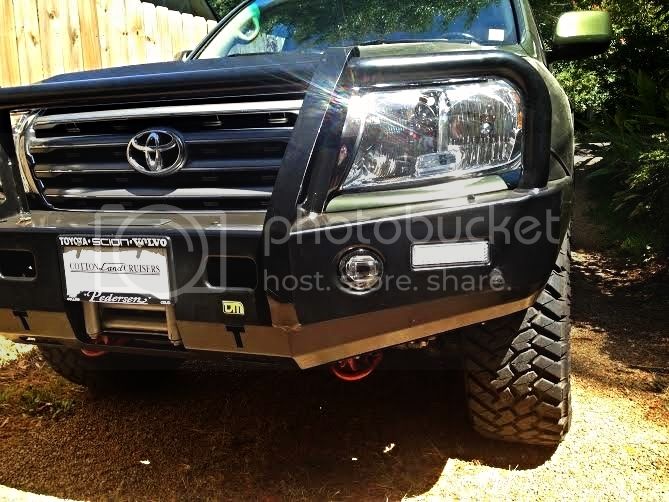
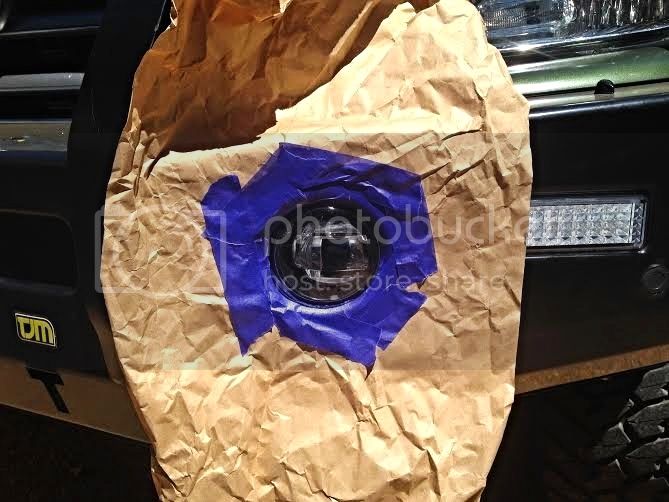
Painted my fog lights this afternoon.
Before:
Masked off:
After:

The paint is from Japan and quite expensive for it's size.
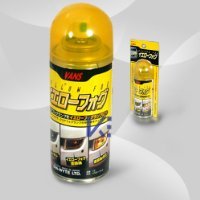
http://www.amazon.com/gp/product/B005Y38S3E?tag=ihco-20
Before:
Masked off:
After:
The paint is from Japan and quite expensive for it's size.
http://www.amazon.com/gp/product/B005Y38S3E?tag=ihco-20
Last edited:
- Thread starter
- #613
Damn double post!

The paint is from Japan and quite expensive for it's size.
http://www.amazon.com/gp/product/B005Y38S3E?tag=ihco-20
The paint job looks awesome; not trying to take away from that or derail, but I couldn't help of thinking about this scene when I read about the highly expensive product from Japan:
- Thread starter
- #616
...It smells just like pure gasoline...
- Thread starter
- #618
I like yellow fog lights I guess. I had them on my 200 before I got my TJM bumper.
Stolen from the internets:
What is Selective-Yellow Light?It's what happens when you subtract blue from the output of a lamp producing white light. But first, what means "white light"? Under US Federal Motor Vehicle Safety Standard number 108 and Canadian Motor Vehicle Standards 108 and 108.1, headlampsas originally installed on motor vehicles (and as installed by anyone other than the vehicle owner) must produce white light. The relevant SAE (and identical ECE) color standards define "white" light as a rather large range within the CIE 1931 colorspace. That's why both brownish sealed beams and bluish HID headlampsare considered "white". It's also why "blue ion" or "crystal blue" bulbs with blue-pass dichroic filters sold to poseurs who want to try to pretend they have HIDs are not considered "white". The light can tend towards a yellow tint to a certain degree and still qualify as acceptable "white" light.
In 1936, the French for tactical reasons wanted a way to identify the registration nationality of vehicles at night. However, they did not want to reduce roadway safety, and wanted in fact to improve it if possible. So, they figured to remove the blue from the output spectrum of their vehicles' front lamps. Some technical papers out of France on the subject can be had here and here. White light with the blue component subtracted is known as "selective yellow" light. It is a pure yellow color with little or no orange component—hence the French yellow headlamps. Yellow lamps have consistently over the years been subjectively ranked as better in poor weather and lower in glare than white ones, but is the effect real? Or is it just a subjective impression? One problem with this conclusion as drawn from the French experience with selective-yellow headlamps in France is that when the question was being considered, the lamps that were being compared with white lamps reduced the absolute intensity of the beam by about 12 percent.This fact may have had a part in reducing the glare. Because the requirement for yellow light no longer exists (though it remains allowed in many countries) we probably will never know the vagaries of the answer to this question.
What explains the persistent subjective preference amongst experienced poor-weather drivers for yellow fog lamps, despite decades of white fog lampprevalence? Selective yellow light can improve a driver's ability to see in fog or rain or snow, but not because it 'penetrates fog better' or 'reflects less off droplets' as is commonly thought. That effect is known as Rayleigh Scattering, and is why the sky appears blue. However, it occurs only when the droplet size is equal or smaller than the wavelength of the light, which is certainly not the case with ordinary fog, rain or snow. Roadway Fog droplets are several orders of magnitude larger than visible light wavelengths, so there's no Rayleigh Scattering.
So, why do yellow fog lamps seem to work better? It's because of the way the human eye interacts with different colors of light. Blue and violet are very difficult for the human optical system to process correctly. They are the shortest visible wavelengths and tend to focus in front of our eyes' retinae, rather than upon it.To demonstrate this to yourself, find a dark blue store front sign or something else that's a dark, pure blue against a dark background in the absence of white light—from any appreciable distance, it's almost impossible for your eyes to see the blue lighted object as a sharply defined form;the edges blur significantly. Deep blue runway lights exhibit the same effect; check it out the next time you land at night. Blue also is a very difficult color of light to look at; it stimulates the reaction we call glare. Within the range of allowable white light, bluer headlampshave been shown to be 46% more glaring than yellower ones for a given intensity of light — see studies here and here. So, it seems culling the blue out of the spectrum lightens the optical workload and reduces glare. For a more detailed examination of this effect with respect to driving in foul weather, see Bullough & Rea's study on the topic.
Stolen from the internets:
What is Selective-Yellow Light?It's what happens when you subtract blue from the output of a lamp producing white light. But first, what means "white light"? Under US Federal Motor Vehicle Safety Standard number 108 and Canadian Motor Vehicle Standards 108 and 108.1, headlampsas originally installed on motor vehicles (and as installed by anyone other than the vehicle owner) must produce white light. The relevant SAE (and identical ECE) color standards define "white" light as a rather large range within the CIE 1931 colorspace. That's why both brownish sealed beams and bluish HID headlampsare considered "white". It's also why "blue ion" or "crystal blue" bulbs with blue-pass dichroic filters sold to poseurs who want to try to pretend they have HIDs are not considered "white". The light can tend towards a yellow tint to a certain degree and still qualify as acceptable "white" light.
In 1936, the French for tactical reasons wanted a way to identify the registration nationality of vehicles at night. However, they did not want to reduce roadway safety, and wanted in fact to improve it if possible. So, they figured to remove the blue from the output spectrum of their vehicles' front lamps. Some technical papers out of France on the subject can be had here and here. White light with the blue component subtracted is known as "selective yellow" light. It is a pure yellow color with little or no orange component—hence the French yellow headlamps. Yellow lamps have consistently over the years been subjectively ranked as better in poor weather and lower in glare than white ones, but is the effect real? Or is it just a subjective impression? One problem with this conclusion as drawn from the French experience with selective-yellow headlamps in France is that when the question was being considered, the lamps that were being compared with white lamps reduced the absolute intensity of the beam by about 12 percent.This fact may have had a part in reducing the glare. Because the requirement for yellow light no longer exists (though it remains allowed in many countries) we probably will never know the vagaries of the answer to this question.
What explains the persistent subjective preference amongst experienced poor-weather drivers for yellow fog lamps, despite decades of white fog lampprevalence? Selective yellow light can improve a driver's ability to see in fog or rain or snow, but not because it 'penetrates fog better' or 'reflects less off droplets' as is commonly thought. That effect is known as Rayleigh Scattering, and is why the sky appears blue. However, it occurs only when the droplet size is equal or smaller than the wavelength of the light, which is certainly not the case with ordinary fog, rain or snow. Roadway Fog droplets are several orders of magnitude larger than visible light wavelengths, so there's no Rayleigh Scattering.
So, why do yellow fog lamps seem to work better? It's because of the way the human eye interacts with different colors of light. Blue and violet are very difficult for the human optical system to process correctly. They are the shortest visible wavelengths and tend to focus in front of our eyes' retinae, rather than upon it.To demonstrate this to yourself, find a dark blue store front sign or something else that's a dark, pure blue against a dark background in the absence of white light—from any appreciable distance, it's almost impossible for your eyes to see the blue lighted object as a sharply defined form;the edges blur significantly. Deep blue runway lights exhibit the same effect; check it out the next time you land at night. Blue also is a very difficult color of light to look at; it stimulates the reaction we call glare. Within the range of allowable white light, bluer headlampshave been shown to be 46% more glaring than yellower ones for a given intensity of light — see studies here and here. So, it seems culling the blue out of the spectrum lightens the optical workload and reduces glare. For a more detailed examination of this effect with respect to driving in foul weather, see Bullough & Rea's study on the topic.

Sweet baby jeebus